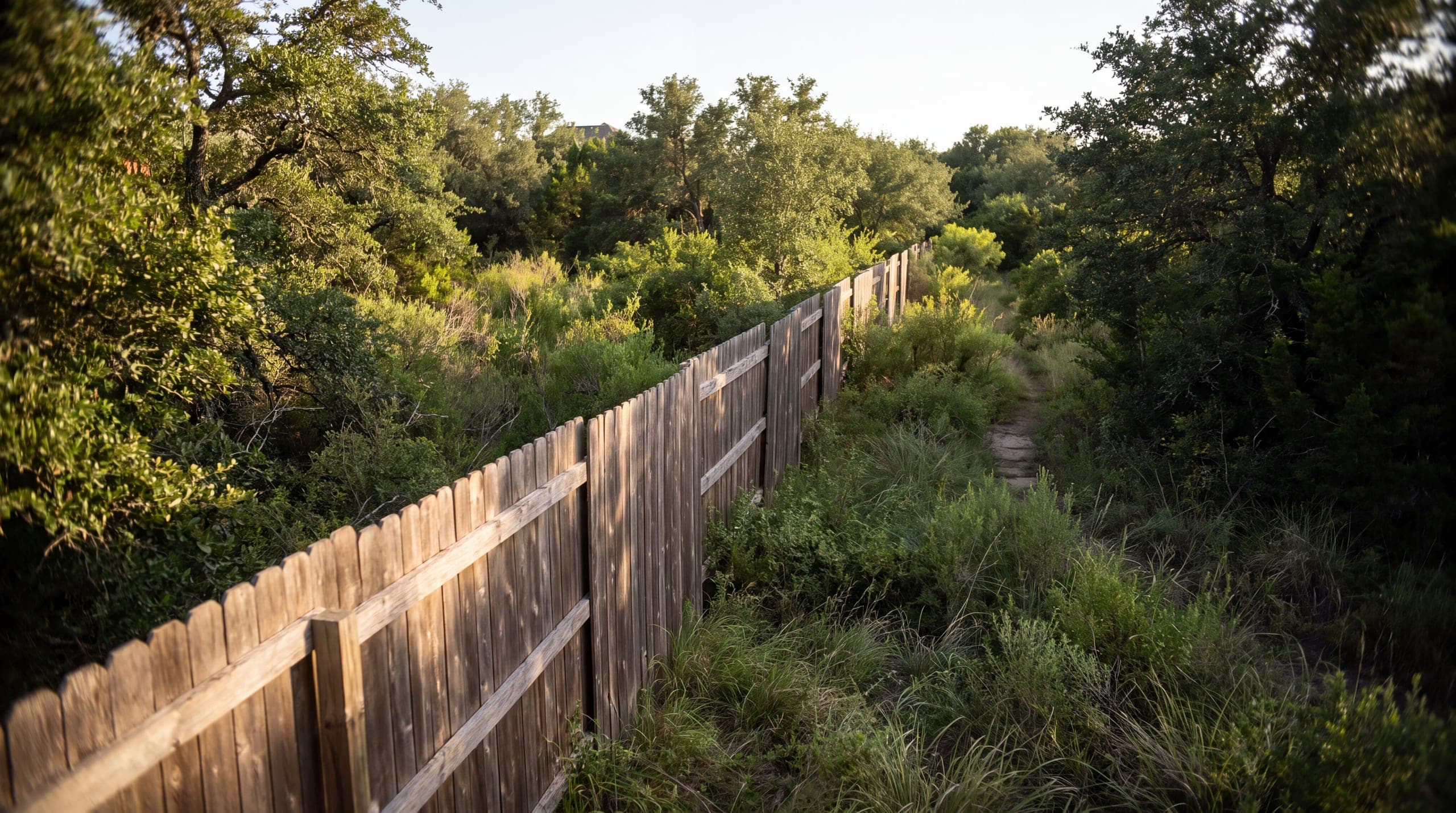
Circle C Ranch went up section by section from the late 1990s through the 2000s, under one master developer and one approved fence spec. The earliest streets are reaching the replacement window now, while houses a few blocks over still have years of fence left.
So the bids you collect are not pricing the same job, even when the fence looks identical from the street. Here is the standard to judge a contractor by, and the questions that make one show their work.
Circle C Is Reaching Its First Replacement Cycle, Section by Section
Wood fences here run out on a schedule the builder set. InterNACHI’s home life-expectancy chart puts a wood fence at about 20 years, so the streets finished in the late 1990s are past that mark and the 2000s streets are arriving at it now. One neighbor is pricing a full replacement while the neighbor behind them still has sound posts. Same builder, same spec, different year.
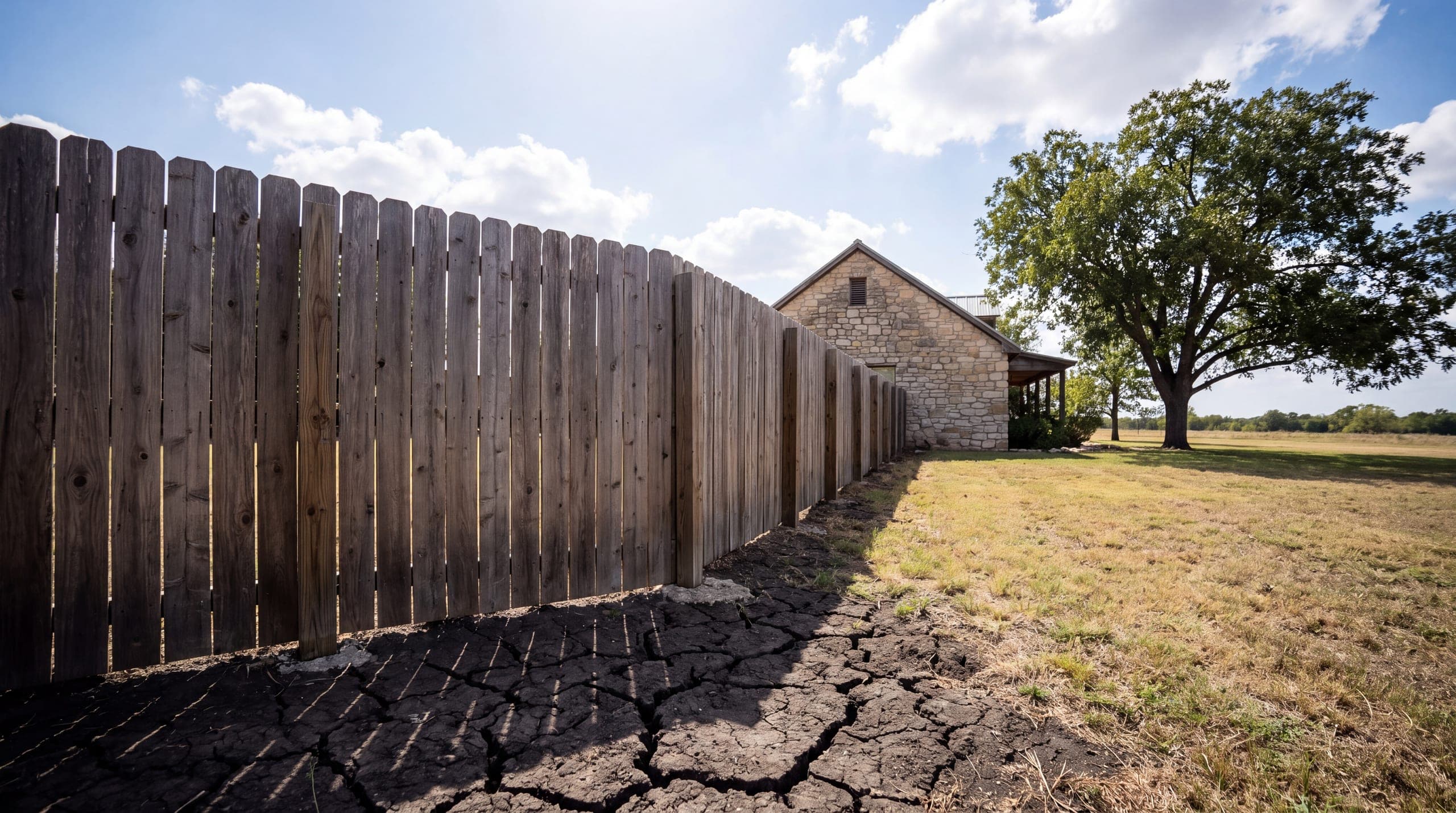
Austin is not a fast-rot climate. The USDA Forest Products Laboratory scores Austin at 55.2 on the wood decay hazard index, against 77.2 for Houston (USDA Forest Products Laboratory, 2009). Wood lasts longer here than on the coast. A 25-year-old Circle C fence usually did not fail early, then. It used up what the material had.
Some owners look at two bad posts and wonder whether patching a run buys them a few more years. That is a fair thing to weigh, and the answer comes from the posts, because loose boards say very little on their own.
| What you find on your line | What it usually means | The question that follows |
|---|---|---|
| Screwdriver sinks into a post at the ground line | That post has lost the wood that carries the load | Ask how many posts the bid replaces, and to what depth |
| Boards are loose but every post is solid | The frame is still doing its job today | Ask what service life is left in posts of that age |
| A whole run leans after a windy week | Wind is finding the corner and gate posts first | Ask what post spacing and bracing the bid uses |
| Posts tilt in the same spot each season | Soil movement is shifting a post whose wood is sound | Ask whether that hole hit rock or stayed in soil |
Know These Five Terms Before You Read a Circle C Bid
Five words decide what a fence quote actually promises, and most bids use all five without defining any of them. Learn them before the first salesperson walks your line. A bidder who cannot explain them on your property is not going to write them into a contract.
| Term | What it means | Why it matters in 78739 |
|---|---|---|
| Ground contact | Preservative level rated for wood buried in soil | Your posts sit in the ground for their whole life |
| Heartwood | The dense inner wood of the tree | Cedar resists rot in heartwood; cedar sapwood does not |
| Embedment | How deep the post sits below grade in concrete | Shallow rock tempts a crew into a shallow hole |
| Picket grade | The mill’s sort for knots and defects, #1 to #3 | Two cedar bids can mean two different boards |
| Caliche | The cemented rock layer under southwest Austin soil | It decides whether a post hole needs drilling |
Ask What the Post Hits 18 Inches Down
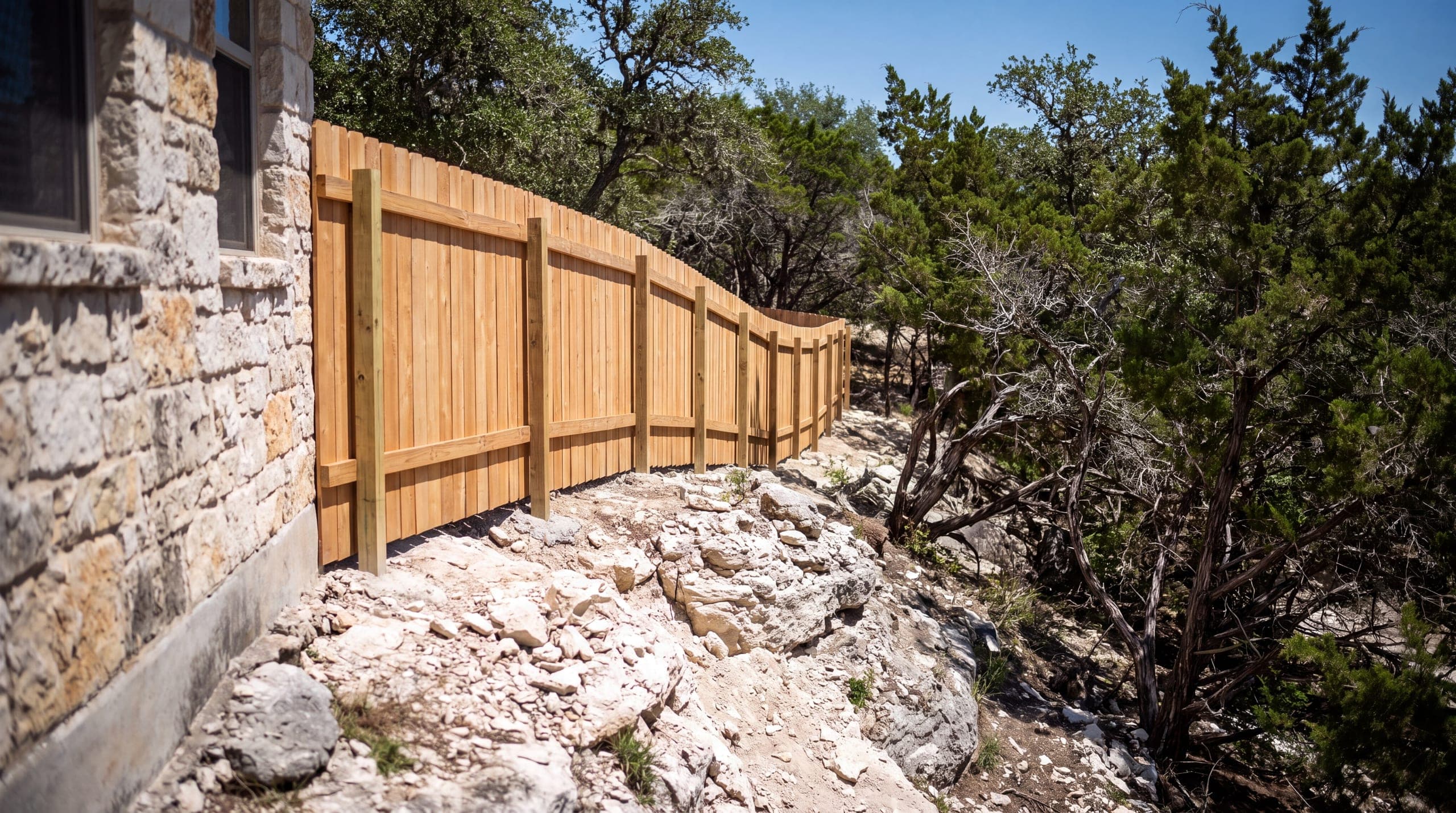
Ask every bidder what happens when the auger hits rock, because in southwest Austin it often does. The USDA soil survey puts the cemented caliche layer in Texas series such as Lacoste at 10 to 20 inches below the surface, and notes that the depth can change within 25 feet. One corner of your yard drills easy. The next one stops the auger cold.
A fence post is engineered as a cantilevered pole. The 2021 International Building Code sizes how deep it goes from the wind force, the height that force pushes against, and the strength of the soil holding it (2021 International Building Code, Section 1807.3.2.1). Rock does not release a crew from that depth. It means coring through the layer or widening the footing, and both cost time and equipment.
Ask three things. Does the price include drilling through rock? What changes if the crew hits it halfway down the line? What depth do the posts go to, in inches, written on the quote? A bidder who has worked this neighborhood answers all three without pausing.
A Greenbelt Fence Line Takes the Wind on an Open Face
A greenbelt lot has nothing upwind to break the gust. Wind tunnel tests of freestanding walls measured a normal force coefficient near 1.45, almost independent of how long the wall is (Letchford, 2001). A solid privacy fence catches close to the full wind across its whole face. On an interior lot, a neighbor’s fence and house absorb some of it first.
Pressure runs highest at the free ends, the leading edge, and the tall posts flanking a gate, which is why those spots fail before the middle of a run does. A quote for a greenbelt-backing line should read differently from a quote for the same house three streets in. Ask whether the post spacing tightens on the open run, what size the gate posts are, and how the end posts are braced.
If a bidder quotes your greenbelt line at the same spec as your side yards, they measured the footage and skipped the exposure.
Ask Which Fence Spec Your Architectural Review Board Already Approved
Get the approved spec from the architectural review board in writing before you collect a single bid. Circle C built out under one developer, so style, height, picket direction, and finish are already defined, and neighbors along a street share them. A bidder who has never built to that spec can hand you a good price for a fence your board rejects.
Texas law narrowed what a board can stop. Since September 1, 2025, a property owners’ association may not prohibit an owner from installing a perimeter fence, though it keeps limited authority over fence type and material, may require a driveway gate set back at least 10 feet from a laned right of way, and may bar fencing forward of the front building line (Texas Property Code, Section 202.023, 2025). Fencing installed before that date is grandfathered.
So the board still governs your material and your style. Ask the bidder whether they have built to this neighborhood’s spec before, whether they submit the approval packet or leave it to you, and what happens to the schedule if the board asks for a change after materials are ordered.
Austin Caps a Solid Fence at 6 Feet From Natural Grade
Austin exempts a fence up to 7 feet from a building permit outside flood hazard areas, but a solid fence along a property line is capped at 6 feet measured from natural grade, rising to 7 feet only where the grade changes by at least 1 foot (City of Austin, 2025). A fence over 6 feet along a public right of way needs a permit. So does a fence of any height inside a floodplain.
That last line matters here more than almost anywhere in Austin, because Circle C wraps around greenbelt and creek drainage. Ask who confirms whether your line sits in a mapped flood hazard area, and who files the permit if it does. A wrong answer is not a fine. It is a fence that comes back out of the ground.