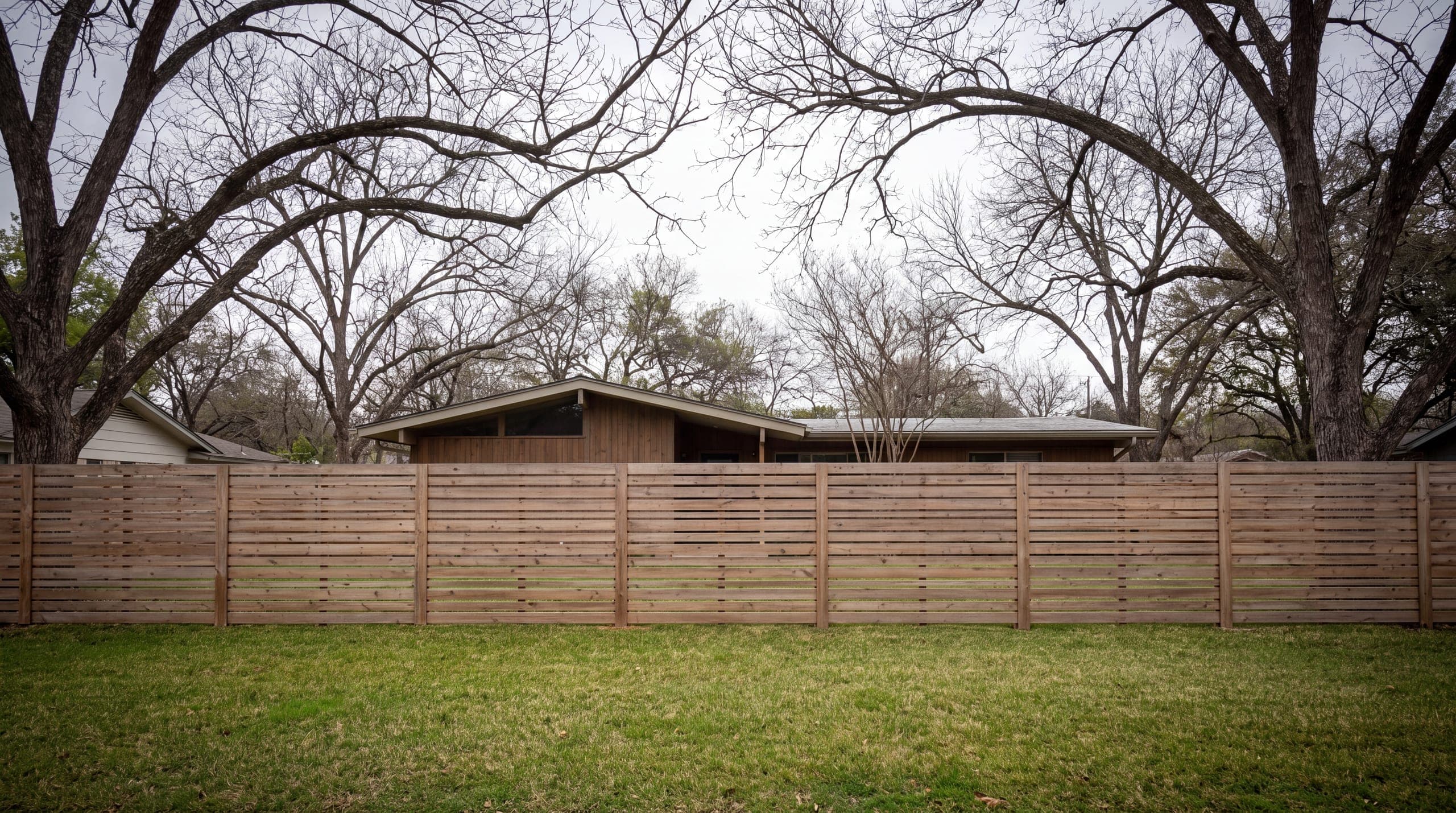
Most fence bids get compared on one number. Price per foot, lowest wins, decided over coffee.
On a Tarrytown or Cat Mountain lot, that number hides almost everything that decides how the job actually goes. The yard is narrow, the fence line is shared on both sides, and the trees were here before the house was. The bid worth reading is the one that priced those things.
A Central Austin Fence Line Is Priced by the Yard Around It
The fence is the cheap part of the job in these blocks. Getting to it is the expensive part. In a December 2025 survey of 1,000 U.S. property owners, 70% went over budget on their most recent renovation and 10% came away regretting the contractor they picked (Clever Real Estate, 2026). On an older central Austin lot, the overrun usually hides in conditions nobody wrote down: a 32-inch side gate, a live oak sitting on the line, a neighbour who had no idea any of this was happening.
Tarrytown and Cat Mountain sit on the same profile. Small lots, long-established houses, mature canopy, and fence lines that have been standing for 20 years or more. A bidder who walks the whole line and asks about access is pricing your yard. A bidder who quotes from the address is pricing an average yard somewhere else in Texas.
Learn These Five Words Before You Read a Replacement Bid
Fence quotes use trade shorthand, and two bids can say the same word and mean different things. Here is the vocabulary that carries the money on a replacement.
| Term | What it means on your bid |
|---|---|
| Linear foot | Cost measured along the fence line. Ask whether gate openings are counted in the footage. |
| Ground contact | The treatment level specified for buried posts. Pickets above ground carry a lighter treatment. |
| Heartwood and sapwood | The darker inner wood resists rot. The pale outer wood on the same board does not. |
| Embedment | How deep each post sits in concrete, and how wide the hole is. |
| Haul-off | Removal and disposal of the old fence, including who does it and on which day. |
| Critical root zone | The soil around a tree where digging damages the roots that keep it alive. |
A quote that names all six is comparable to another quote. A quote that names none of them is a number on a page.
Narrow Side Yards Decide How the Old Fence Leaves the Property
Access is the first cost driver on a small lot, and most homeowners never ask about it. Older central Austin homes often sit close to the side property line, with a single pedestrian gate and no alley behind. That means the old pickets, rails, posts, and concrete footings come out by hand and go up the side yard one load at a time. No skid steer, no truck backed into the yard.
Ask each bidder three things about this. Where does the debris go while the crew works. Where does the dumpster or trailer sit, and does it need the street. How many extra hours did the access add to the number they just handed you. A crew that has already answered those questions in its own head will answer them in one breath.
A Shared Fence Line Means Two Households, Not One Customer
A backyard in these neighbourhoods usually touches three other properties, so a replacement is a scheduling problem for people who are not paying you. Whether a neighbour splits the cost is a conversation, and it goes better before the quote than after the crew arrives. The same is true of staging: crews sometimes need a few feet on the other side to set posts plumb and finish the far face.
There are three details to settle in advance. Which side gets the smooth face, since one household looks at rails and the other does not. How the dogs and the pool are secured on the days the line is open. And who tells the neighbour which morning the old fence comes down. A contractor who raises those before you do has replaced a fence between two houses before.
Mature Trees Change the Post Layout Before They Change the Price
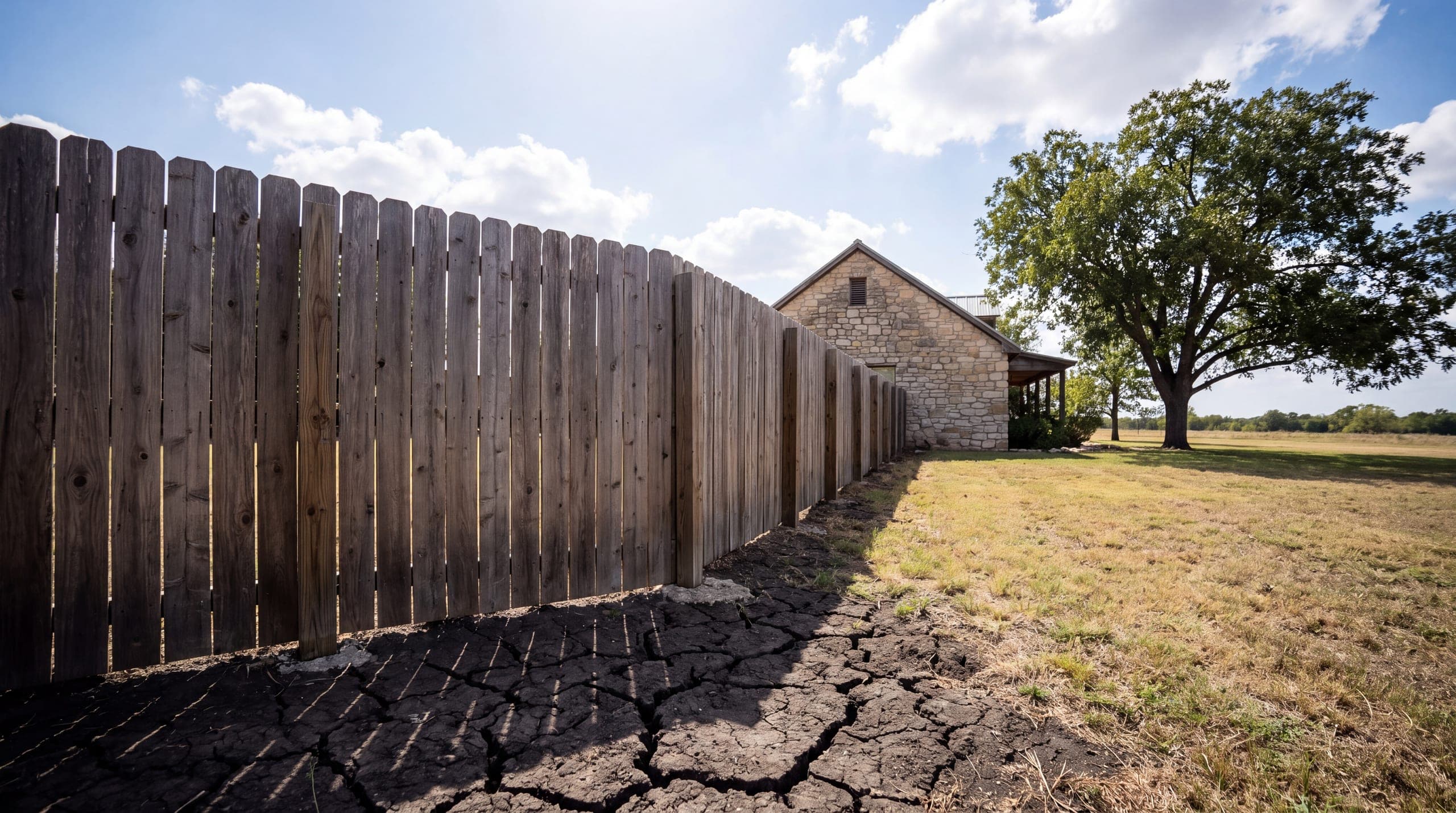
Trees move where posts go, and that decision is made standing in the yard. Austin sits at 55.2 on the decay hazard index, inside the moderate band, well above Dallas at 44.3 (Carll, USDA Forest Products Laboratory, 2009). Shade and leaf litter hold moisture against the ground line, so the shaded run of a fence usually fails years before the sunny run does.
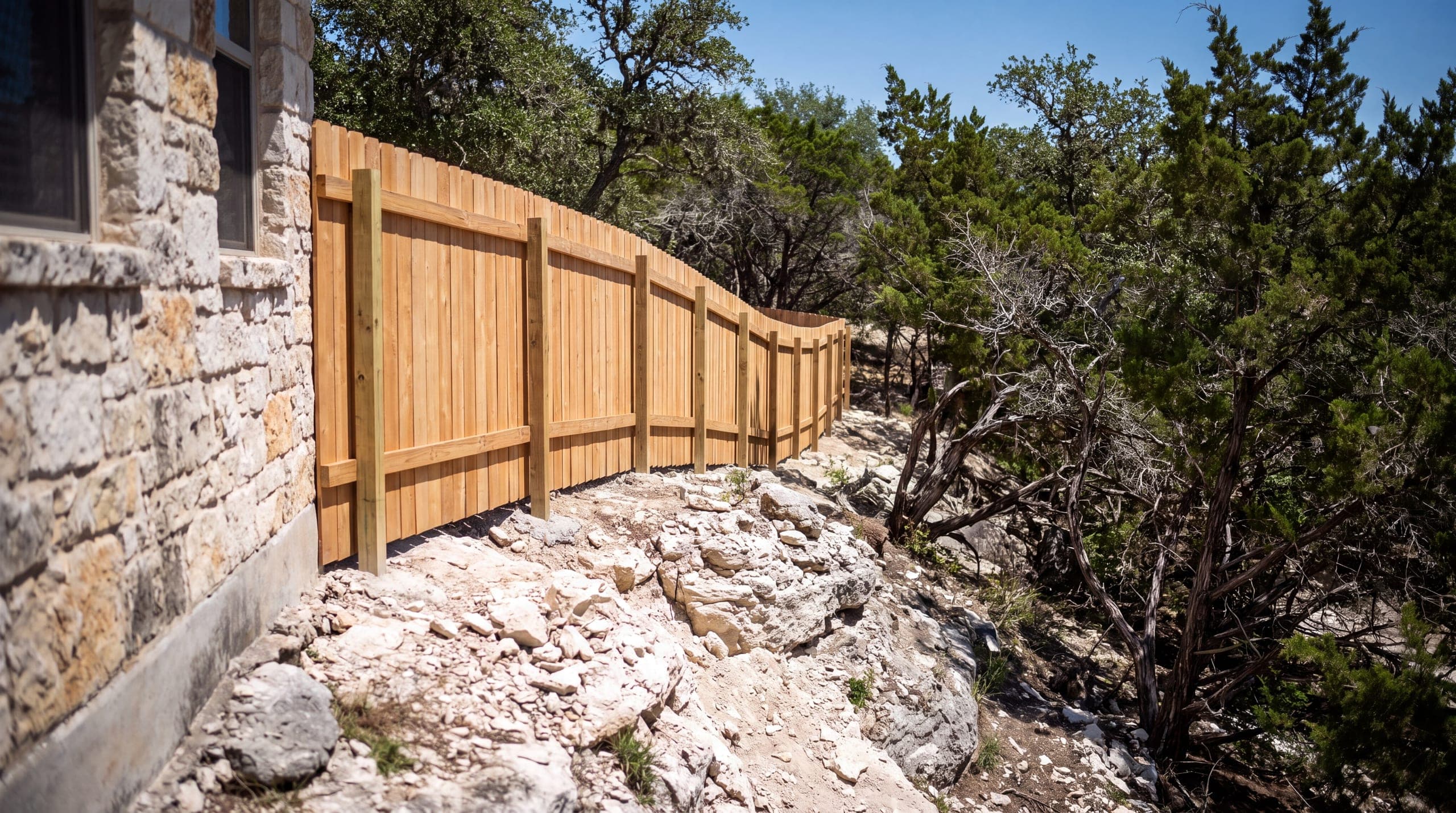
Where the line meets a trunk, there are only a few honest answers. Box the fence around the root zone. Shift the line a foot or two. Run a longer span between posts with the rail sized for it. Never bolt a fence to a living trunk, because the tree grows into the hardware and the fence rides the movement. Ask what happens to that live oak on the north line, and listen for a specific layout instead of a reassurance.
Some Blocks Have a Review Board and Some Have None
Austin exempts a fence up to 7 feet from a building permit, and requires one above 6 feet along a public right of way or inside a flood hazard area at any height (City of Austin, 2025). That covers most replacements in these neighbourhoods. It does not cover what your own deed restrictions say.
Older central Austin blocks vary house to house. Some have no association at all. Others run architectural review with real teeth on material and style. Texas narrowed what a review board can do: since September 1, 2025, an association may not prohibit an owner from installing a perimeter fence, keeping limited authority over type and material and over fencing forward of the front building line (Texas Property Code, 2025). Ask the bidder whether they handle association submittals and permit filing, or whether that paperwork lands on you.
Ask These Six Questions and Listen for a Specific Answer
Texas has no statewide fence contractor licence, so the state has not screened anyone bidding your job (Texas Department of Licensing and Regulation, 2026). The screening is yours to do, and these six questions do most of it.
The answer names your side yard or your street.
- Which picket grade is this price written against? Cedar and pine come in grades, and #1 through #3 are different boards at different prices.
- How deep are the posts and how far apart? A real answer gives inches and feet.
- What happens where the line meets the tree? Box, shift, or span. Pick one.
- Who contacts my neighbours, and how many days before? Somebody has to, and it should not be a surprise on install morning.
- Does the warranty cover workmanship, material, or both? Most cover one. Get which one in writing.
If two bidders are close on price, these answers separate them faster than anything else on the page.