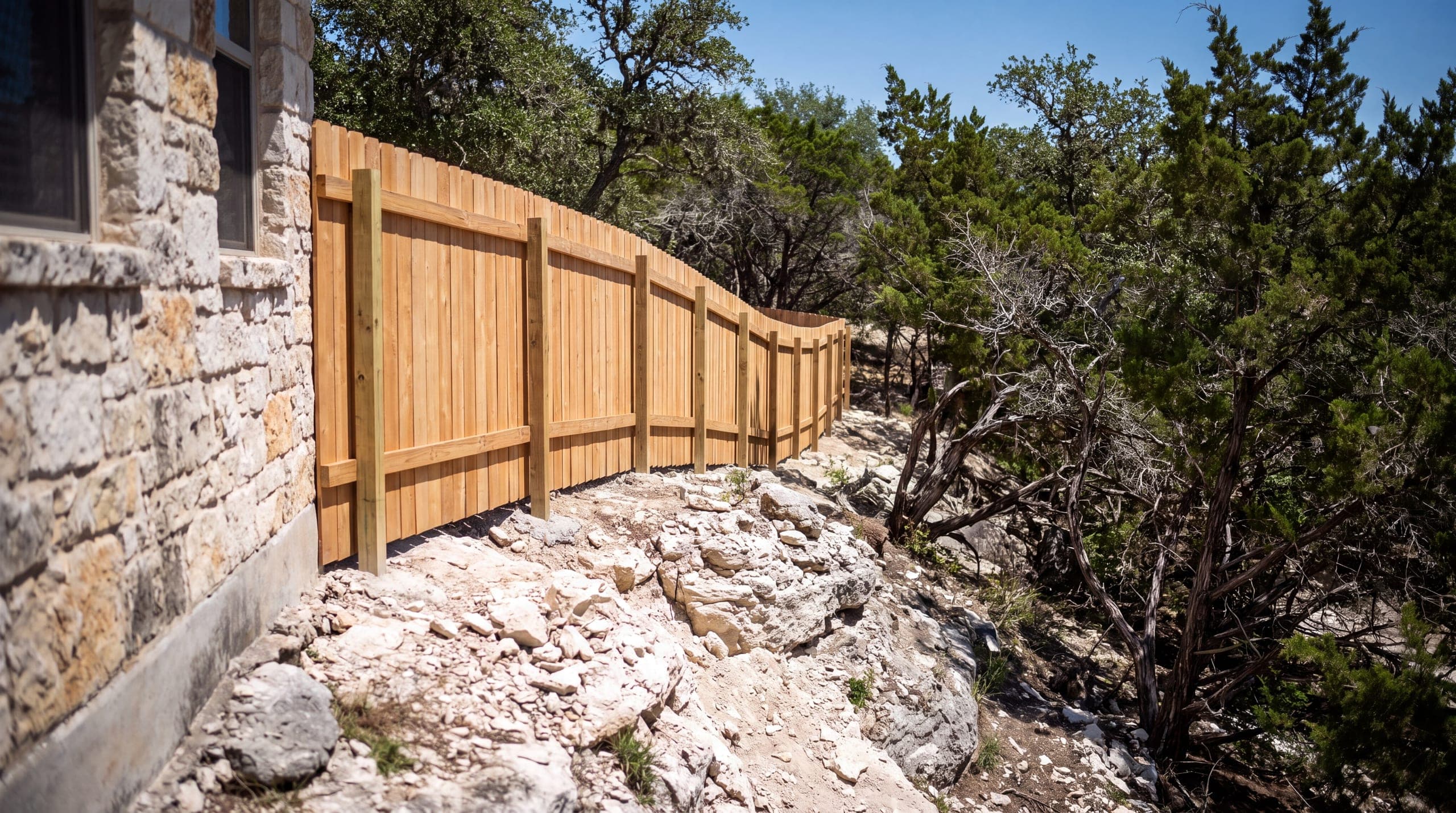
Lakeway is two fence markets sitting on the same map. In the older phases of Lakeway and The Hills of Lakeway, fences from the 1980s and 1990s buildout are past the age where wood holds up. Out on the newer lakefront lots in Rough Hollow, the fence was never in the base price at all.
Most people start by collecting three numbers and taking the lowest one. That comparison tells you the least here, because two bids for the same fence line can be priced against completely different ground.
Lakeway Is Two Fence Markets on the Same Map
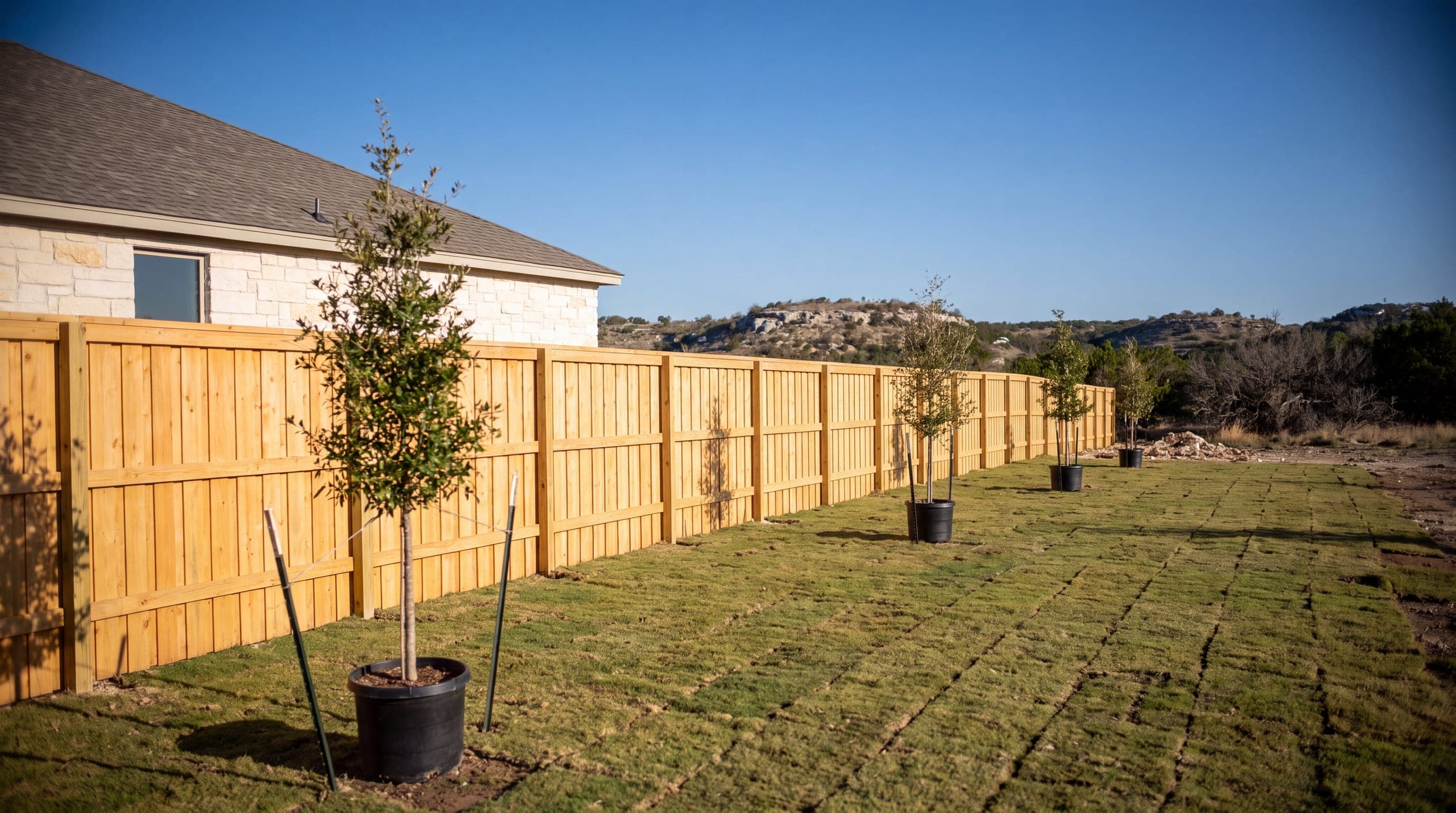
The age of your street decides which job you are actually buying. InterNACHI, the home inspectors’ association, rates a wood fence at about 20 years of service, which puts fences from Lakeway’s 1980s and 1990s phases well past their expected life. Newer lakefront sections have the opposite situation. Fencing is frequently left out of the base build in this corridor, so the first fence is a homeowner purchase after closing.
Those two jobs cost different money for reasons that have nothing to do with the pickets. A replacement on an established lot means tearing out an old line, working around mature live oaks, avoiding irrigation lines already in the ground, and hauling everything away. A first fence on a newer lot skips all of that, and then hits grade changes and rock instead.
Before you compare any two numbers, know which of the two jobs the bidder thought they were pricing.
Know These Five Terms Before You Read a Hill Country Bid
Five words carry almost all the money in a fence quote, and most bids use them without explaining them. Learn them once and you can read any bid in the area in about five minutes.
| Term | What it means | Why it matters in Lakeway |
|---|---|---|
| Linear foot | The measured length of fence, priced per foot | Two bids differ if one measured and one guessed |
| Embedment | How deep the post sits in the ground | Wind and soil set this number, not habit |
| Picket grade | Board quality, sorted from #1 down to #3 | “Cedar” alone names no grade and no price |
| Heartwood | The dense inner wood of a cedar log | Cedar sapwood decays far sooner than heartwood |
| Core drilling | Boring a post hole through solid rock | Limestone lots need it, and it costs real money |
Limestone Decides How Deep the Posts Actually Go
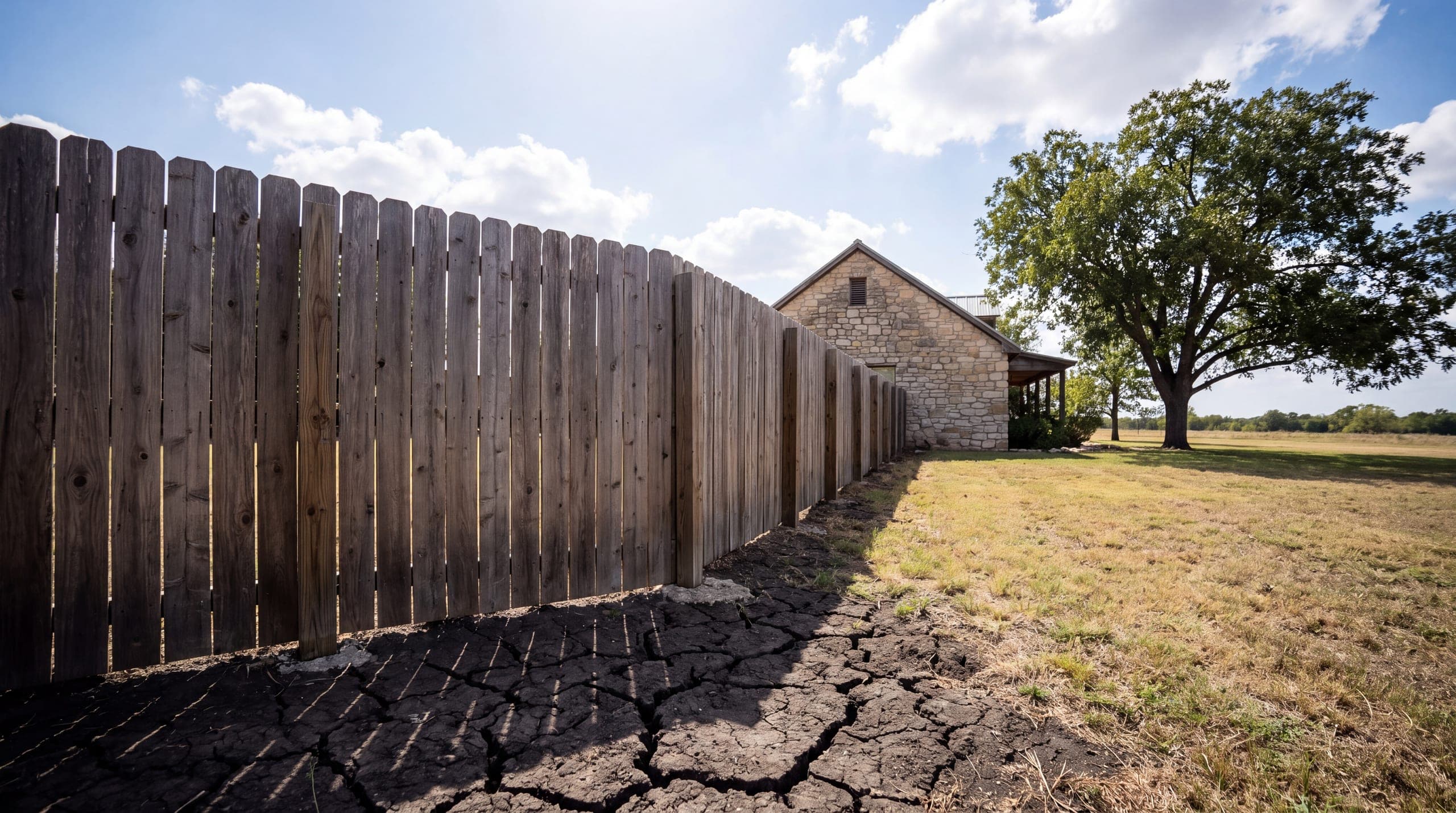
Rock is the single biggest surprise on a Hill Country fence line, and it does not sit at one depth. In the Lacoste soil series, the hard caliche layer sits 10 to 20 inches down, and the USDA soil survey notes that whole range can show up within 25 horizontal feet (USDA NRCS, Official Series Description). One post hole digs like dirt. The next one, 25 feet along the same line, hits rock.
That is why a per-foot price alone cannot be compared between two Lakeway bids. One crew has priced hand digging and will treat rock as a change order on install day. The other has priced core drilling into the number you are reading.
Ask every bidder the same two questions. What happens when you hit rock on my line, and is that cost in this number or added later? A bidder who has worked this ground answers immediately and puts the answer in writing.
Ridge Lots Take Wind That Flat Lots Never See
A solid privacy fence catches wind the way a wall does, and the engineering standard treats it as exactly that. ASCE 7-22 designs a solid freestanding wall against the full solid area of its face, and it counts a fence as solid once its openings drop below 30% of the face (ASCE/SEI 7-22, 2022). Nothing about that load gets easier on an exposed ridge lot above Lake Travis.
The load lands on the posts, and the posts are held by the ground. The building code sizes an embedded post as a cantilever, so required depth grows with the wind force and shrinks only with stronger soil (2021 International Building Code, Section 1807.3.2.1). A shallow post in a thin layer of soil over rock is the failure waiting to happen, and it shows up first at corners and at gate posts.
So the bid should name post size, post spacing, and embedment depth as numbers. A bidder who will not put those in writing is asking you to trust habit.
View Rules Can Rule Out a Solid Privacy Panel
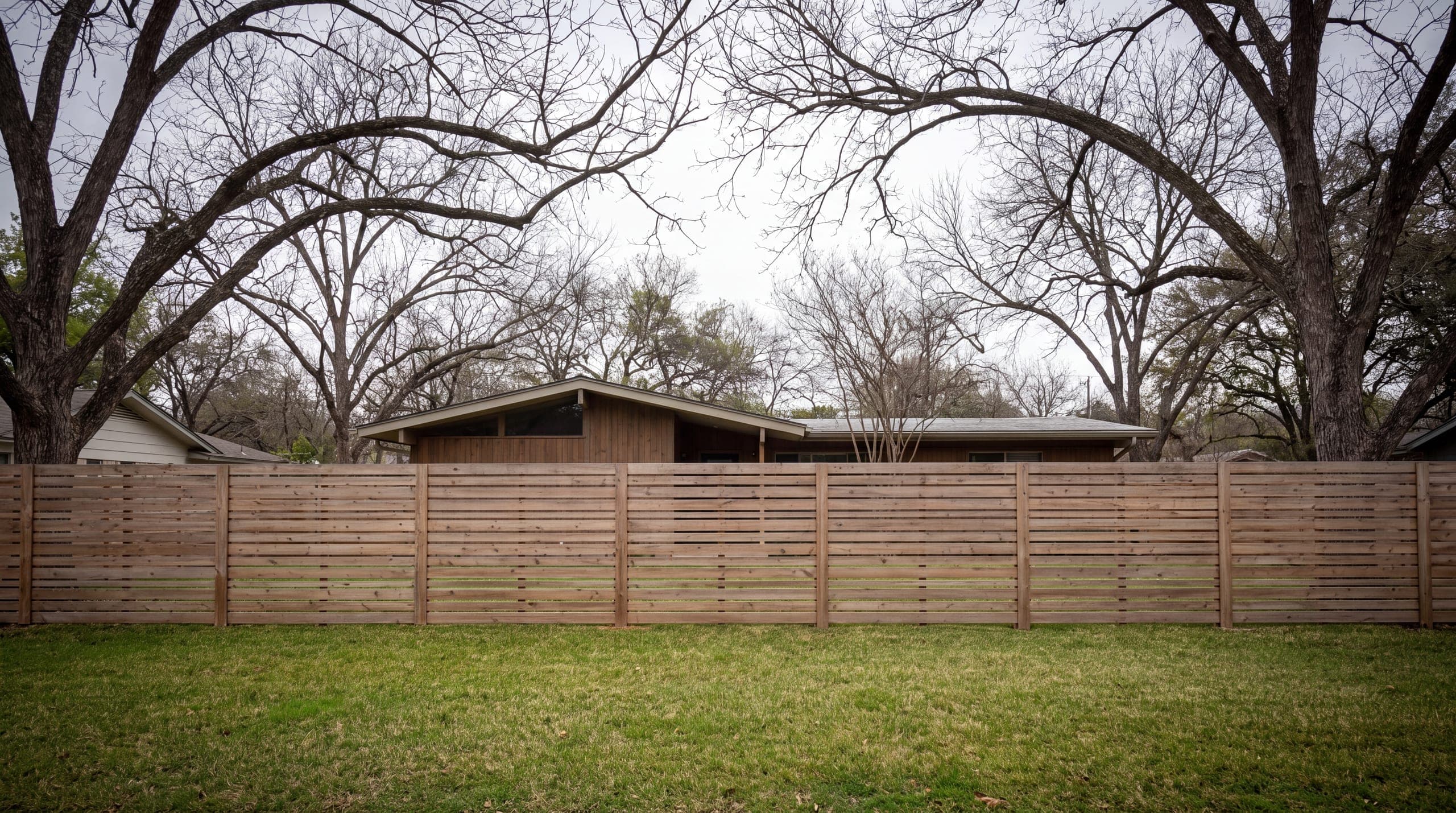
On some Lakeway and Hills of Lakeway lots, the covenants favor open ornamental metal over solid wood panels, to protect sightlines to the lake and the hills. That is a design decision made before you ever pick a material, and it changes the wind math in your favor, because an open picket line sheds air that a solid panel catches.
Texas law narrowed what an association can refuse. Since September 1, 2025, a property owners’ association may not stop an owner from installing a perimeter fence, though it keeps limited authority over fence type and material, may require a driveway gate to sit at least 10 feet back from a laned right of way, and may bar fencing forward of the front building line (Texas Property Code, Section 202.023, as amended by SB 711, 2025).
Read that as good news with a condition attached. Your right to a fence is protected. The look of it is still the association’s call, so get the written architectural rules for your section before you take a bid, and ask each bidder whether they have built to those rules here.
On an Established Lot, Removal Is Part of the Price
Published cost ranges price a new fence on flat, clear ground, which is the one thing an older Lakeway lot never is. The bands below are a modeled planning estimate for Texas, triangulated from the published survey ranges of HomeGuide, Angi, HomeAdvisor, and Ergeon. They exclude old-fence removal and haul-off, gates and automation, permits, and rocky or difficult terrain.
| Fence type, 6 ft residential | Modeled Texas cost per linear foot | What the band leaves out |
|---|---|---|
| Pressure-treated pine privacy | $18 to $30 | Removal, haul-off, gates, rock drilling |
| Cedar privacy | $25 to $45 | Higher grades and clear boards run above the band |
| Ornamental steel or iron | $45 to $90 | Custom welded designs run above the band |
| Composite | $30 to $55 | Removal, gates, and difficult access |
Every one of those exclusions applies to an older Lakeway lot. Tear-out of an old line with concrete footings in rock takes real hours, and the debris has to leave. When one bid sits far under another, removal is the first place to look for the difference.
Ask Which Picket Grade the Number Was Written Against
Cedar is a species, and a species is not a spec. Cedar and redwood rate as resistant to decay, class 2 of 4, while southern pine rates only moderately resistant to perishable (Scheffer and Morrell, 1998). That rating describes heartwood. The pale sapwood on the same board carries none of it.
Grade works the same way. Boards sort from #1 down to #3, and the gap between them is knots, splits, and wane you will be looking at for the next 15 years. A quote that says “cedar pickets” and stops has left itself room to deliver the cheapest board in the yard.
Ask which grade the price was written against, then ask what a grade up would add. A bidder who names the grade without hesitating is the one who priced real material.