Texas and Local

Commercial Fencing Security Codes in San Antonio Explained

What San Antonio’s codes require of a commercial fence, from height and permits to UL 325 gate operators, and what a compliant bid names.

August 22, 2026

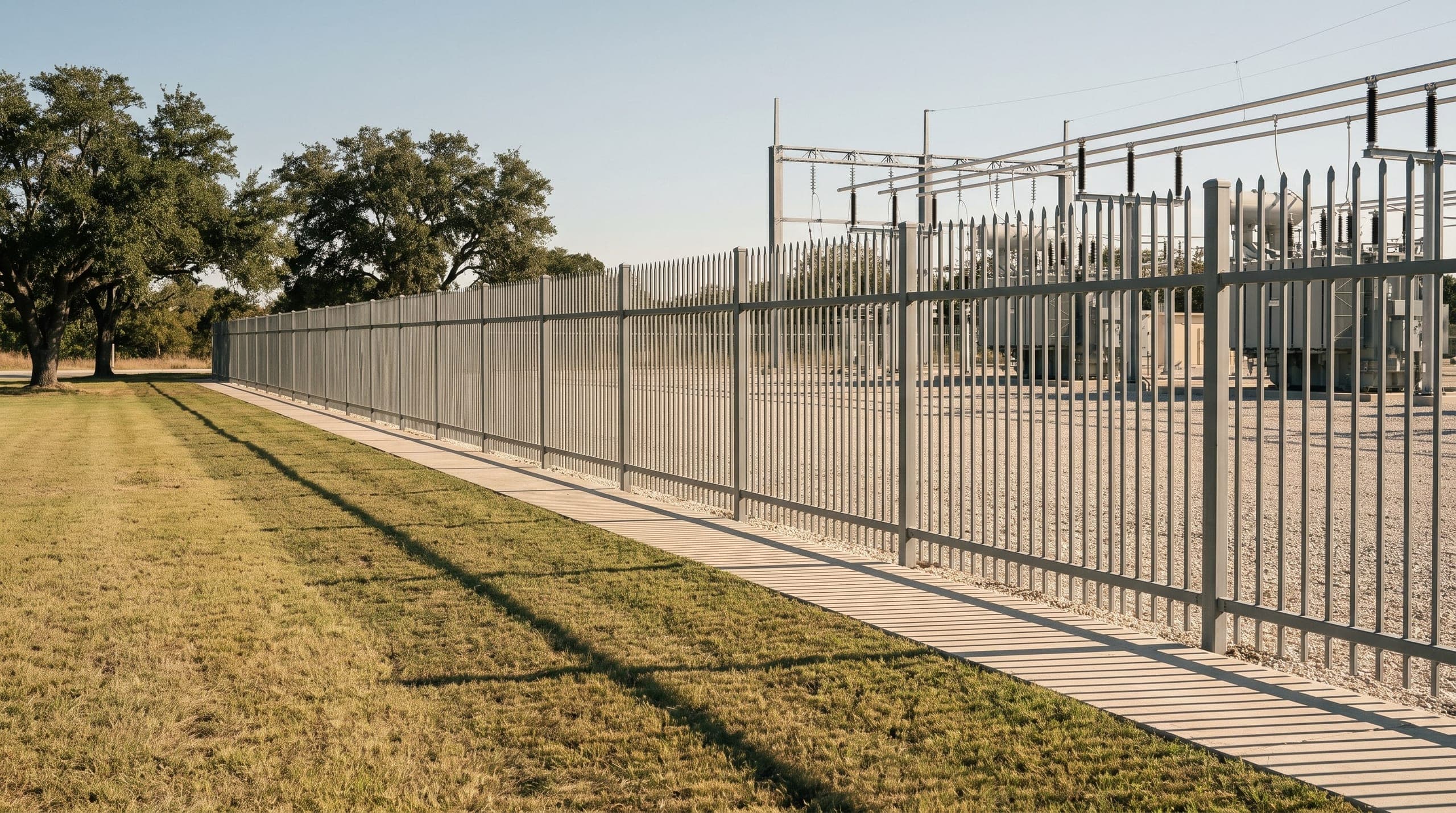
A steel perimeter securing substation plant outside San Antonio

Most commercial fence conversations in San Antonio start with a number. How tall can we go, and does it need a permit. That number is real, and it is the cheapest part of the spec to get right.

The expensive part is everything a height limit never tests. A fence can clear Section 35-514, pass inspection, and still come down in a windstorm or leave you holding a gate entrapment claim.

San Antonio Permits a Commercial Fence on Height Alone

San Antonio requires a building permit for any new fence inside city limits, with limited exemptions, and sets height by use and yard (San Antonio Unified Development Code, Section 35-514, 2025). That is what plan review checks. It confirms where the fence sits and how tall it is.

It does not confirm that your posts are sized for the wind that will hit them. It does not confirm that the gate at the front entrance has the protection the national standards require. Those are separate tests, run by different documents, and no inspector’s approval on the height line covers either one.

So get your district’s number from Development Services early, then stop treating it as the spec. It is one line in a stack you still have to clear.

Learn These Five Terms Before You Read a Commercial Fence Spec

The vocabulary changes depending on which document you are reading, and the same fence can be described three ways in one submittal package. Here is the short list a general contractor or property manager needs to follow a bid.

Term What it means on your job Where it comes from
Solid screen fence A fence face that is mostly closed, with openings under 30% of the area ASCE 7-22 wind provisions
Predominantly open fence A fence you can largely see through, such as chain link or pickets San Antonio UDC 35-514
Engineer certification A licensed engineer’s signed wind-load design for the fence San Antonio UDC 35-514
Embedment How deep the post sits below grade, sized as a cantilever in soil International Building Code
Entrapment zone Any place a moving gate can trap a person or a limb ANSI/UL 325
Usage class The four classes that sort an automated gate by site type ASTM F2200

Read a bid with these in hand and the gaps show up fast. A quote that names a height and a material, and none of the six, is a price for boards and labor.

Over 8 Feet, the Code Wants an Engineer to Sign the Wind Design

San Antonio requires engineer certification of the wind-load design for a solid screen fence over 8 feet (San Antonio Unified Development Code, Section 35-514, 2025). Read that requirement closely, because the city is telling you something about the other side of the height limit. Above a certain face area, the city will not accept height compliance as proof the fence stands up.

A certified design is not a formality, and it produces numbers your crew builds to:

  • The design wind speed and exposure category for that specific address, which drives every other figure on the sheet.
  • Panel and post sizes with a spacing, because a longer span between posts loads each post harder.
  • Footing size and reinforcement, which is where most of the resistance actually comes from.

The masonry industry’s prescriptive standard shows what that output looks like. It sizes cantilevered fence walls against lateral-load tiers of 15, 20, and 25 psf, and an 8-foot fence in the 20 psf tier needs No. 4 vertical bars at 16 to 24 inches on center over a 12-by-42-inch footing (NCMA/CMHA TEK 14-16B, 2007). Nothing about that spec is visible from the height number.

San Antonio Has Reviewed Plans Against the 2024 Codes Since May 2025

City Council adopted the 2024 editions of the International Building Code and the other ICC codes on January 30, 2025, effective May 1, 2025, superseding the 2021 edition that had governed since February 2023 (City of San Antonio, Ordinance No. 2025-01-30-0075, 2025). A drawing set built on the older references gets corrected in review, and corrections cost you calendar days you already budgeted for install.

For a fence and gate package, the edition matters in one specific place. The building code is what points your design at the wind provisions, and the wind provisions are what decide post size and footing depth. Confirm the edition your engineer worked from before the package goes in.

A Solid Screen Fence Loads Like a Wall in Texas Wind

Wind engineers do not treat a solid privacy fence as a fence. They treat it as a solid freestanding wall, with the design force applied across the full solid face and a net force coefficient that climbs as the wall grows longer relative to its height, checked under several cases including an eccentric end-zone case (ASCE/SEI 7-22, 2022). Your 8-foot screen is a sail bolted to the ground.

That is why the corners, the end panels, and the tall posts flanking a gate opening are the parts that go down first. It is also why the choice of face matters more than the choice of wood species on a windy site.

Fence type How it takes wind Security role on a commercial site What the spec has to name
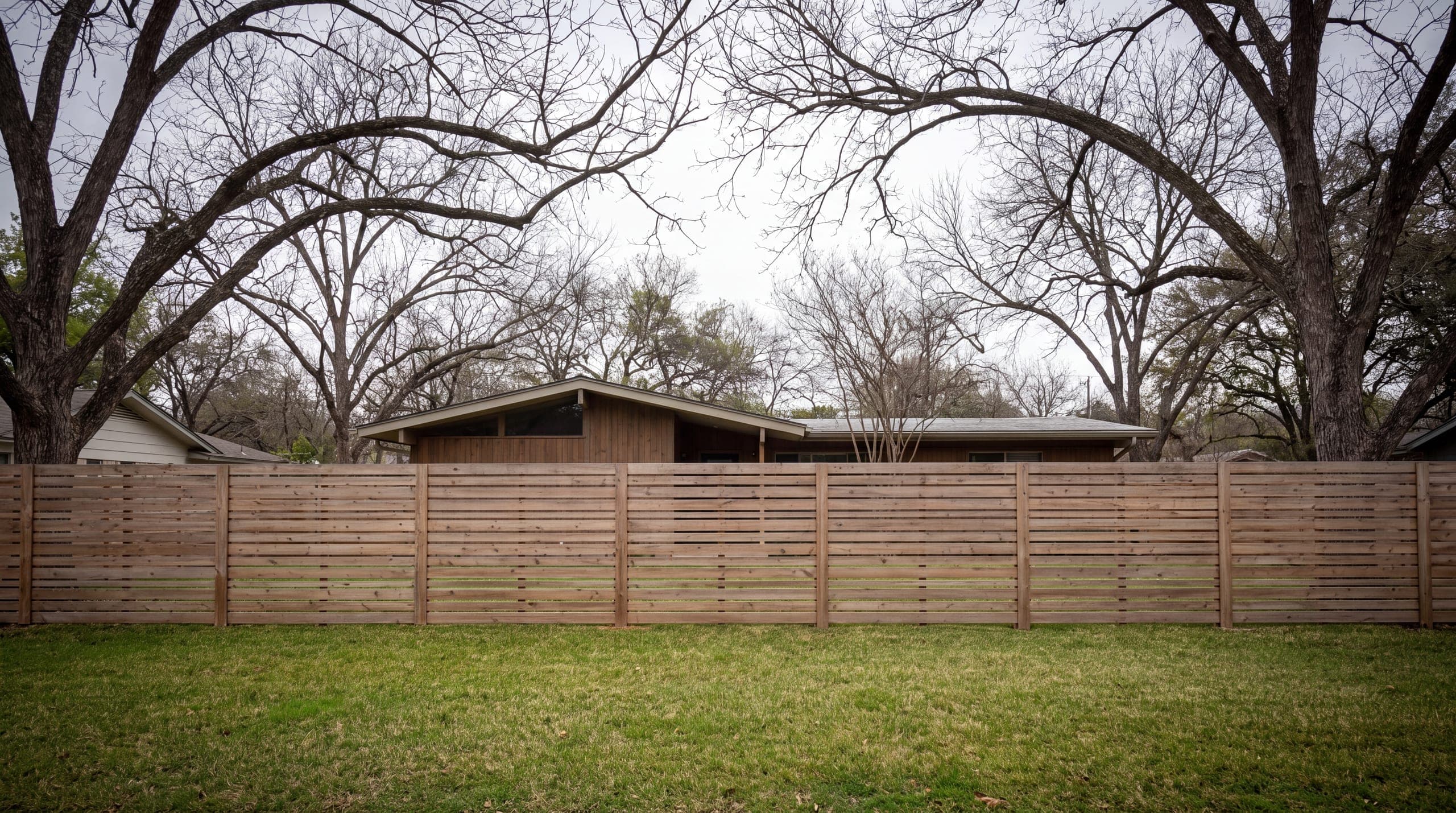
Solid wood or composite screen The full face loads like a wall Blocks sight lines into the yard An engineer’s certification above 8 feet
Chain link The open weave passes most of the wind through Defines the line and delays entry The zinc coating class of the fabric
Ornamental steel Pickets let air through the face Hard to climb, easy to observe through Post size and embedment for the wind load
Masonry or concrete Engineered as a freestanding wall Highest mass and highest deterrence Vertical reinforcement and footing size

Caliche and Clay Decide How Deep a San Antonio Post Goes

The building code sizes a fence post as a cantilevered pole in soil, and the required embedment grows with the wind force and its lever arm while shrinking as the soil gets stronger (International Building Code, 2021). Soft ground and a tall solid face together drive a deep, wide concrete footing. That is arithmetic, and it does not care what the fence permit says.

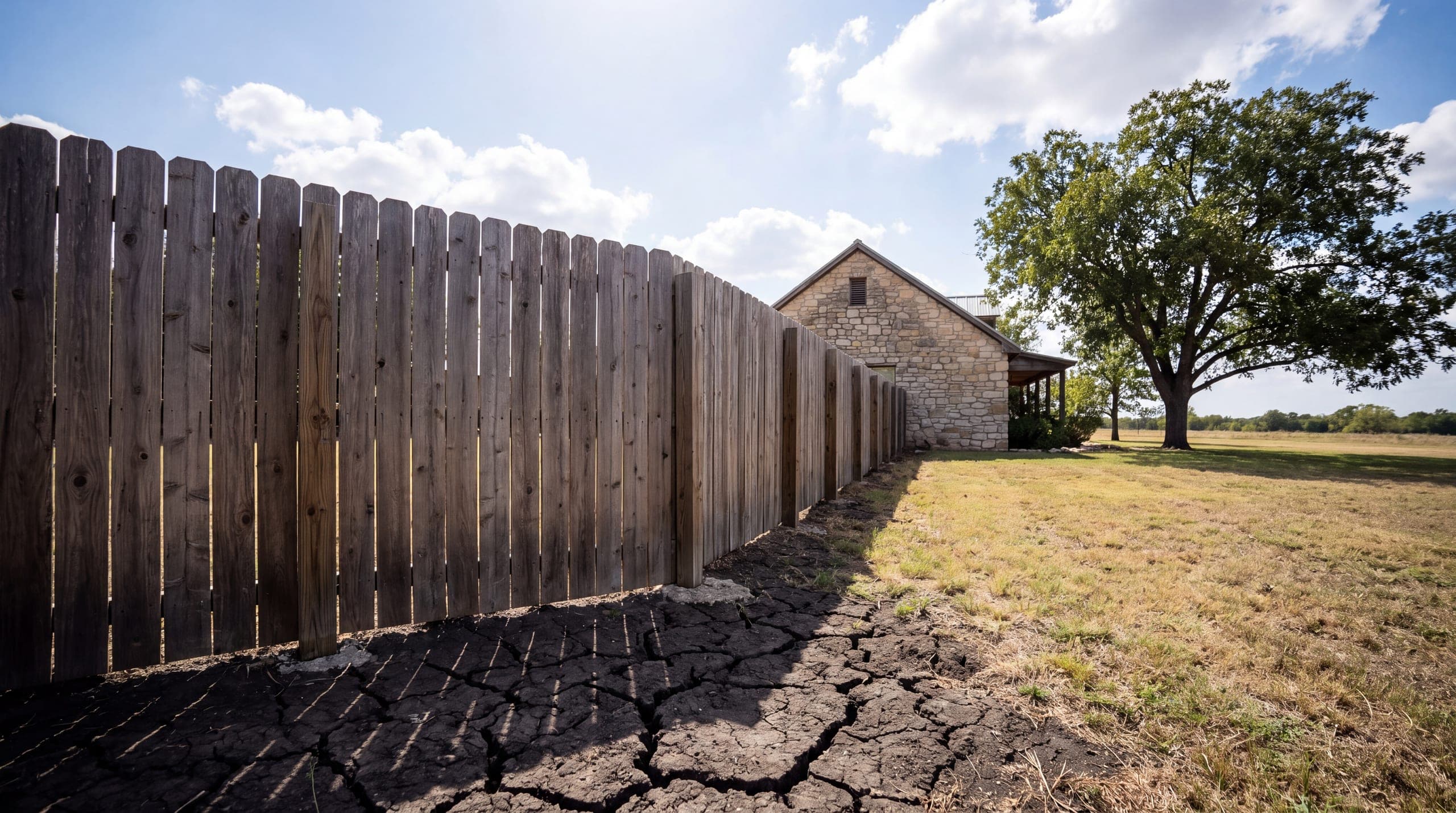
San Antonio soil makes this local. In one Texas soil series, the depth to the cemented caliche horizon runs 10 to 20 inches, and that whole range can show up within 25 horizontal feet (USDA NRCS National Cooperative Soil Survey). One hole hits rock at a foot. The next one digs soft for four feet.

A crew running a fixed depth down the whole line will be too shallow somewhere. Ask any bidder how they handle the holes that do not match the others, and whether their price changes when the auger stops early.

But an Automated Gate Needs Two Different Entrapment Protections

Every entrapment zone on an automated gate has to be protected by at least two independent, different-type means in each direction of travel, an inherent reversing system plus an external non-contact photo eye or a contact edge, and since August 1, 2018 those external sensors must be monitored so the operator drops to constant-pressure or manual operation on any fault, wiring break, or lost signal (DASMA Technical Data Sheet #353, 2018). Monitored is the word that catches people out.

A sensor that quietly stops reporting is a compliance failure the day it stops, and nobody sees it until someone gets hurt. This is where the security spec and the liability spec are the same document. It is also where a consumer-grade operator bolted onto a commercial entrance becomes the most expensive line item on the property.
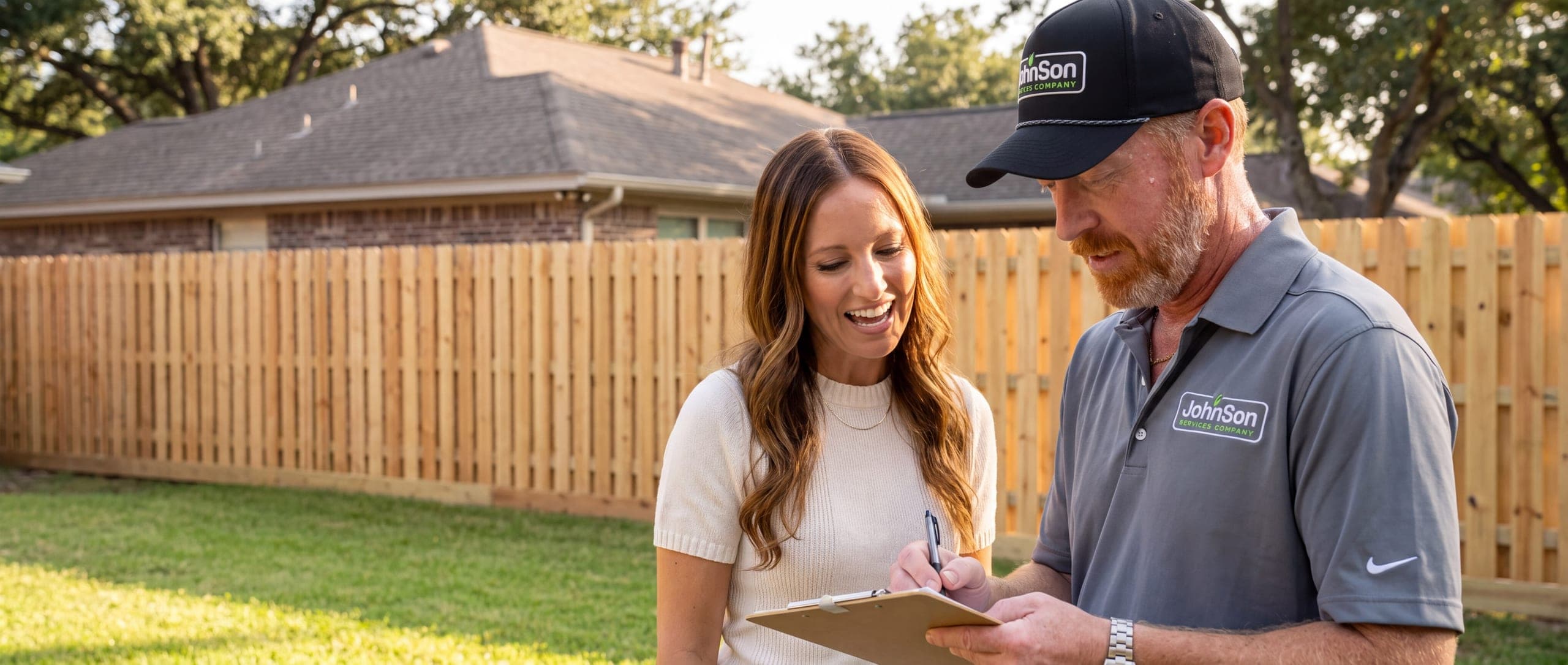
A Johnson estimator writing a fence quote on a clipboard beside a homeowner.

Price a fence before you call

See what a fence costs before anyone quotes you.

Pick the material, the height and how many feet of fence, and the calculator shows the market range for a fence like yours in Texas. Then a salesperson measures the real one in your yard and the number comes back the same day.

The estimate is free and there is nothing to sign.

ASTM F2200 Sorts Your Gate Into a Class Before You Pick an Operator

ASTM F2200 defines four usage classes matching UL 325, Class I residential through Class IV guarded or restricted access, and requires the gate system to comply with both standards so pinch points and entrapment zones are eliminated or guarded (ASTM F2200-24, 2024). The class comes first. The gate construction and the operator selection follow from it.

Here is the order a general contractor actually clears on a San Antonio commercial job, and what sends each step back.

Step in the sequence It clears when It comes back when
Height and yard The limit for that district and use is confirmed with Development Services The number was carried over from another site or another city
Permit The fence permit is filed and issued before crews mobilize Work starts on an assumption that the fence is exempt
Engineer certification A licensed engineer seals the wind design for a solid screen over 8 feet The drawing shows 9 feet with no seal on the sheet
Wind and embedment Post size and depth are calculated for the design wind and the soil on site Every post on the run gets the same depth
Gate class and operator The gate is classified and the operator matched to that class A residential operator is fitted to a commercial entrance
Entrapment protection Two different monitored means cover each direction of travel One photo eye is treated as the whole solution

Where Johnson Services Company Sits Among San Antonio Fence Contractors

A commercial buyer here is solving for one thing, which is a fence and gate package that clears the city, the wind design, and the gate standards without three separate vendors pointing at each other. Here is how the San Antonio contractors quoting commercial work compare on reach, on what they can build across a whole property, and on automated gate compliance.

Company Texas metros served Commercial scope on the property Automated gate compliance
Johnson Services Company Houston, Dallas-Fort Worth, Austin, San Antonio, 42 cities statewide Fencing, entrance gates and operators, concrete fences, custom stone columns, masonry, landscaping Gate operators installed to UL325 standards
Quality Fence & Welding San Antonio and South Texas Iron, aluminum, chain link and wood fencing, custom steel fabrication, masonry, decks Gates and access control offered; no UL325 statement published
Fence Pros of Texas San Antonio metro Wood, iron, vinyl, chain link and aluminum fencing, gates, railings, commercial and ranch work Gates offered, including community gate installation
Alamo Fence Company of San Antonio San Antonio metro Chain link, iron, wood and ranch fencing, masonry, temporary and rental fence, supply store Gates and access control offered

Frequently Asked Questions

Who pulls the fence permit on a commercial job in San Antonio?

The permit is the general contractor’s responsibility unless the fence contract assigns it, so put it in writing before anyone mobilizes. We determine whether a commercial project needs a permit and file it, which keeps the question off your desk.

How tall can a commercial fence be in San Antonio?

Height is set by use and yard in UDC Section 35-514, so the number depends on your zoning district and which yard the fence runs through. Get the figure for your specific address from Development Services, and plan for engineer certification if a solid screen goes above 8 feet.

What wind speed should a San Antonio commercial fence be designed for?

The design wind speed comes from the ASCE 7 map for your site address and its exposure category, and your engineer pulls both. Ask for the speed and exposure to appear on the sealed drawing, because those two values drive the post size and footing depth.

Does a photo eye by itself satisfy UL 325 on an automatic gate?

No. A non-contact photo eye is one means of entrapment protection, and the standard requires two independent means of different types in each direction of travel, with external sensors monitored for faults.

Does a permit-exempt fence still have to be designed for wind?

Yes. A permit exemption is an exemption from plan review, and the building code still requires wind loads to be determined for the structure. An unreviewed fence that blows over is still your rebuild.

Do I need a licensed fence contractor for commercial work in Texas?

Texas issues no statewide fence contractor license, so the license question tells you very little. Ask instead for proof of insurance, bonding, and a list of commercial jobs in the metro you can call.

How fast can a commercial fence project start in San Antonio?

We call back the same day on a logged lead and get a quote out the same day on 95% of real leads, with work starting within about 4 days of acceptance. Larger commercial packages with engineering and permitting run longer, and we will tell you the real date before you sign.

The Height Number Is the Cheapest Line in Your Spec

Ask the height question first, because you have to. Then ask the four that decide whether the fence is still standing in year five and whether the gate is still safe in year one. What wind speed was it designed for. How deep do the posts go in your soil. Which usage class does the gate fall under. Are the entrapment sensors monitored.

Code compliance and security performance are two different tests, and passing the first one has never predicted the second. A fence that clears the height limit and fails the wind is a fence you pay for twice. What a commercial buyer actually needs is one contractor accountable for the permit, the sealed design, and the gate hardware together.

How Johnson Services Company Files the Permit and Installs Gate Operators to UL325 Standards

That accountability is the reason we handle permit determination and filing on commercial projects, and install gate operators to UL325 standards rather than leaving access control to a separate trade. Customers rate us 4.9 stars across 60 Google reviews, and 4.9 across 170 reviews on SoTellUs. In an April 2026 SoTellUs review, a customer wrote: “The price was fair, the service was excellent, and everything was left clean once the job was done. Communication was great throughout the process, and they really took the time to go over the design with me before starting the work.” In a June 2026 review on the same platform, another wrote: “The crew at Johnson Services Company provided outstanding service at a very competitive price. They went above and beyond our expectations, and we truly appreciated the extra effort and attention to detail they put into the job.”

We have built fences in Texas since 2002, installed more than 2 million feet of fence across more than 20,000 projects in the last year, and run 5 to 15 crews out of our San Antonio office on Naco Pass, with over 100 statewide. Commercial scope covers wood, iron and aluminum, chain link, concrete fences, custom stone columns, entrance gates and operators, plus masonry and landscaping on the same property.

Price comes from the same scale. Master Halco named us its Largest Volume Customer for the Southwest Region and the World in 2026, which means a wood picket cost smaller contractors do not get, and we pass that through. We also name the picket grade, #1 through #3, on the quote, so you are comparing the same board across bids.


Johnson Services Company is the one accountable partner for a San Antonio commercial fence that has to clear the code and the wind load at the same time. Call (877) 956-4676 or ask for a free on-site estimate, and we will tell you whether your project needs a permit and file it for you.

Get a free on-site commercial fence estimate →

Free estimate

Get your estimate from the largest fence company in Texas

Tell us what you need and where the fence goes, and a salesperson will come out and measure the line before anyone writes a number. You get the picket grade and the total in writing, the visit costs nothing, and there is nothing to sign.

Call (877) 956-4676

Monday to Friday, 7am to 4pm.

What kind of fence?
Which part of Texas?
Roughly how much fence?
How did you hear about us?
  • Free on-site estimate
  • Same-day quote
  • Nothing to sign
  • Work starts in about 4 days