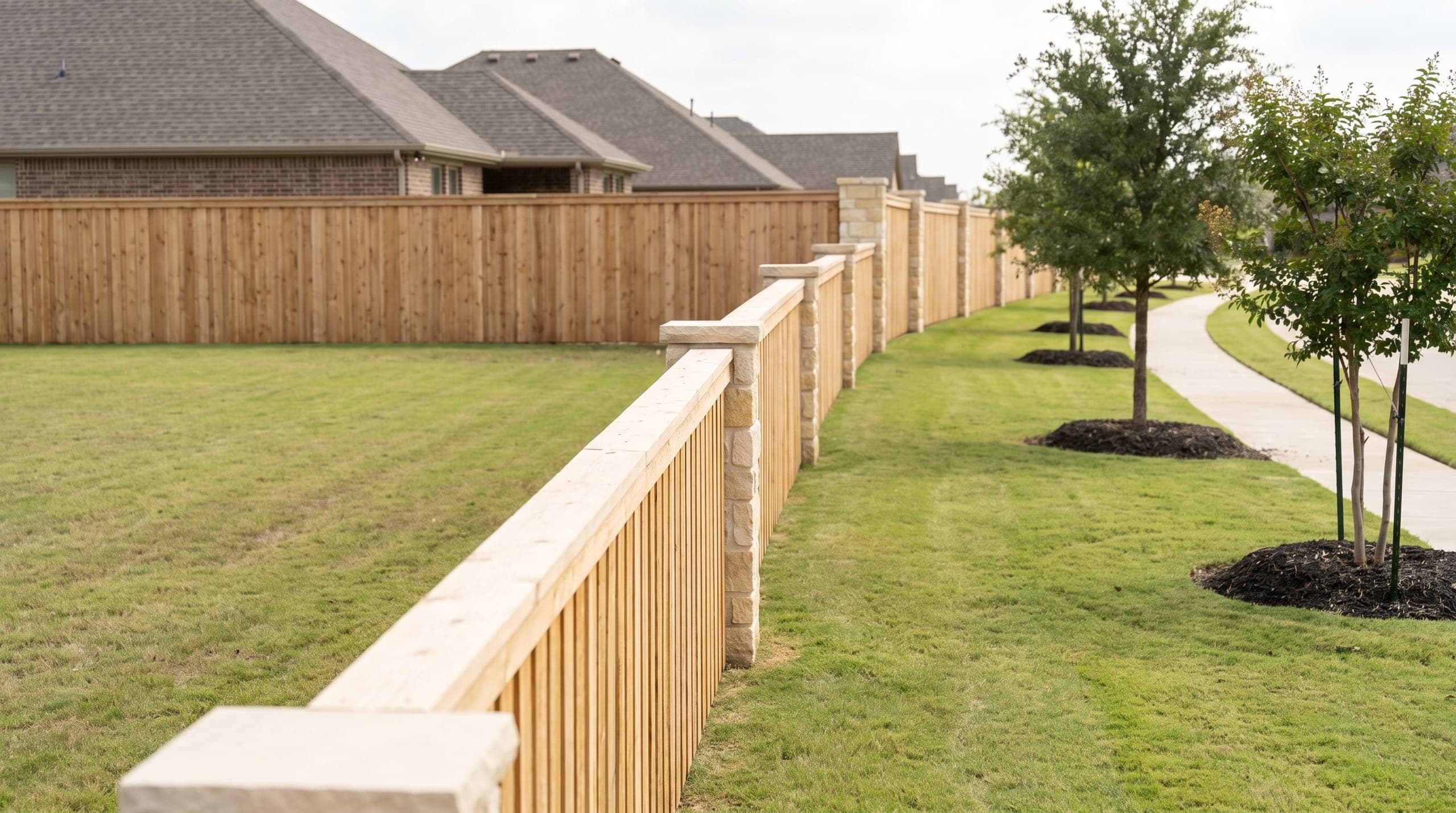
In Cinco Ranch, the fence you are allowed to build is decided before you ever open a catalog. The architectural guidelines set material, height, and style, and since September 2025 Texas law has drawn a line around how far those rules can reach. So the contractor worth hiring here is the one who reads both correctly the first time, because a rejected submission costs you the schedule, and sometimes the fence.
Your HOA Picks the Fence Before You Ever Like One
Material, height, and style are settled by the architectural guidelines long before a homeowner picks a picket. In a master-planned community, the guidelines are the first spec sheet for your fence and your taste is the second. That is why a Cinco Ranch bid is not really a design conversation. It is a compliance conversation with a fence at the end of it.
Here is what community guidelines usually govern in a neighborhood like this one.
- Material. Cedar, treated pine, ornamental iron, or masonry, often with one approved for the perimeter and another for interior lot lines.
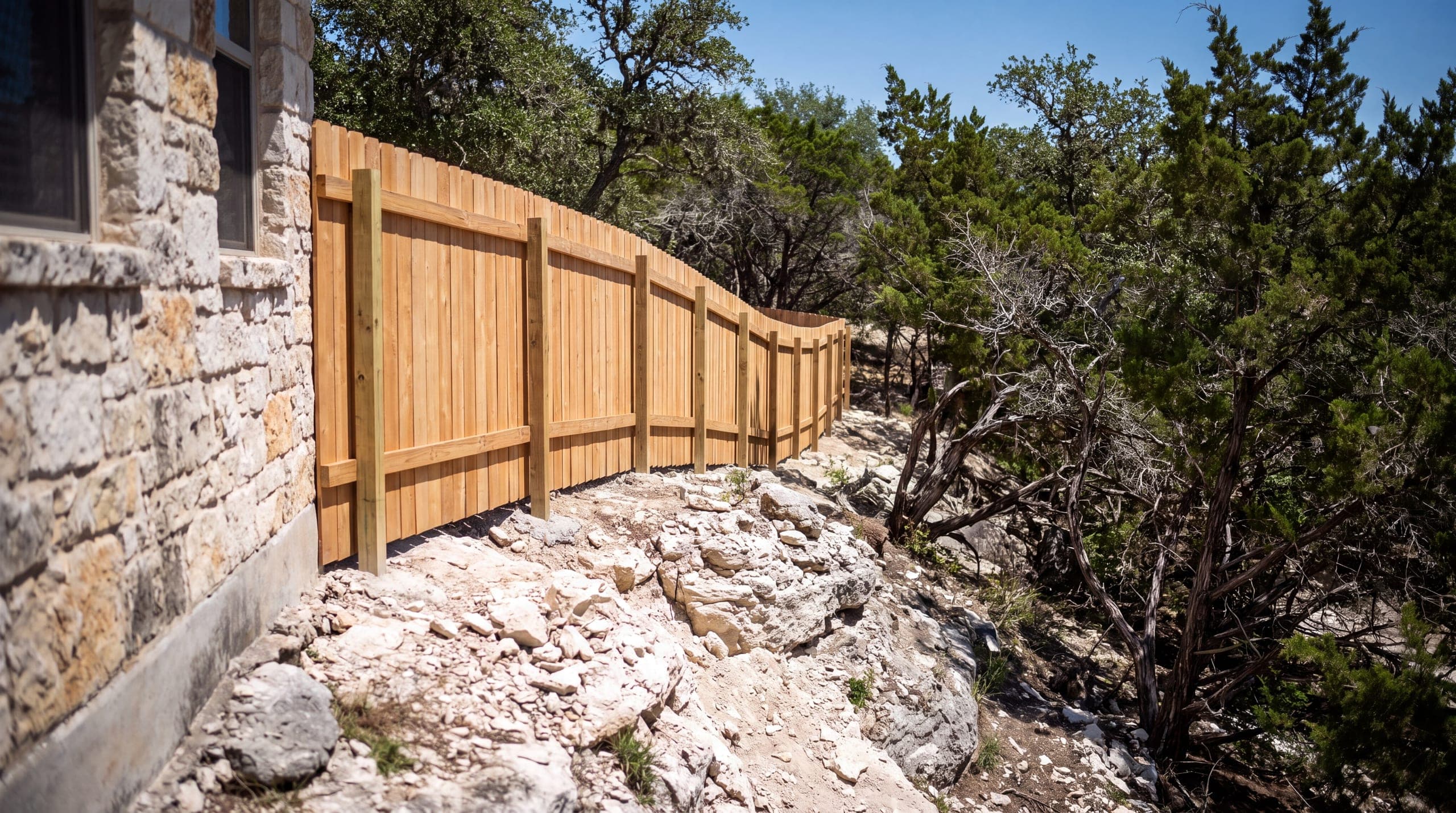
- Height. A single allowed height, measured from grade, which matters on any lot that slopes.
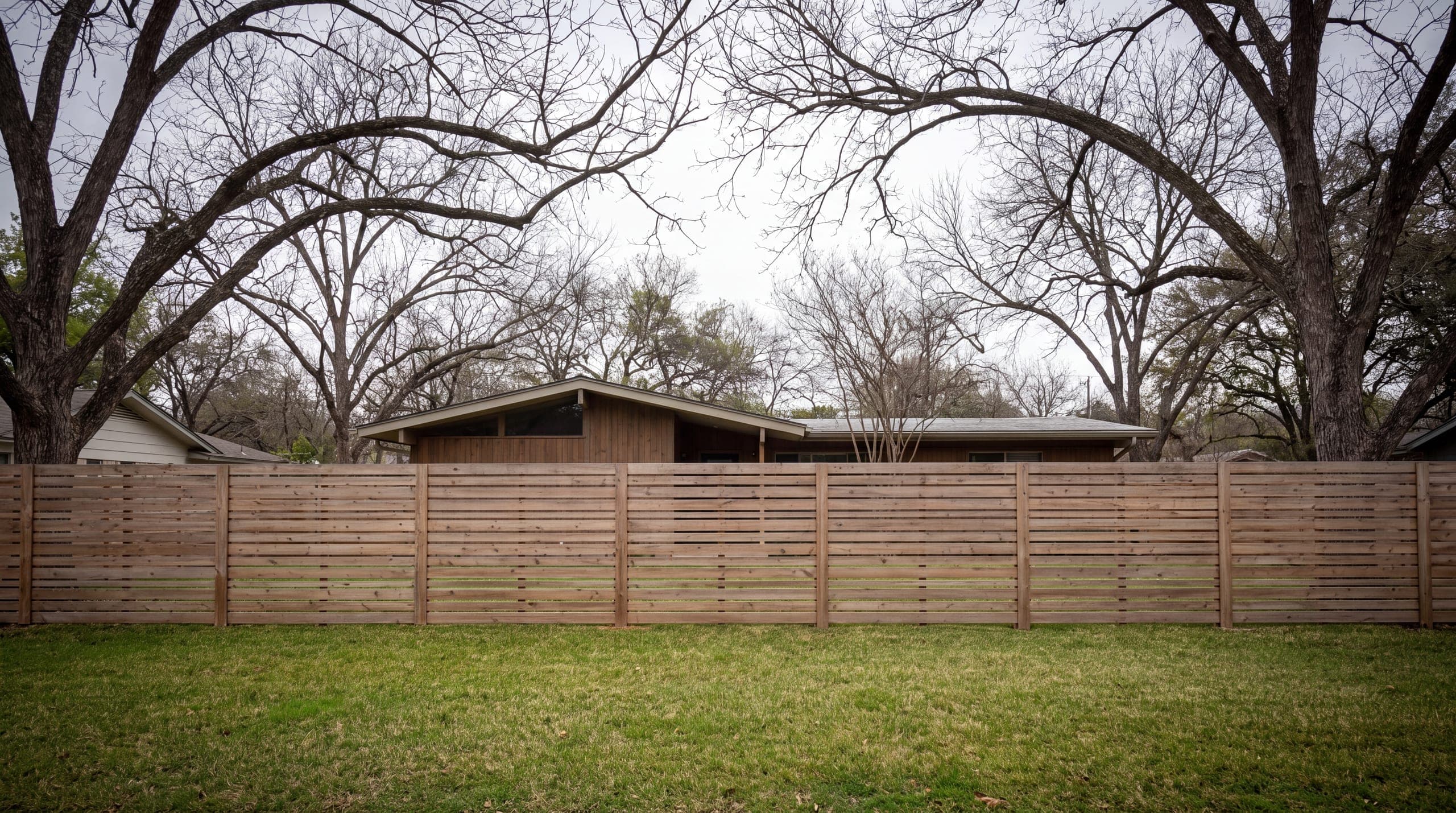
- Style and picket pattern. Board-on-board, shadowbox, or flat picket, with cap and trim details spelled out.
- The finished side. Which face of the fence points toward the street or the greenbelt.
- Stain or paint. Whether the wood is left natural, sealed, or stained to a set color.
- Gates. Width, swing, hardware, and where a driveway gate may sit relative to the street.
Get one of those six wrong and the submission comes back. The fence is fine. The paperwork is not.
But Texas Law Now Limits What Your HOA Can Ban
Since September 1, 2025, a Texas property owners’ association may not prohibit an owner from installing a perimeter fence or other security measure (Texas Property Code, 2025). Senate Bill 711 left associations narrower powers: they can still regulate fence type and material, require a driveway gate to sit at least 10 feet back from a laned right-of-way, and bar fencing forward of the front building line. Fencing installed before that date is grandfathered.
That matters in practice. A homeowner told “the association does not allow that” now has a reason to ask which part of the rule is being applied. A contractor who knows the difference is worth more to you than one who simply nods.
| Term | What it means on your lot |
|---|---|
| Perimeter fence | The fence enclosing your yard, which an association can no longer forbid outright |
| Fence type and material | The part the association still controls, so cedar-versus-iron is genuinely their call |
| Front building line | The line your house fronts on; associations may still bar fencing forward of it |
| Driveway gate setback | An association may require at least 10 feet between the gate and a laned right-of-way |
| Grandfathered fencing | Fencing installed before September 1, 2025, which the new limits leave in place |
Why the Approval Packet Matters More Than the Permit
A wood or metal fence 8 feet or under needs no City of Houston building permit, while masonry or concrete construction requires one at any height (City of Houston, 2026). Fence permitting around this metro is light. Deed restrictions are not.
That gap trips people up because most fence marketing is written for the rest of the country. Fence-company advice pages, including ones from builders that serve this market, tell readers that installing a fence requires a special building permit in most cities and that permit fees generally run $150 to $400. Around Cinco Ranch, a homeowner reading that goes looking at the wrong counter.
The approval that actually gates your install is the architectural one. It is free, it is local, and it has a meeting calendar.
Get the Architectural Review Right the First Time
A submission passes on specifics, and it gets kicked back on vagueness. Committees are reading for the same handful of items every time, and a packet that names each one in writing gives them nothing to guess about. A contractor who has filed dozens of these in the same community already knows which line the committee reads first.
| What the committee reviews | What a clean submission shows | What gets it kicked back |
|---|---|---|
| Site plan | A survey with the fence line drawn and the front building line marked | A hand sketch with no property lines |
| Height | Height measured from grade at each run, including sloped runs | One height stated for a lot that drops several feet |
| Material and grade | Species, grade, post material, and post size named | “Wood fence” with no grade and no post spec |
| Style and finished side | Picket pattern named and the street-facing side identified | Style left to the crew on install day |
| Gates | Gate width, swing direction, and distance from the street | A gate added to the plan after approval |
Then comes the part nobody writes down. Ask when the committee meets. A packet submitted the day after a meeting waits for the next one, and your crew date has to be built around that, never the other way around.
Houston Rots Wood Faster Than Dallas or San Antonio
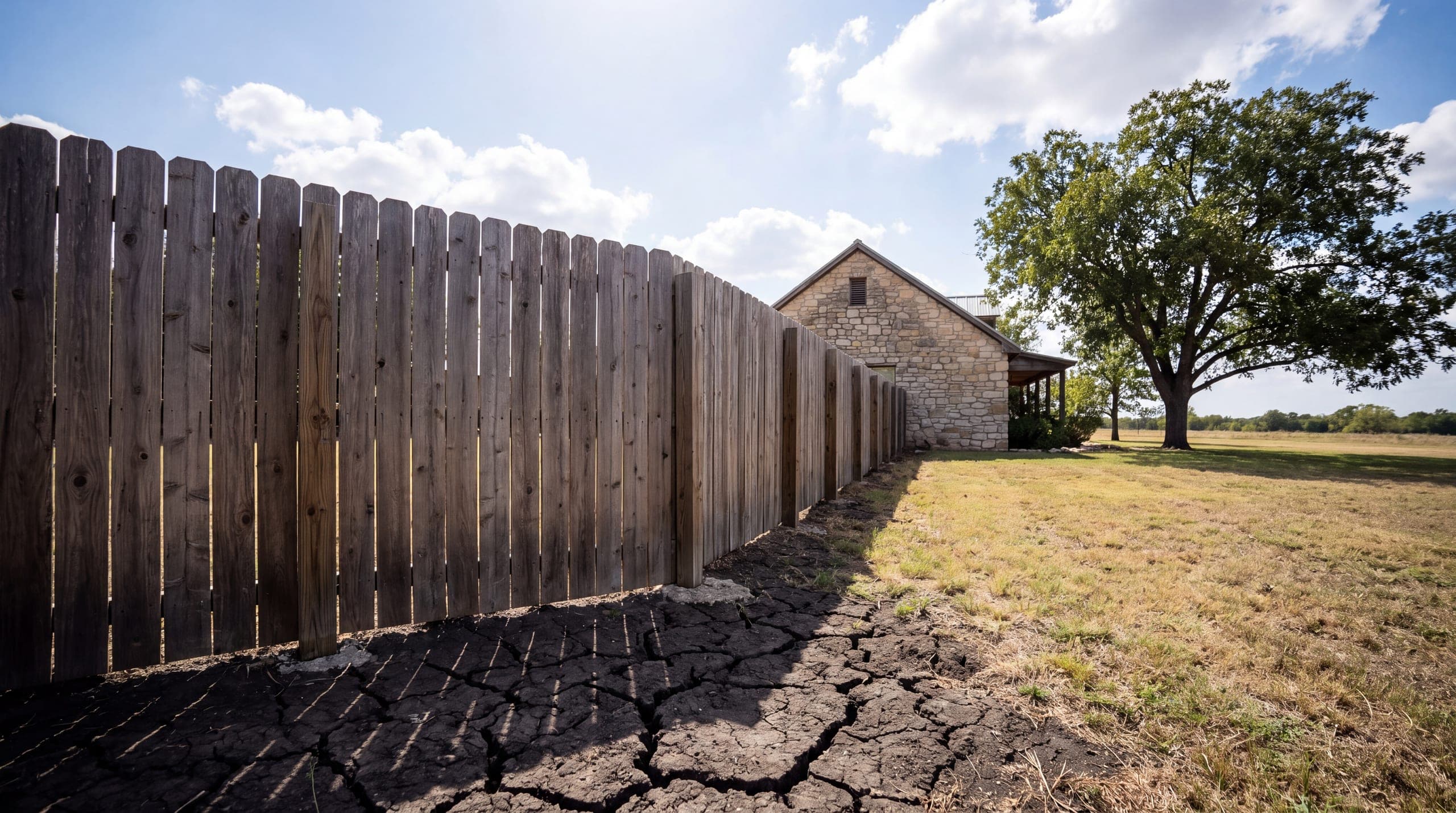
Houston scores 77.2 on the decay hazard index, deep inside the high-hazard band, against 44.3 for Dallas and 52.2 for San Antonio (USDA Forest Products Laboratory, 2009). Same state, roughly double the rot pressure. Your association tells you which material to use. Within that material, specification is what decides whether the fence is still straight in year twelve.
Posts are where it shows first. The wood-preservation standard puts fence posts in ground-contact service and pairs that exposure with a minimum preservative retention engineered for long-term in-ground use (AWPA Standard U1). A post bought to that spec and a post that merely looks similar cost different money and fail decades apart.
We hear the other version of this often enough. One homeowner told us their previous fence was already rotting and warping after three and a half years, and that they had not understood what a good fence was until we rebuilt it. Nobody has to sell that customer on doing it right. They already paid once for doing it wrong.
What a Cinco Ranch Privacy Fence Runs Per Foot
A 6-foot pressure-treated pine privacy fence runs about $18 to $30 per installed foot in Texas, and cedar about $25 to $45 (HomeGuide and Angi, 2026). Those are planning numbers for flat, clear ground, materials plus labor. They leave out old-fence removal and haul-off, gates and operators, permits, and heavy clay that slows every post hole.
| Fence type (6 ft residential) | Texas installed cost per foot | Where the top of the range comes from |
|---|---|---|
| Treated pine privacy | $18 to $30 | Higher grades, closer post spacing, longer runs |
| Cedar privacy | $25 to $45 | Western red cedar and clear, knot-free grades |
| Ornamental steel or iron | $45 to $90 | Custom welded panels and decorative caps |
| Vinyl | $30 to $60 | Heavier wall thickness and wider gate spans |
We hold the 2026 Largest Volume Customer awards for the Southwest Region and the World, displayed on our homepage beside the Master Halco logo. That wood-picket buying power is why a Texas wood fence from us can be specified up and still land at a fair number.