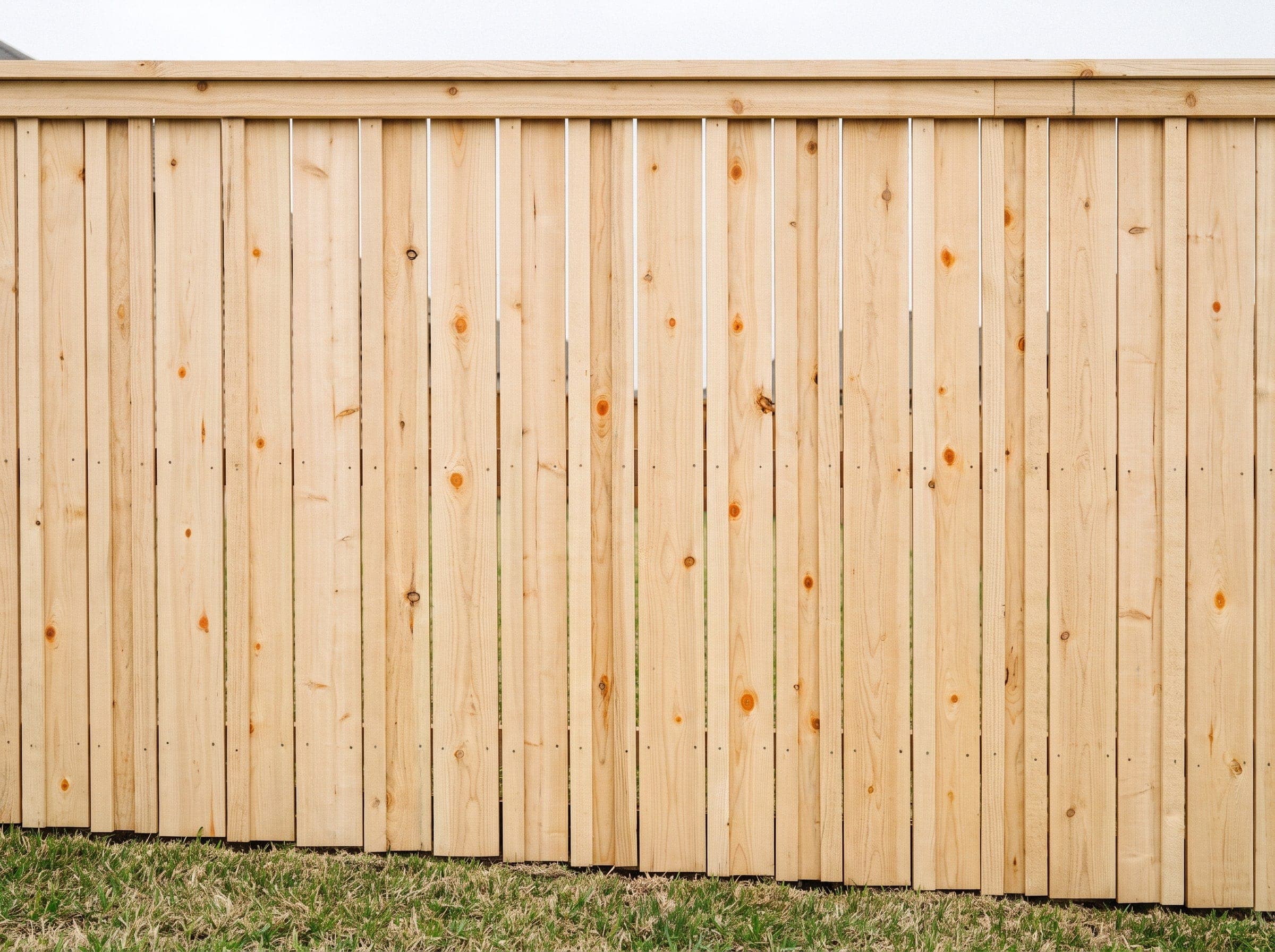
There is no Texas fence height. There are city codes, and one state law that sits over your HOA. Get the layer wrong and you either chase a permit you never needed or tear out a fence you already paid for.
Texas Has No Statewide Fence Height Rule
The state does not regulate fence building at all. Its licensing authority covers about 40 occupations, and a residential fence builder is not one of them, so a fence company can work anywhere in Texas without a state license (TDLR, 2026). The number that governs your yard comes from city hall, and the four big metros do not agree with each other.
Here is how the same 8-foot cedar fence lands in each of the four metros we serve.
| Metro | Residential height ceiling | Front-yard limit | The rule that trips people up |
|---|---|---|---|
| Houston | 8 feet above grade before a permit | No zoning height number, but front-yard fences are reviewed against setbacks and building lines | A masonry or concrete fence needs a permit at any height |
| Austin | 7 feet permit-exempt, 6 feet for a solid fence on a property line | 6 feet along a public right-of-way | A lot in a floodplain needs a permit at any height |
| San Antonio | 8 feet, with no exception granted above it | 3 feet solid, 4 feet predominantly open | An open front-yard fence over 4 feet needs a 20,000 sq ft lot |
| Dallas | 9 feet in a required yard | 4 feet in a required front yard | A panel less than 50% open must sit 5 feet off the front lot line |
Your Front Yard and Your Corner Follow Different Rules
Height is only half of the front-yard question. Most Texas codes also test how much you can see through the fence, and near an intersection they test how much a driver can see past it. Both tests can stop a fence that is legal on height alone.
A front-yard fence usually has to be open, not just short. San Antonio caps a solid residential front-yard fence at 3 feet but allows a predominantly open one at 4 feet (San Antonio UDC, 2025), so the extra foot is bought with openness rather than with a permit. Dallas comes at the same idea through placement: in single-family districts a panel less than 50% open has to stand at least 5 feet back from the front lot line, while a more open panel may come forward (Dallas Development Code, 2025). Austin drops the permit-free height to 6 feet along a public right-of-way (City of Austin, 2025). Read any of those codes as a height table and you will design a legal-height fence in an illegal style.
On a corner lot, the limit near the intersection is far lower. Texas cities carve out a sight-visibility triangle where the two streets meet and require it kept clear of anything that blocks a driver's view of cross traffic. Inside that triangle the working fence limit falls well under the backyard number, typically to a low open rail rather than a privacy panel. The reason is the driver's eye line, not your privacy, which is why the rule ignores material and looks only at what you can see through. The triangle dimensions and the clear height are set city by city, so get both in writing from your city's development services counter before the line is staked. A solid 6-foot panel carried around a corner is the most common version of this mistake, and it comes out at the owner's cost.
In Houston, the front yard is reviewed even when nothing needs a permit. Houston has no zoning, so the code publishes no front-yard height number. What it does have is setback and building-line administration through the Planning and Development Department, which is where a front-yard fence gets checked against platted building lines, setback lines, and corner visibility. That review can apply to a fence sitting comfortably under the 8-foot permit line and needing no building permit at all, which is exactly the case Houston homeowners assume is unregulated.
What the Front Yard and the Corner Cost You in Each Metro
The backyard ceiling is the number homeowners quote each other. The front yard and the corner are where the fence actually gets stopped, and each metro applies a different test. Read this row by row for the city you pay taxes to.
| Metro | Front-yard height | The openness test | Who reviews it, and the corner |
|---|---|---|---|
| Houston | No published zoning number | None in the code, but placement is judged against platted building lines | Planning and Development Department reviews the front yard against setbacks and corner visibility, even on a fence that needs no building permit |
| Austin | 6 feet along a public right-of-way before a permit is required | Solid fence on a property line capped at 6 feet from natural grade | Development Services sets the sight-visibility triangle at the corner; confirm dimensions before staking |
| San Antonio | 3 feet solid, 4 feet predominantly open | The extra foot is bought with openness, not with a permit; 6 feet open needs a 20,000 sq ft lot and 100 feet of frontage | City review, plus a clear-vision area at the intersection set locally |
| Dallas | 4 feet in a required front yard | A panel less than 50% open must sit 5 feet back from the front lot line | City building permit above the by-right limits; visibility triangle confirmed at the counter |
Two things do not appear in any of these rows as a number, on purpose. The sight-visibility triangle at a corner is measured differently in every city, and the clear height inside it is lower than anything in this table, because the rule is written for a driver's eye line rather than for your privacy. Ask your city's development services counter for the triangle dimensions and the clear height in writing, then design the corner run to those two figures rather than to your backyard ceiling.
Houston Has No Zoning, So the Permit Rule Governs
A residential fence in Houston can reach 8 feet above grade before the city asks for a building permit (City of Houston, 2026). Wood, iron, chain link, composite: the height line is the same for all of them, and most backyard privacy fences here never come close to it.
The exception is material. A fence built wholly or partly of masonry or concrete needs a permit at any height, including a 4-foot brick wall along a side yard. That is the one Houston homeowners get wrong, because they read the height rule and stop reading.
If your fence is going up in Cypress, Katy, Tomball, or Kingwood, check the city you actually pay taxes to. Houston’s rule does not travel with you across a city line.
Austin Is the Tightest of the Four Big Metros
Austin exempts a fence of any material up to 7 feet from a permit, and a solid fence on a property line is capped at 6 feet from natural grade (City of Austin, 2025). That 6-foot cap rises to 7 feet only where the ground itself changes by at least a foot across the fence line.
Two more triggers pull an Austin fence into permit territory. Anything over 6 feet along a public right-of-way on residential property needs one. So does any fence in a floodplain, at any height, including a 4-foot picket.
Round Rock, Cedar Park, Georgetown, Pflugerville, Buda, and Hutto each write their own code. Austin’s numbers are the starting point for the metro, and the confirmation still has to come from your city.
San Antonio Measures Your Front Yard First
San Antonio caps a solid residential front-yard fence at 3 feet and a predominantly open one at 4 feet, with 8 feet the maximum residential height anywhere on the lot (San Antonio UDC, 2025). Above 8 feet the code grants no special exception at all, so there is no application to file.
An open fence up to 6 feet in the front yard is allowed by right only on a lot of at least 20,000 square feet with at least 100 feet of street frontage. Everything smaller goes through a special exception. That single rule is why so many San Antonio front yards carry wrought iron at 4 feet while the back runs privacy wood at 6 or 8.
Converse, Helotes, Leon Valley, and New Braunfels sit under their own codes with their own front-yard numbers.
Dallas Ties Your Height to the Required Yard
In Dallas residential districts, a fence may not exceed 4 feet above grade in the required front yard, and no fence in a required yard may exceed 9 feet (Dallas Development Code, 2025). Anything above those by-right limits needs a city building permit.
Dallas also regulates where the fence sits. In single-family districts, a fence panel less than 50% open has to stand at least 5 feet back from the front lot line. A solid 6-foot privacy panel pushed up to the sidewalk is a violation even when the height is legal, which is a placement problem no height table will catch for you.
Plano, Frisco, Carrollton, Coppell, Garland, and Arlington all publish separate fence rules.
Learn These Five Terms Before You Read Your City Code
Every fence ordinance in Texas leans on the same handful of words, and they are the words that decide your height. Read a code without them and you will measure the wrong thing.
| Term | What it means on your lot |
|---|---|
| Above grade | Measured from the ground the fence stands on, so caps, lattice, and trim all count toward the total |
| Required yard | The setback strip the code makes you leave open between your house and the lot line |
| Solid fence | A fence whose openings are under 30% of its face area, the same threshold engineers use for wind load |
| Right-of-way | The public strip along the street, where Austin drops the permit-free height to 6 feet |
| Front building line | The line your home’s front wall sits on, which an HOA may still bar you from fencing past |