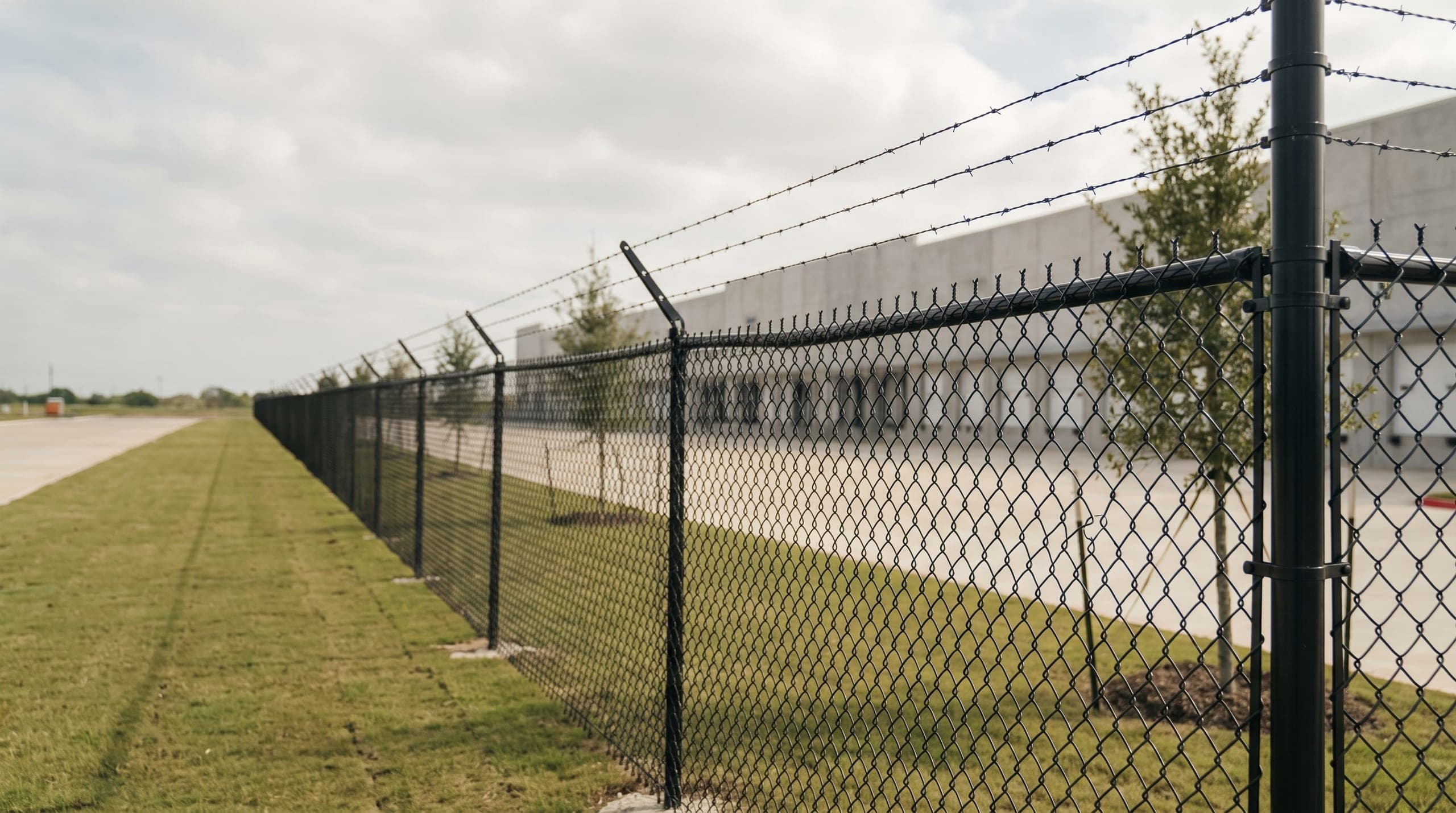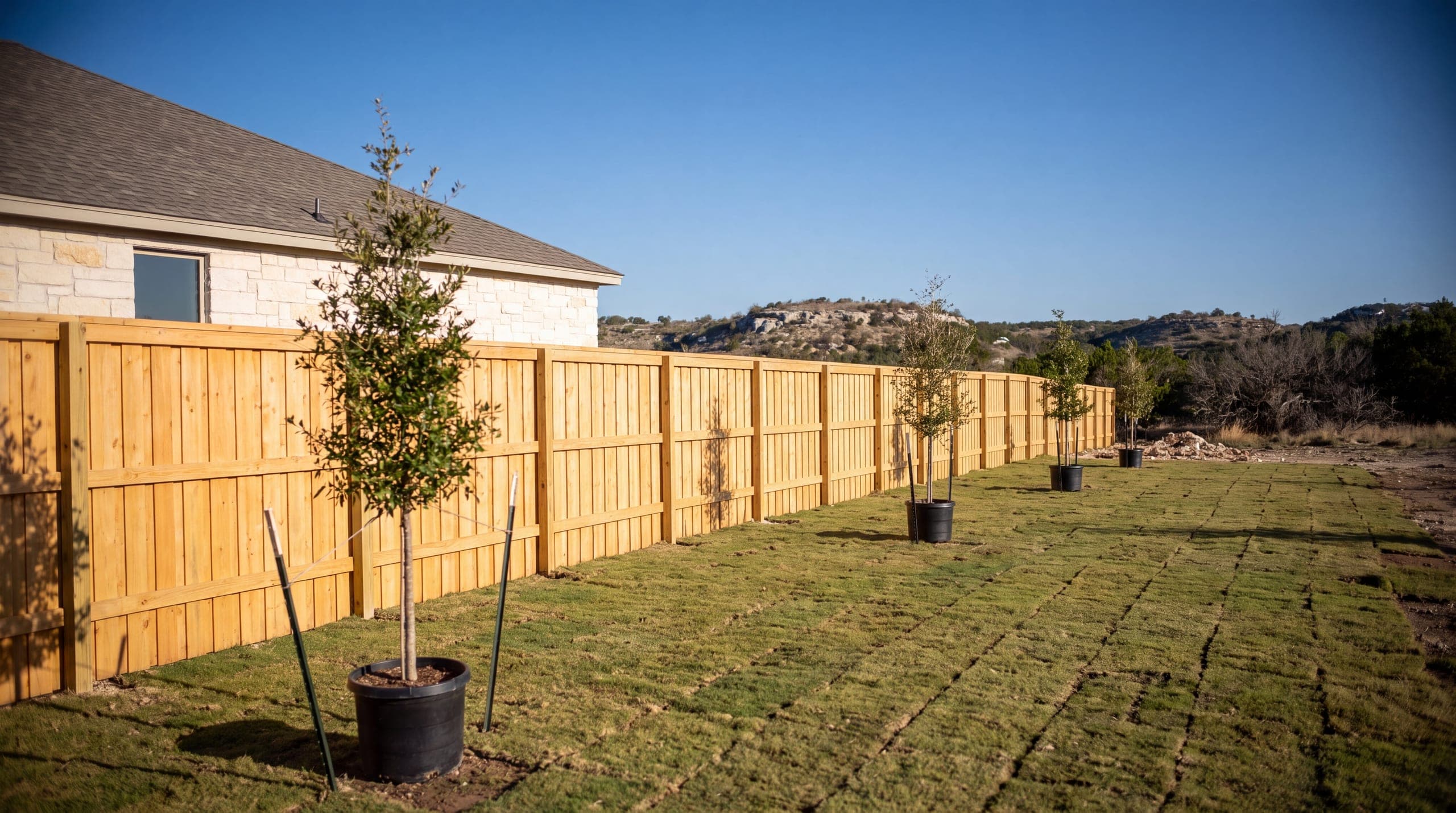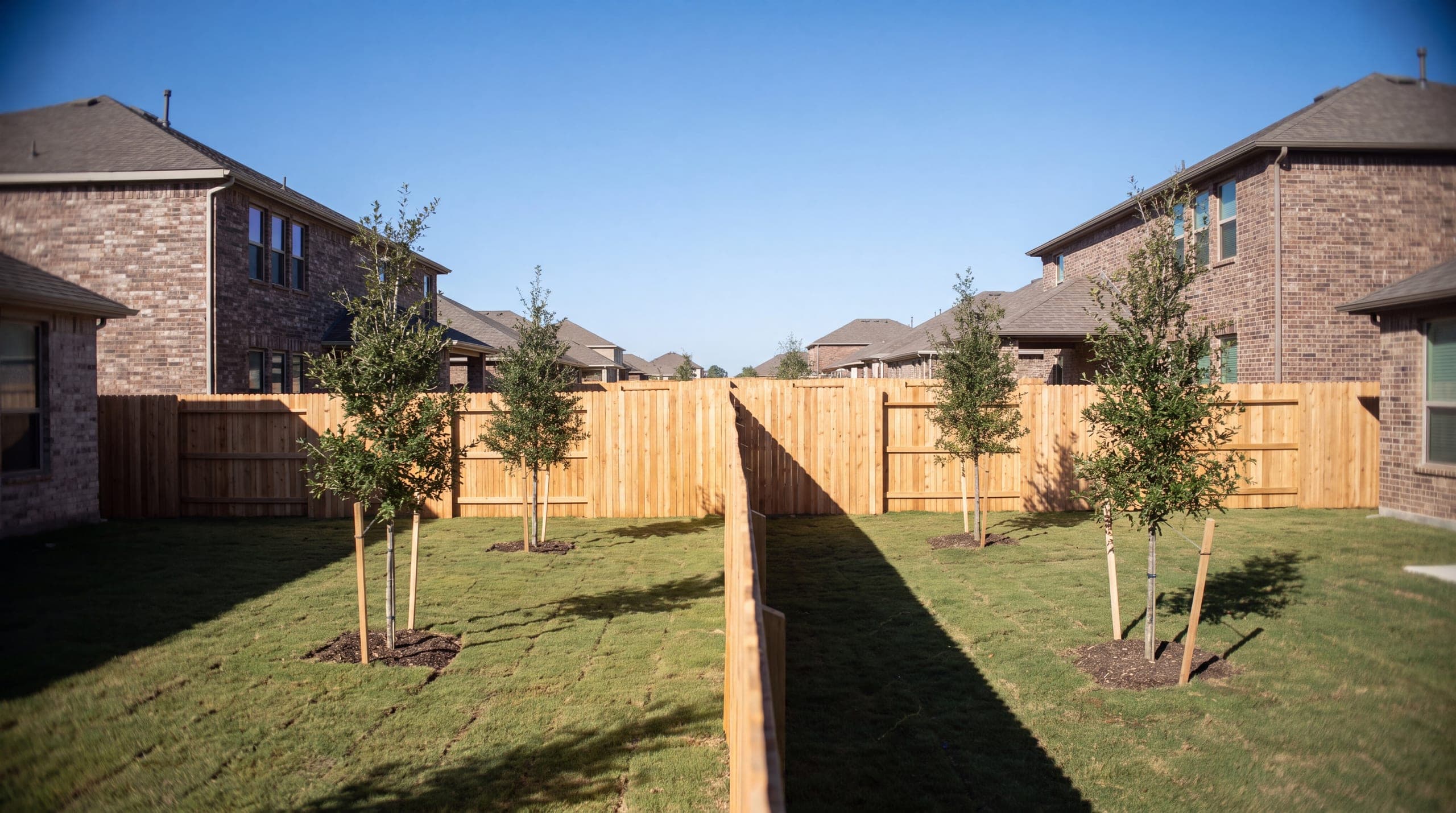

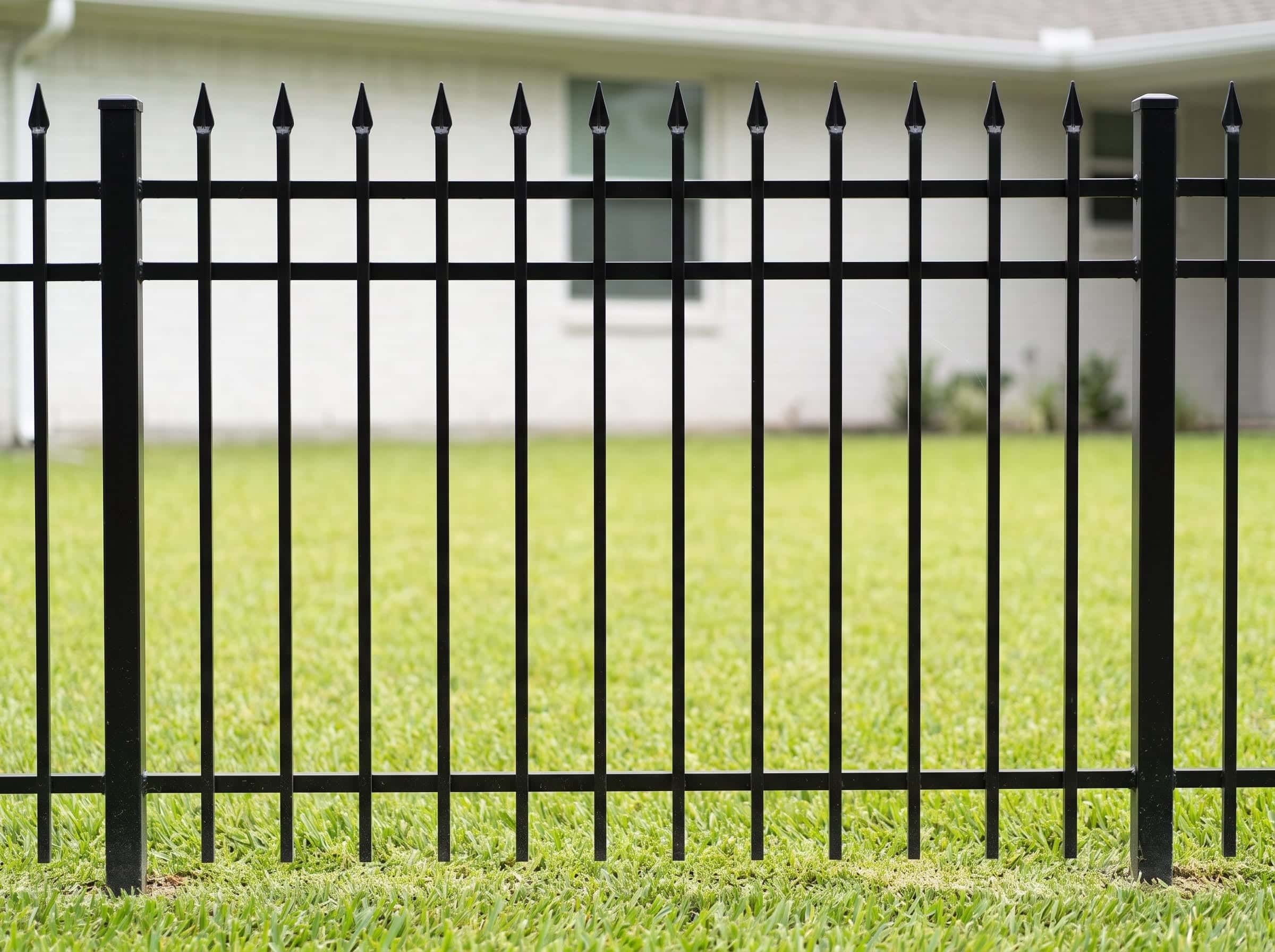
A wood fence in San Antonio costs about $18 to $30 a foot installed, by HomeGuide and Angi’s measure, in pressure-treated pine and up to $45 in cedar, and ornamental steel or wrought iron about $45 to $90 a foot (HomeGuide and Angi, 2026). Wood wins the bid and is the only one of the two that screens a yard; iron does not rot, so it closes the gap over 20 years.
San Antonio’s decay record and its clay soil both work on wood posts long before the fence looks old. Count those two over twenty years and the cheaper bid is not always the cheaper fence.
Is a Wood or Iron Fence Cheaper to Install in San Antonio?
Wood is, on every Texas quote. Pine and cedar cost less to buy and less to set, so the first bid always favors wood. Installed Texas prices land at about $18 to $30 per foot for a 6-foot pressure-treated pine privacy fence and $45 to $90 for ornamental steel or wrought iron, on published cost ranges trued up to Texas quotes (HomeGuide and Angi, 2026). That gap is real. Nothing later in this piece makes it disappear on install day.
| Material (6 ft residential) | Installed cost per foot in Texas | What moves it inside the range |
|---|---|---|
| Pressure-treated pine privacy | $18 to $30 | Picket grade, post spacing, gate count |
| Cedar privacy | $25 to $45 | Western red cedar and clear, knot-free grades price at the top |
| Ornamental steel or wrought iron | $45 to $90 | Panel style, picket spacing, custom welded work |
Those ranges cover flat, clear ground. They leave out old-fence removal and haul-off, gates and operators, and the rocky or heavy clay that slows a post hole, all of which are common on a San Antonio lot.
What Should a Wood or Iron Fence Quote Name?
Four words decide most of what happens to a fence here, and two bids can use all four differently. The wood-preservation industry’s own standard, AWPA U1, puts fence posts in Use Category UC4A, the general ground-contact class, with a preservative retention set for long in-ground service (American Wood Protection Association, current edition). A quote that never names that class is quoting you a picket price and calling it a fence.
| Term | What it means | Why it matters in San Antonio |
|---|---|---|
| Heartwood | The dead inner wood of the tree | Decay resistance sits in cedar heartwood; cedar sapwood does not carry it |
| Ground contact (UC4A) | The treatment class for wood buried in soil | The part of a wood fence that fails first is the part below grade |
| Embedment | How deep the post sits below grade in concrete | Shallow caliche can stop an auger before it reaches spec depth |
| E-coat | The epoxy layer under an ornamental steel topcoat | The corrosion warranty on iron is written against this coating |
How Fast Does a Wood Fence Rot in San Antonio?
Faster than in Dallas and slower than in Houston. The USDA’s decay hazard index scores San Antonio at 52.2 against Dallas at 44.3, both inside the moderate band that runs 35 to 65 (USDA Forest Products Laboratory, 2009). Houston sits at 77.2 in the high band. So a San Antonio wood post is not living the Gulf Coast’s life, and it is not living Dallas’s either. It sits about eight points of hazard worse than the Metroplex, every year, for the whole life of the fence.
Which wood you buy changes what that index does to you. A worldwide durability checklist rates western redcedar and coast redwood as resistant, class 2, and loblolly southern pine as only moderately resistant to nonresistant, class 3 to 4 (Scheffer and Morrell, 1998). That rating applies to heartwood. A cedar board cut from sapwood is not a decay-resistant board, whatever the invoice calls it, which is why the grade on a bid matters more here than the species name.
Iron has no stake in any of this. There is nothing in a steel picket for a fungus to eat.
Does San Antonio Soil Move Fence Posts?
Yes, the clay shrinks and swells and works posts loose from the side. The NRCS classifies Houston Black, the Texas State Soil, as a smectite-clay Vertisol at roughly 60% to 80% clay, with very high shrink-swell, and it runs the Blackland Prairie from Dallas south to San Antonio (USDA NRCS, 2023). That soil swells when it rains and pulls back when it dries. A post set in it gets pushed and released, season after season, whether or not the wood is sound.
Then there is the rock. In the Lacoste series, depth to the cemented caliche horizon runs 10 to 20 inches, a spread commonly found within 25 horizontal feet, and the Gruene series puts strongly cemented caliche around 13 to 22 inches down (USDA NRCS, official series descriptions). One fence line can cross both conditions.
Three things follow from that, and they apply to wood and iron alike:
- Post depth is a site decision, not a price decision. Where caliche stops the auger short, somebody has to break through it or the post is under-embedded from day one.
- The corner and gate posts move first. They carry the most load and get the least help from neighbors on both sides.
- A seasonal tilt is the ground talking, not the wood failing. A post that leans a little more each summer was set too shallow for what this clay does.
Does an Iron Fence Hold Up Better in San Antonio?
Yes, because steel does not rot. Ornamental steel answers decay and movement in its spec sheet. Ameristar warrants its Montage welded ornamental steel against corrosion, cracking, peeling, chipping, and blistering for a lifetime on the residential grade and 20 years on the commercial grade, backed by a multi-stage pretreatment plus an epoxy e-coat and topcoat (Ameristar, current warranty). Set that against the certified home-inspector trade’s own reference chart, which rates a wood fence at about 20 years (InterNACHI, n.d.). One material is warranted past the point where the other is scheduled to be replaced.
Iron still has to be set correctly in this clay. Steel does not stop a Vertisol from swelling, and a shallow iron post leans the same way a shallow wood one does. What changes is the failure list. With wood you are managing rot at the ground line and movement below it. With iron you are managing movement only.
A Woodlands homeowner, Rita S., put the price side of that plainly in a review of a metal fence we built for her, in a different metro from this one: “They charged almost $900.00 less than three other companies for the same metal, coating and paint for my black metal fence in Del Webb of The Woodlands…Thanks Matthew.”
Which Fence Costs Less Over 20 Years in San Antonio?
At year 20 the two materials are in different places, and that is where the bid gap closes. Wood arrives at the end of the service life its own trade reference gives it. Ornamental steel arrives inside the term of the coating warranty it was sold under.
| Material | Where it stands at year 20 | What that means for the bill |
|---|---|---|
| Pressure-treated pine privacy | At the roughly 20-year mark the home-inspection trade rates for a wood fence | You are pricing a second fence |
| Cedar privacy | Heartwood boards often standing; sapwood boards and post bases gone first | A partial line, then a second full spend |
| Ornamental steel or wrought iron | Inside the lifetime residential term of the Montage coating warranty | Priced once |
Run that against the HomeGuide and Angi per-foot table. A 200-foot pine fence at $24 a foot is $4,800, and a second one twenty years later makes it two purchases. The same 200 feet of ornamental steel at $60 a foot is $12,000 and is still under warranty when the wood fence is being torn out. On this ground, the higher first number was already the twenty-year number.