
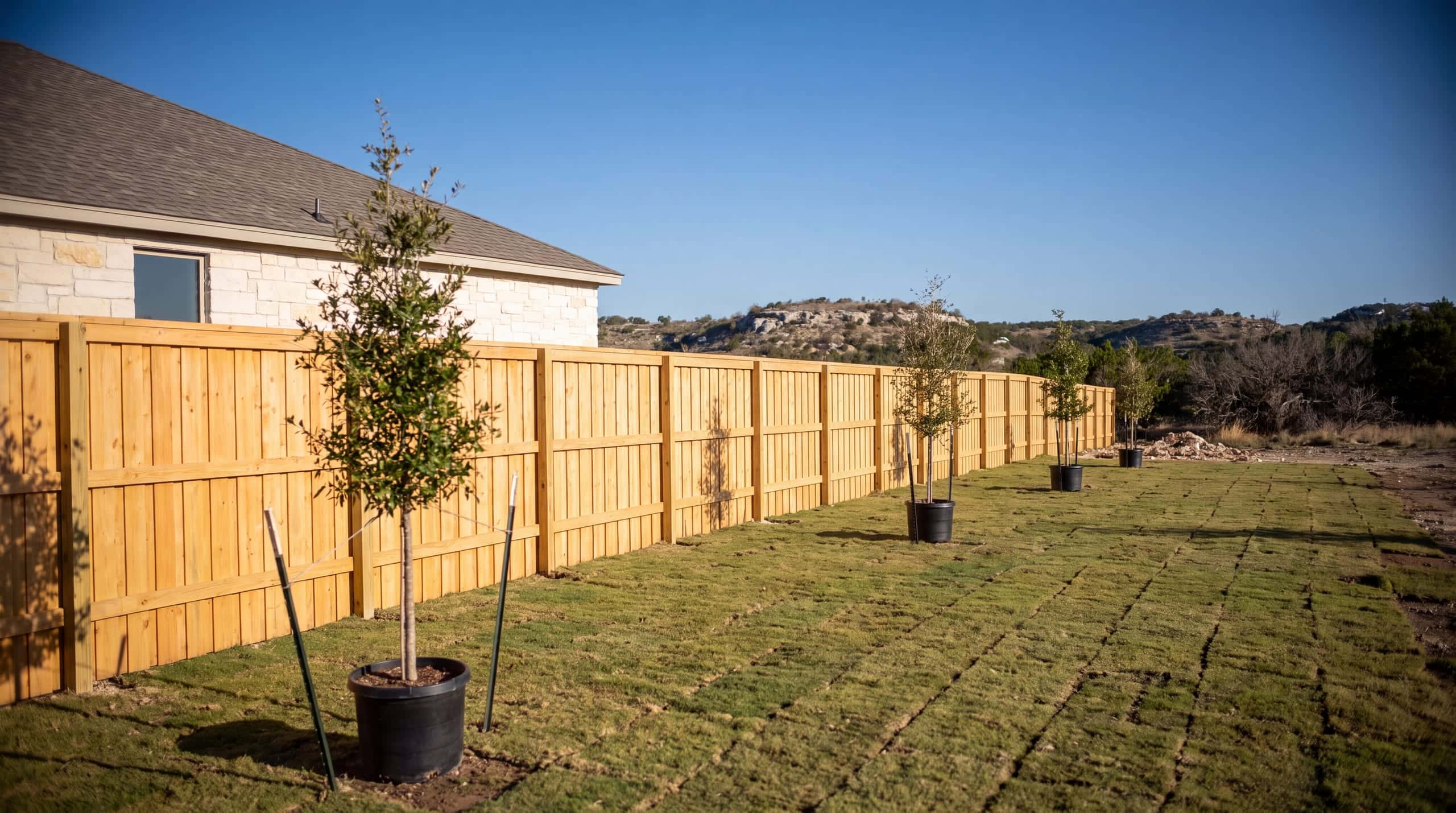
Match the fence to its job: a wood privacy fence suits most Texas backyards ($18 to $45 a foot installed per HomeGuide, Angi and HomeAdvisor), and ornamental steel or iron suits fronts and pools ($45 to $90 a foot from the first two of those sources). Soil, wind and a crew that builds to spec decide how long either one stands, and Johnson Fence builds both with over 100 crews across Houston, Dallas-Fort Worth, Austin and San Antonio.
A fence chosen for its job and written down to spec avoids all three.
What should your Texas fence do before you pick a type?
Start with the job: full privacy, a property line, pet containment, a pool or a front-yard look each point to a different fence. Full backyard privacy points to wood, a front yard or pool points to ornamental iron or steel, and a boundary or pet containment points to chain link or ranch fencing. We build in wood, wrought iron, chain link, ranch, composite, brick and smart styles, so the job picks the fence.
Nearly every Texas home is built with a backyard privacy fence as standard, and Austin is a partial exception. That is why wood is the default here, and why we measure every job before we price it. Jake M. gave us five stars on Google in August 2026: “Justin and his guys did a great job very professional group clean and courteous would highly recommend”
How do Texas heat, clay soil and wind change what you build?
Texas fences face heavy sun, soil that swells and shrinks, and high seasonal wind, and the metros differ. Houston has the highest federal decay index of the four (77.2), ahead of Austin (55.2), San Antonio (52.2) and Dallas (44.3), according to Carll at the USDA Forest Products Laboratory (2009).
The soil moves too. The USDA Natural Resources Conservation Service (2023) classes Houston Black, the Texas State Soil, as a smectite-clay Vertisol of about 60% to 80% clay with very high shrink-swell potential, and it covers Blackland Prairie from Dallas south to San Antonio. The 2021 International Building Code, Section 1807.3.2.1, sizes fence posts as cantilevered poles, so a tall, solid fence in soft clay needs a deep, wide concrete footing. Wind adds load: ASCE/SEI 7-22 (2022) maps the Houston area at basic design wind speeds of about 130 to 140 mph.
How do wood, iron, composite and brick fences hold up in Texas?
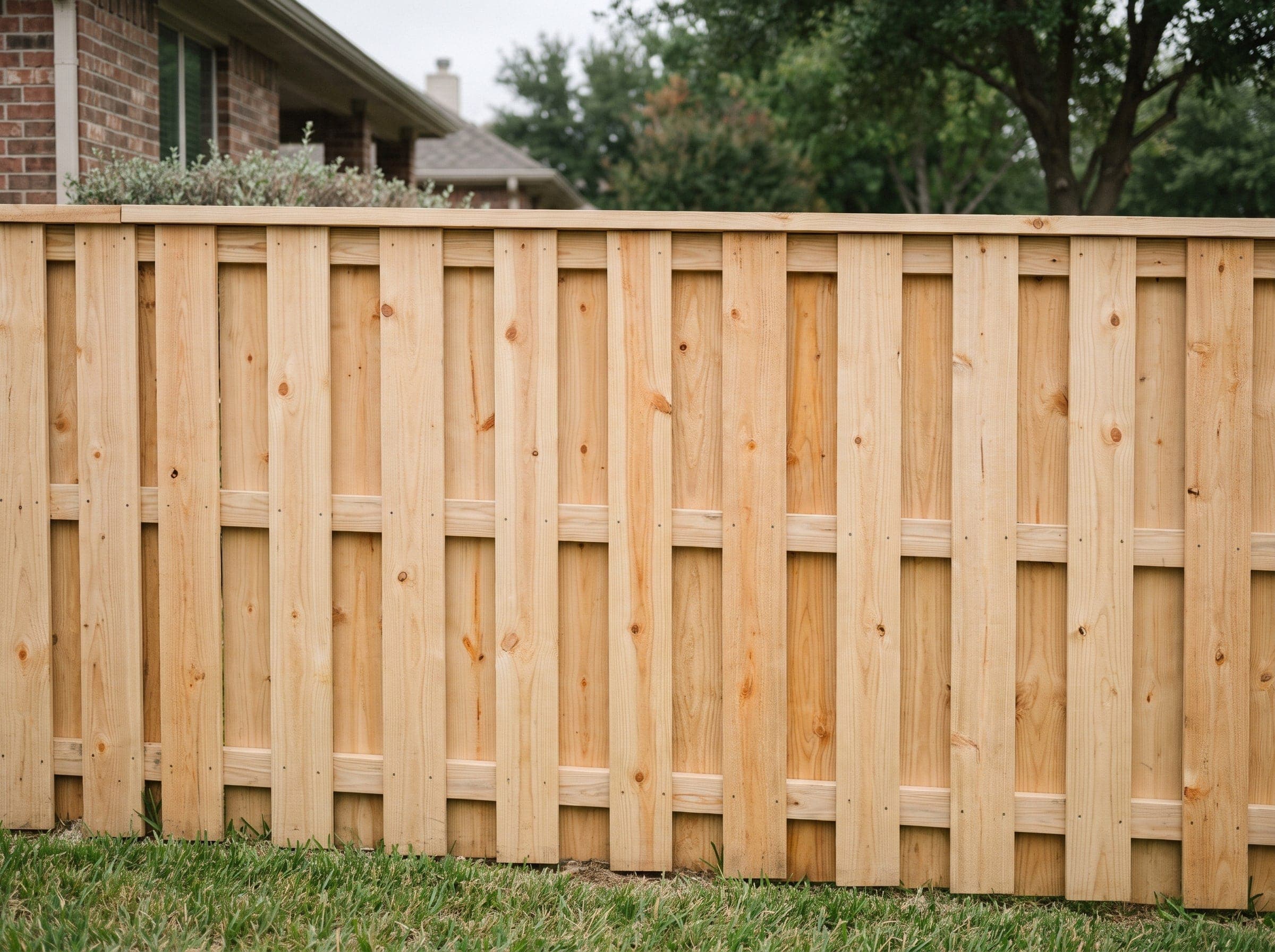
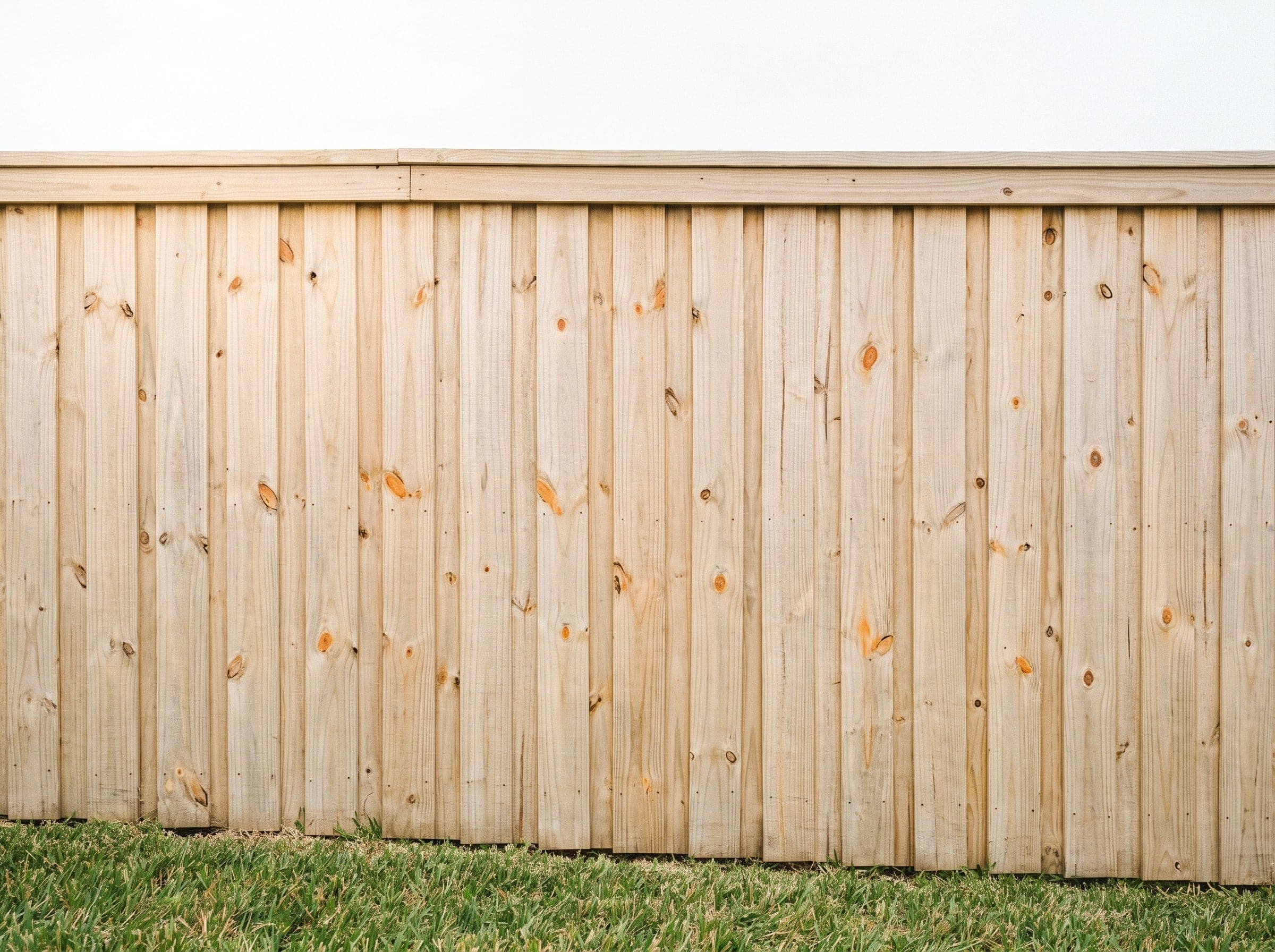
Wood is the standard Texas privacy fence and suits most backyards, and cedar resists rot and insects better than pine. Oregon State University’s durability checklist (Scheffer and Morrell, 1998) rates western redcedar as resistant (class 2) and loblolly pine as moderately resistant to nonresistant (class 3 to 4). We build with pressure-treated framing and cedar pickets.
Ornamental steel or iron lets wind through and needs little upkeep. Ameristar warrants its Montage welded ornamental steel against corrosion, cracking, peeling, chipping and blistering for a lifetime on residential grade (Ameristar, current). Brick sits at the long end: the Brick Industry Association (2017) puts brick walls at 100 to 150-plus years before major repair. Wood is graded from #1 picket through #3 and priced accordingly, and we name the grade on the quote.
What do board-on-board, horizontal and picket fences suit?
Style sets the look and the privacy, and material sets the life. We build wood fences in board-on-board, horizontal and picket styles, plus ranch, wrought iron and smart styles, so the style follows the yard’s job from the first section.
Material decides how long any style lasts. InterNACHI’s life-expectancy chart rates a wood fence at about 20 years and a vinyl fence at 100-plus years. Composite is not rot-proof in the lab (Clemons and Ibach, USDA Forest Products Laboratory, 2004), though Trex backs its composite fence with a 25-year residential limited warranty (ASTM D7032 and Trex, current). A wood fence put in properly should give you about twenty years.
What does a fence cost per foot in Texas by material?
Wood runs $18 to $45 a foot installed per HomeGuide, Angi and HomeAdvisor. Ornamental steel or iron runs $45 to $90 per HomeGuide and Angi. Vinyl privacy runs $30 to $60 and composite $30 to $55, both per HomeGuide and Ergeon. Chain link runs $12 to $28 on the same two sources as ornamental steel or iron. A brick fence runs $60 to $240 a foot per HomeGuide (2026). These are market ranges for a six-foot fence on flat ground before tear-out, gates and slope, so a measured quote sets the real number.
| Material | Market range | Who measured it |
|---|---|---|
| Wood, pine to cedar | $18 to $45 a foot | HomeGuide, Angi, HomeAdvisor (Texas triangulation, citations.md) |
| Ornamental steel or iron | $45 to $90 a foot | HomeGuide, Angi |
| Vinyl privacy | $30 to $60 a foot | HomeGuide, Ergeon |
| Chain link | $12 to $28 a foot | HomeGuide, Angi |
| Composite | $30 to $55 a foot | HomeGuide, Ergeon |
| Brick fence, 3 to 6 ft | $60 to $240 a foot | HomeGuide, January 2026 |
| Brick privacy wall, 6 to 8 ft | $200 to $360 a foot | Angi, July 2026 |
| Brick or stone column | $500 to $3,000 each | HomeGuide, January 2026 |
| Fiber cement | no publisher breaks it out; bracket it between composite and a brick fence | checked HomeGuide, Angi, HomeAdvisor, Fixr, 2026-09-05 |
| Wood deck addition | $18,263 national average, 94.9% recouped at resale | Zonda, 2025 Cost vs. Value |
| Automatic driveway gate | $1,600 to $13,000 installed, most about $7,000; $2,380 to $8,000 on Angi | HomeGuide 2026; Angi, August 2026 |
Then comes what a range cannot buy. We price every project by custom quote after a free on-site estimate, with the footage measured on site and the picket grade chosen. Nobody buys more fence pickets than we do, so nobody in Texas sells a wood fence for less. We hold Master Halco’s 2026 Largest Volume Customer award for Southwest Region and for the World, and that wood-picket buying power is passed on through the picket.