Guides

Will an HOA Approve a Fiber Cement Fence in Texas

Most homeowners ask whether their HOA allows a fiber cement fence. That is the wrong question, and asking it is how a packet comes back denied.

August 14, 2026

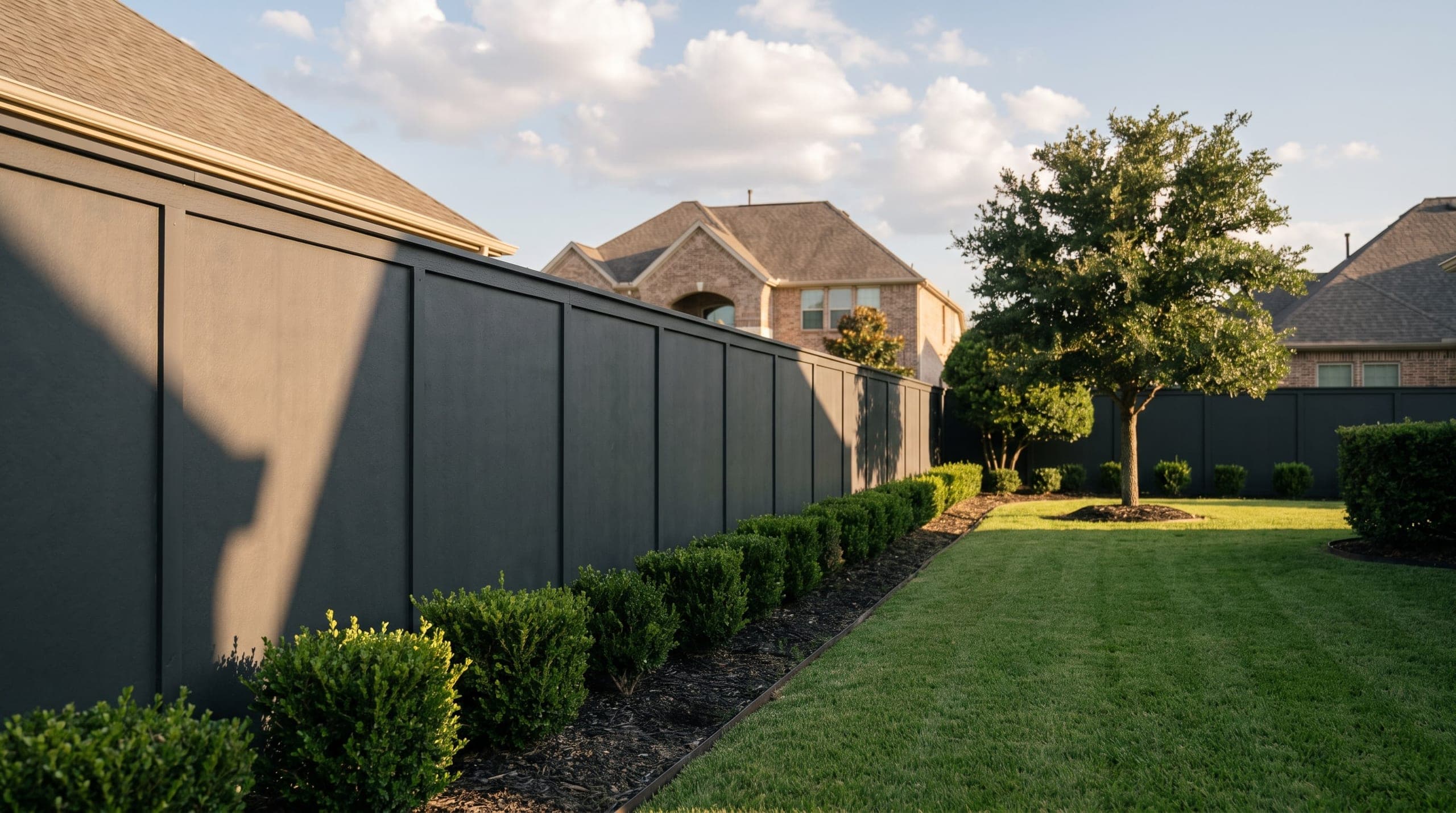
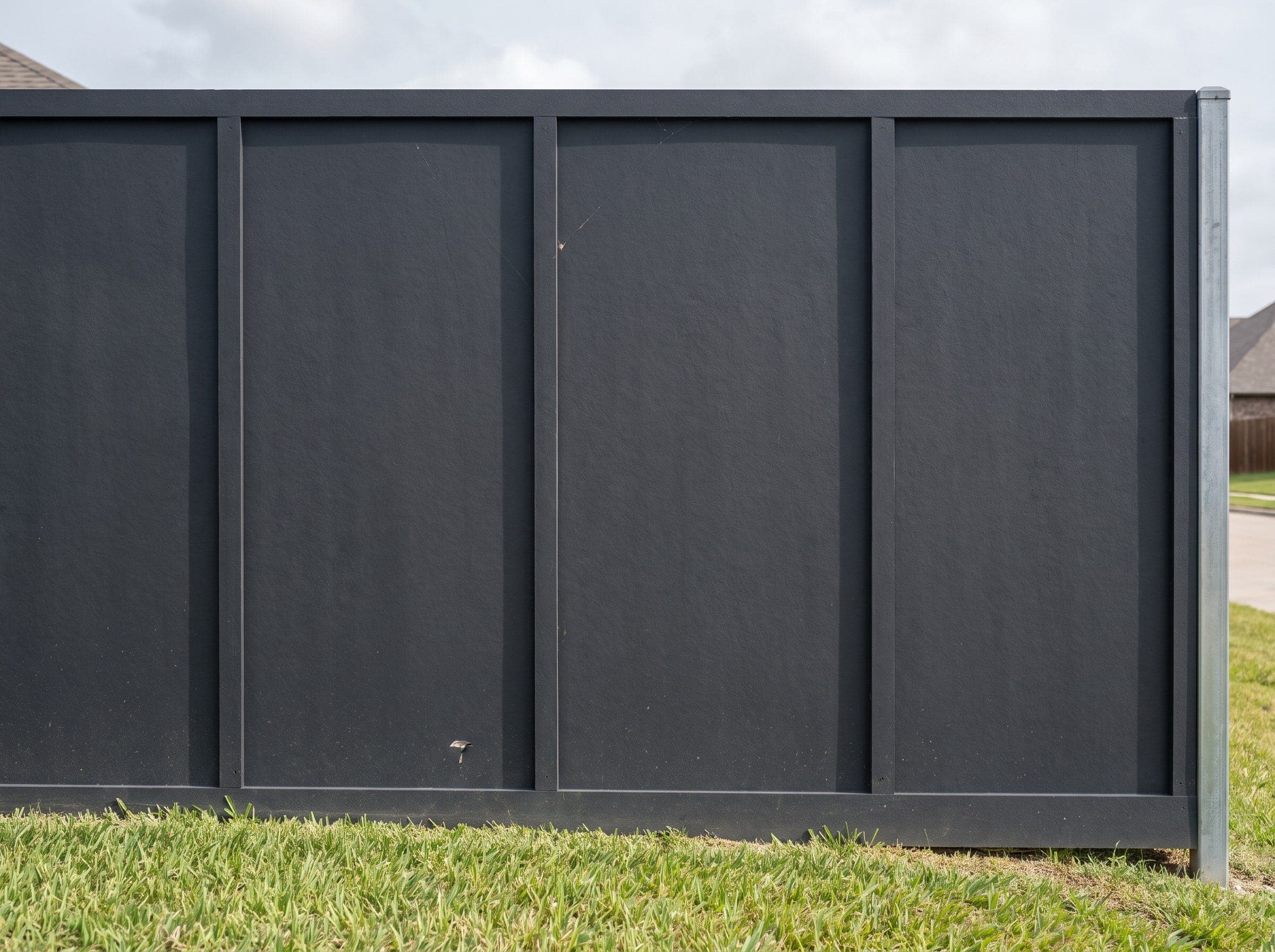
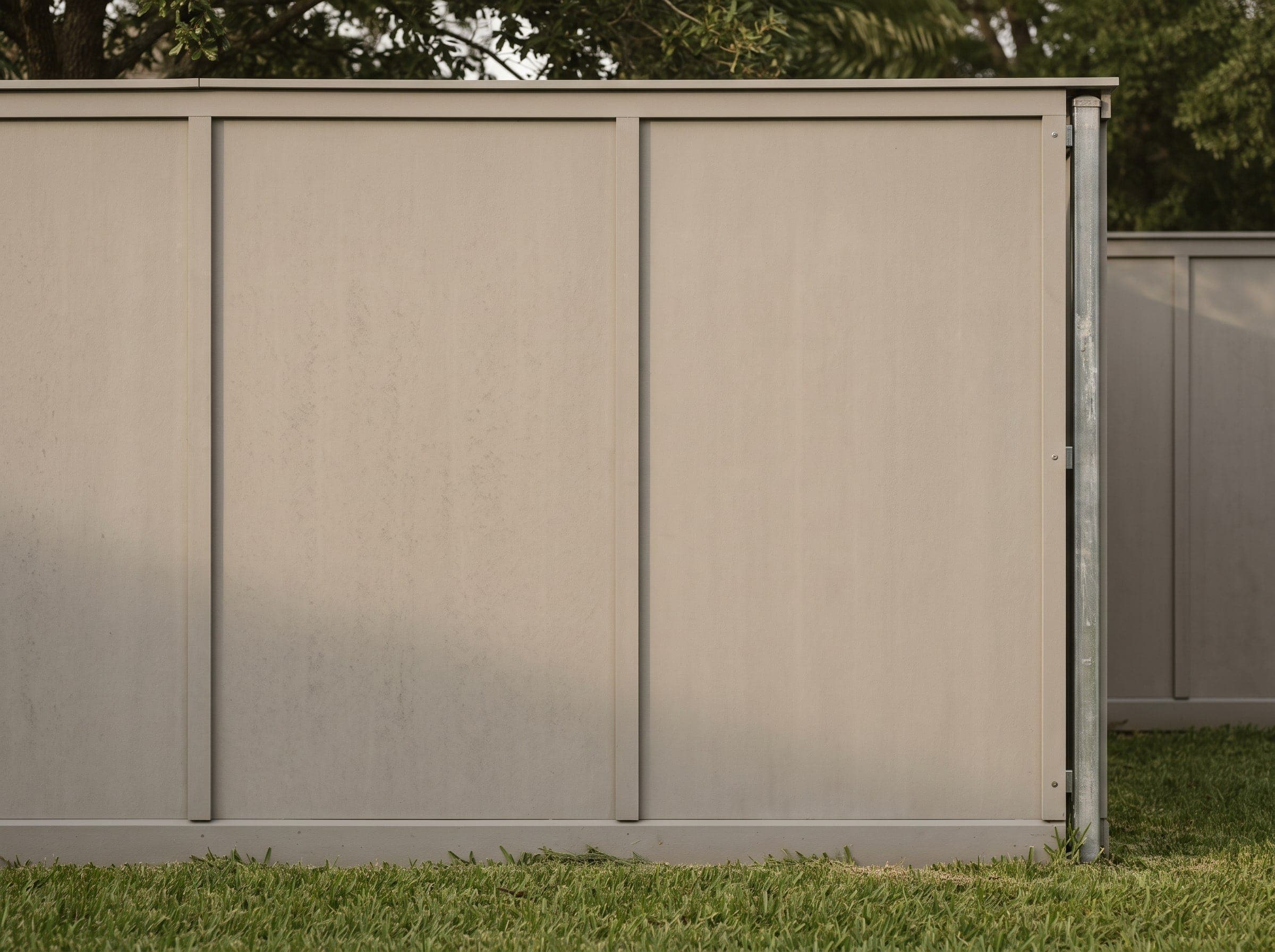
A painted fiber cement panel fence with battens along a Texas back yard

Most homeowners ask whether their HOA allows a fiber cement fence. That is the wrong question, and asking it is how a packet comes back denied.

Texas law changed on September 1, 2025, and it took the outright ban off the table. What it left standing is your board’s say over material, and with a fence material most Texas neighborhoods have never seen, approval turns on what your paperwork says about it.

SB 711 Stops a Fence Ban and Keeps the Material Rule

Your HOA can no longer stop you from fencing your yard. Since September 1, 2025, Senate Bill 711 has barred a Texas property owners’ association from prohibiting a perimeter fence or other security measure, while leaving it limited authority over fence type and material (Texas Property Code, 2025). Material is where the argument happens now, because most approved-materials lists in Texas were written when the only real choices were wood and iron.

Three carve-outs survived the bill, and all three show up in fiber cement denials. A board can still regulate fence type or material. It can require a driveway gate set back at least 10 feet from a laned right-of-way. And it can bar fencing forward of the front building line. Fences installed before September 1, 2025 are grandfathered, which protects what is already standing in your yard and does nothing for what you want to build.

Know These Five Terms Before You Read Your Deed Restrictions

Read your covenants with these five words in hand, because every one of them shows up in a denial letter. Your deed restrictions are the rulebook the committee applies, and the terms below are the ones a homeowner skips and then loses a round over.

Term What it means on your packet
Architectural review committee (ARC) The HOA committee that approves or denies your fence submission before work starts
Restrictive covenant The recorded rule in your deed that sets fence material, height, and placement for your lot
Front building line The line your house front sits on; a Texas HOA can bar fencing forward of it
Grade The ground level a fence height is measured from, which changes on a sloped lot
Fiber cement A cement-and-cellulose panel, sold for fencing as Hardie Plank, that neither rots nor burns

A Like-for-Like Swap Can Skip Review, and a Material Switch Cannot

A fiber cement fence goes to review because it changes the material, even when the fence line never moves an inch. Where your covenants exempt a replacement in the same material, that exemption covers wood for wood and iron for iron. Trade either one for a cement panel and you are asking for a change of material, which is the exact thing the new law left your board free to regulate.

That catches people out, because the reason to switch is usually a fence that already failed. One homeowner told us their last fence was rotting and warping after three and a half years. Nobody in that position needs convincing about material. They need a submission that survives a committee reading it for the first time.

Five Things Your Fiber Cement Packet Has to Name

A complete packet names the product, the place, and the numbers, so the committee has no blank to fill in with a question. Every item below is something an ARC will ask for if you leave it out, and each round trip costs a week or more.

  • The material spec. Manufacturer, product name, panel dimensions and thickness, and the factory finish.
  • A site plan or survey with the fence line drawn on it. Property lines, the front building line, and every gate location marked.
  • Height, measured from grade. State the height at the high end and the low end where the ground slopes.
  • Color and finish. Name the color, and say whether it comes factory-finished or gets painted on site.
  • Posts, frame, and footings. Post material, post spacing, embedment depth, and concrete footing size.

Where a Texas HOA Can Still Legally Deny Fiber Cement

Five denials hold up under the new law, and four of them are cured by paperwork you can send with the first submission. Only the first one is a real fight, and it is a fight about a list rather than about your fence.

Where a denial holds What your board can require What defuses it in the packet
Material not on the approved list A specific fence type or material for the neighborhood Name the manufacturer, product, and finish, and request a written variance
Fence forward of the front building line No fencing in front of that line Draw the front building line on the site plan and keep the fence behind it
Driveway gate set too close to the street A gate set back at least 10 feet from a laned right-of-way Dimension the setback on the plan and label it
Height above the covenant limit A maximum fence height for the lot Give the height from grade at both ends of any slope
Color or finish outside the palette An approved color and finish range Name the exact color and state factory finish or field paint

Your City Permit Rule Runs Alongside the HOA, and Neither Waives the Other

Houston requires a building permit for a residential fence over 8 feet above grade, and at any height when the fence is built wholly or partly of masonry or concrete (City of Houston, 2026). That second trigger matters for a cement-based panel, so call the Houston Permitting Center and ask where your product falls before you order material. An HOA approval is not a permit, and a permit is not an HOA approval.

City Permit trigger for a residential fence Front-yard limit Source
Houston Over 8 feet above grade, or any height in masonry or concrete No zoning, so no by-right front-yard height rule City of Houston, 2026
Austin Over 7 feet, over 6 feet along a public right-of-way, or any height in a floodplain Solid fence on a property line capped at 6 feet from natural grade City of Austin, 2025
Dallas Permit required above the by-right height limits for the yard 4 feet in a required front yard, 9 feet in any required yard Dallas Development Code, 2025
San Antonio Residential maximum is 8 feet, with no special exception above it 3 feet solid, 4 feet predominantly open in a front yard San Antonio Unified Development Code, 2025

But an Approved Panel Still Has to Carry Texas Wind

Approval settles how the fence looks, and the wind settles whether it stays up. ASCE 7-22 treats a fence as a solid freestanding wall once its openings drop under 30% of the gross face area, which loads the full solid face with wind force (ASCE/SEI 7-22, 2022). A fiber cement privacy fence is solid by that definition, so the posts and footings under it are doing structural work.

The national design-load standard maps the Houston metro at basic design wind speeds on the order of 130 to 140 mph for ordinary structures in open exposure (ASCE/SEI 7-22, 2022). Post spacing, embedment depth, and footing size are what answer that number. Putting those three figures in the packet does two jobs at once: it satisfies the committee member who asks how a new material gets held up, and it commits your contractor to a spec in writing before anyone digs.
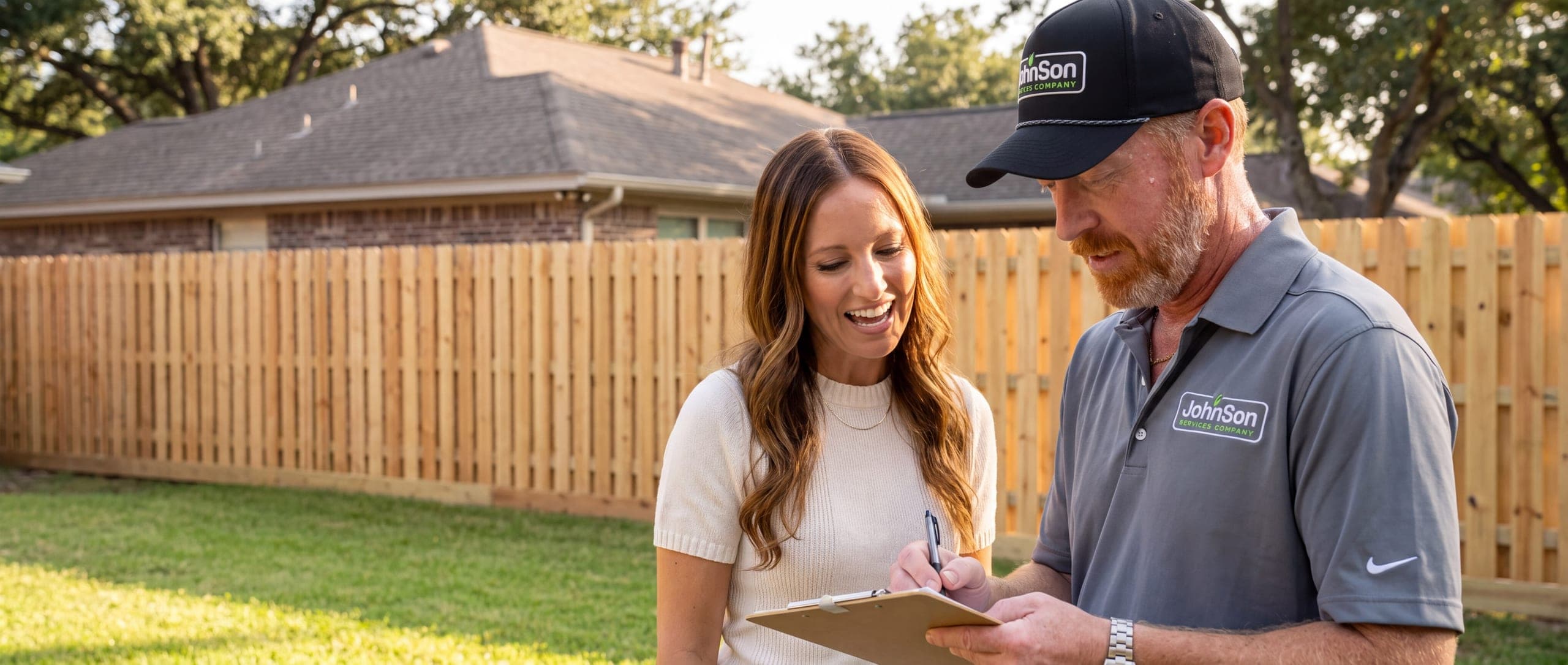
A Johnson estimator writing a fence quote on a clipboard beside a homeowner.

Price a fence before you call

See what a fence costs before anyone quotes you.

Pick the material, the height and how many feet of fence, and the calculator shows the market range for a fence like yours in Texas. Then a salesperson measures the real one in your yard and the number comes back the same day.

The estimate is free and there is nothing to sign.

Ask Your ARC These Five Questions Before You Submit

One phone call to the management company saves a full review cycle. Ask these five, get the answers in writing, and build the packet against them.

Question to ask Why the answer decides your packet
“Is fiber cement on the approved materials list?” A yes turns your submission into paperwork; a no turns it into a variance request
“What does a variance request have to include?” Tells you whether the committee wants product literature, photos, or a neighbor sign-off
“How is fence height measured, from grade or from the slab?” Decides which number you put on the drawing for a sloped lot
“Which colors and finishes are pre-approved?” A named pre-approved color removes the easiest reason to bounce a packet
“How long is the review period, and who signs the approval?” Sets your install date and tells you whose signature the contract waits on

How the Houston Fence Lineup Compares on Fiber Cement

A material switch only works if the contractor bidding it actually builds in that material and can spec it for a committee. Here is how we and the three Houston-area contractors we track compare on the two things a fiber cement packet turns on: whether the material is in the lineup at all, and how many Texas metros the crews cover.

Company Fiber cement in the published lineup Other fence materials published Texas metros served
Johnson Services Company Hardie Plank fiber cement in both the residential and commercial lines Wood, iron and aluminum, brick and stone, vinyl, chain link, Trex composite Houston, Dallas-Fort Worth, Austin, San Antonio
Texas Fence Not in its published lineup Wood and cedar, iron, vinyl, chain link Houston metro
Southland Fence & Supply Not in its published lineup Wood, iron, vinyl, chain link, brick and stone Houston metro
Bayou City Fence Company Not in its published lineup Wood, vinyl, iron, aluminum, chain link, Trex, hog, cable Southeast Houston and Gulf Coast suburbs

Frequently Asked Questions

Can an HOA in Texas deny a fence outright?

No. Since September 1, 2025, a Texas property owners’ association cannot prohibit an owner from installing a perimeter fence or other security measure (Texas Property Code, 2025). It keeps limited authority over the type and material of that fence, which is why a denial usually arrives as a material objection.

Does a fiber cement fence need HOA approval if the old fence was wood?

Yes. A same-material replacement exemption in your covenants covers wood for wood, and switching to a cement panel is a change of material that goes to the committee. Send the full packet the first time rather than starting the fence and asking after.

Is a fiber cement fence considered a security fence under the new law?

The law protects your right to install a perimeter fence or other security measure, and it does not name specific materials. Your board can still hold fiber cement to its material and appearance rules, so the protection gets you a fence and the packet gets you this fence.

Can my HOA require a specific color on a fiber cement fence?

Yes, appearance falls inside the type-and-material authority the law preserved. Ask which colors are already pre-approved and pick from that list, because a pre-approved color removes one of the two easiest grounds for a denial.

Do I need a city permit for a fiber cement fence in Houston?

Houston requires a permit for any residential fence over 8 feet above grade, and at any height for fences built wholly or partly of masonry or concrete (City of Houston, 2026). Call the Houston Permitting Center about your specific product before you order material, since a cement-based panel sits close to that second trigger.

What happens if the ARC denies my submission?

Read the denial for the specific ground it names, then resubmit against that ground with the detail that was missing. A denial over height, placement, or color is a paperwork fix; a denial because the material is off the approved list needs a written variance request.

Does the 10-foot gate setback apply to my driveway gate?

It applies where your association chooses to require it, because the law lets a board require a driveway gate set back at least 10 feet from a laned right-of-way (Texas Property Code, 2025). Dimension that setback on your site plan whether or not your covenants mention it.

How much of the packet should my fence contractor produce?

The material spec, post spacing, embedment depth, and footing size should come from whoever is building it, since those are the numbers they will be held to. The site plan and the height dimensions come off a survey and a measurement taken in your yard.

The Committee Is Reviewing Your Packet Before It Ever Judges Your Fence

Homeowners walk into this asking whether their HOA allows fiber cement. The committee is answering a narrower question: whether the submission in front of it names the product, the place, the height, and the color clearly enough that there is nothing left to deny. Give it those four things and a material switch becomes routine. Leave one blank and you get a second round, which is a month of summer you spend on email instead of on a finished fence. The packet is the job, and the spec inside it has to come from somebody who has stood in your yard with a tape measure.

How Johnson Services Company Specs a Fiber Cement Fence Before It Goes to Review

The reason packets bounce is missing numbers, so we produce them before you submit. We measure every job on site, name the material and the finish, and give you post spacing, embedment depth, and footing size in writing. Hardie Plank fiber cement sits in both our residential and commercial fence lines, alongside wood, iron and aluminum, brick and stone, vinyl, chain link, and Trex composite, so if your ARC sends you back to a wood fence we build that instead without restarting the bid.

Homeowners rate us 4.9 stars across 60 Google reviews, and 4.9 across 170 reviews on SoTellUs. What they name most often is the speed of the callback and the fact that somebody walks the design with them first. In an April 2026 SoTellUs review, a customer wrote: “The price was fair, the service was excellent, and everything was left clean once the job was done. Communication was great throughout the process, and they really took the time to go over the design with me before starting the work.” Another wrote in June 2026: “Their price was competitive and lower than the other 2 but what sealed the deal was Matt called back the same day I initially contacted them for an appraisal.”

Two other numbers matter once the committee says yes. Master Halco named us its 2026 Largest Volume Customer for the Southwest Region and the World, and that wood-picket buying power gets passed straight to the customer, which is why a Johnson wood fence is priced the way it is at the grade we name. And across more than 20,000 jobs last year, we had zero craftsmanship warranty callbacks. The warranty runs one year on workmanship, and our record says it does not get used.


Johnson Services Company builds the material spec, site plan, and footing detail your architectural review committee needs before it can approve a fiber cement fence. Call (877) 956-4676 or request an estimate online, and a salesperson measures the yard and writes the numbers down with you.

Get a free on-site estimate and fence spec →

Free estimate

Get your estimate from the largest fence company in Texas

Tell us what you need and where the fence goes, and a salesperson will come out and measure the line before anyone writes a number. You get the picket grade and the total in writing, the visit costs nothing, and there is nothing to sign.

Call (877) 956-4676

Monday to Friday, 7am to 4pm.

What kind of fence?
Which part of Texas?
Roughly how much fence?
How did you hear about us?
  • Free on-site estimate
  • Same-day quote
  • Nothing to sign
  • Work starts in about 4 days