
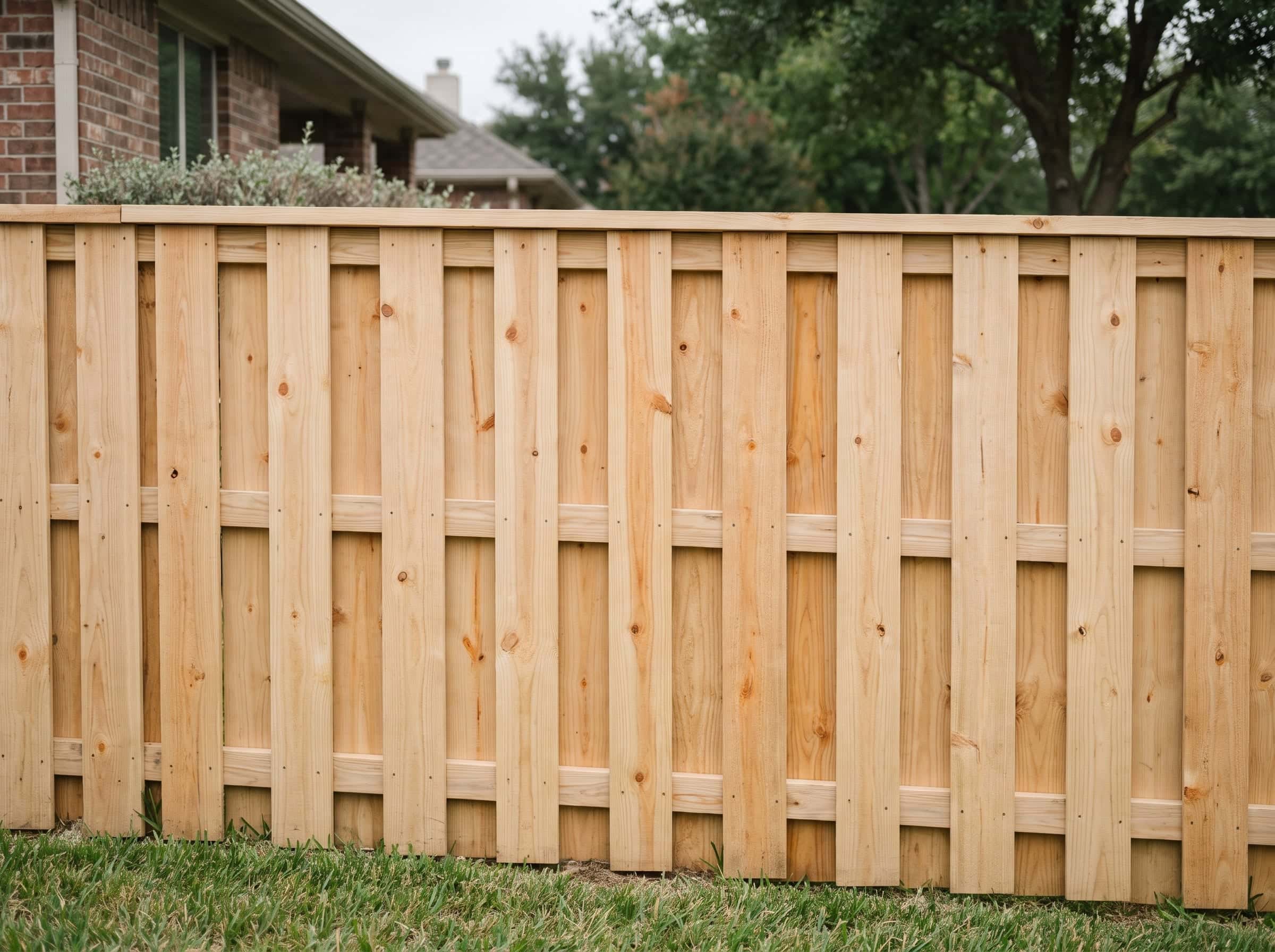
In Texas, the neighbor who builds a fence pays for it, and neither side must share the cost of a boundary fence unless they agreed to in writing. If you want the other owner to chip in, get the split signed before any crew starts. Johnson Fence measures the line and quotes the job free on site, so the written agreement can carry a real figure.
Most owners find this out the hard way: the fence leans, the neighbor assumes you will pay half, and a verbal “sure, we’ll split it” sits on nothing. The answer below covers who owns the fence, how to split it, what can override a deal, and who to call.
Does a Texas neighbor have to pay for a boundary fence?
No. Texas does not require a neighbor to share the cost of building or repairing a fence, even one on the property line, and whoever builds it generally pays, as the Texas State Law Library’s fences and boundaries guide explains. That makes the cost question one you settle with your neighbor. A statute does not settle it for you.
The number is worth knowing before you ask. National wood-fence installs run $20 to $50 per linear foot (HomeGuide, 2026; HomeAdvisor, 2025), while Houston-area wood privacy fences are commonly quoted at $16 to $42 per linear foot (Angi Houston and HomeBlue, 2025 to 2026). Those are market ranges from those publishers, rather than our price.
Who owns a fence that sits on the property line?
A fence entirely on one owner’s land belongs to that owner, and a fence that only looks like it sits on the line may be on one side of it. A property survey is how you find out where the line is before anyone assumes the fence is shared.
Ownership also decides what the fence may look like. In Austin, a solid fence along a property line may not exceed 6 feet from natural grade, rising to 7 feet only where there is a grade change of at least 1 foot (City of Austin, 2025). The owner who builds carries those limits, so a split cost without a split on the plan is half a deal.
How do you split a fence cost with a neighbor in Texas?
Agree on the split in writing before any work starts, and attach the quote so both of you are signing a number. Written terms on who pays, who owns and who repairs it protect both owners.
Our free on-site estimate gives you that number. We price every project by custom quote after the estimate, because cost depends on fence type, materials, length, gates and site conditions. The quote comes from measuring the fence line on site, and it is the price the customer pays. A figure given over the phone from an address is only a rough estimate.
If you live in an HOA, send the plan through review first. Section 209.00505 of the Texas Property Code, which governs architectural review, applies to an association of more than 40 lots (Texas Legislature, 2025). Put the approval date in the same agreement your neighbor signs.
What Texas rules can override a neighbor’s fence agreement?
Three things can add duties on top of any neighbor deal: Texas Agriculture Code chapter 143 on livestock fencing, your city’s fence ordinance and permit rules, and your HOA’s deed restrictions. Check all three before you set a height, a material or a cost split.
The HOA rule changed recently. Under Senate Bill 711, an owners’ association may no longer prohibit an owner from installing a perimeter fence. It keeps limited authority to regulate fence type or material, to require a driveway gate set back at least 10 feet from a laned right-of-way, and to bar fencing forward of the front building line (Texas Property Code, Chapter 202, Section 202.023, 2025). Fencing installed before September 1, 2025 is grandfathered. City rules differ by city, so read yours before you sign anything.
What goes wrong when a Texas fence is built without a measured quote?
Reviewers of other Texas fence companies describe the same few failures: posts set short, quotes that never arrive, deposits with no result. Each one is a fence a neighbor then has to live next to.
A one-star Google review from May 26, 2026 reads: “The post should be 2 feet underground but they only did 1 feet. … Now my fence is in bad condition and it is leaning because of that and they are not willing to come back to fix it.” A shared fence leaning into two yards turns a cost question into a dispute.
On September 25, 2026, another reviewer left one star on Google and wrote: “They stole my money. Paid them a deposit and I never heard back from them. They asked that I pay with a check and not a credit card. Now I see why. Do not do business with them. I just saw that they lost their BBB accreditation.” A signed split with your neighbor means little if the money goes to a crew that never shows. Get the footage measured and the picket grade named on the quote before you pay.