
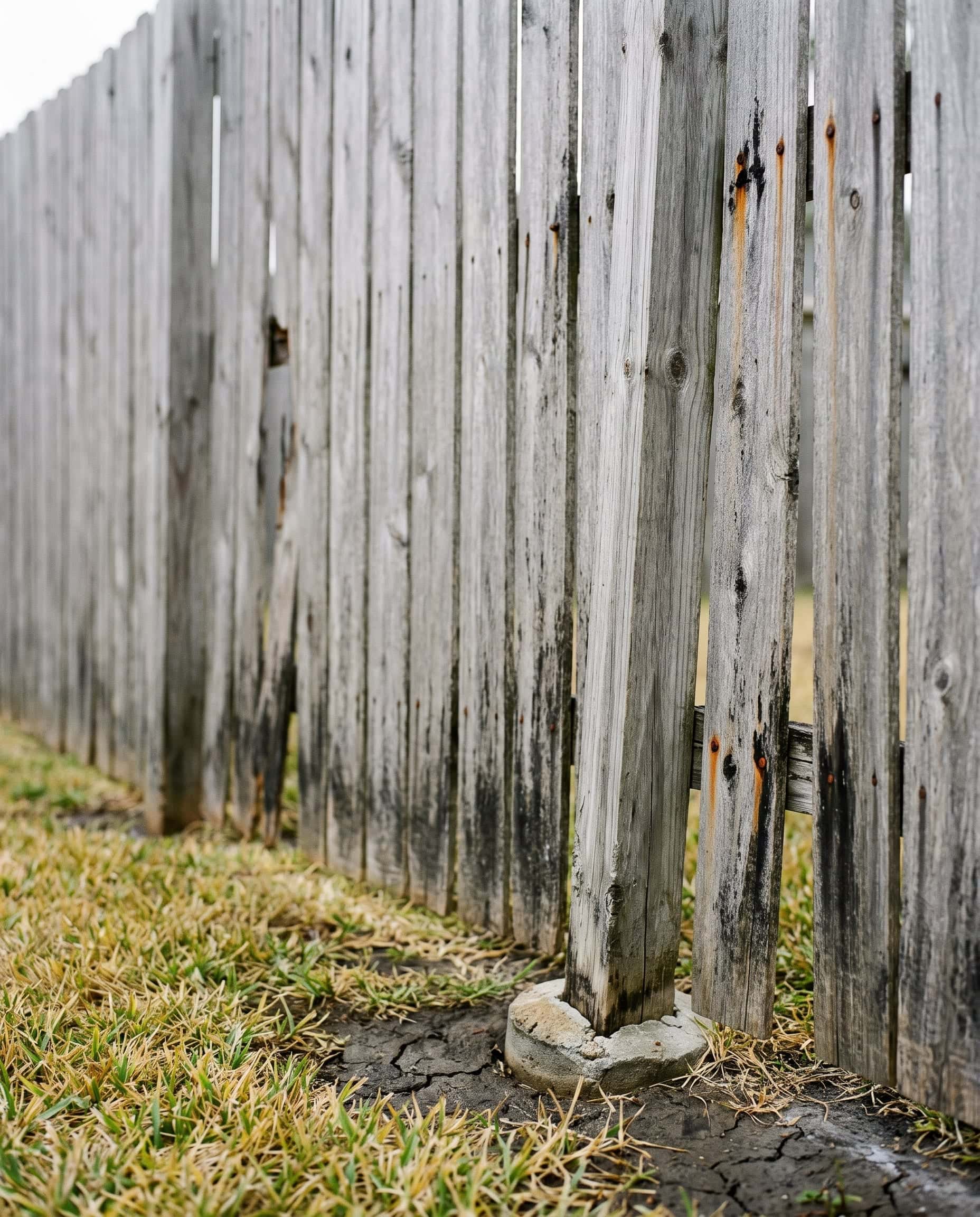
Ask what a fence costs in Houston and you get a per-foot range, then a list of questions back at you. That range is the least useful part of a quote. Four lines under it set your bill: the picket grade, the footage, the tear-out, and the post depth.
What Does a Fence Cost in Houston, by Material?
Houston wood privacy fences are commonly quoted at $16 to $42 per linear foot (Angi Houston and HomeBlue, 2025 to 2026). Every other material sits above or below that band. These are market numbers from publishers who measured them, for a 6-foot residential fence on flat ground, before tear-out, gates, and slope.
| Material (6 ft residential) | Installed cost per linear foot | Who measured it |
|---|---|---|
| Wood, pine to cedar | $18 to $45 | HomeGuide, Angi, HomeAdvisor |
| Chain link | $12 to $28 | HomeGuide, Angi |
| Vinyl privacy | $30 to $60 | HomeGuide, Ergeon |
| Ornamental steel or iron | $45 to $90 | HomeGuide, Angi |
Notice what the table cannot tell you. Two quotes can both land inside the wood band and still describe different fences. The band is something to check a quote against. It is not a price.
Four Terms to Know Before You Read a Houston Fence Quote
Most of the confusion in a quote comes from four words that sound simple. Each one hides a number that moves your total.
| Term | What it means on a Houston quote |
|---|---|
| Linear foot | One foot of fence along the line, the unit every per-foot price multiplies against |
| Picket grade | The quality tier of the wood boards, sorted from #1 down to #3 |
| Tear-out and haul-off | Pulling the old fence and driving it out of your yard |
| Post embedment | How many inches of each post sit in the ground, and in what footing |
A per-foot price multiplies the first term by a number. The other three decide what that number actually buys.
Which Picket Grade Was the Price Written Against?
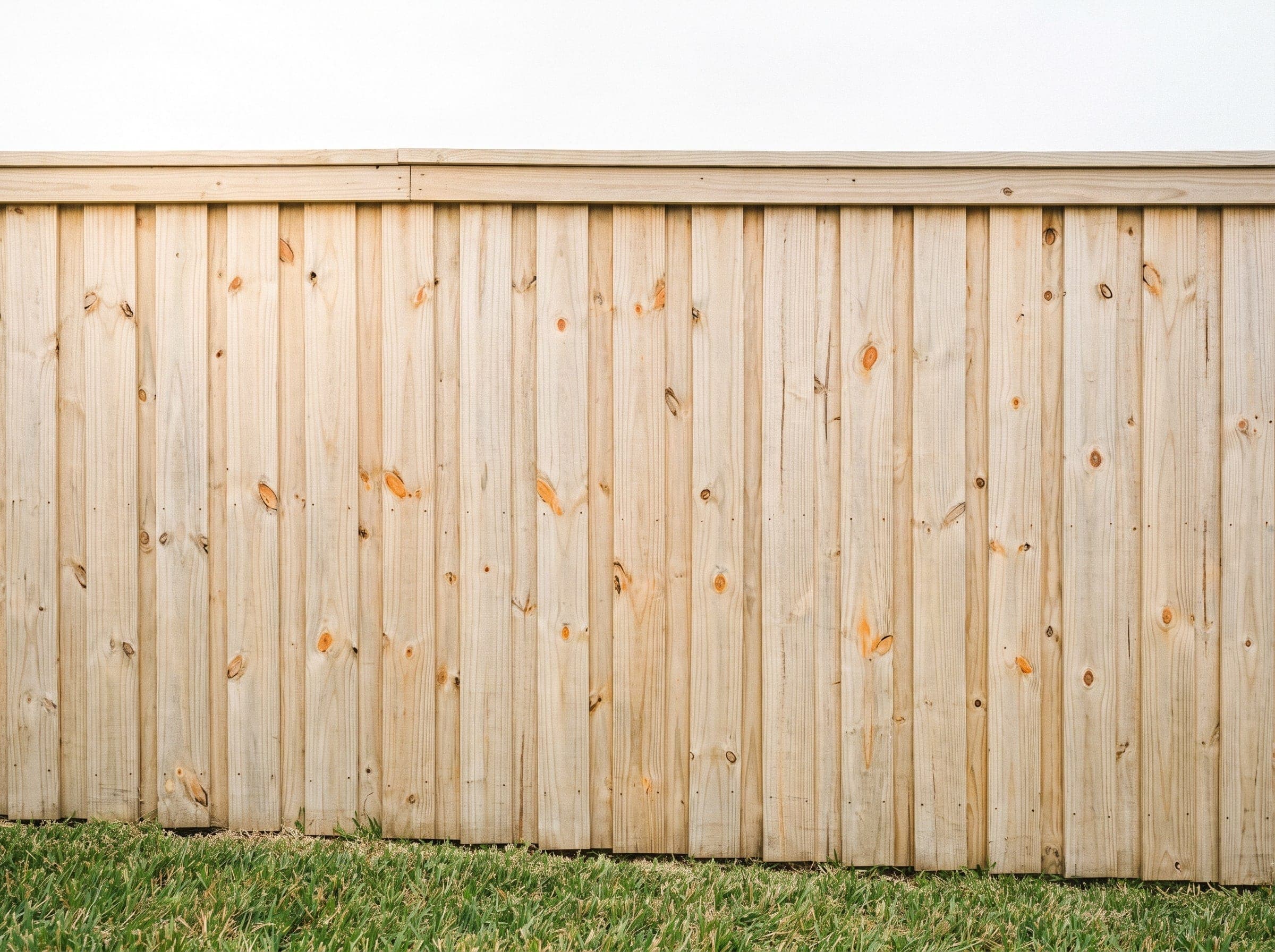
A quote that says only “cedar” leaves the grade open, and the grade changes the board you get. Pickets run from #1 to #3, and the lower tiers carry more knots and flaws. Two bids for the same fence can differ by hundreds of dollars on grade alone.
We quote the grade by name on every wood job. We can do that at a price others cannot match because we buy the wood for less. We are Master Halco’s 2026 Largest Volume Customer for the World, and we pass that buying power through. Nobody buys more fence pickets than Johnson Fence, so nobody in Texas sells you a wood fence for less on the same spec.
Our price is lower for the same spec. It is not lower for a thinner one. Ask every company to write the grade next to the price, and ask us too.
Was the Footage Measured on Site or Guessed?
Footage is the number everything else multiplies against. A guess of 20 feet too long costs you the whole fence line at the per-foot rate. A guess of 20 feet too short shows up as a change order after the crew arrives.
Here is how our quotes get built. A rough number comes over the phone from your address. Then the salesperson walks your yard, measures the linear footage with a tape, and confirms the fence type and picket grade. Same-day quotes follow. The materials are counted from that footage and loaded before a crew leaves the yard.
That is the expensive, unglamorous way to do it. It is also why install day has fewer surprises for both of us. If a quote arrives without anyone ever standing in your yard, treat its footage as an estimate of an estimate.
Does the Quote Include Tear-Out and Haul-Off?
On a replacement, the old fence has to leave. That work is real labor and real disposal, and it is the line most often left off a cheap quote. The market ranges above exclude it, so a total that looks low may simply not include it.
Old Houston yards make removal harder than it sounds. Mature live oaks run along the fence line, irrigation lines sit in the ground, and the old fence has to come out without damaging either. A builder lot has none of that.
Our replacement jobs start with tearing out the old fence. In a June 2026 SoTellUs review, a customer wrote that Johnson Services “were quick to replace and remove the old fence.” Ask any company whether removal is a named line with its own price or a hope.
How Deep Do Fence Posts Go in Houston Clay?
Houston wood has a rot problem and a soil problem, and both attack the post first. The USDA Forest Products Laboratory puts Houston at 77.2 on the Scheffer decay hazard index, deep inside the high band above 65, against 44.3 for Dallas (USDA Forest Products Laboratory, 2009). Moisture is why. Wood in constant contact with wet ground fails at the ground line before the boards ever look tired.
The clay adds a second force. It swells when it is wet and shrinks when it is dry, and a shallow post gets pushed around by both. The building code sizes an embedded post as a pole in soil, so required depth grows with wind force and shrinks only as the soil gets stronger (International Building Code, 2021). The code lets the soil resist over just one-third of the embedded depth. A shallow hole is cheap to dig, which is exactly why a thin quote shortens it.
Ask for the post depth in inches, written on the quote, and ask what footing surrounds it. We measured, specified, and loaded every one of last year’s 20,000-plus jobs the same way, and we had zero craftsmanship warranty callbacks across all of them. Our craftsmanship warranty runs one year. The record says it went unused.