
Guides

The Texas Fence Materials Termites Cannot Eat

Ask which fence material termites cannot eat and you get a list: vinyl, aluminum, steel, composite.

August 14, 2026

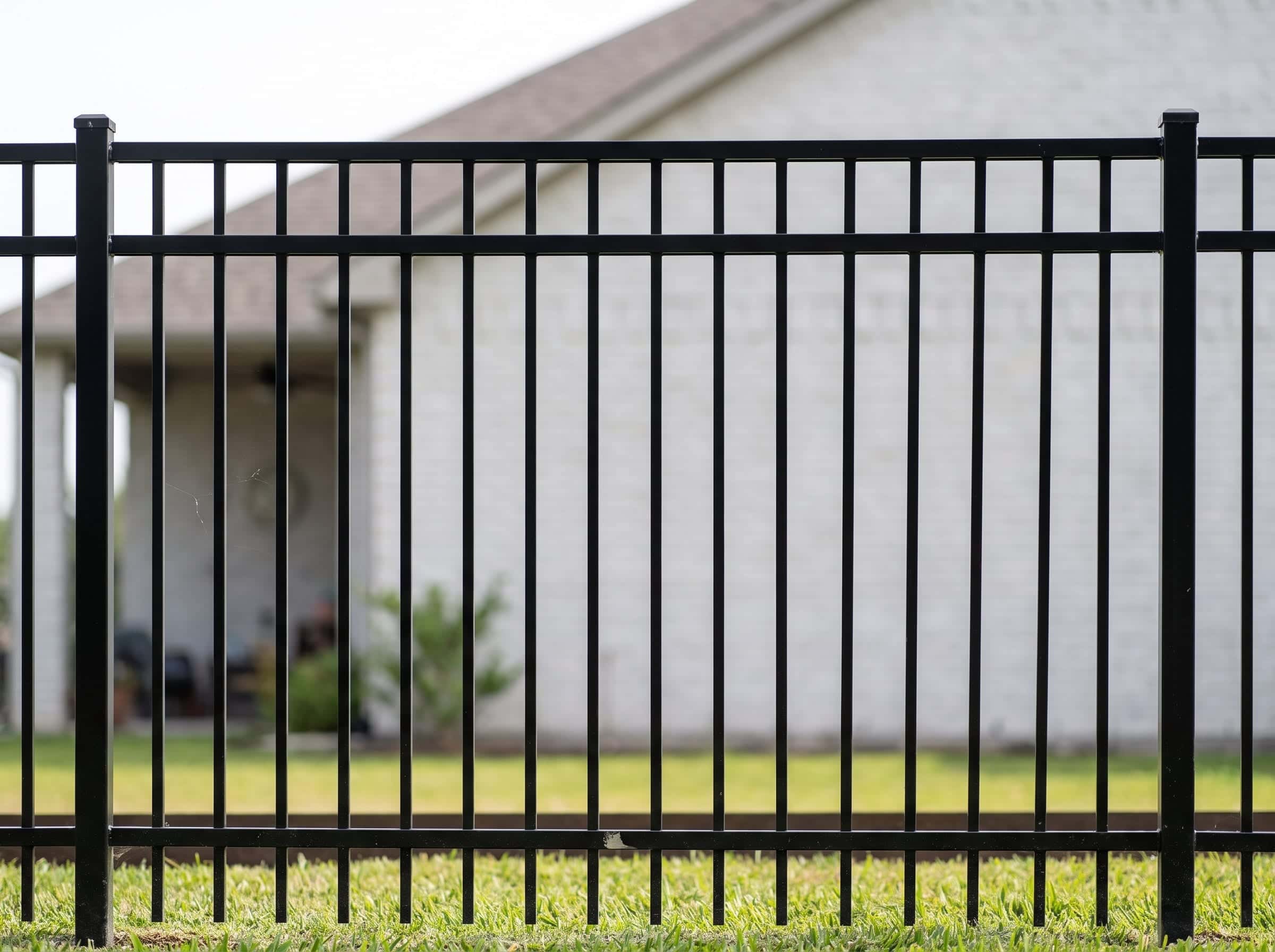
A flat-top ornamental steel fence along a Texas front lawn

Ask which fence material termites cannot eat and you get a list: vinyl, aluminum, steel, composite. The list is correct. It is also only the second half of the answer.

The first half is where your property sits, because termite pressure in Texas is not one number statewide, and a wood fence built to the right spec outlasts plenty of the material people buy to dodge the question. Here is how each material behaves once it is in the ground, and what to ask before anyone hands you a price.

Two Termite Pressures Cross Texas, and One Is Coastal

Your zip code changes the risk more than the material aisle does. Texas has two major structural termite pests, and the aggressive one is concentrated: the Formosan subterranean termite is found primarily in the greater Houston-Galveston area and the Beaumont-Port Arthur corridor, while native Reticulitermes species occur throughout the state and are more prevalent along the coast (Texas A&M AgriLife Extension, 2018). Same fence, same cedar, different odds depending on which side of the state it is standing on.

Size is why the Formosan matters. Its colonies run at least four times as large as native subterranean colonies, and a new colony can pass 1 million individuals within 5 years (Texas A&M AgriLife Extension, 2010). For a homeowner in Kingwood, Friendswood, or Galveston, that is the pressure a buried post is arguing with. In Frisco, Georgetown, or Helotes, the native species are present but the pressure eases as you move inland from the Gulf.

So the honest opening question is not which material is termite-proof. It is which material is worth the money on your lot.

Learn These Four Terms Before You Read a Fence Quote

Four words decide whether a wood fence is a real answer or a coin flip, and most quotes leave two of them out. Fence posts sit in what the wood-preservation industry calls Use Category UC4A, general ground contact, and the consensus standard pairs that exposure with a minimum preservative retention engineered for long-term in-ground service (American Wood Protection Association, Standard U1). A post that is not treated to that retention is a different product wearing the same color.

Term What it means Why it changes your fence
Cellulose The plant fiber in wood that termites digest for food Vinyl, aluminum, steel, and chain link carry none of it
Heartwood The dense inner wood of a mature tree, where natural decay resistance sits Cedar heartwood resists decay; cedar sapwood does not
Ground contact (UC4A) The treatment class rated for wood buried in soil, per AWPA Standard U1 A post treated only for above-ground use fails at the dirt line
Picket grade The mill grade of the board, #1 through #3 Two quotes that both say cedar can be two different fences

Ask for all four in writing. A contractor who names the species but never the grade has told you almost nothing about what shows up on the truck.

Vinyl, Aluminum, Steel, and Composite Give Termites Nothing

Take the cellulose away and the termite question closes. InterNACHI’s life-expectancy chart for homes rates a wood fence at about 20 years and a polyvinyl fence above 100, the widest gap between the two most common Texas fence materials in a single comparable reference. Metal and vinyl still age. They just age from sun and corrosion instead of from something eating them.

Material What termites can use Rated service life What ages first
Vinyl (PVC) Nothing 100-plus years Chalking and color loss on sun-facing panels
Aluminum Nothing Lifetime limited-warranty term Powder coat at scratches and welds
Ornamental steel or iron Nothing Lifetime residential warranty, 20 years commercial Coating breakdown where the post meets soil
Chain link Nothing Set by zinc class: 2.0 oz/ft² Class 2 outlasts 1.2 oz/ft² Class 1 Thin galvanizing on residential-grade fabric
Trex composite Wood flour bound inside plastic, nothing exposed to feed on 25-year residential warranty term Water uptake at unsealed cut ends

The trade is money and looks. An ornamental steel or aluminum fence costs several times a pine privacy fence per foot, and neither one screens a backyard the way a 6-foot wood panel does. That is the real reason most Texas backyards are still wood.

Wood Built to Spec Is Still in the Running

A correctly built wood fence is not the sacrifice this comparison usually makes it. In a decades-long in-ground study at a severe-exposure site in southern Mississippi, pressure-treated wood showed expected durability beyond 60 years, against a year to a few years for untreated stakes in the same soil (USDA Forest Products Laboratory, 2013). The treatment is the difference between those two numbers.

Species matters on the boards above the ground line. A worldwide durability checklist rates western redcedar and coast redwood as resistant, class 2, and loblolly (southern) pine as only moderately resistant to nonresistant, class 3 to 4 (Scheffer and Morrell, Oregon State University, 1998). So the fence that holds up in a high-pressure coastal yard is usually a pair: cedar heartwood pickets over ground-contact treated pine posts.

Price is where wood usually wins, and it is where we are hard to beat, because Master Halco named us its 2026 Largest Volume Customer for both the Southwest Region and the World. That buying power is a picket cost a one-to-three-crew shop does not get, and we pass it to the customer. You pay less for the same spec instead of less for a thinner one.

Sapwood Is Why Two Cedar Fences Age Differently

Decay resistance lives in heartwood, and the same tree’s sapwood does not carry it. A USDA test-fence study exposing 10 softwoods and 9 hardwoods for up to 22 years classified western redcedar, redwood, and Douglas-fir heartwood among the most decay-resistant woods above ground, at an estimated 20-plus years, while the sapwood of those same species failed markedly sooner (Highley, USDA Forest Products Laboratory, 1995). Both boards get sold as cedar.

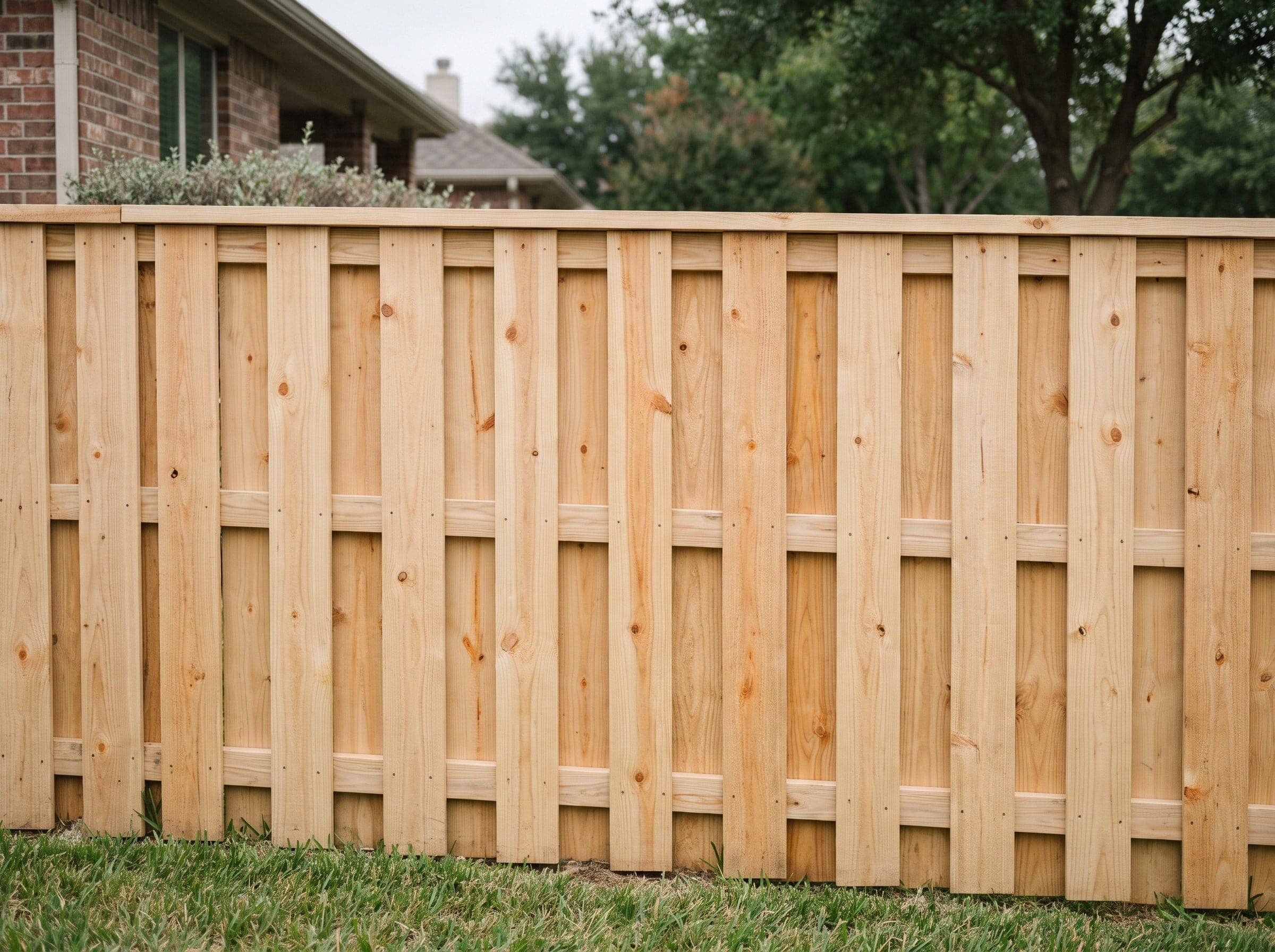
This is where the grade earns its place on the quote. A #1 picket is a tighter, cleaner board with less sapwood and fewer knots than a #3, and the price gap between them is real money across 200 feet of fence. Some competitors quote a species, deliver a lower grade, and let the customer discover the difference in year four. We name the grade, #1 through #3, on the estimate.

Cedar heartwood pickets over treated posts is a fence that lasts. Sapwood pickets over above-ground-rated posts is a fence that looks identical on install day and fails in half the time.

Why Does the Same Fence Rot Faster in Houston?

Moisture, and Houston has more of it than almost anywhere else in Texas. The Forest Products Laboratory’s decay-hazard index, recalculated for 280 U.S. locations, puts Houston at 77.2 and Port Arthur at 80.7, both deep inside the high-hazard band above 65, against Dallas at 44.3, San Antonio at 52.2, and Austin at 55.2 (USDA Forest Products Laboratory, 2009). Wet wood is also what draws subterranean termites in the first place, so the coastal metros carry both problems at once.

Which means the install details do heavy lifting on a Gulf Coast lot. Keep pickets clear of the soil so water is not wicking up the end grain. Set posts in concrete crowned to shed water away from the wood. Grade the line so runoff crosses the fence instead of pooling against it. Cut ends get the treatment they lost when the saw went through them.

None of that shows up in a price per foot, and all of it shows up in year six.
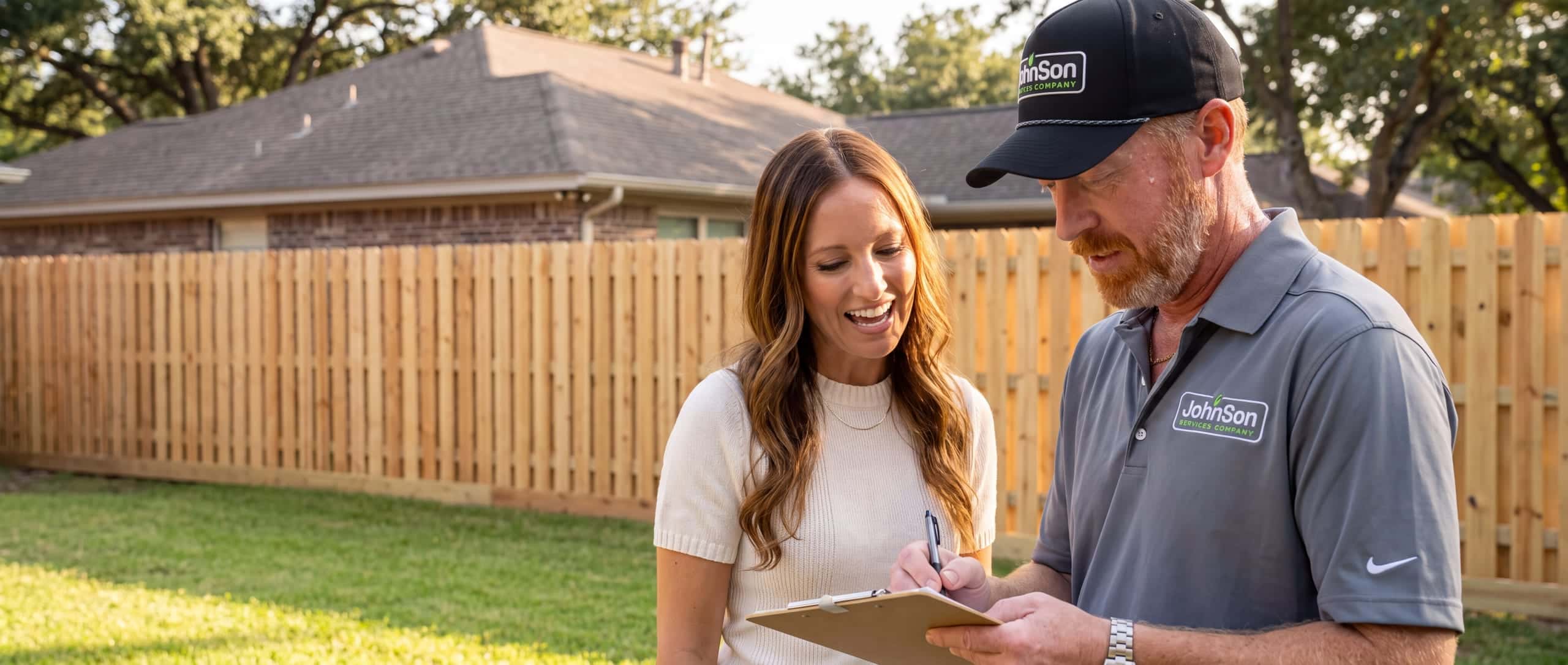
A Johnson estimator writing a fence quote on a clipboard beside a homeowner.

Price a fence before you call

See what a fence costs before anyone quotes you.

Pick the material, the height and how many feet of fence, and the calculator shows the market range for a fence like yours in Texas. Then a salesperson measures the real one in your yard and the number comes back the same day.

The estimate is free and there is nothing to sign.

Pick the Material by the Job It Has to Do

Match the spec to the lot, then compare prices between contractors who quoted the same spec. Here is how the four common situations sort out.

Your situation Weight this first Insist on this in writing
Coastal Houston lot, shade and clay Vinyl, aluminum, or ornamental steel Post depth, and concrete crowned to shed water
Inland Dallas, Austin, or San Antonio lot Cedar heartwood pickets over treated posts Picket grade #1 through #3, named on the quote
Ranch or long acreage line Ground-contact treated pine or steel pipe AWPA UC4A retention on every buried post
Pool, patio, or front elevation Ornamental iron, brick, or stone columns Coating spec, and footing size for the wind load

Every one of those specs is one we build. Across the last year we installed more than 2 million feet of fence over more than 20,000 projects, in wood, iron, chain link, vinyl, Hardie fiber cement, Trex composite, and brick and stone.

Ask These Five Questions Before You See a Price

Five questions separate a spec from a sales pitch, and you can ask all of them on the phone.

  • What treatment class are the posts? You want ground contact, UC4A. If the answer is only pressure-treated, ask again.
  • What grade are the pickets? #1, #2, or #3, written on the estimate. A species with no grade is not a spec yet.
  • Is the cedar heartwood? Ask what share of the board is sapwood, especially on a coastal lot.
  • Who measured the footage? A quote written off satellite imagery is a guess. Ours come from a salesperson standing in the yard with a tape.
  • What does the warranty cover, and how often is it used? Our warranty runs one year on craftsmanship, and the record behind it is zero craftsmanship warranty callbacks across the 20,000-plus jobs we finished last year.

The last one matters most. Warranty length is a promise. A callback record is a result.

How We Compare With One Builder in Each Texas Metro

Every fence company in Texas sells wood, and most sell at least one material termites cannot touch, so breadth and crew depth are what separate them. Here is how we line up against one established builder in each of the four metros we work, on non-cellulose lines offered, crews in the field, and metros covered.

Company Non-cellulose fence lines Crews in the field Metros served
Johnson Services Company Vinyl, aluminum and iron, chain link, Trex composite, Hardie fiber cement, brick and stone Over 100 crews, 25 to 30 of them in Houston Houston, Dallas-Fort Worth, Austin, San Antonio, 42 cities
Texas Fence Iron, vinyl, chain link 20-plus crews Houston and surrounding areas
Bayou City Fence Vinyl, iron, aluminum, chain link, Trex, cable Not published Southeast Houston and Gulf Coast suburbs
Austex Fence & Deck Ornamental iron, ActiveYards aluminum Not published Austin and Central Texas
Kodiak Fence Company Wrought iron, aluminum, chain link, Simtek Not published Flower Mound and North DFW towns

Frequently Asked Questions

Do termites eat pressure-treated wood?

Correctly treated wood is not food, which is why AWPA Standard U1 sets a preservative retention for buried posts instead of a species. The failure people call termite damage in treated pine is usually a post treated for above-ground use and put in the ground anyway.

Can termites damage a vinyl or aluminum fence?

No. Neither material contains anything a termite can digest, so the fence ages from sun and corrosion instead. Termites can still tunnel past a vinyl fence line to reach a wood deck or a house, so the fence protects itself, not the structures behind it.

Is composite fencing termite-proof?

Composite mixes wood flour into plastic, so there is no exposed cellulose for termites to work on. Water is the thing to watch instead, and it gets in at unsealed cut ends, so ask how the installer finishes field cuts.

Can a wood fence bring termites closer to my house?

A fence does not create a colony, but wet wood in ground contact gives an existing one a foothold near your slab. Keep the fence line draining, keep pickets off the soil, and keep stacked scrap lumber away from the posts after the crew leaves.

How do I tell whether a post failed from termites or rot?

Push a screwdriver into the post at the ground line. Rot gives you soft, crumbling wood that sinks under pressure, while termite work leaves hollow galleries and often a mud-packed tunnel on the surface. Either answer means that post is finished.

Does cedar need treated posts if the pickets are cedar?

Yes, on almost every job. Cedar heartwood earns its reputation above the ground line, and below it you want pine treated to ground-contact retention doing the buried work.

Do I have to replace the whole fence if only a few posts are eaten?

Not always. Scattered failures across a long run can be spot-repaired, but once several posts in the same stretch fail, the frame behind the pickets is the actual problem and a section replacement costs less than repairing it twice.

What Termites Cannot Eat Is Only Half the Answer

The four materials on that list really do close the question, and if you are on a shaded coastal lot in the Formosan corridor, spending the extra money on vinyl or ornamental steel is a defensible call. Inland, with cedar heartwood pickets over ground-contact posts and a grade written on the page, wood competes on service life and wins on price. What sinks a fence is a quote that names a species, skips the grade, and leaves the treatment class to whatever the yard loads that morning.

Ask which material termites cannot eat and you get a list. Ask where your fence is going and what grade is on the paper, and you get a fence.

How Johnson Services Company Names the Picket Grade Before You Price It

The gap between a good wood fence and a bad one is the spec nobody wrote down, so we write it down. A salesperson measures your footage on site, confirms the fence type, and names the picket grade, #1 through #3, before a number goes on the page. Because Master Halco named us its 2026 Largest Volume Customer for the Southwest Region and the World, the picket price behind that spec is one a three-crew shop cannot match, and it goes to you as a lower total rather than a thinner board.

Homeowners rate us 4.9 stars across 60 Google reviews, and 4.9 across 170 reviews on SoTellUs. What customers name most is the speed of the callback and the price landing under the other bids. In a June 2026 SoTellUs review, a homeowner wrote: “Their price was competitive and lower than the other 2 but what sealed the deal was Matt called back the same day I initially contacted them for an appraisal. It was a good decision and Matt was quick to reply with the cost estimate and each time I had a question.” On the non-wood side, David H. wrote on our reviews page: “Johnson replaced a metal fence along my back yard. They were responsive to my needs, came in a fair price and delivered as promised. The quality of the materials is excellent and the installation was seamless. i would highly recommend them.”

We have been building fences across Texas since 2002, we hold an A+ BBB rating with accreditation since March 2003, and we run over 100 crews, so the install date you are given is one a missing crew does not move.


Johnson Services Company is the answer to a quote that names a species and hides the grade. We measure your footage in the yard, put the picket grade and post treatment in writing, and give you the estimate free.

Get a free on-site fence estimate →

Free estimate

Get your estimate from the largest fence company in Texas

Tell us what you need and where the fence goes, and a salesperson will come out and measure the line before anyone writes a number. You get the picket grade and the total in writing, the visit costs nothing, and there is nothing to sign.

Call (877) 956-4676

Monday to Friday, 7am to 4pm.

What kind of fence?
Which part of Texas?
Roughly how much fence?
How did you hear about us?
  • Free on-site estimate
  • Same-day quote
  • Nothing to sign
  • Work starts in about 4 days