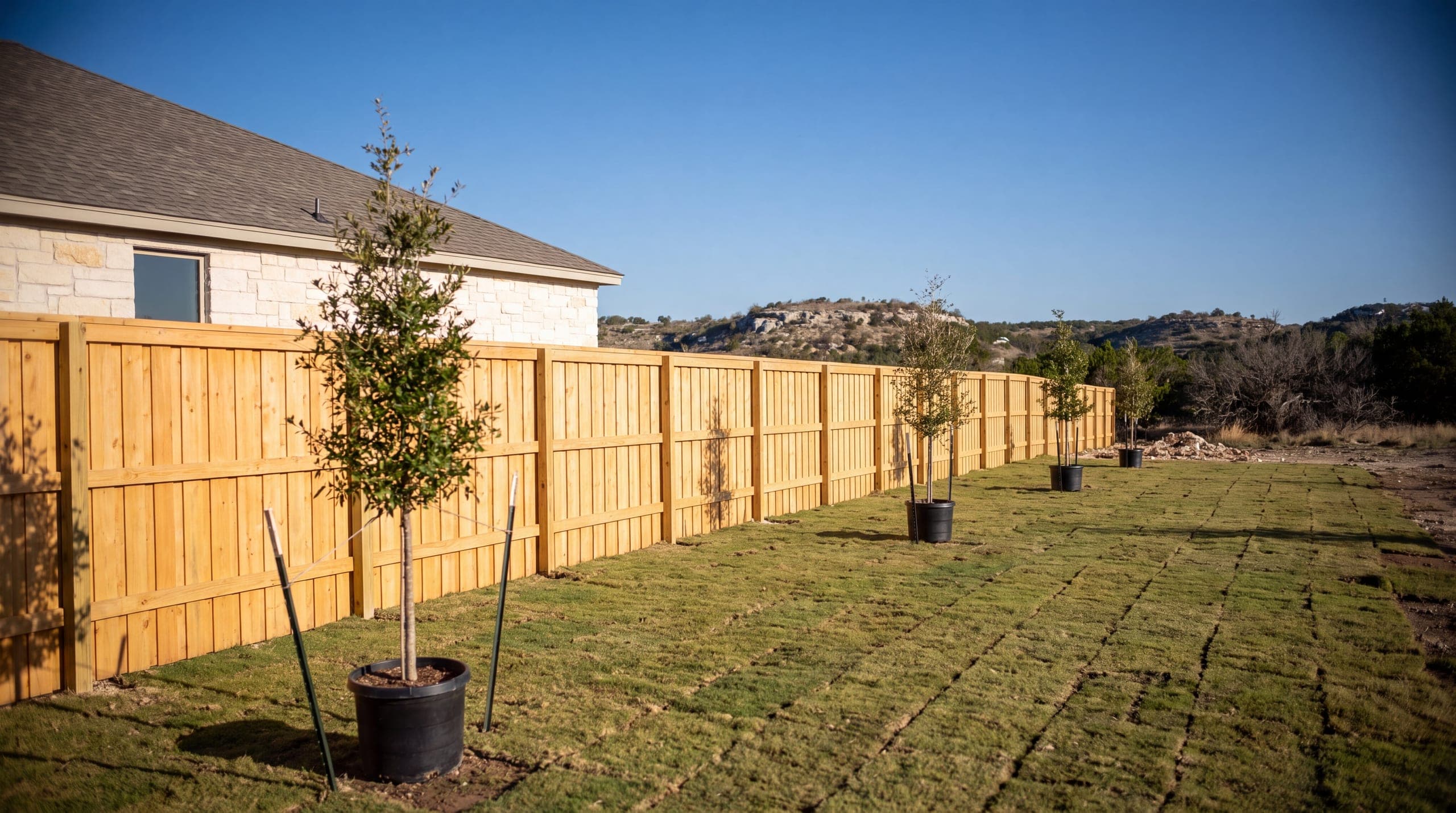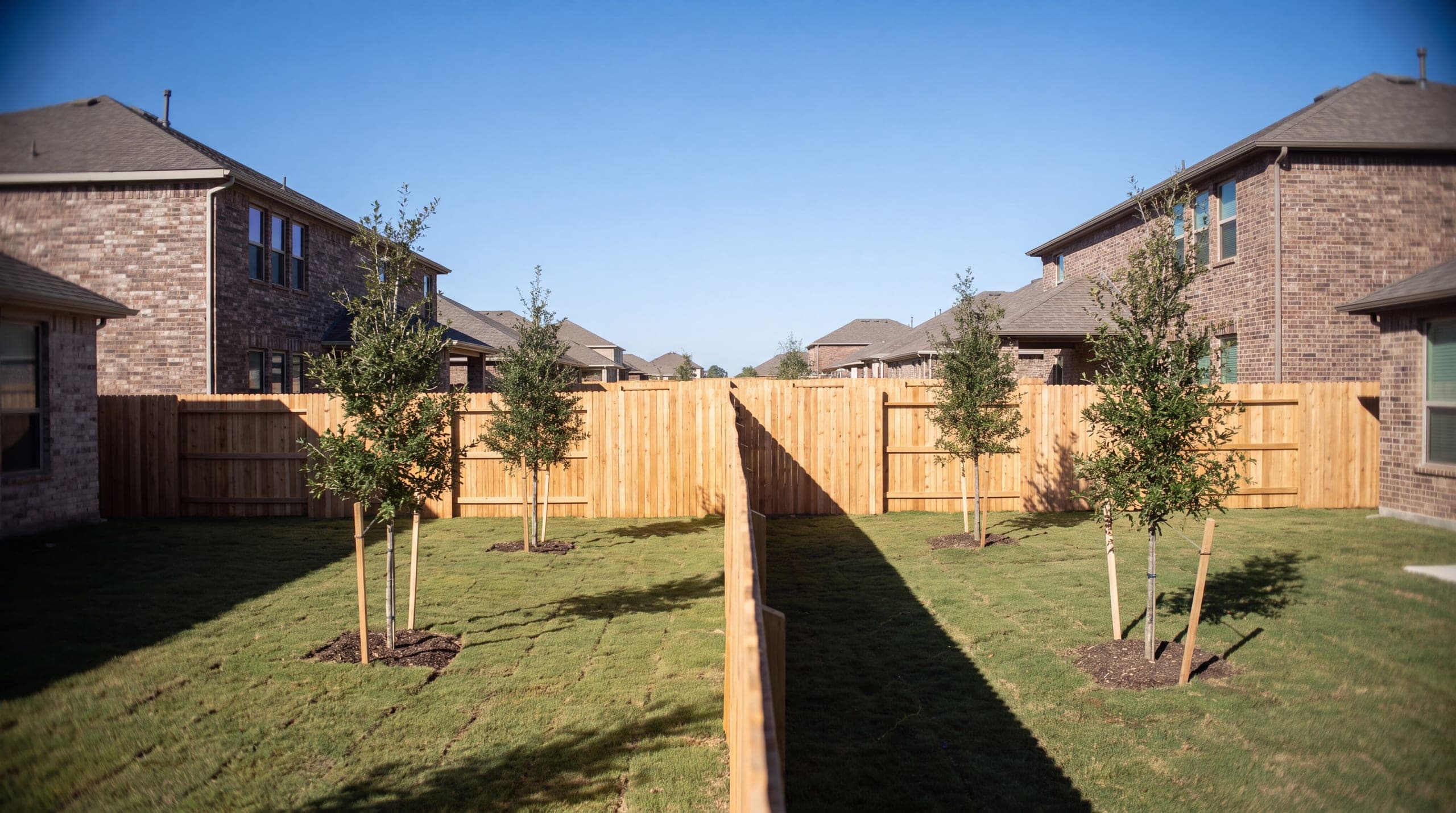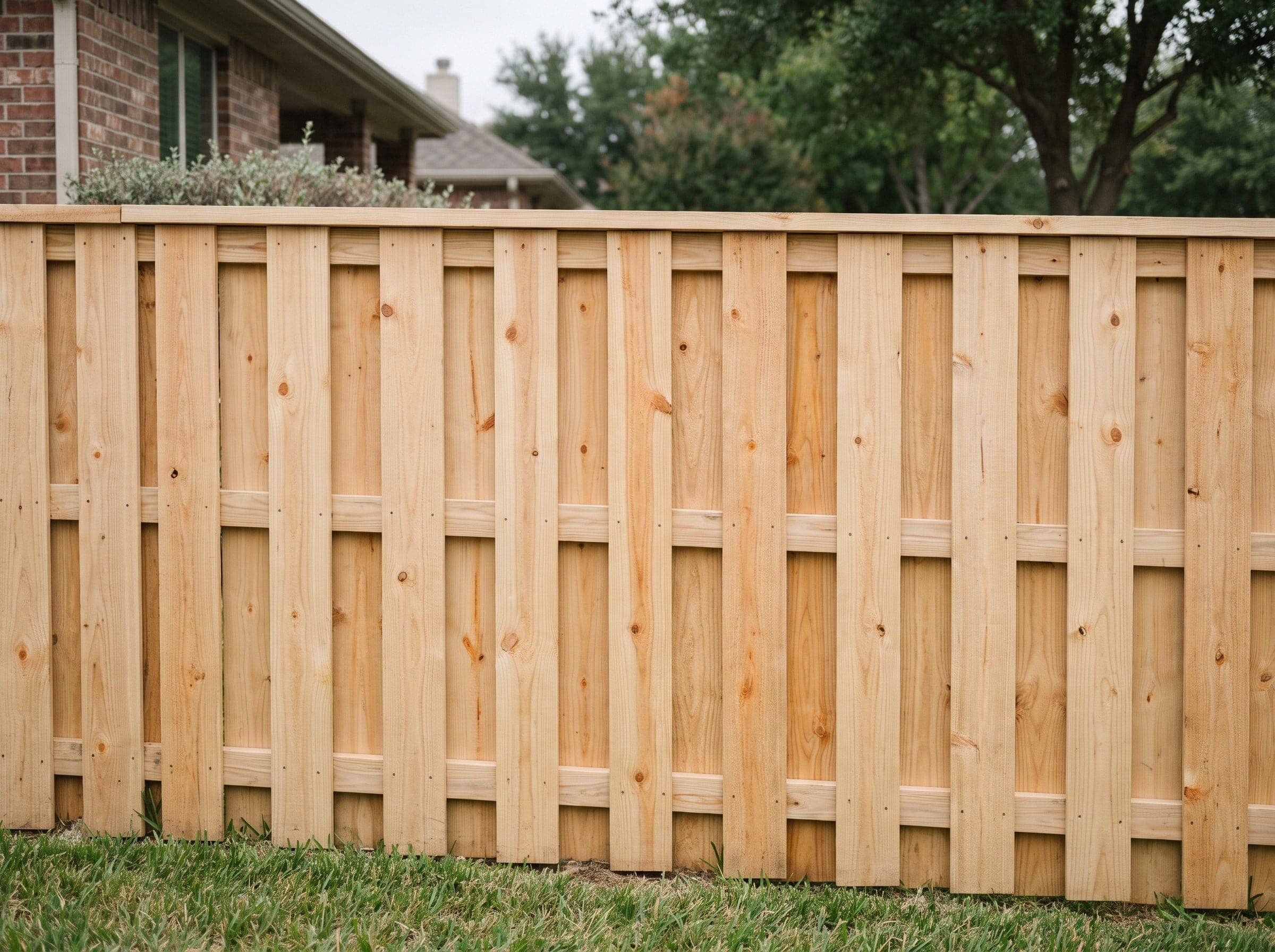

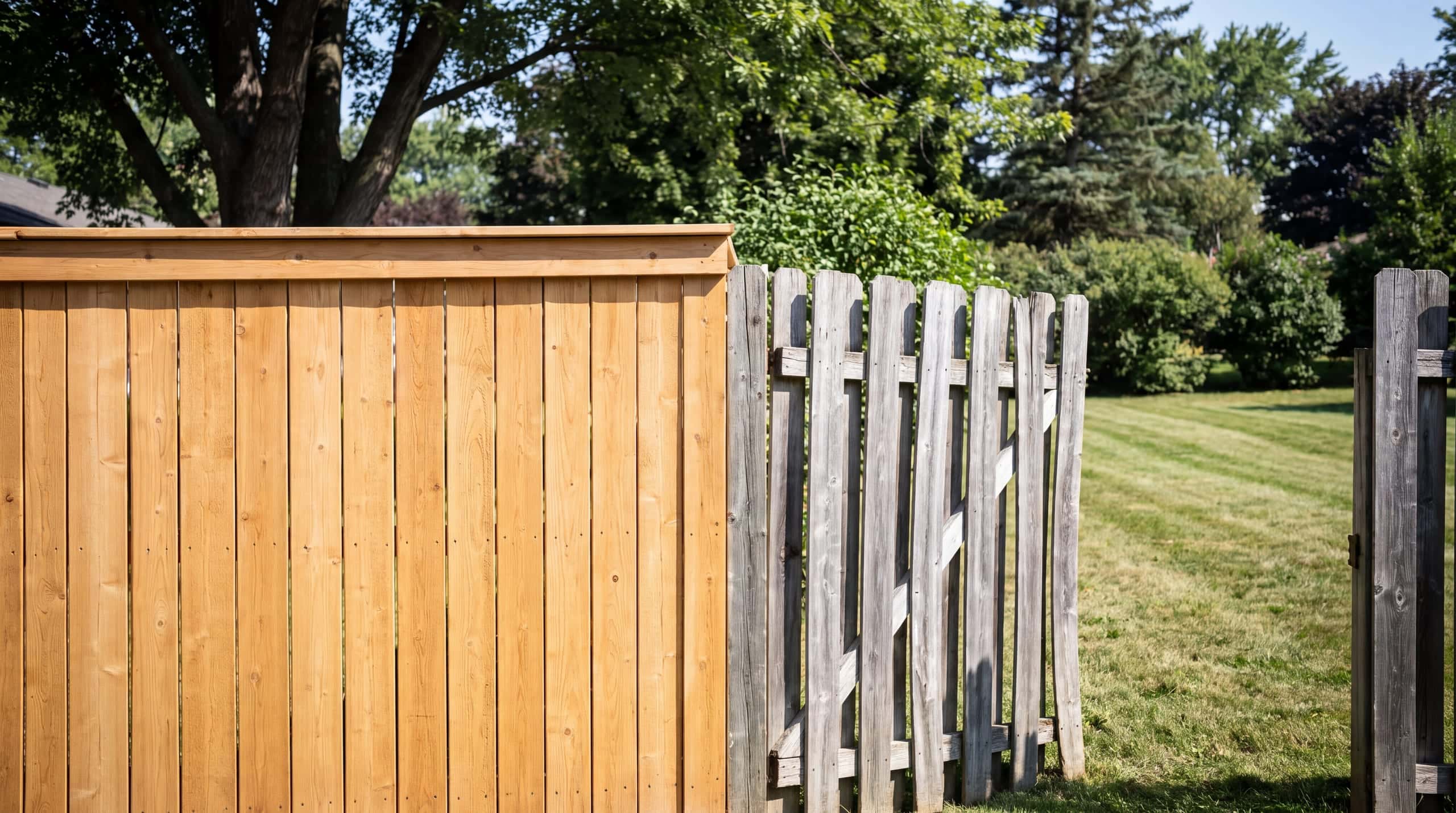
A Bellaire house that changed hands last year tells you almost nothing about the fence behind it. On one block the house came down and went back up inside 18 months, with a new fence line in by the time the sod went down. Two streets over, an older home sold with the same cedar the last owner put up when his kids were small.
So the useful question is not about the house at all. It is how old the fence is, and the answer is written at the base of the posts, in the two inches of wood above the dirt and the two inches below it.
Bellaire Rebuilds Houses Faster Than It Rebuilds Fences
A new house in Bellaire does not mean a new fence. Builders rebuild on lots that already have neighbors, and those neighbors already have fence on two or three sides. The cheapest move is to leave a sound run standing and build only what has to be built. That is how one property ends up holding two fence jobs put in 20 years apart, meeting at a corner post nobody points out at closing.
We see this more in Bellaire than in Memorial or River Oaks, where the housing stock is older and the fence line usually has one age. Here the street gives you no signal. The house can be three years old and the back run 25, and the paint on the pickets will not tell you which is which.
For a buyer, that matters in dollars. A fence you assumed came with the build can turn into a full replacement in year two of owning the place.
Read the Post Base, Because Boards Weather Fast Here
Kneel at a post and push a screwdriver into the wood right where it meets the dirt. That one spot dates the fence. Wood only decays when it stays wetter than the fiber saturation point, an average moisture content of about 30%, and the ground line is the only part of a fence that holds that much water for weeks at a time (USDA Forest Products Laboratory, 2021).
Everything above that line is the wrong evidence. A picket face in Bellaire silvers in one summer. Cupping, splits, and a gray tone show sun and rain, and they show up on a two-year-old fence and a 25-year-old fence alike. The frame ages on a different clock than the boards, and the frame is what you are buying or replacing.
Here is the same fence at two ages, read point by point.
| Where you look | At about 2 years | At about 25 years |
|---|---|---|
| Post at the ground line | Screwdriver tip stops at the surface; the wood knocks hard | Screwdriver sinks in past a quarter inch of soft, stringy fiber |
| Concrete collar | Collar sits at or just above grade with sharp edges | A gap has opened between the collar and the post |
| Nails and screws | Bright galvanized or coated heads, no rust bleed | Rusted heads with black streaks running down the picket |
| Picket bottoms | Square cut ends, still tight to each other | Split, cupped ends with daylight showing between boards |
| Rails behind the pickets | Rails straight, pickets flat against them | Rails sagging between posts, picket tops fanned apart |
Know These Five Words Before You Judge a Fence Line
Fence estimates and inspection reports use five terms, and knowing them turns a walk along the line into a reading. The one that carries the most weight is ground contact: the wood-preservation standard puts fence posts in Use Category UC4A, general ground contact, and sets a minimum preservative retention for long service in soil (AWPA Standard U1). A post that was never bought to that spec is on a short clock from the day it went in.
| Term | What it means on your fence |
|---|---|
| Ground line | The band of post 2 inches above and below the dirt, where rot starts |
| Heartwood | The dark inner wood of the tree, the decay-resistant part of a cedar picket |
| Sapwood | The pale outer band, which fails years before heartwood in the same board |
| Ground contact (UC4A) | Treatment level specified for wood set in soil, used for posts |
| Picket grade | The mill grade, #1 through #3, set by knot size and count |
Grade matters to dating because it tells you what somebody paid. A run of tight, small-knot pickets and a run of loose, fist-sized knots on the same property are two different purchases, made in two different years.
Five Signals That Date a Bellaire Fence in 10 Minutes
Walk the whole line once, both sides, before you decide anything. Five things separate a run built recently from one left standing, and none of them require a tool beyond a screwdriver.
- The fasteners. Rust bleeding down a picket face takes years of wet summers to show. Clean heads with no staining mean recent work, even where the boards have already grayed.
- The picket grade. Two grades on one property means two jobs. Look at knot size where a run meets a corner and you will often see the seam.
- The post spacing. A crew sets posts on a consistent spacing down a run. Where the spacing changes, one job ended and another began.
- The corner joint. This is the giveaway in Bellaire. A rebuilt run meets an original at a doubled post, a picket width that does not match, or a half-inch height difference nobody bothered to plane.
- The gate. Gates move thousands of times and age faster than any panel. A dragging gate on a run with hard posts usually means an old gate hung on a new line, or a hinge already replaced once.
Houston Rots Wood Faster Than Dallas Does
Wet air and warm winters do the work here. A wood fence carries a service life of about 20 years on the national reference chart used by home inspectors (InterNACHI), and that number was not written for the Gulf Coast. Bellaire spends most of the year in the range where decay fungi actually grow, so the same pine and the same cedar give back fewer of those years.
The Forest Products Laboratory scores decay hazard for U.S. cities on the Scheffer index, recalculated against 1971 to 2000 climate normals. Anything above 65 sits in the high band (USDA Forest Products Laboratory, 2009).
| Texas metro | Decay hazard index | What that means for a fence |
|---|---|---|
| Houston (Bellaire included) | 77.2 | High band; ground-line rot is the normal failure |
| Austin | 55.2 | Moderate band; wood lasts longer than on the coast |
| San Antonio | 52.2 | Moderate band; drier soil, slower decay |
| Dallas | 44.3 | Moderate band, at the low end for Texas metros |
Read the calendar accordingly. A 12-year-old fence in Bellaire has absorbed weather that a Dallas fence of the same age has not.
Bellaire Clay Tilts Posts That Never Rotted
A post can lean with no rot in it at all. The clay under this part of Texas swells when it rains and shrinks when it dries, and that seasonal movement walks a shallow post out of plumb a little at a time. Expansive soils do more damage to U.S. structures than floods, hurricanes, tornadoes, and earthquakes combined (Jones and Holtz, 1973), and a fence post is one of the lightest things they push on.
That gives you a second clock. Rot at the ground line tells you how long the wood has been wet. A lean with sound wood tells you the footing was too shallow for the soil, whoever set it and whenever they set it.
Check both before you form an opinion. A leaning run with hard posts is a footing problem worth resetting. A plumb run with soft posts is at the end of its life whether or not it looks straight from the patio.