
Guides

Replacing a Fence in Austin, When the Ground Sets the Price

Cedar or pine.

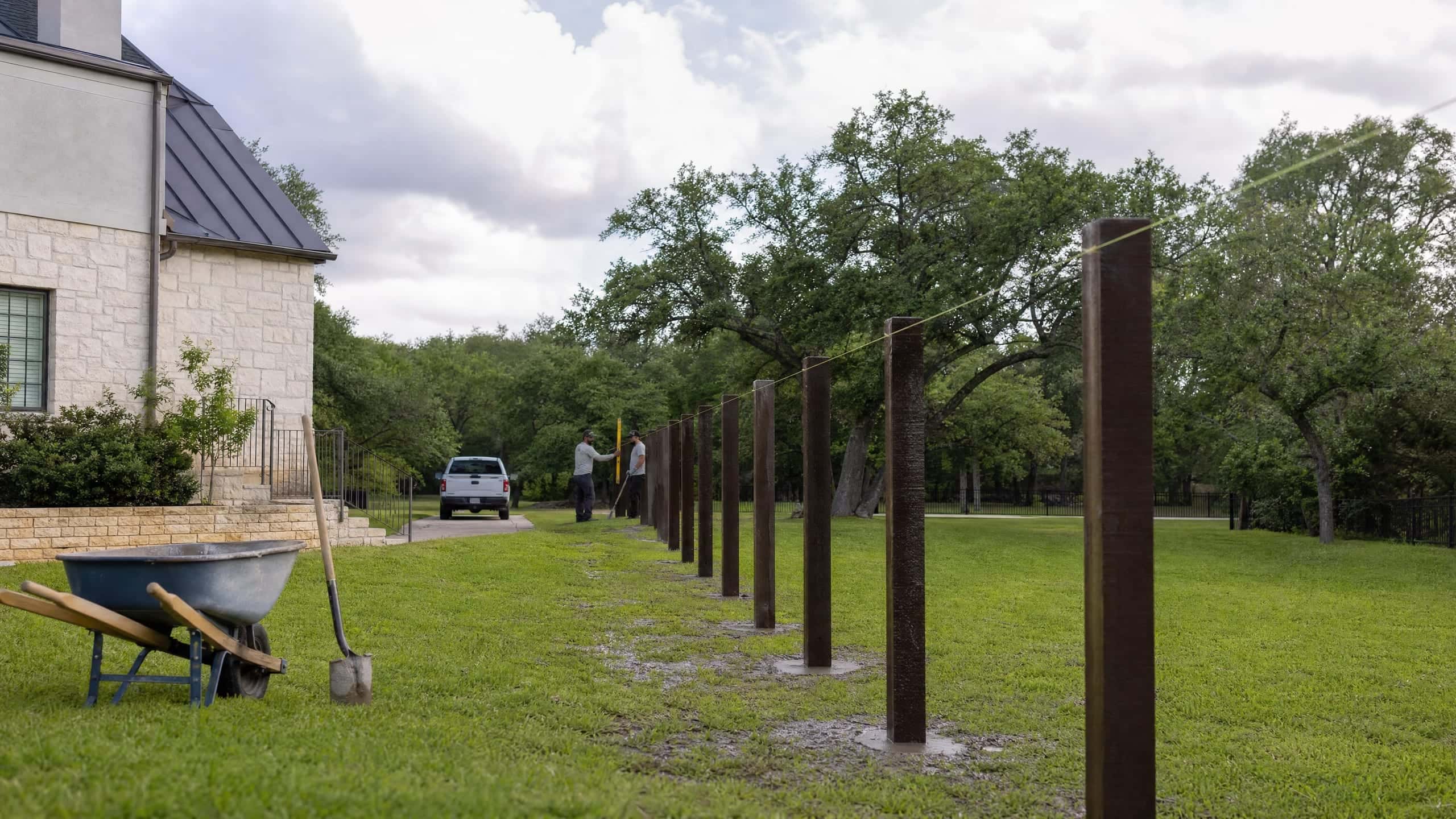
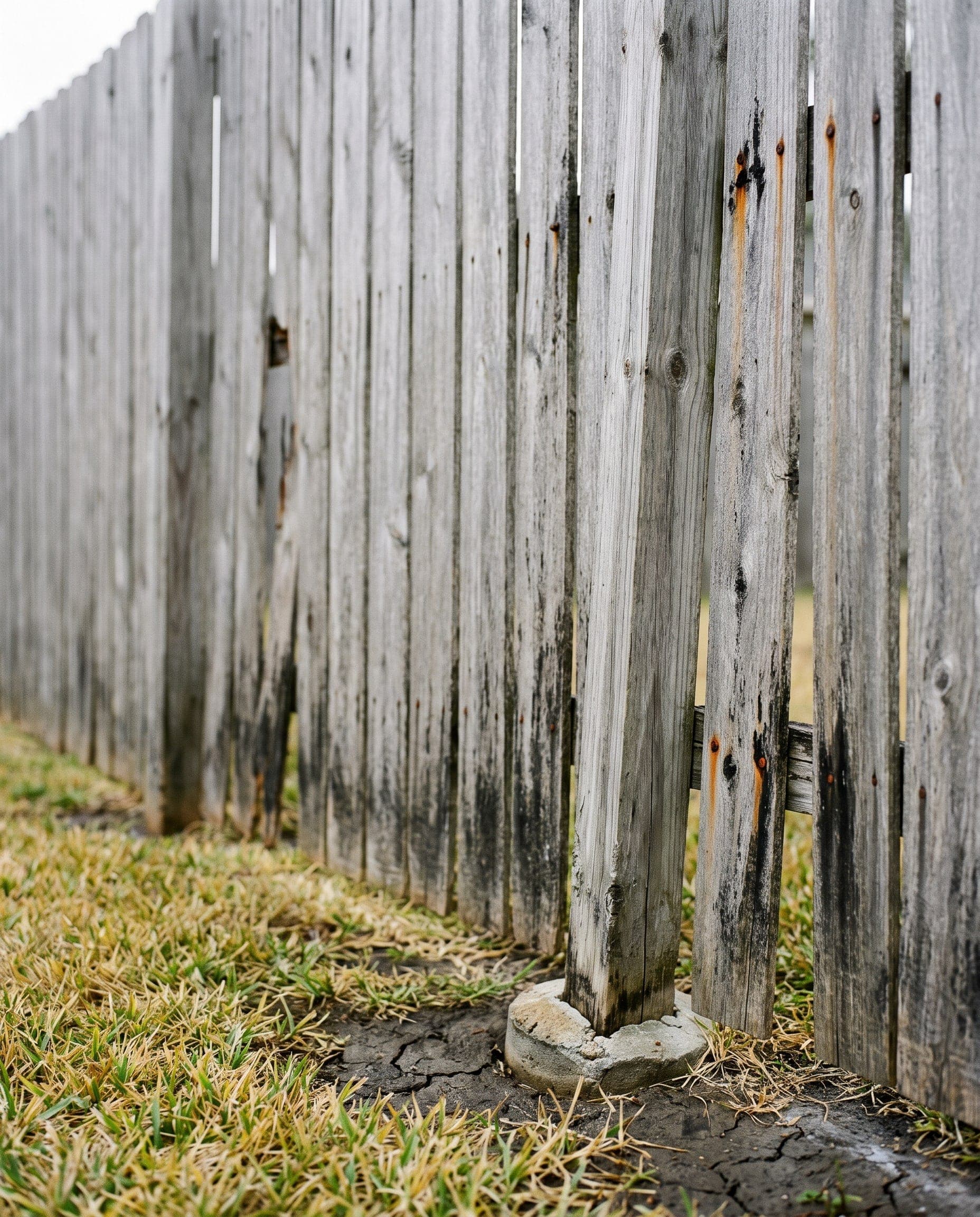
New posts set in concrete along a cleared line, a string pulled between them

Cedar or pine. 6 feet or 8. Board-on-board or side-by-side. That is what the price list you found online is priced against, and none of it is what makes two Austin bids for the same fence differ by a thousand dollars.

The difference is underground. West and southwest Austin sit on limestone that comes up close to the surface, and a post hole that takes 4 minutes in soft ground can take 40 in rock. The wood costs what it costs. The ground is the variable, and it is the one nobody prices until the auger stops.

Shallow Limestone Sits Inside Standard Post-Hole Depth in West Austin

A fence post hole in west Austin frequently hits rock before it hits depth. The USDA Natural Resources Conservation Service puts depth to lithic limestone bedrock in the Eckrant series, common on Hill Country dissected plateaus, at 4 to 20 inches (USDA NRCS, 2018). A standard residential fence post wants more depth than that. So the hole that was supposed to be a 4-minute job becomes a rock job, and the crew either brings the right equipment or shortens the post.

That is the story of a Hill Country fence price, and it is decided before anyone picks a picket. Austin’s west side got this geology from the Balcones fault, which dropped the east side of the city by as much as 700 feet and left the hard Lower Cretaceous limestone exposed on the west (UT Bureau of Economic Geology). Cross that line and the digging changes.

A second measurement makes the same point from a different direction. On a mapped Tarpley clay unit in Hays County, researchers found fractured indurated limestone at 17 to 21 inches down (Texas State University, 2000). That soil is mapped as clay. The rock is still there, inside the depth a post needs.

Rock Removal Is a Line Item Before the Fence Is Even Priced

Rock adds $200 to $1,000 to an Austin fencing project, and that is separate from the fence. Angi’s Austin fence-cost page names clearing brush, leveling ground, or removing rocks as add-ons in that range, and notes that limestone yards often need additional equipment to dig post holes and set concrete footings (Angi, 2026). Read that as what it is: an equipment and labor charge that exists before a single board goes up.

Here is what the ground does to a job that the material spec never touches.

What the crew hits Effect on the hole Effect on the job
Deep soil, no rock Auger reaches full depth in one pass Baseline labor, standard 2-man auger
Caliche or weathered limestone Auger slows, may need repeated passes Longer install day, more wear on equipment
Solid limestone shelf Auger stops short; needs rock bit, breaker, or mini-excavator Rock removal charge, extra equipment on site
Fractured limestone under clay Hole starts easy, stops at 17 to 21 inches Surprise mid-dig; the most common change-order trigger

The last row is the one that catches homeowners. The topsoil digs like ordinary ground, so a crew that never probed assumes it goes all the way down. It does not.

Limestone Stops the Post, Blackland Clay Moves It

Two different Texas soils break a fence in two different ways, and the fix for one does not help the other. Limestone is a depth problem: the post cannot get down far enough, so the fence stands on a shallow footing that wind eventually works loose. Blackland clay, the Vertisol that runs from Dallas south through San Antonio, is a movement problem. The NRCS classifies Houston Black, the Texas state soil, at roughly 60 to 80% clay with very high shrink-swell potential (USDA NRCS, 2023).

Clay grabs the post and moves it every wet and dry cycle. Limestone refuses to let the post in at all.

Soil condition Where it shows up How the fence fails What the fix costs
Shallow limestone Westlake, Rollingwood, Lakeway, Bee Cave, Dripping Springs Post set too shallow; leans under wind at corners and gates Rock removal and equipment, $200 to $1,000 (Angi, 2026)
Blackland clay Georgetown, Round Rock, Pflugerville, and east Posts tilt seasonally as soil swells and shrinks Deeper embedment, wider footing, more concrete
Fractured limestone under clay Hill Country transition lots, mapped as clay Both: shallow set, then seasonal movement Rock work plus clay-rated footing depth

An Austin lot can carry either one, or both within the same fence line. A contractor who prices your yard from the soil map alone has guessed at which.

Walk Your Own Fence Line Before You Call Anyone

Ten minutes with a long screwdriver or a piece of rebar tells you more about your quote than any online cost calculator. You are looking for how far you can push before something stops you, and whether that answer changes as you move along the line. It usually does.

Five things to check, and each one changes what a fair bid looks like:

  • Probe every 20 feet along the fence line. Push a rod straight down. Where it stops at 8 inches and where it goes past 24 tells you the shelf is uneven, and uneven is what makes a flat per-foot price a fiction.
  • Look at the existing posts. Pull one that is already loose. If the old concrete plug is short and squat, the last crew hit rock and stopped there. That is your answer about the ground and about the last contractor.
  • Note where the lot slopes. Rock tends to sit closer to the surface on the high side of a Hill Country lot, and slope changes panel layout on its own.
  • Mark the corners and gate posts. These take the most load and need the most depth, so they are where shallow rock hurts most.
  • Check for trees along the line. Mature live oaks mean roots in the same 18 inches the post wants, which is a separate constraint that stacks on top of the rock.

None of that requires a contractor. All of it changes the conversation when one shows up.

Five Lines Your Replacement Estimate Has to Name

A replacement estimate that names post depth, rock handling, gate posts, removal, and picket grade cannot turn into a change order, because there is nothing left unstated to change. Most Austin quotes name two of the five. The three missing ones are exactly where the ground conditions hide.

Line item What it must say Why it matters here
Post embedment depth Depth in inches, plus footing diameter The number that shallow rock is most likely to shorten
Rock or caliche handling Who pays if the auger stops, and at what rate Turns a surprise into a known price (Angi, 2026)
Gate and corner posts Size, depth, and count, listed separately Highest load, first to lean when set short
Old fence removal and haul-off Included or excluded, and which day Excluded haul-off is the quiet gap between two bids
Picket grade Species plus grade, #1 through #3 Cedar without a grade is not a spec

Ask about the second row directly. The right answer names a rate or names it as included. The wrong answer is a shrug, and a shrug on a Westlake lot is a change order with a delay built into it.

Post Depth Is a Code Calculation, Not a Rule of Thumb

Embedment depth comes out of a formula, and soil strength is one of its inputs. The 2021 International Building Code sizes a nonconstrained embedded post as a cantilevered pole, with required depth d = 0.5·A·{1 + [1 + (4.36·h/A)]^0.5}, where embedment grows with the wind force and its lever arm and shrinks with stronger soil (IBC, 2021). The code lets the soil resist over only one-third of the embedded depth, which is why a tall gate post in soft ground drives a deep, wide footing.

Limestone is strong soil. That helps, right up until you cannot get the hole to depth at all, at which point the post is sitting on rock rather than in it. A post bearing on a shelf resists downward load and very little sideways load, and sideways is the direction wind pushes.

Wind is not a small input on a solid privacy fence. ASCE 7-22 treats a solid privacy fence as a solid freestanding wall, loading the full solid area (ASCE/SEI 7-22, 2022). Full-scale wall testing at Silsoe established that pressure is highest near the free ends and leading edge, which is the field reason a fence’s end panels, corners, and gate posts fail first (Robertson and Hoxey, 1996). Those are the same posts a rock shelf is most likely to have cut short.
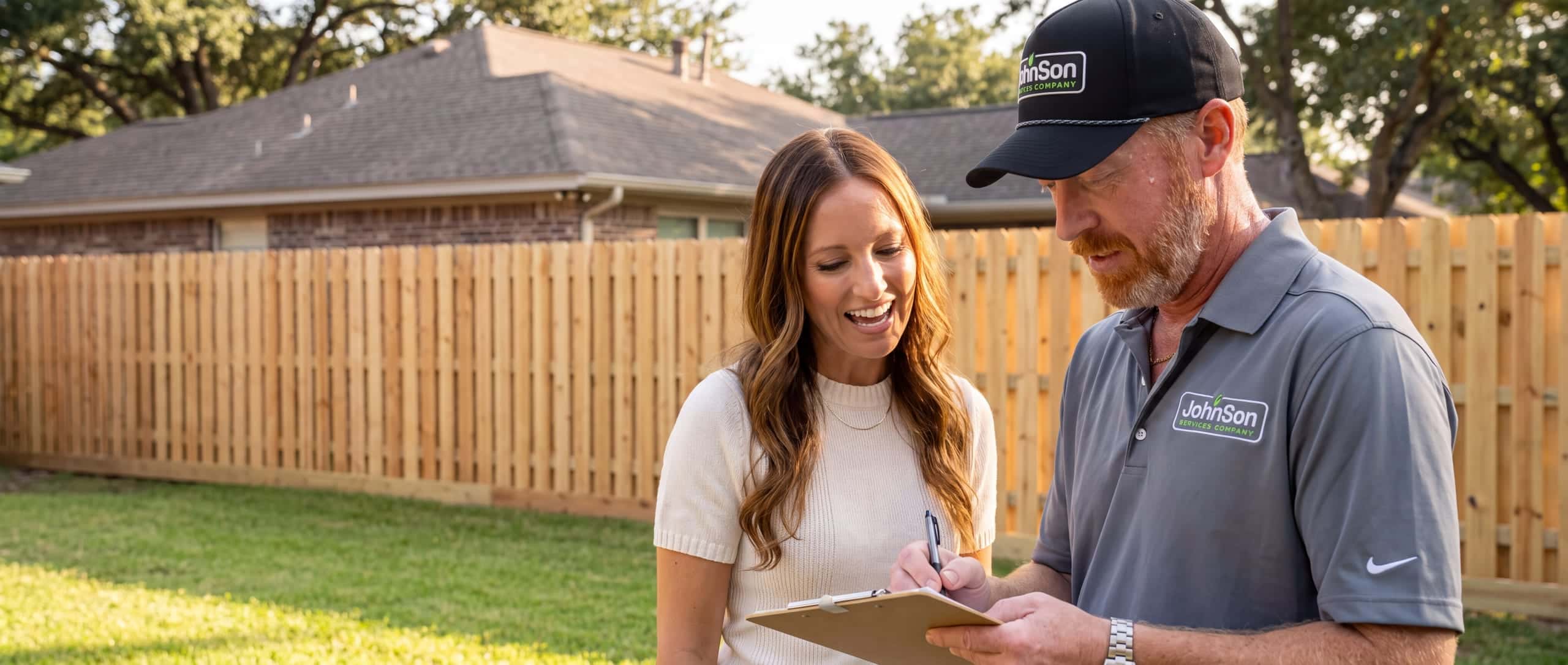
A Johnson estimator writing a fence quote on a clipboard beside a homeowner.

Price a fence before you call

See what a fence costs before anyone quotes you.

Pick the material, the height and how many feet of fence, and the calculator shows the market range for a fence like yours in Texas. Then a salesperson measures the real one in your yard and the number comes back the same day.

The estimate is free and there is nothing to sign.

An Estimator Who Walks the Lot Prices What Is Actually There

Someone standing in your yard with a probe finds the shelf. Someone reading a satellite photo finds a rectangle. That is the difference between a quote you can sign and a number that gets revised on install day, and in west Austin it is the single biggest predictor of whether the final invoice matches the estimate.

Our salespeople measure the linear footage on site and confirm fence type and picket grade before a quote goes out, on every job. It costs us a visit. It is also why our customers do not get a phone call from a foreman standing next to a stopped auger. A Johnson customer in Del Webb of The Woodlands put the value of that process plainly in her review: Rita S. wrote that we charged “almost $900.00 less than three other companies for the same metal, coating and paint for my black metal fence.”

Hold every Austin bid to the same standard. Did a human being walk the line? Did they probe it? Did they write down what they found?

How Austin Fence Companies Compare on Site Measurement and Coverage

Every Austin buyer is choosing between contractors who handle the ground differently, and the options cluster into a few recognizable approaches. Here is how they compare on metro reach, crew depth, and whether an estimator measures on site before quoting.

Company Texas metros served Crew depth Site measurement before quote
Johnson Fence Houston, DFW, Austin, San Antonio Over 100 crews statewide, 5 to 15 in Austin Salesperson measures the lot and confirms grade on site
Sierra Fence Austin metro only Family-owned, describes itself as a small operation Free quotes; scale not published
FenceMaxx Austin and surrounding areas Not published Free quotes; scale not published
Austex Fence & Deck Central Texas and Austin metro Not published; runs a materials showroom Free quotes; showroom for material selection

Every company listed serves the Austin metro and quotes for free. What separates them on a rock lot is how many crews stand behind the install date and whether anyone puts a probe in your ground first.

Frequently Asked Questions

How much does fence replacement cost in Austin?

An Austin wood privacy fence generally runs in the range Texas cost publishers report for the state, with pressure-treated pine at $18 to $30 per linear foot installed and cedar at $25 to $45, before site conditions. On a west Austin lot, add rock removal at $200 to $1,000 on top of that (Angi, 2026), which is why a per-foot number alone will not tell you your price.

Why do two Austin fence quotes for the same fence differ so much?

Usually because one priced the ground and one did not. A bid written off a satellite photo assumes ordinary digging; a bid written after someone probed the line carries the rock handling in it, so it looks higher on paper and lower on the final invoice.

Does shallow limestone mean my fence posts will be too short?

It means they will be too short if the crew stops when the auger does. A post set on top of a rock shelf resists very little sideways load, and wind pressure concentrates at corners, ends, and gates (Robertson and Hoxey, 1996), which is where a shallow-set fence leans first.

Do I need a permit to replace a fence in Austin?

A fence up to 7 feet is permit-exempt in Austin outside floodplains, with a permit required above 7 feet, above 6 feet along a public right-of-way on residential property, or within a floodplain at any height (City of Austin, 2025). A solid fence along a property line is capped at 6 feet from natural grade, rising to 7 only where there is a grade change of at least a foot.

Is the ground different in Round Rock and Georgetown than in Westlake?

Yes, and it fails a fence differently. East and north of the Balcones fault you are generally on Blackland clay, which swells and shrinks and tilts posts seasonally (USDA NRCS, 2023); west of it you are on shallow limestone, which stops the post from reaching depth in the first place.

Should I ask about rock before I get a quote?

Ask during the site visit, and ask who pays if the auger hits rock. The answer should be a stated rate or an inclusion, and getting it in writing is what keeps ground conditions out of the change-order column.

Does Texas license fence contractors?

No. Texas has no statewide general-contractor, home-improvement, or fence-contractor license, so a residential fence builder can operate statewide without one (TDLR, 2026). That puts the burden on you to verify insurance, references, and whether anyone actually measured your yard.

Can a fence be built on a sloped Hill Country lot?

Yes, and slope changes both the panel layout and the legal height, since Austin measures a solid property-line fence from natural grade. Slope also tends to put rock closer to the surface on the high side, so a sloped lot deserves probing at more points along the line.

Reading the Ground Is the Job in Austin

The cedar-versus-pine question is real, and it is not the question that decides your price. In west and southwest Austin the price is decided by what a probe hits 18 inches down, and by whether the person who wrote your quote bothered to find out. Bedrock at 4 to 20 inches on Hill Country plateaus is not a rare surprise (USDA NRCS, 2018). It is the normal condition, and the only thing that varies is whether it shows up in the estimate or in a phone call on install day.

So judge every Austin bid on one thing before you compare a single number: did an estimator stand in your yard, probe the line, and write down what the ground gave them. That is the bid that will not change. The rest is a materials list with a hopeful number at the bottom, and the ground does not care about hope.

How Johnson Fence Prices an Austin Fence After Measuring the Lot

The gap between a quoted price and a final invoice is the problem this whole argument turns on, and we close it by measuring before we quote rather than after. Members of our Austin team measure the linear footage on site, confirm the fence type and picket grade, and get a quote out the same day on 95% of real leads, with work starting within about 4 days. Customers rate us 4.9 stars across 55 Google reviews, and 4.9 across 175 reviews on SoTellUs.

What they name most often is the price and the follow-through together. One customer wrote in a June 2026 SoTellUs review: “Johnson Services provided a great estimate to replace our backyard fence beating out all other quotes. They were quick to replace and remove the old fence. The fence looks great and well built.” Another, in March 2026: “Great Communication and great price point. The work was completed very quickly and the finished product was exceptional!”

We can hold that price because of how we buy. Master Halco named us its Largest Volume Customer for 2026, both the Southwest Region and the World, so our wood picket cost is lower than what a three-crew shop pays, and that goes to the customer rather than into the spec. You get the same fence for less, because we buy the wood for less. And across more than 20,000 jobs last year, we had zero craftsmanship warranty callbacks.


Johnson Fence measures and probes your Austin fence line before naming a price, so shallow limestone shows up in the estimate instead of in a change order. We serve Westlake Hills, Rollingwood, Lakeway, Bee Cave, Steiner Ranch, Circle C Ranch, Dripping Springs and the surrounding communities, and the on-site estimate is free.

Get a free on-site fence estimate →

Free estimate

Get your estimate from the largest fence company in Texas

Tell us what you need and where the fence goes, and a salesperson will come out and measure the line before anyone writes a number. You get the picket grade and the total in writing, the visit costs nothing, and there is nothing to sign.

Call (877) 956-4676

Estimate requests get a reply 24 hours a day, 7 days a week.

What kind of fence?
Which part of Texas?
Roughly how much fence?
How did you hear about us?
  • Free on-site estimate
  • Same-day quote
  • Nothing to sign
  • Work starts in about 4 days