
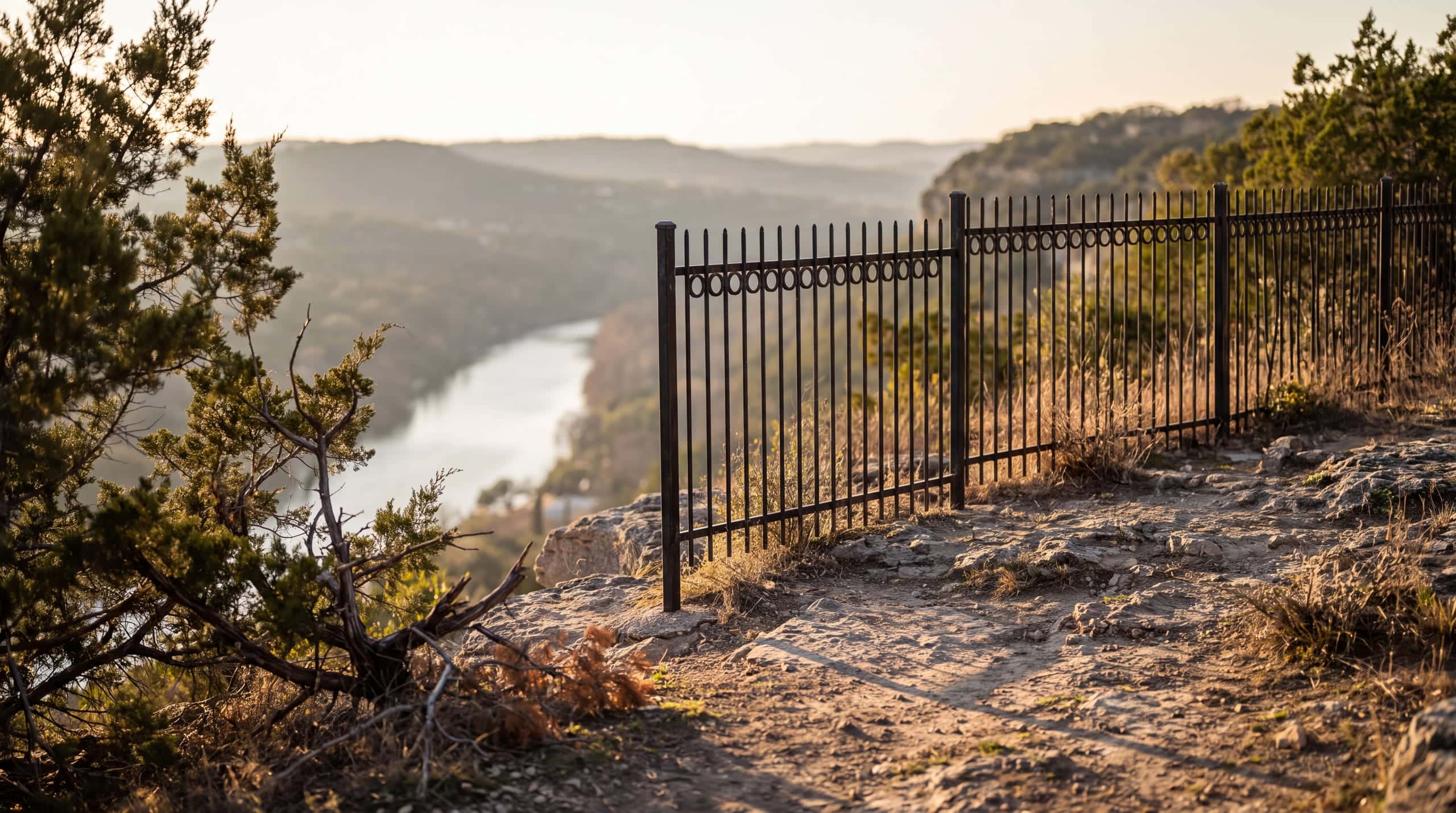
Two houses three streets apart in Steiner Ranch can have fences 15 years apart in age. The neighborhood went up in phases across the 1990s and 2000s, so the wood on your line is as old as your phase and nothing else.
That is why the usual way of choosing a bidder falls apart here. Most people line up three quotes and pick the lowest number at the bottom of the page. The better question is what each of those numbers was written against.
Your Fence Is as Old as Your Steiner Ranch Phase
The oldest Steiner Ranch phases are 25 to 30 years old now, and a wood fence rarely gets that far. InterNACHI, the home inspectors’ association, rates a wood fence at about 20 years. A 1990s phase is past that number. A mid-2000s phase is just arriving at it. Both are inside the same neighborhood, sometimes on the same walk.
Austin is easier on wood than the coast is. The USDA Forest Products Laboratory scores Austin at 55.2 on the decay hazard index, in the moderate band, against 77.2 for Houston (USDA Forest Products Laboratory, 2009). That buys years, and it does not buy immunity. Sun, wind off the lake, and 20 summers still do the same work in the end.
Austin Lake Estates, Austin Lake Hills, and Senna Hills sit next door with established housing stock of their own. Same math, different build dates. Start by finding out when your house was finished, because that is the year your first fence went in.
Push a Screwdriver Into Every Post Base Before You Price Anything
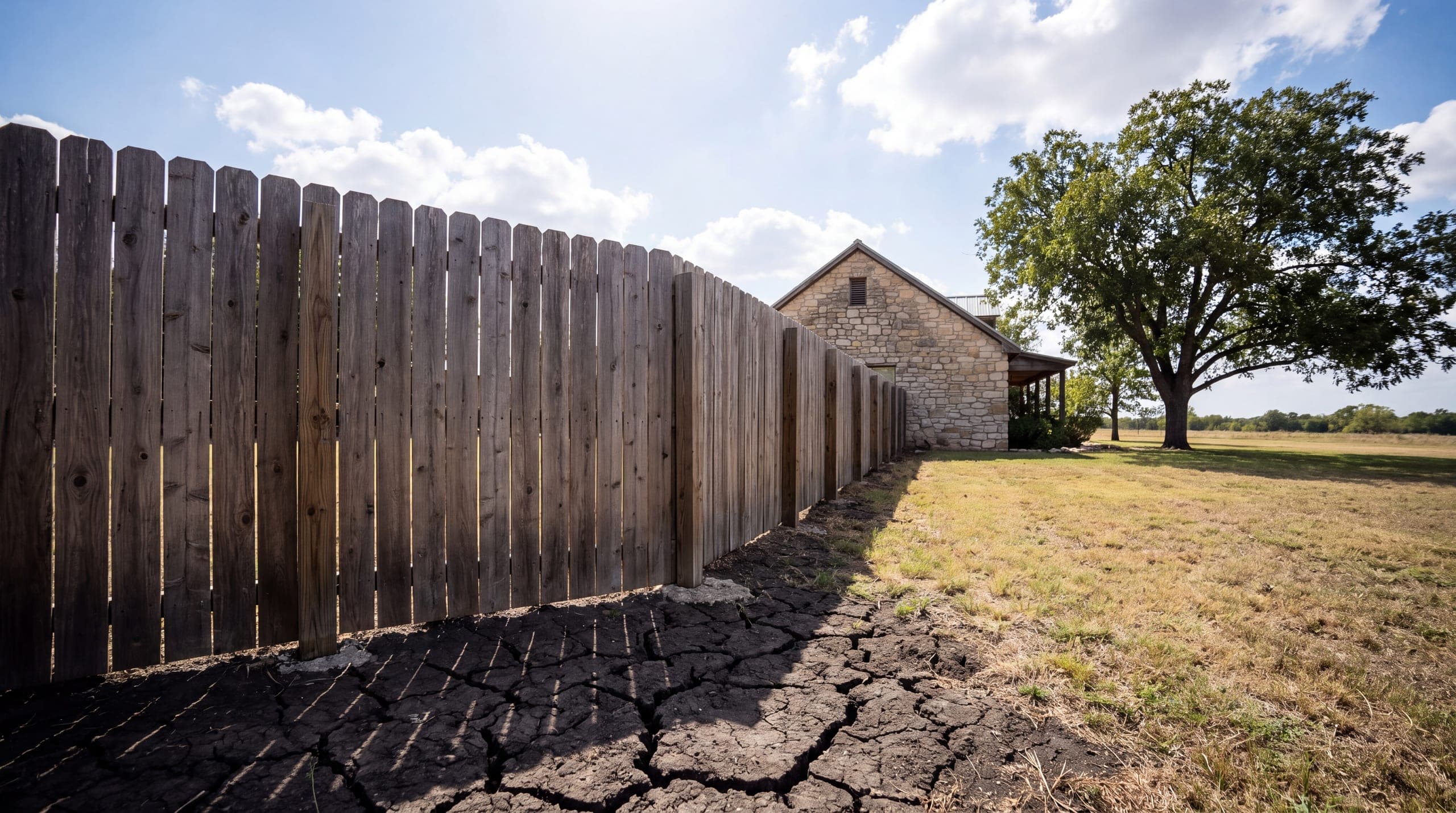
The post base decides whether this is a replacement year, and it takes ten minutes to check. Walk the line and press a screwdriver into each post right where it meets the soil. Sound wood pushes back. Soft wood takes the tip like cork. Boards can look terrible while the frame behind them is fine, and boards can look fine while three posts are already gone.
- Soft at the ground line. The post is failing from the outside in, and paint or stain will not bring it back.
- A lean that shows up only in wind. Corner posts and gate posts carry the most load, so they go first.
- A post that shifts every season. That is soil movement working the footing, not rot.
- Grey, cupped boards over solid posts. Surface weathering. The frame still has service left.
| What you find on a 20-post line | What it usually means | Reasonable next step |
|---|---|---|
| 1 to 2 soft posts | Isolated failure, often near a downspout or a wet spot | The line still has time; keep watching the same posts |
| 3 to 5 soft posts along the run | The frame is aging as one unit | Start collecting replacement quotes |
| More than a quarter soft or leaning | The line is at the end of its service life | Full replacement; piecemeal work will chase itself |
| Posts sound, boards grey | Surface weathering only | No replacement year yet |
Know These Five Terms Before You Read a Fence Bid
Five words separate a bid you can compare from a bid you can only admire. Contractors use them differently, and a homeowner who asks what each one means on this quote gets a very different conversation than one who does not.
| Term | What it means | Why it matters on your line |
|---|---|---|
| Linear foot | One foot measured along the fence line | The unit every price hangs on; ask who measured it and when |
| Picket grade | Board quality, graded #1 through #3 | Two cedar quotes can mean two different boards at two costs |
| Heartwood and sapwood | The dense inner wood and the pale outer wood | Cedar resists rot in the heartwood; sapwood does not |
| Ground contact | Lumber treated for burial in soil | Anything set in the ground here has to carry this rating |
| Embedment | How deep the post sits in the hole | The number that decides what a wind event leaves standing |
Ask a bidder to point to each of these on the page. A quote that names the grade, the species, and the embedment can be set beside another quote. A quote that says “cedar fence, 6 feet” cannot.
Shallow Limestone Decides How Deep Your Posts Can Go
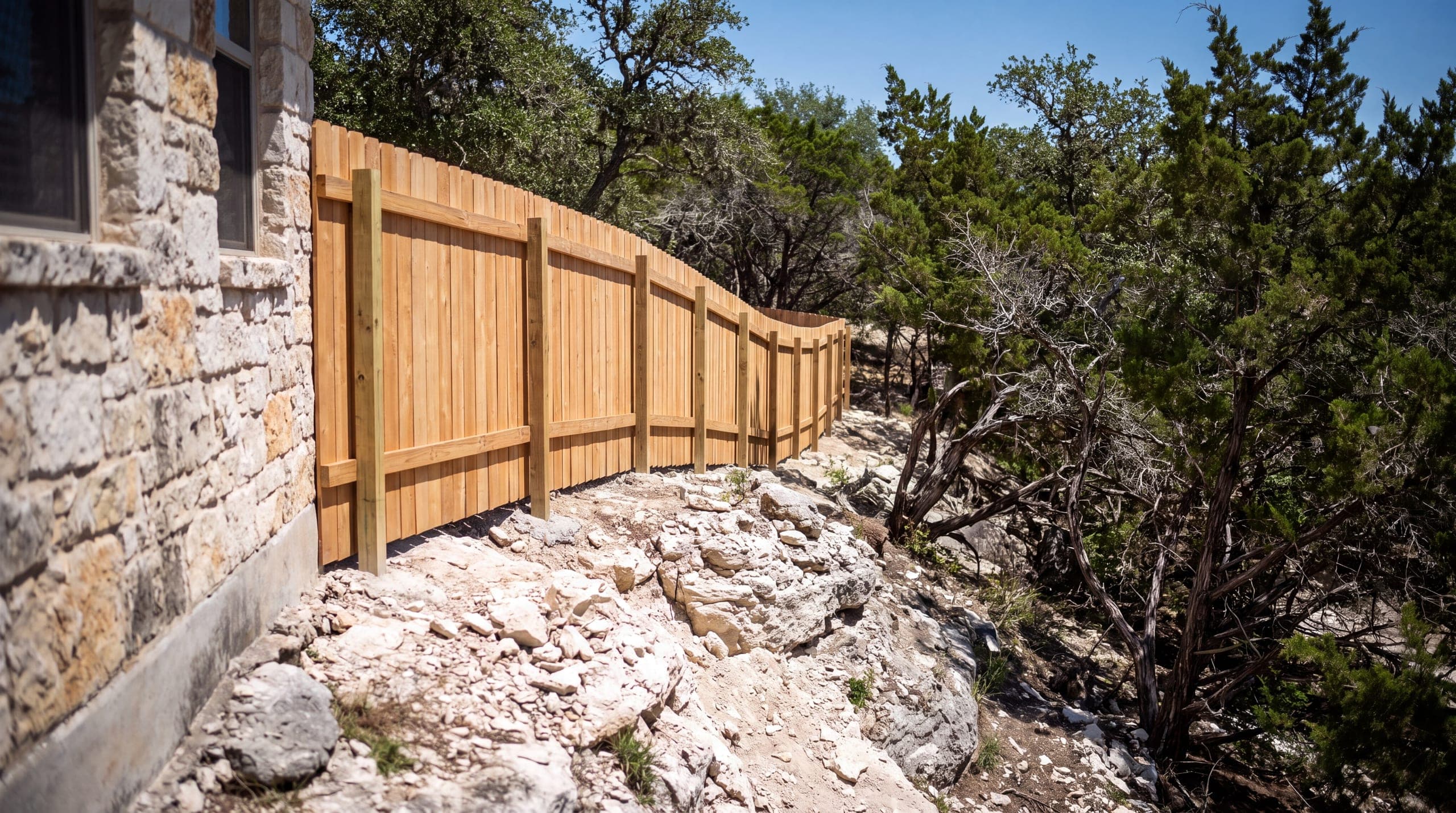
Rock sits close to the surface across this side of Austin, and it does not sit at one depth. The USDA soil survey describes Texas caliche layers starting at 10 to 20 inches, a range that can turn up inside 25 horizontal feet. Two post holes on the same fence line can hit rock a foot apart in depth. That is a real cost, and it belongs in the quote rather than in a phone call on install day.
Depth is not a preference. The 2021 International Building Code sizes fence and gate posts as cantilevered poles, with required embedment growing as the wind load and its lever arm grow (International Building Code, 2021). A 6-foot solid fence catches wind like a wall, so the post has to go deep enough to hold it. When the drill hits limestone at 14 inches, somebody has to decide what happens next.
Three questions force a real answer:
- What do you do when a hole hits rock? Core drilling, a rock bit, and epoxy-set anchors are all legitimate. No answer is not.
- Is rock drilling in this price or a change order? Get the number either way, in writing.
- What embedment are you setting to, and on which posts? Corners and gate posts should be deeper than line posts.
Get the HOA’s Approved Materials List Before Anyone Quotes
The association’s list narrows your options before any contractor does, so pull it first. Steiner Ranch runs architectural review with approved materials, and a bidder who has never read that list is guessing at your fence style. Ask the association for the current list and the submittal packet, then hand both to every bidder at the same time. Three quotes written against one spec are comparable. Three quotes written against three guesses are not.
Texas law moved in the homeowner’s direction here. Since September 1, 2025, Senate Bill 711 bars a property owners’ association from prohibiting a perimeter fence, while leaving it limited authority to regulate fence type and material, to require a driveway gate set back at least 10 feet from a laned right of way, and to bar fencing forward of the front building line (Texas Property Code, 2025). Fences installed before that date are grandfathered. So the association cannot tell you no on the fence itself, and it can still tell you which material.
Then ask each bidder one more thing: who submits the packet, you or them, and how long approval has taken on their recent jobs in this neighborhood.
Texas Never Licensed Your Fence Contractor, So Ask for Paper
No state license stands behind a Texas fence builder. The Texas Department of Licensing and Regulation regulates about 40 occupations, and fence contracting is not among them (TDLR, 2026). Anyone with a truck and a post-hole digger can quote your line legally. That puts the whole burden of vetting on you, and it is the reason the paperwork questions matter more here than in a licensed trade.
Ask for four things, and ask for them before the price conversation.
- A certificate of insurance, sent from the carrier, current on the date of your install.
- Proof of bonding, which is separate from insurance and separate again from a warranty.
- Two references on established lots, ideally a replacement rather than a new-build fence.
- The warranty term in writing, plus what it actually covers.
That last one trips up more homeowners than any other. Most fence warranties in this market cover workmanship, meaning the install. The boards and posts carry whatever the mill or the manufacturer offers, which is a separate document with separate terms. Ask which half you are being given, because a company that says “fully warrantied” and cannot break it into two answers has told you something.