
Guides

Is a 4-Foot Fence Cheaper Than a 6-Foot Fence in Texas

Ask what a 6-foot fence costs against a 4-foot one and you get a percentage back. Add 20% or 30%, the answer goes, and you have your number.

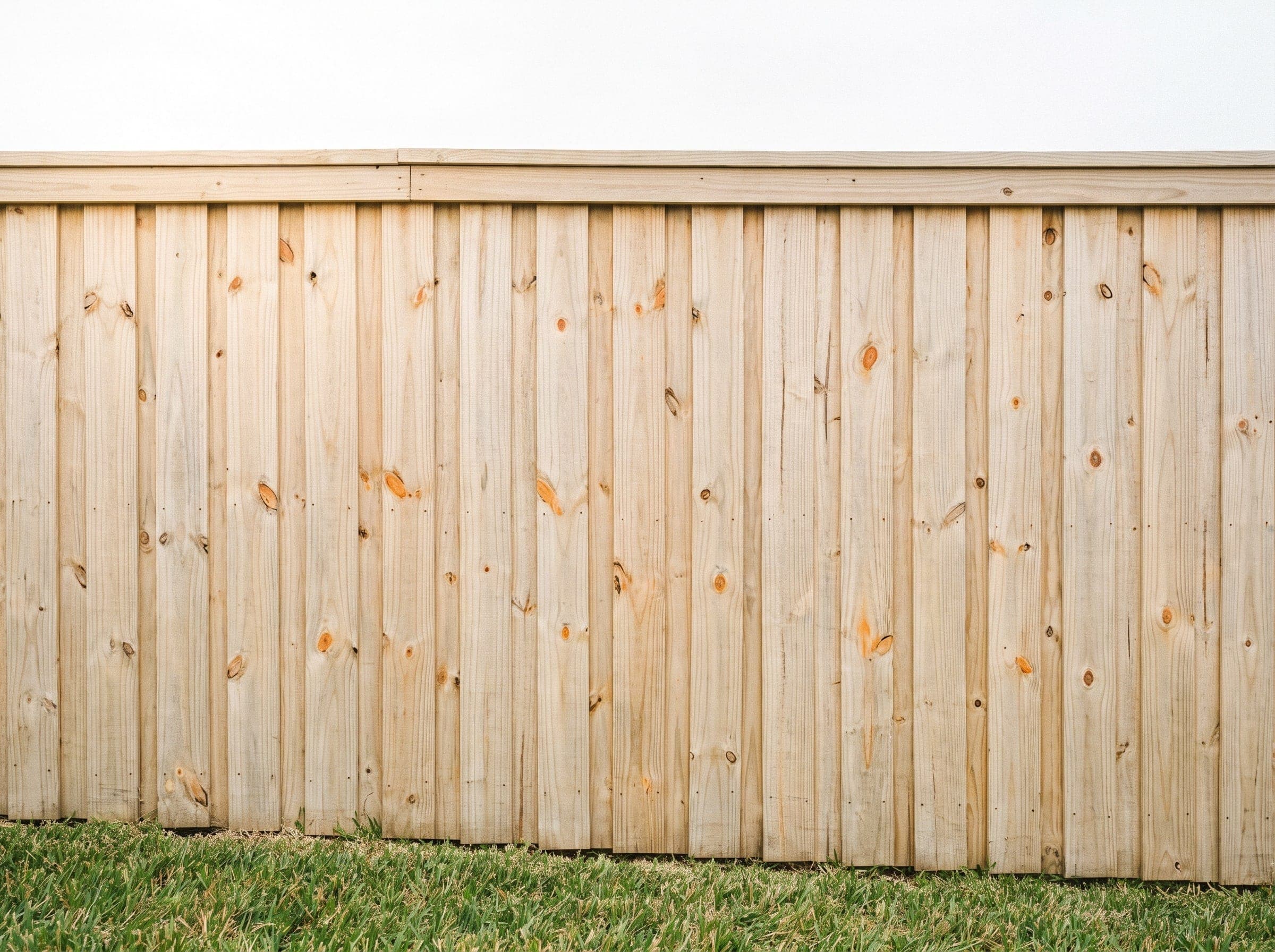
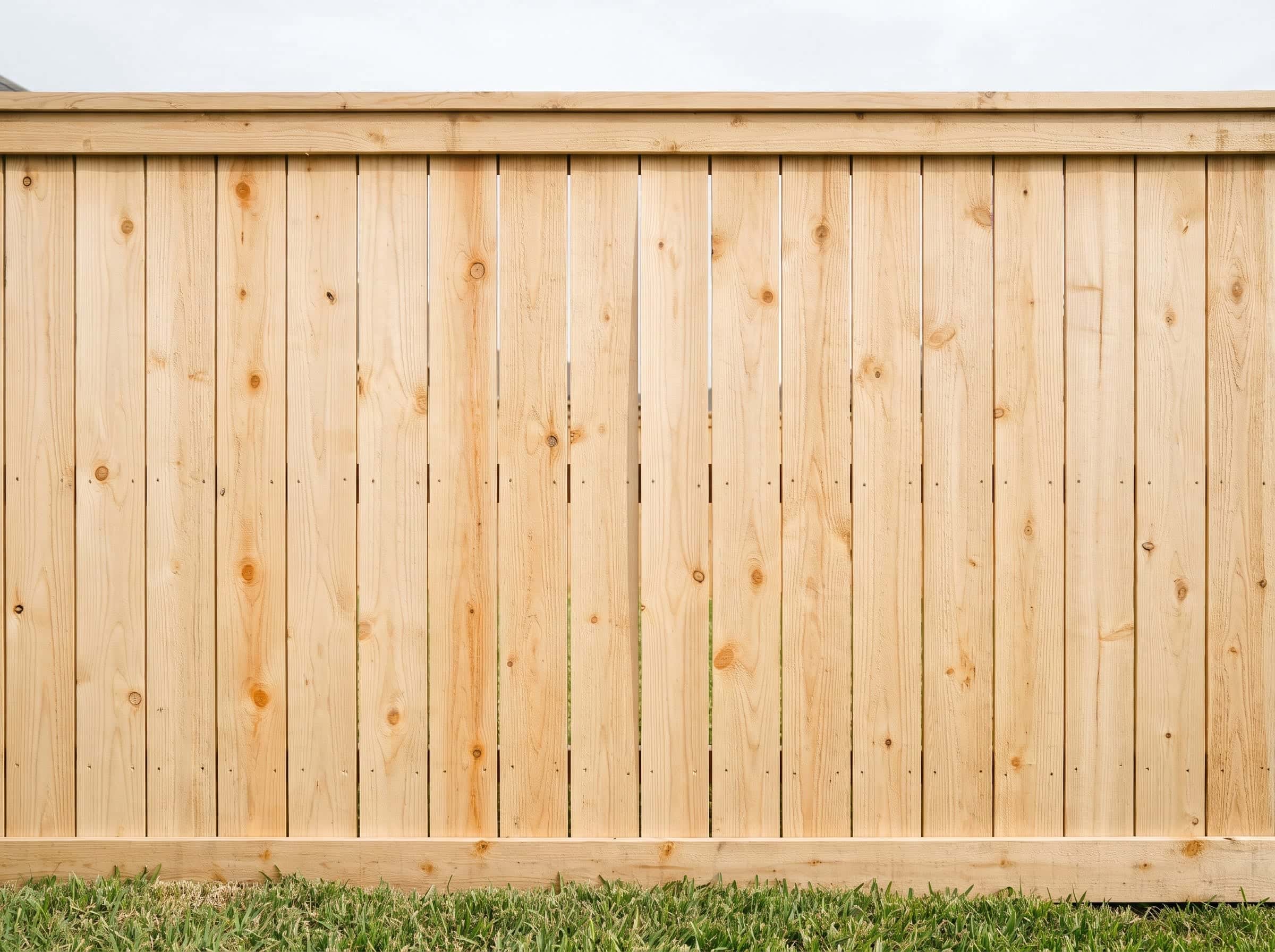
A six-foot cedar privacy fence with solid pickets and no gaps

Ask what a 6-foot fence costs against a 4-foot one and you get a percentage back. Add 20% or 30%, the answer goes, and you have your number.

A percentage knows nothing about the wood you picked or the ground your posts go into, and those two things move a Texas quote further than the height does. The 4-foot fence is cheaper. The percentage is not what makes it cheaper.

Yes, 4 Feet Costs Less, and the Gap Is Not a Flat Percentage

A 4-foot fence costs less than a 6-foot fence in the same material, every time. How much less is where the flat percentage falls apart. Ergeon’s booked chain-link installs put 4-foot, 5-foot and 6-foot residential fence in one cluster near $36 to $43 a linear foot, with the real step-change showing up at 7 feet, about $75, and 8 feet, about $78 (Ergeon, 2026).

Ergeon is measuring its own booked jobs, so that is a picture built from real installs. What it shows is the thing a percentage hides. Height does not raise the price on a smooth slope. It raises it in steps, and the steps land where the build changes. A taller post. A deeper hole. More concrete in it.

Going from 4 feet to 6 adds 2 feet of pickets and, on a wood fence, often a third rail. That part is easy to price. The part that moves is under the ground.

Material Sets Your Price Before Height Ever Does

Wood fencing runs $18 to $45 a linear foot installed in Texas and chain link $12 to $28, on ranges published by HomeGuide, Angi and HomeAdvisor (2026). That is a $33 spread from the cheapest material to the top of wood, and no 2 feet of height competes with it.

The ranges below are for a 6-foot residential fence on flat, clear ground. They leave out tear-out and haul-off of the old fence, gates, and a sloped lot, and each one of those is a real line on a real quote.

Material, 6 ft residential Texas installed range per linear foot What pushes it to the top of the range
Chain link $12 to $28 6-foot and commercial-grade fabric, heavier zinc coating
Pressure-treated pine privacy $18 to $30 #1 grade pickets and tighter post spacing
Cedar privacy $25 to $45 western red cedar, clear and knot-free boards
Vinyl $30 to $60 taller panels and heavier wall thickness
Composite $30 to $55 6-foot panel heights, plus a gate at each opening
Ornamental steel or iron $45 to $90 custom welded panels and ornamental detail

Texas prices under the national average on wood, because pine and cedar supply sits close and the competition here is heavy. Houston-area wood privacy fence is commonly quoted at $16 to $42 a linear foot (Angi Houston and HomeBlue, 2026).

One more thing sits on the material line that no percentage can see, and it is who bought the wood. Master Halco named us its 2026 Largest Volume Customer for the World. Nobody buys more fence pickets than Johnson, so nobody in Texas sells you a wood fence for less, and we name the picket grade by number so you know which board the price was written against.

Know These Five Terms Before You Compare Two Fence Quotes

Two quotes at two heights only compare when both name the same five things. Most homeowners read the price and the height and skip the rest, which is exactly where a cheap 6-foot fence and a properly specified 6-foot fence look identical on paper.

Term What it means on your quote
Linear foot one foot measured along the fence line, so 150 feet of fence is 150 linear feet at any height
Embedment depth how far the post goes into the ground, from grade down to the bottom of the concrete
Ground contact a treatment rating for lumber buried in soil, which is what a fence post is
Picket grade the mill’s quality number for a board, #1 through #3, where #1 carries the fewest knots
Solid fence a fence whose openings are under 30% of its face, which is how wind design classifies a privacy panel

That last one matters more than it sounds. A 6-foot board-on-board privacy panel and a 6-foot ornamental iron fence are the same height and two different structures once the wind comes up.

At 6 Feet, a Solid Fence Loads Up Like a Wall

Engineers do not treat a privacy fence as a fence. ASCE/SEI 7-22 designs it as a solid freestanding wall, with the wind force applied across the whole solid face, and a fence counts as solid once its openings fall under 30% of that face (ASCE/SEI 7-22, 2022).

Two more feet of face is two more feet of wind. And Texas hands that face plenty to hold: the same standard maps the Houston metro at design wind speeds of 130 to 140 mph for ordinary structures, rising toward 150 mph at the shoreline.

The load has to go somewhere, and it goes into the post and the soil packed around it. The 2021 International Building Code sizes a fence post as a cantilever, so required depth grows with the wind force and its lever arm, and shrinks only as the soil gets stronger (International Building Code, 2021). Raise the fence and the same formula asks for a deeper hole and more concrete in it. That is why the taller fence is priced by more than its extra 2 feet of boards.

Texas Clay and Caliche Decide What the Deeper Post Costs

The soil is the other half of the price, because the soil is what the code lets the post lean against. Houston Black, the official Texas State Soil, runs 60% to 80% clay and covers 1.5 million acres of Blackland Prairie from Dallas south to San Antonio, and its shrink-swell potential is a recognized limit for building sites (USDA NRCS, 2023).

Ground under the fence line What the auger meets What that does to a 6-foot post
Blackland clay, Dallas south to San Antonio clay that swells when wet and shrinks when dry holds the post, then works it loose season by season, so depth and hole width carry the fence
Hill Country limestone, west Austin to Helotes rock 4 to 20 inches down under thin soil the auger stops short of design depth, and reaching it takes rock equipment
Brushy or sloped lots anywhere in Texas grade, roots and buried rock before the first hole clearing and leveling get priced before a single post is set

West of Austin and around San Antonio the problem flips. The soil is thin, the rock is close, and the hole still has to reach the depth the design calls for. Angi puts clearing brush, leveling ground and removing rock at $200 to $1,000 on a fencing project, and notes that limestone yards often need extra equipment to dig post holes and set concrete footings (Angi, 2026).
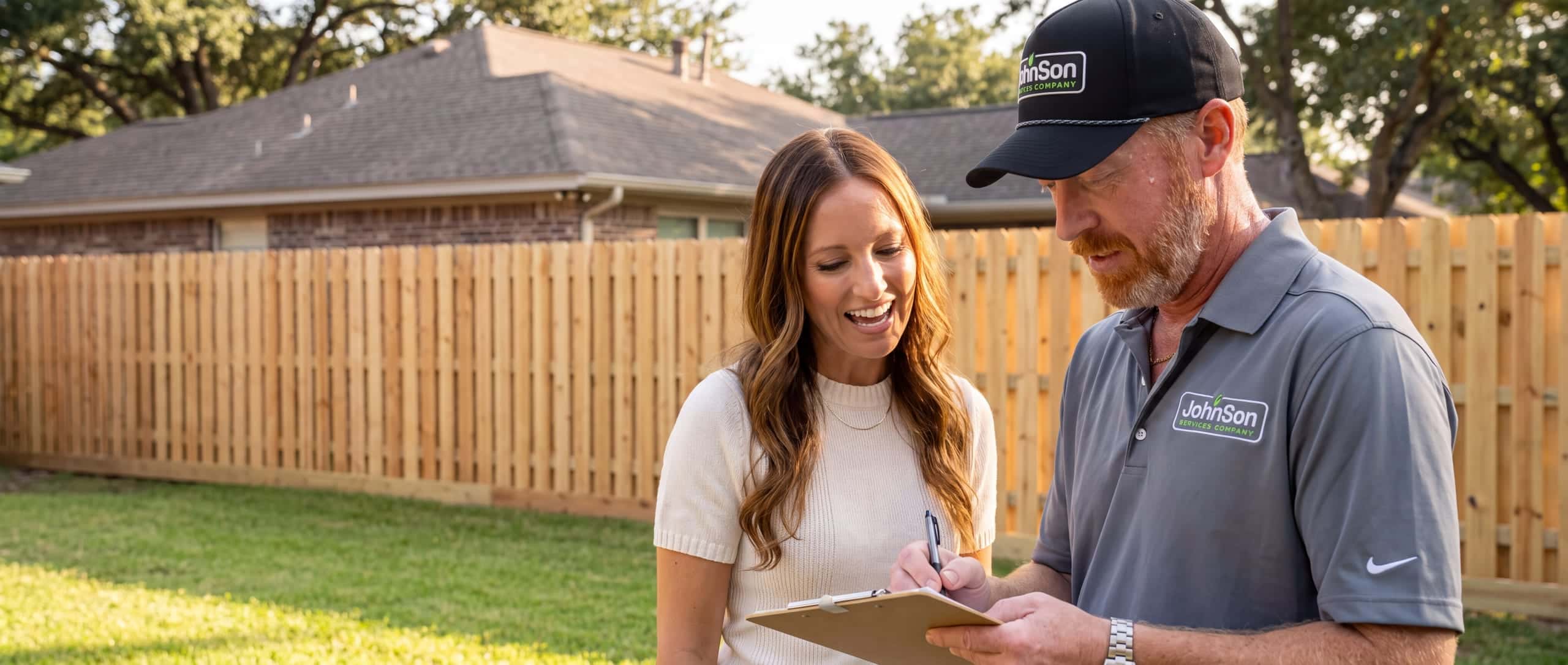
A Johnson estimator writing a fence quote on a clipboard beside a homeowner.

Price a fence before you call

See what a fence costs before anyone quotes you.

Pick the material, the height and how many feet of fence, and the calculator shows the market range for a fence like yours in Texas. Then a salesperson measures the real one in your yard and the number comes back the same day.

The estimate is free and there is nothing to sign.

Ask About the Posts Before You Compare Any Two Heights

One line makes a 4-foot quote and a 6-foot quote comparable, and it is the post spec. Ask how deep the post goes, how wide the hole is, and what it gets set in. A quote that names a height and a price but never names the post is not something you can hold anyone to.

  • Post depth and hole width. The number that converts height into cost. Two bids at 6 feet with different embedment depths are two different fences.
  • Post material and spacing. Steel or treated wood, and how many feet apart. Wider spacing saves posts and gives the wind a longer panel to push on.
  • Picket grade, by number. “Cedar” is not a spec until it says #1, #2 or #3. Grade is where a low bid hides.
  • Where the height is measured from. Natural grade, or the top of a retaining wall. Cities measure this their own way, and so do estimators.
  • Tear-out and haul-off. Who pulls the old posts, and on what day. On a replacement this is real money that never appears in a per-foot range.

Then match the height to the job before you compare anything at all.

What the fence has to do Height to price The line to check first
Mark a front yard boundary 4 feet your city’s front-yard cap, tighter than its back-yard cap in every big Texas metro
Contain a large dog 6 feet the gap at the bottom and how the boards meet grade
Screen a back yard from a neighbor 6 feet solid post depth, because a solid face carries the full wind load
Fence acreage or livestock ranch rail, priced by the run bracing at every corner and gate along the whole line

We measure every job before we price it, and we count and load the materials before a crew leaves the yard. Last year that discipline produced more than 20,000 finished projects and not one craftsmanship warranty callback.

Where Johnson Sits Among Texas Fence Companies

A quote at either height is worth only what the company behind it can hold, and the established contractors working the four metros we serve each cluster around one of them. Here is how they compare on metros covered, crews in the field, and the materials they will price at 4 feet or 6.

Company Texas metros served Crews in the field Materials priced
Johnson Fence Houston, Dallas-Fort Worth, Austin and San Antonio, 42 cities and towns Over 100 crews from seven offices Wood, iron and aluminum, Hardie Plank, brick and stone, vinyl, chain link, Trex composite
Texas Fence Houston metro only Over 20 crews and 30 full-time staff Wood and cedar, iron, vinyl, chain link
Austex Fence & Deck Austin and Central Texas Not published Cedar, ornamental iron, ActiveYards aluminum, plus decks and pergolas
Quality Fence & Welding San Antonio and South Texas Not published Iron, aluminum, chain link, wood, plus custom steel fabrication
Kodiak Fence Company Flower Mound and North Dallas-Fort Worth towns Not published Cedar, board-on-board, horizontal, wrought iron, aluminum, chain link, Simtek

Frequently Asked Questions

Is a 6-foot fence worth the extra cost over a 4-foot one?

If the fence has to screen a yard or hold a large dog, yes, because a 4-foot fence does neither job well. If it is marking a boundary or facing a street, 4 feet does the same work for less and often clears front-yard rules that a 6-foot fence will not.

Can I add 2 feet of height to my existing 4-foot fence?

Not without dealing with the posts first. The posts under a 4-foot fence were sized for a 4-foot fence, and adding face adds wind load they were never designed to carry. On an older wood line the money usually goes further into a full replacement at the height you actually want.

Does a 4-foot fence need a permit in Texas?

Rarely, though the rule belongs to your city. Houston asks for a fence permit only above 8 feet, or at any height when the fence is masonry or concrete, and Austin’s exemption runs to 7 feet outside a floodplain.

Why are two quotes for the same 6-foot fence hundreds of dollars apart?

Usually the picket grade, the post depth, or whether tear-out and haul-off are inside the number. Ask both estimators which grade the price was written against and how deep the posts go, and the gap normally explains itself.

Is a 4-foot fence tall enough to keep a dog in the yard?

For a small dog, often. A tall or athletic dog clears 4 feet without much effort, and the gap along the bottom matters as much as the height, so ask how the boards meet grade.

Do gates cost more on a 6-foot fence?

Yes. A gate at 6 feet is a heavier leaf hanging on the same post, so it needs a bigger post and a deeper footing than the fence beside it. Gate and corner posts are where a wind-loaded fence line gives first.

What happens if the crew hits rock while digging my post holes?

The hole still has to reach the depth the design calls for, so the crew brings rock equipment and that shows up as a line on the quote. Ask before you sign whether rock is included or excluded, because west of Austin and around San Antonio it is a common find.

So the 4-Foot Fence Is Cheaper, and the Percentage Never Told You Why

Height is the smallest of the three things setting your price. The material moves it further, the ground under the posts moves it further still, and both of those get decided before anyone talks about 4 feet or 6. A 20% rule of thumb cannot know whether your posts are going into Blackland clay or stopping on limestone 8 inches down, and that is the money.

So compare the post spec, then compare the height. And ask for a number written by someone who stood in your yard with a tape.

How Johnson Fence Prices Both Heights From a Measured Yard

The whole argument here is that a percentage cannot price your fence and a measurement can. So a salesperson meets you on site, measures the linear footage, confirms the fence type and the picket grade, and writes the number against what your ground actually is. Quotes go out the same day. Work starts within about 4 days, and most fences finish the day they start.

Homeowners rate us 4.9 stars across 60 Google reviews, and 4.9 across 175 reviews on SoTellUs. In a June 2026 SoTellUs review, a customer wrote: “Johnson Services provided a great estimate to replace our backyard fence beating out all other quotes. They were quick to replace and remove the old fence. The fence looks great and well built.” Another, in March 2026: “Great Communication and great price point. The work was completed very quickly and the finished product was exceptional!”

The price holds up because of what sits behind it. Master Halco named us its 2026 Largest Volume Customer for the World, and that picket buying power goes straight into the wood line on your quote. Over 100 crews out of seven Texas offices are why the install date you get is the date the fence goes up.


Johnson Fence answers the 4-foot against 6-foot question with a number measured in your own yard, with the post depth and the picket grade named on the page. Call (877) 956-4676 or request an estimate online, and expect the quote the same day.

Get a free on-site fence estimate →

Free estimate

Get your estimate from the largest fence company in Texas

Tell us what you need and where the fence goes, and a salesperson will come out and measure the line before anyone writes a number. You get the picket grade and the total in writing, the visit costs nothing, and there is nothing to sign.

Call (877) 956-4676

Estimate requests get a reply 24 hours a day, 7 days a week.

What kind of fence?
Which part of Texas?
Roughly how much fence?
How did you hear about us?
  • Free on-site estimate
  • Same-day quote
  • Nothing to sign
  • Work starts in about 4 days