
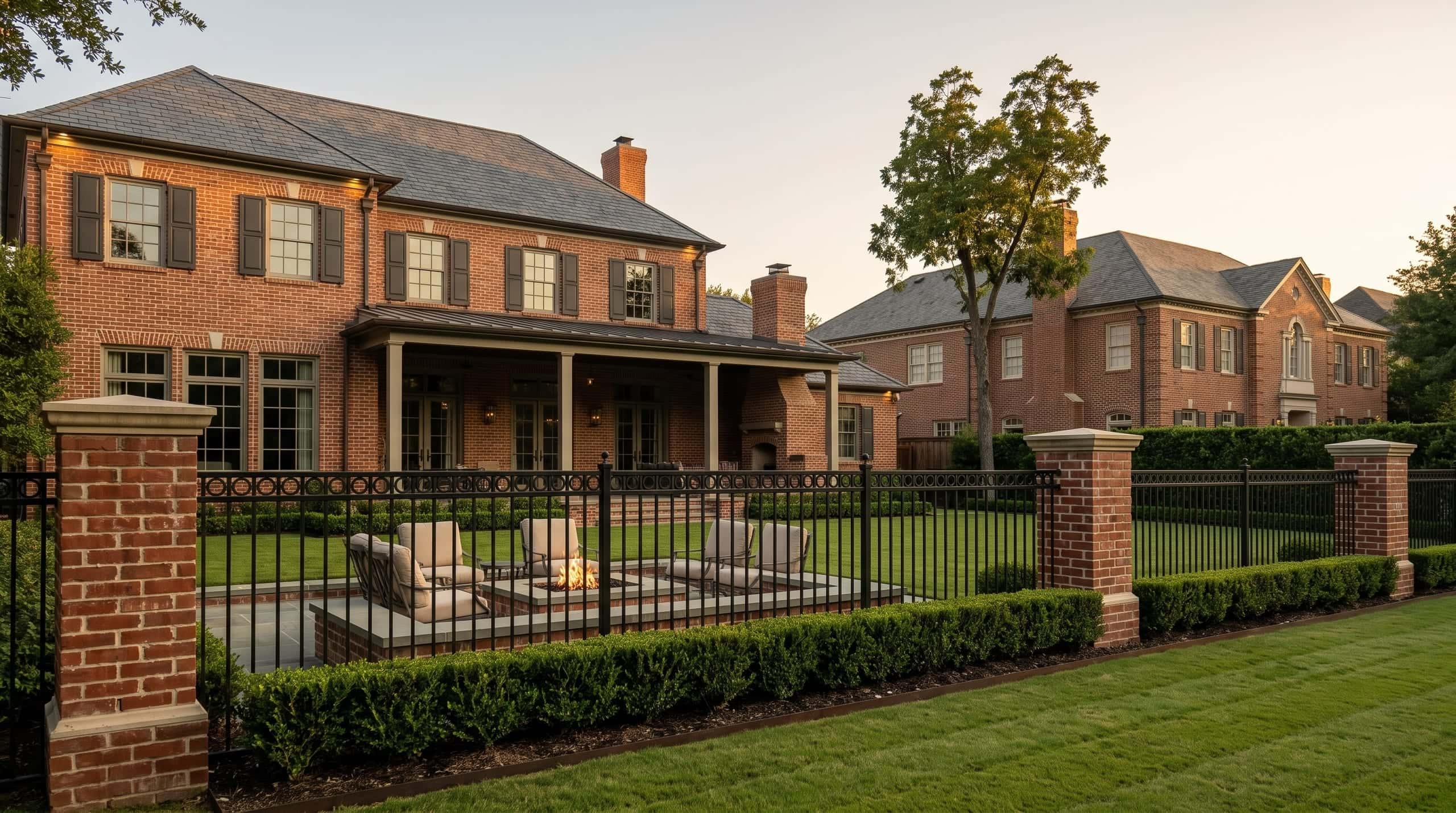
Garland fence companies publish warranties from one year to ten: Texas Select Fencing covers wood for three years and iron for ten, Texas Backyard Living covers stained wood for ten, and Cedar Creek’s conditional warranty runs ten years. Ratings cluster between 4.8 and 5.0, published install times run two to four days, and Johnson Fence’s Garland listing holds 5.0 across 22 reviews (October 2026).
The star rating tells you how the last job ended. It cannot tell you whether a crew shows up on the Tuesday it promised, or what happens when a post moves in year two.
Four things separate one contractor in this market from another: what the warranty covers, how the review record reads for volume and recency, how many crews stand behind the start date, and where the wood is bought. Here is where the named local companies stand on the one number they all publish, and how to make any of them answer the other three before you sign.
Is There One Best Fence Company in Garland?
No, but the field is short, so four criteria sort it quickly. No single company owns fence replacement in Garland and the northeast Dallas suburbs, and the field here is smaller than in Houston or Austin. That is good news for a buyer. A shorter list means you can run the same four questions past every name and compare real answers instead of averages. It matters because the wrong pick is expensive: in a December 2025 survey of 1,000 property owners, 10% said they regretted choosing the wrong contractor on their last renovation (Clever Real Estate, 2026).
The four criteria are the warranty and exactly what it covers, the review record read for volume and recency, the crew count behind the promised start date, and where the materials come from. Only one of those shows up in search results. The other three come out of a phone call, and they are the ones that decide how the fence looks in year three.
What Terms Should You Know Before Reading a Garland Fence Bid?
Fence bids use five words that carry more weight than the price at the bottom, and two of them get used loosely. Learn them first and the quotes stop looking alike.
| Term | What it means on a fence bid |
|---|---|
| Craftsmanship warranty | Covers the install. Post depth, spacing, gate hang, and alignment. The contractor writes it. |
| Manufacturer coverage | Comes from the mill or maker of the picket, panel, or metal. The crew does not write it. |
| Ground contact | The rating for lumber that sits in soil. Posts need it. Pickets above the ground do not. |
| Picket grade | A quality rank from #1 to #3. A quote that says only “cedar” has not named a grade yet. |
| Crew | One install team. A company’s crew count is how many jobs it can run on the same day. |
What Does a Fence Warranty Actually Cover in Texas?
Almost every fence warranty covers one of two things, and buyers assume it covers both. Texas issues no statewide general-contractor, home-improvement, or fence-contractor license, so the written warranty is the document you would actually enforce (Texas Department of Licensing and Regulation, 2026). Read it before you compare years.
- Workmanship coverage is the install itself. It is the part the crew controls and the part that fails when a post was set shallow.
- Material coverage comes from whoever made the board or the panel. The installer passes it along and does not write it.
- The callback record is the number nobody prints. A one-year warranty means one thing at a company that gets called back weekly and another at a company that does not.
Ours runs one year and covers craftsmanship. Across more than 20,000 completed projects last year, we had zero craftsmanship warranty callbacks. That is a record of what happened, and it is the number we would want to see from anyone quoting your line.
How Should You Read Garland Fence Company Reviews?
Read the volume and recency, not just the average. Ratings decide who gets called, which is why the count behind them matters: 92% of consumers say star ratings factor into which local business they choose, and 68% will not use one rated below 4 stars (BrightLocal, 2026). Every company on the Garland list clears that bar. So the average stops sorting anybody, and the volume takes over.
A larger review book buys two things an average cannot. It buys recent jobs, so you can read what the company did last month instead of three years ago. And it buys range, enough entries to show how a company handles the job that goes sideways. A rating built on a small book is directional and worth reading closely, one review at a time, for dates and for the kind of work described.
We hold 4.9 stars across 60 Google reviews on our company profile. We also hold 4.9 across 175 reviews on SoTellUs, which is a second public book a reader can go and count.
What Decides Whether a Garland Fence Company Keeps Your Start Date?
Crew depth. The start date on your contract is a promise about staffing, and most fence contractors are staffed thin. Across roughly 599,000 specialty-trade-contractor establishments nationally, average employment runs fewer than ten workers per establishment (U.S. Bureau of Labor Statistics, 2025). One truck down on Monday is your Tuesday.
We run over 100 crews. Every market outside Houston carries 5 to 15 of them, and the Garland office works a radius of about 30 miles, so the depth is local to the job you are buying. Work starts within about 4 days of an accepted quote, and most residential jobs finish the same day they start. In a June 2026 SoTellUs review, a customer wrote: “In addition the crew showed up promptly per schedule and Matt came by early to coordinate some changes I requested after accepting the original quote. The fence was installed in just 2 days and looks great!”
Why Do Two Garland Quotes for the Same Fence Differ?
Often because of where the wood is bought. Two quotes for the same 200 feet of cedar can differ by hundreds, and the difference often sits at the lumber yard rather than in the labor. A contractor buying pickets a pallet at a time pays a pallet price. Master Halco named us its 2026 Largest Volume Customer for the Southwest Region and for the World, and that picket cost is passed straight through. You pay less for the same spec, and the grade does not get quietly thinned to hit a number.
That grade decides how long the line stands here. Dallas sits at 44.3 on the decay hazard index, inside the moderate band rather than the high one that runs along the Gulf (USDA Forest Products Laboratory, 2009). Wood built to spec does well in this soil and this climate, which is exactly why a quote should name the picket grade as #1, #2, or #3 in writing. Ask which grade the price was written against before you compare two numbers.
What Should You Ask Before You Sign a Fence Contract?
Four questions cover all four criteria, and any contractor working this market can answer them on the first call. The Federal Trade Commission tells homeowners to get written estimates that list the work, the materials, the completion date, and the price, and to never pay the full amount up front (FTC, 2024). These questions are how you get that estimate to say something.
| Criterion | Ask this | A straight answer includes |
|---|---|---|
| Warranty | “What does your warranty cover, and for how long?” | The word craftsmanship or material, a term in years, and it in writing |
| Reviews | “Where else can I read reviews of your work?” | A second platform named, with jobs in the last few months |
| Schedule | “How many crews run in this market, and what is my start date?” | A crew number and a calendar date, given on the call |
| Materials | “Which picket grade is this price written against?” | A grade named as #1, #2, or #3, printed on the quote |