
The #1 fence company in Texas
Hardie Plank Fences for Texas Homes
A Hardie board fence is cement and sand with wood fiber pressed in, hung on a steel frame. Termites cannot eat it, standing water cannot soften it, and Johnson has replaced more failed wood with it than anyone in Texas.
Same-day quotes. The estimate is free and there is nothing to sign.
- 24Years in Texas
- 20K+Fences installed yearly
- 4.9Google rating
- A+BBB rating
A Hardie Plank fence is the fence you buy after wood has failed you twice. The panels are fiber cement, cement and sand with wood fiber pressed in, so termites cannot eat them and a wet corner cannot soften them. Galvanized steel makes the frame under the panels, so the part in the ground is not wood either.
Houston sits at 77.2 on the federal wood-decay index, deep in the high band, and a pine post at the bottom of a wet yard shows it. Cement board on a steel frame is the same after a wet summer as before it. It costs more than pine on the day and a great deal less over twenty years.
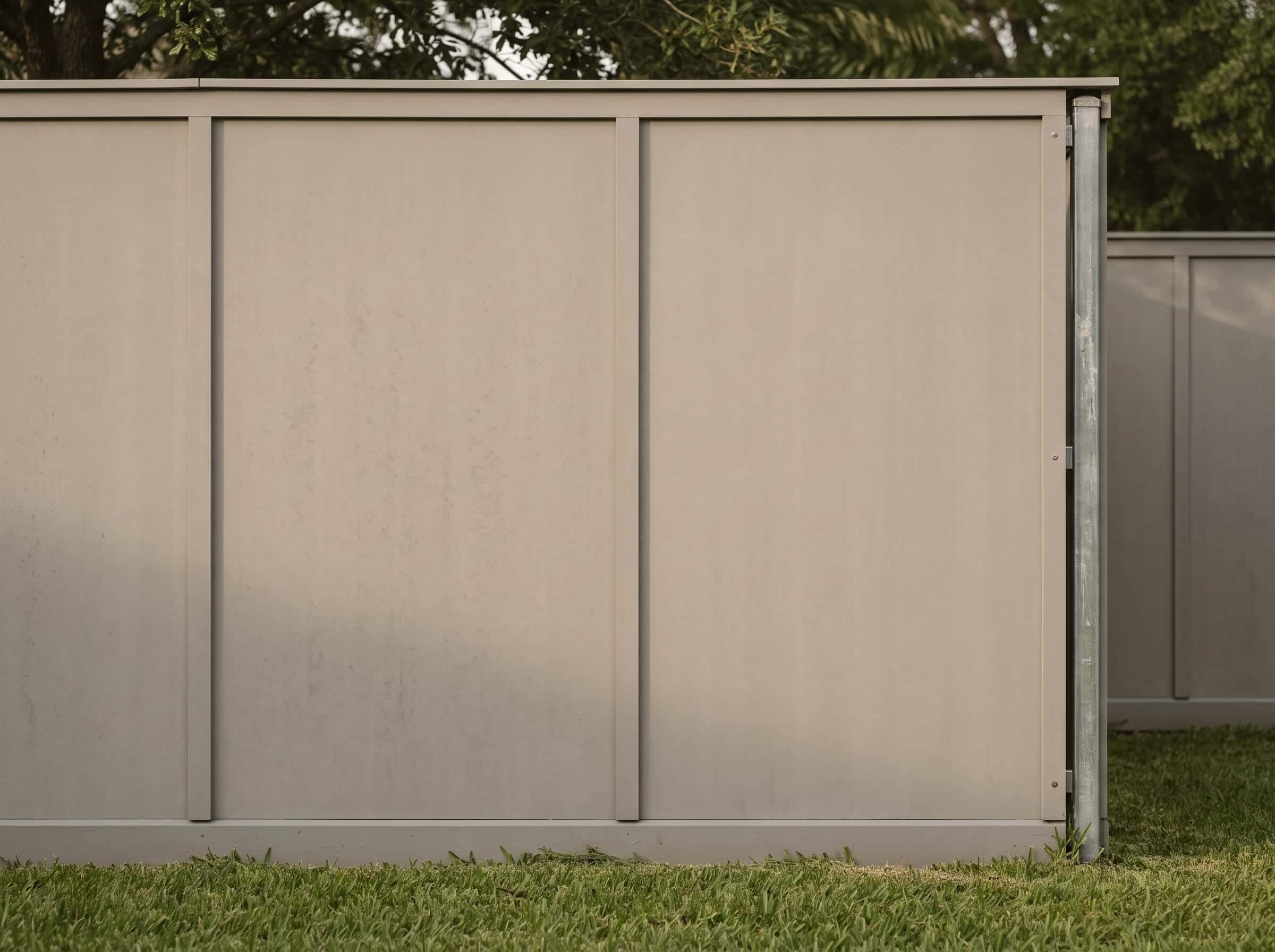
Hardie board fence panels on a steel frame, painted, capped and battened
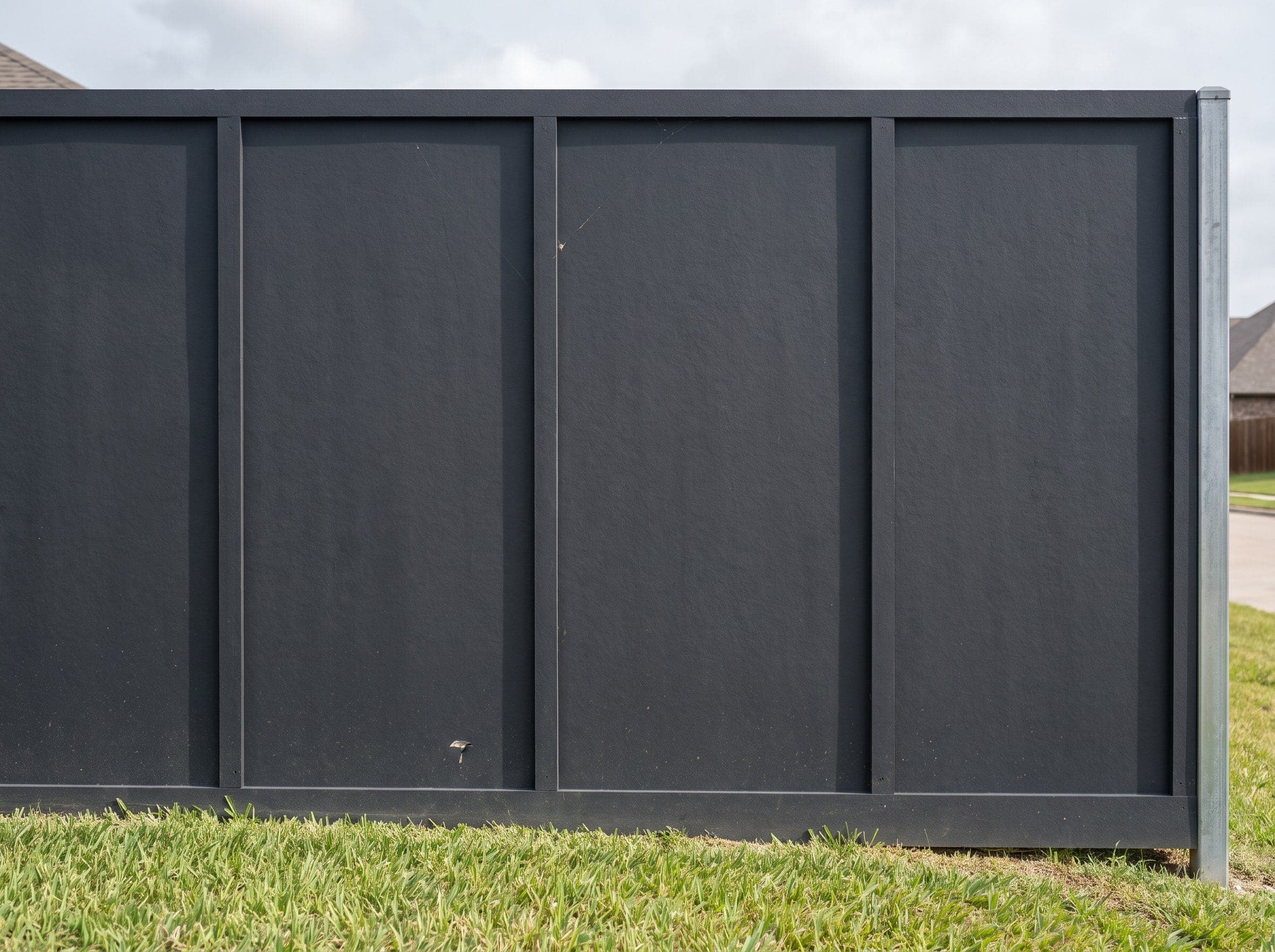
The panel is the same fiber cement siding the house trade has hung on Texas homes for decades, in fence-sized sheets. It comes factory primed and takes exterior paint in any color. A deep color, charcoal or bronze, reads as a designed wall; bare primer reads as a job half done, so the paint is part of the job.
Battens over the joints and a flat cap along the top hide every seam and shed the rain. Galvanized steel posts and rails make the frame, set in concrete, so nothing in the fence rots and the line does not move with the clay.
Fiber cement panels, factory primed, painted on site.
Galvanized steel posts and rails, set in concrete below the ground that moves.
Battens over every joint and a cap along the top.
Six and eight foot heights; an eight-foot fence gets deeper posts, closer together.
A wet corner, a termite line, or a wood fence that has gone over twice
The lots that call for a fiber cement fence have a story. A neighbor’s sprinkler hits the back fence every morning. The last two wood fences rotted at the post in under ten years. A termite line runs along the back of the subdivision and the pickets are the first thing it finds.
A cement board fence answers all three at once. It also reads as a modern flat plane, so it suits a newer elevation and an HOA that wants a painted, uniform look along the street side.
Price a fence before you call
See what a fence costs before anyone quotes you.
Pick the material, the height and how many feet of fence, and the calculator shows the market range for a fence like yours in Texas. Then a salesperson measures the real one in your yard and the number comes back the same day.
The estimate is free and there is nothing to sign.
Fiber cement, cedar or masonry, and which one your yard is asking for
Cedar heartwood resists rot on its own and silvers evenly, and it is the lower number on the day. It should give you about twenty years on treated posts. Pick it where you want real wood and the yard stays dry.
A masonry wall stops sound as well as sight and outlives the house, and it is the most expensive of the three by a distance. It needs an engineered footing and, in Houston, a permit at any height, which we file. Fiber cement sits between the two on price and above both on upkeep.
| Hardie Plank | Cedar | Masonry wall | |
|---|---|---|---|
| Rot and termites | Neither can touch it | Heartwood resists, posts do not | Neither can touch it |
| Upkeep | Paint, on a long cycle | Stain every two to three years | Repoint at fifty years |
| Cost on the day | Between cedar and masonry | The lowest of the three | The highest by a distance |
| Permit in Houston | Over eight feet only | Over eight feet only | Any height |
What a Hardie board fence costs in Texas, and why ours is the number to hold
No cost survey breaks fiber cement fencing out on its own, so here is the bracket it sits in. HomeGuide and Ergeon put a composite fence at $25 to $50 a foot installed, and HomeGuide puts a brick fence at $60 to $240 a foot. Cement board on a steel frame lands between the two.
A galvanized steel frame costs more than treated pine and does not move with the clay. Paint is part of the job. An eight-foot fence catches real wind, so the posts go deeper and closer together. A salesperson measures the fence line in your yard and the number is yours, tear-out and haul-off included.
Measured before the truck leaves
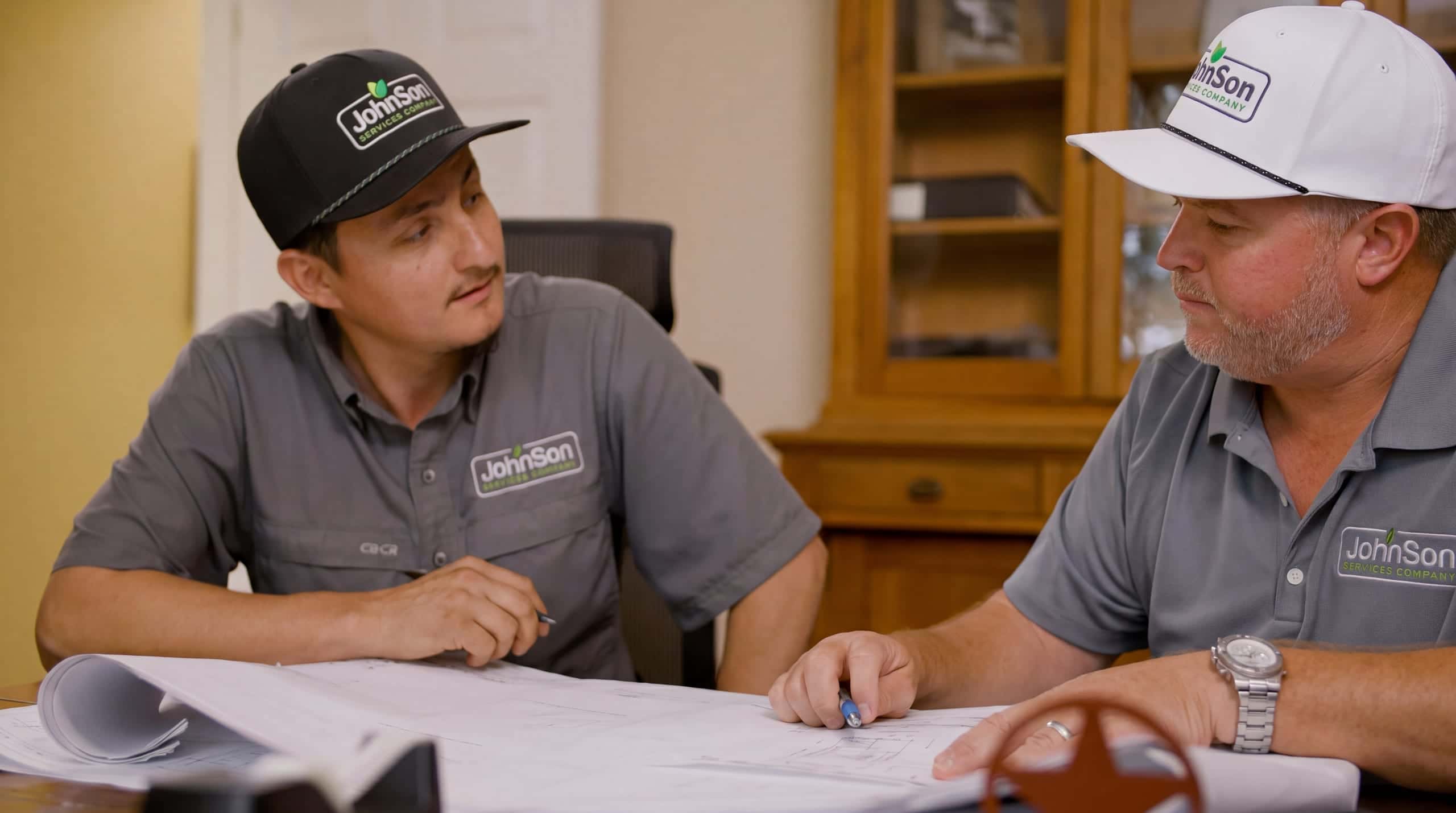
A salesperson measures your fence line with a tape, and the crew loads every panel and post at our yard before the truck leaves.
Nobody spends the morning waiting on a delivery, because the truck that turns up is carrying the whole job, paint included.
Twenty-five to thirty crews out of two Houston yards, more than any other Texas company keeps in one metro, so the date we give you is the date you get.
Customers
Twenty thousand fences last year, and not one callback
Fence didn’t budge an inch when severe storms came through the next day!
Celeste T.Google review, Houston North office, August 2025 Johnson replaced a metal fence along my back yard. They were responsive to my needs, came in a fair price and delivered as promised. The quality of the materials is excellent and the installation was seamless. i would highly recommend them.
David H.Google review, Houston North office, August 2025 I have had Johnson services first – put in a perimeter fence, then- add a front gate, then add a side gate, then recently a back gate- I have been very pleased with all of their work, their workers, their sales person, and office staff. Thank you very much!!! This is over a 3 year period- still satisfied.
Vivian B.Google review, Houston North office, October 2025
Common questions about hardie plank fences
Is a Hardie board fence the same as a fiber cement fence?
Yes. Hardie is the brand of fiber cement board most Texas builders use, so the two names describe one fence: cement and sand with wood fiber pressed in, on a frame.
Will an HOA approve a Hardie Plank fence?
Most do, because it reads as a painted, uniform wall. The HOA can set the height, the color and which side the finished face points, and we check the deed restrictions before a post goes in.
Does a fiber cement fence need a permit in Houston?
Houston asks for a building permit only when a fence stands over eight feet, or for a masonry or concrete fence at any height. A fiber cement fence of eight feet or under goes in with no permit.
How long does a Hardie board fence last?
The panel does not rot and termites cannot eat it, and a galvanized steel frame carries it, so the fence ages the way siding does: it wants paint on a long cycle and nothing else. Every job carries a one-year craftsmanship warranty on our work.
Can you build a Hardie Plank fence eight feet tall?
Yes. An eight-foot solid fence catches real wind, so the posts go deeper and closer together, and the quote names that. Above eight feet Houston asks for a permit, which we file.
Free estimate
Get your estimate from the largest fence company in Texas
Tell us what you need and where the fence goes, and a salesperson will come out and measure the line before anyone writes a number. You get the picket grade and the total in writing, the visit costs nothing, and there is nothing to sign.