
Johnson Fence builds HOA community perimeters, gates and amenity-area fencing across Texas, with over 100 crews in Houston, Dallas-Fort Worth, Austin and San Antonio. We have fenced entire new neighborhoods for regional and national homebuilders for two decades.
A board hiring for a whole community has usually seen what goes wrong at smaller scale: a fence that failed too soon, a quote that left out the picket grade, a crew that never came back. Who owns the fence, what the pool and park areas need, what the work costs, and how to pick a contractor who can finish, are all covered here.
Johnson Fence fences HOA perimeters and amenity areas across Texas
We serve 42 cities and towns across Texas from seven offices: Houston North (Corporate, Tomball), Houston South, Tomball (Masonry), Dallas-Ft. Worth, Garland, Austin (Round Rock) and San Antonio. That covers the Houston, Dallas-Fort Worth, Austin and San Antonio metros, and we are expanding.
For a board, that means one contractor can work the perimeter, the entry gates and the amenity areas of a community in any of those four metros. You do not have to hire one company for the street frontage and another for the pool.
Who is responsible for an HOA community’s perimeter fence in Texas?
The HOA, or property owners’ association, generally manages fencing designated as association property or common-area infrastructure. Who owns and maintains each stretch of fence depends on the recorded declaration, plats, easements and governing documents.
Read those documents before you collect bids. A fence along a common-area boundary may belong to the association, while a fence between two lots may belong to the owners. A bid written for the wrong footage is a bid you will have to redo.
What fence works for HOA pools, parks and dog parks in Texas?
Pool areas follow state law, and parks and dog parks follow the community’s own needs. Texas Health and Safety Code Chapter 757, Section 757.003 sets the pool yard enclosure at a minimum of 48 inches, measured from the ground on the side away from the pool.
Gates matter as much as height. Section 757.004 requires a gate in a pool yard enclosure to have a self-closing and self-latching device, and to open outward away from the pool yard. The same section sets the latch at least 60 inches above the ground, with exceptions it spells out.
Parks, playgrounds, dog parks and recreation areas each need fencing, gates and access control suited to how people use them. On our side, fences are built with pressure-treated framing and cedar pickets, and the ideal job is typically a wood fence. We quote the picket grade, #1 to #3, by name, so a board can compare two bids on the same material.
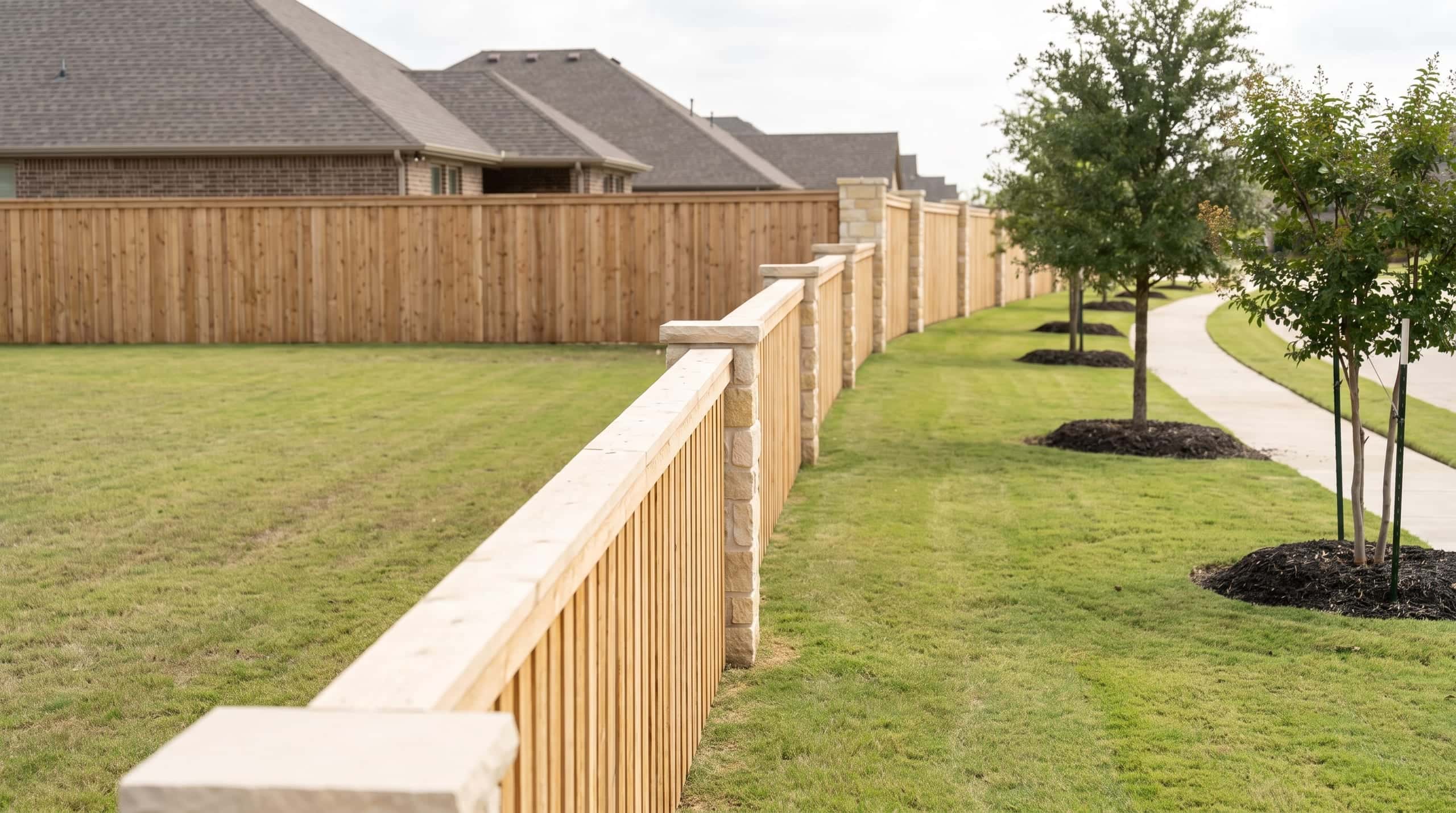
Some work splits by customer. Concrete fences and custom stone columns are commercial-only for us, and decks, gazebos and trellises are residential-only. Community entrances and amenity areas fall on the commercial side.
What does HOA perimeter fencing cost per foot in Texas?
A 6-foot wood privacy fence costs $25 to $50 per linear foot installed (HomeGuide, 2026). Texas runs below the national average, with Houston-area wood privacy fences commonly quoted at $16 to $42 per linear foot (Angi Houston and HomeBlue, 2025 to 2026).
In Dallas-Fort Worth, Wood Wonders Fence puts a 6-foot wood privacy fence at $25 to $60 per linear foot installed in 2026. It gives $30 to $50 as the realistic figure for 6-foot cedar. i30 Builders publishes all-in rates of $62 per linear foot for a 6-foot cedar standard privacy fence and $72 for cedar board-on-board in DFW (2026).
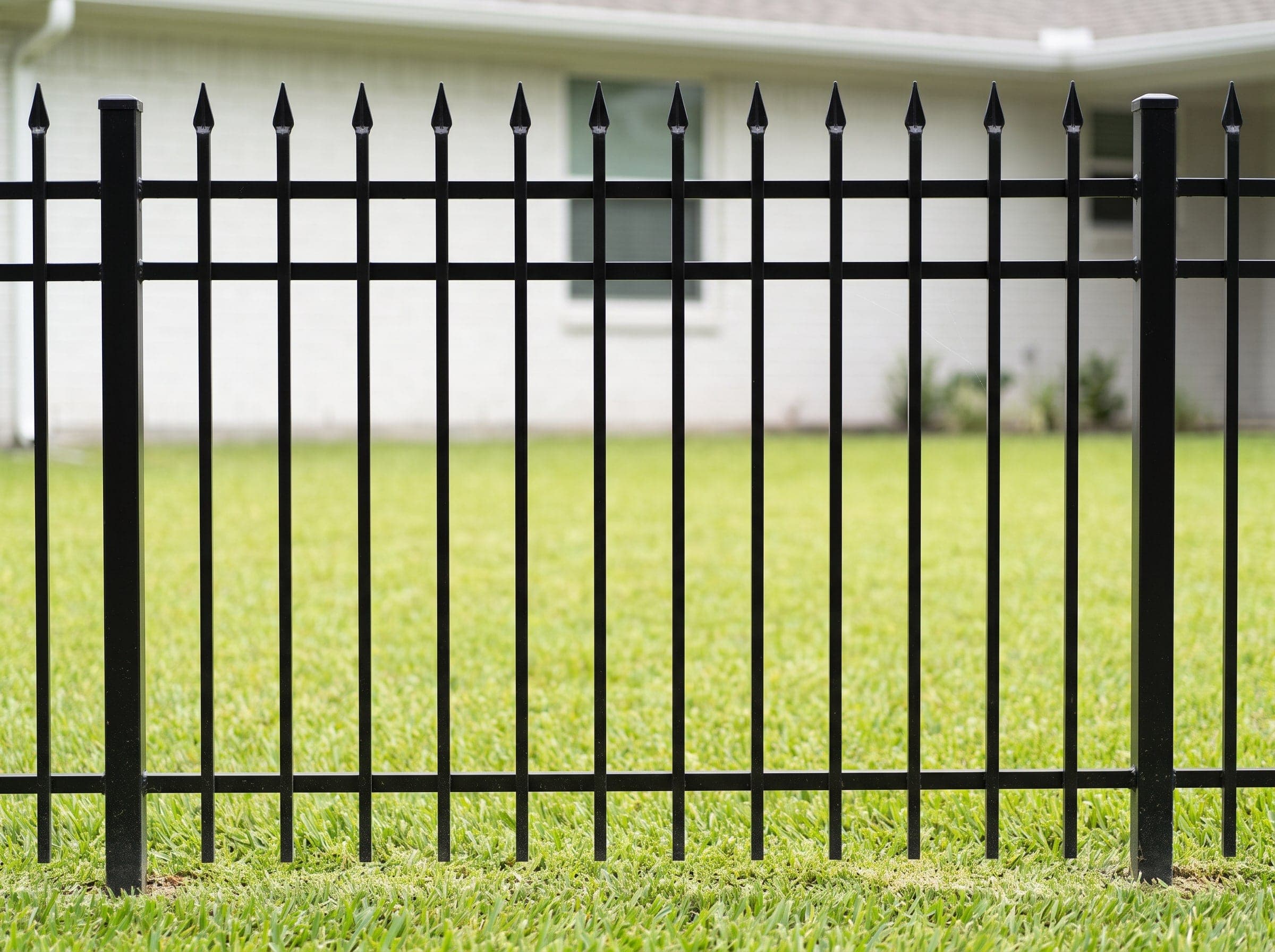
Entrances and amenity areas often call for something heavier. Wrought iron costs $50 to $85 per linear foot for heights of 4 to 6 feet, and custom ornamental designs run $85 to $130 (HomeGuide, 2026). A brick fence costs $60 to $240 per linear foot for 3 to 6 foot walls (HomeGuide, 2026).
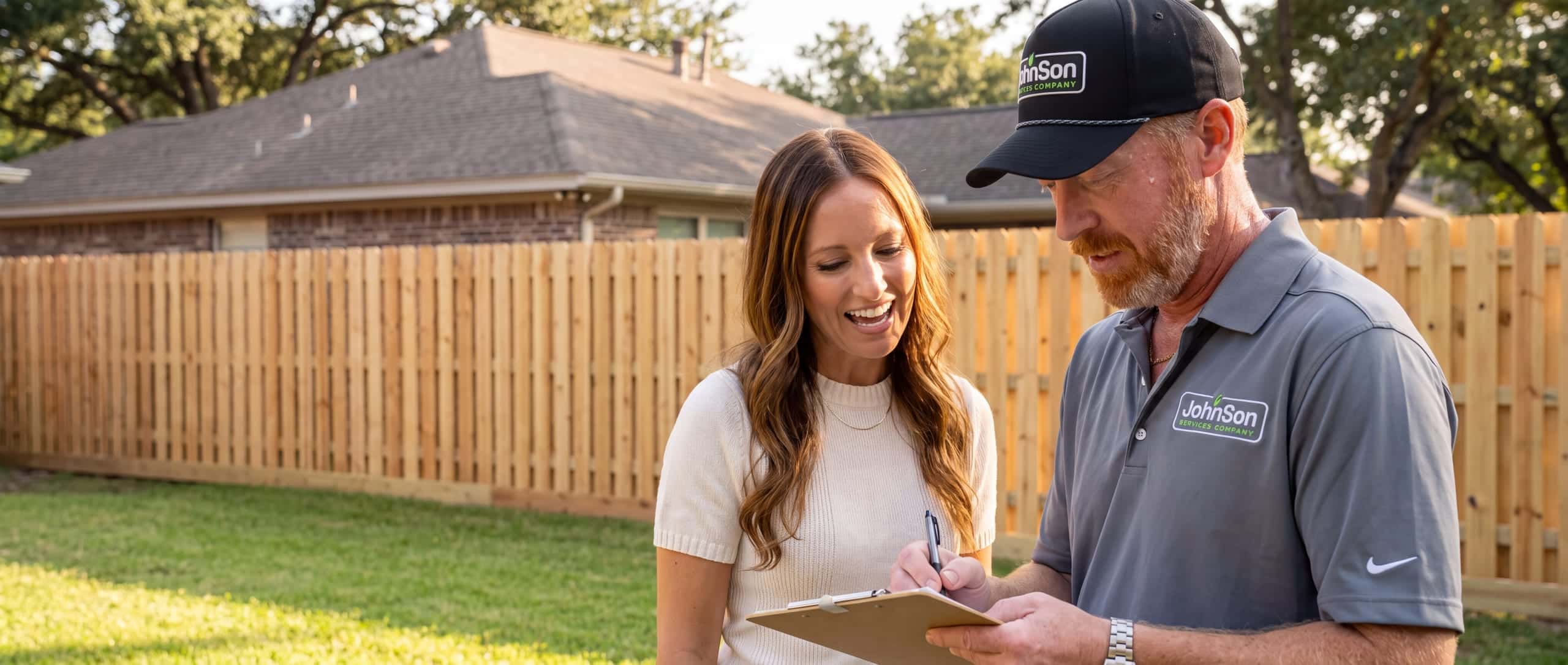
Those are market ranges from the publishers named, for a standard fence. They are not our price. We price every project by custom quote after a free on-site estimate and keep no fixed price list, because cost depends on fence type, materials, length, gates and site conditions. The salesperson meets you on site, measures the linear footage and confirms fence type and picket grade, so the number you sign is built on your community’s footage.
What should an HOA board check in a fence bid before signing?
Check that the bid names the picket grade, the post depth, the footage and the warranty terms. A bid that leaves one of those out is a bid you cannot compare with the next one.
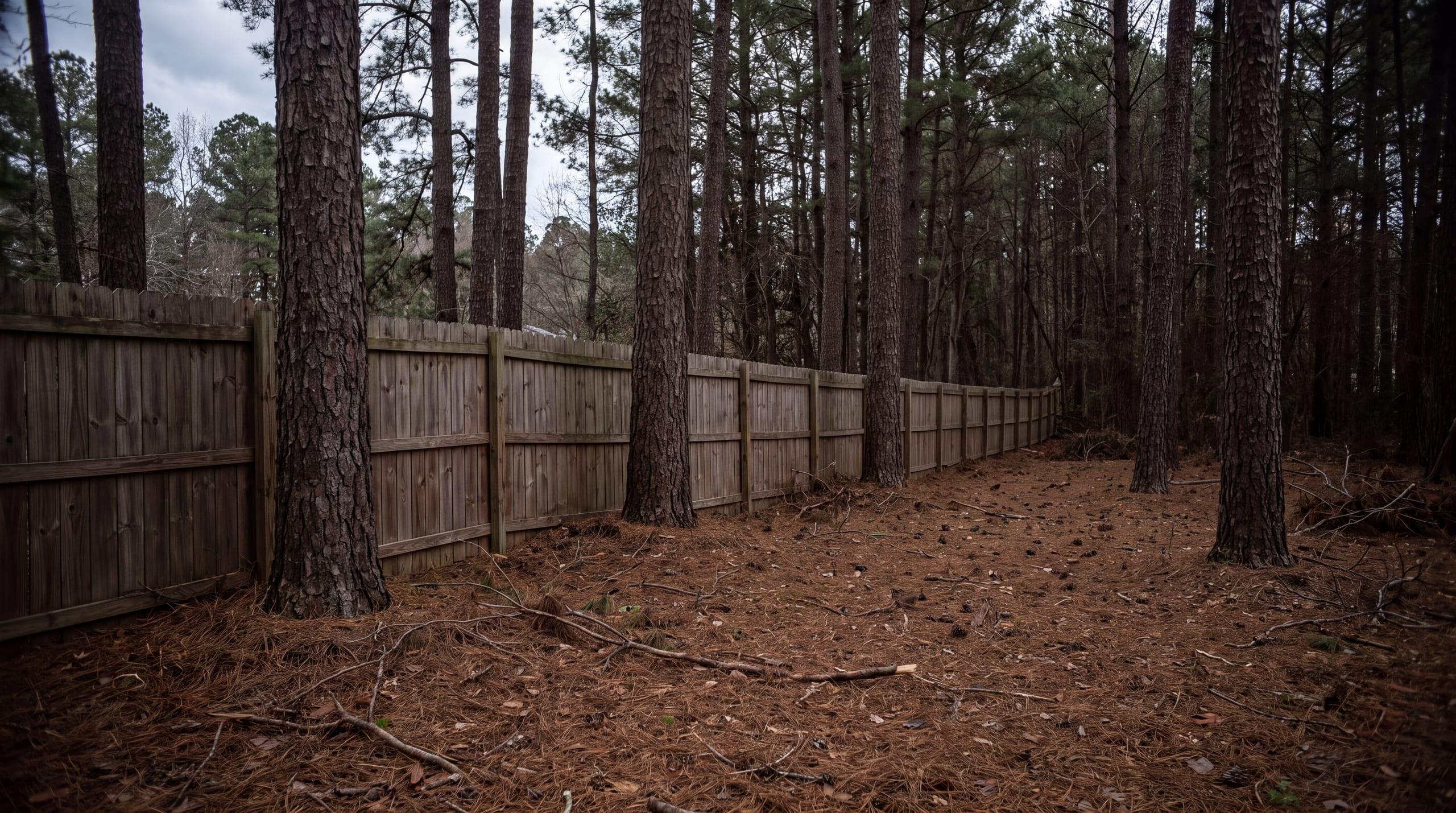
Other Texas fence companies’ own reviews show what goes wrong when a bid is vague. A one-star Google review from May 26, 2026 reads: “The post should be 2 feet underground but they only did 1 feet. I cannot imagine a fence professional company could do something like that. Now my fence is in bad condition and it is leaning because of that and they are not willing to come back to fix it.”
For a community, that is a failure repeated along every post of the perimeter. Ask for post depth in writing, ask who stands behind the work, and ask how long the warranty runs and what it covers.
Ask about crews too. A two-star Google review from March 25, 2026 complained of “Slow turnaround, uncompetitive pricing, lack of follow-through on follow-ups and revisions.” On a big job, the start date depends on how many crews the contractor can put on it.
What city permits does a Texas HOA fence project need?
Permit rules are set city by city. Houston, which has no zoning, requires a building permit for a residential fence only when it exceeds 8 feet above grade or is built wholly or partly of masonry or concrete (City of Houston, 2026). An ordinary wood or metal fence of 8 feet or under is exempt.
Austin sets a lower line. A fence of any material up to 7 feet is permit-exempt outside floodplains, while a permit is required above 7 feet, above 6 feet along a public right-of-way on residential property, or within a floodplain at any height (City of Austin, 2025). A solid fence along a property line may not exceed 6 feet from natural grade, rising to 7 feet only where the grade changes by at least 1 foot.
Masonry entrance columns can trigger a permit in Houston at any height. Our team determines whether a project needs a permit and files it, so the board does not carry that task.