
In a Fort Worth front yard, ornamental iron that is at least 50% open and picket wood with no more than 50% density are allowed by right at 4 feet tall. Chain link is not allowed in the required front yard. A solid wood privacy fence is not allowed by right there either.
The costly mistakes come after the rule is known: a quote that leaves out the picket grade, and a crew that never comes back to fix a post set too shallow. Here is what the city allows, what each material costs, and what the quote has to say before you sign anything.
Fort Worth front yards allow open wood and iron, not chain link
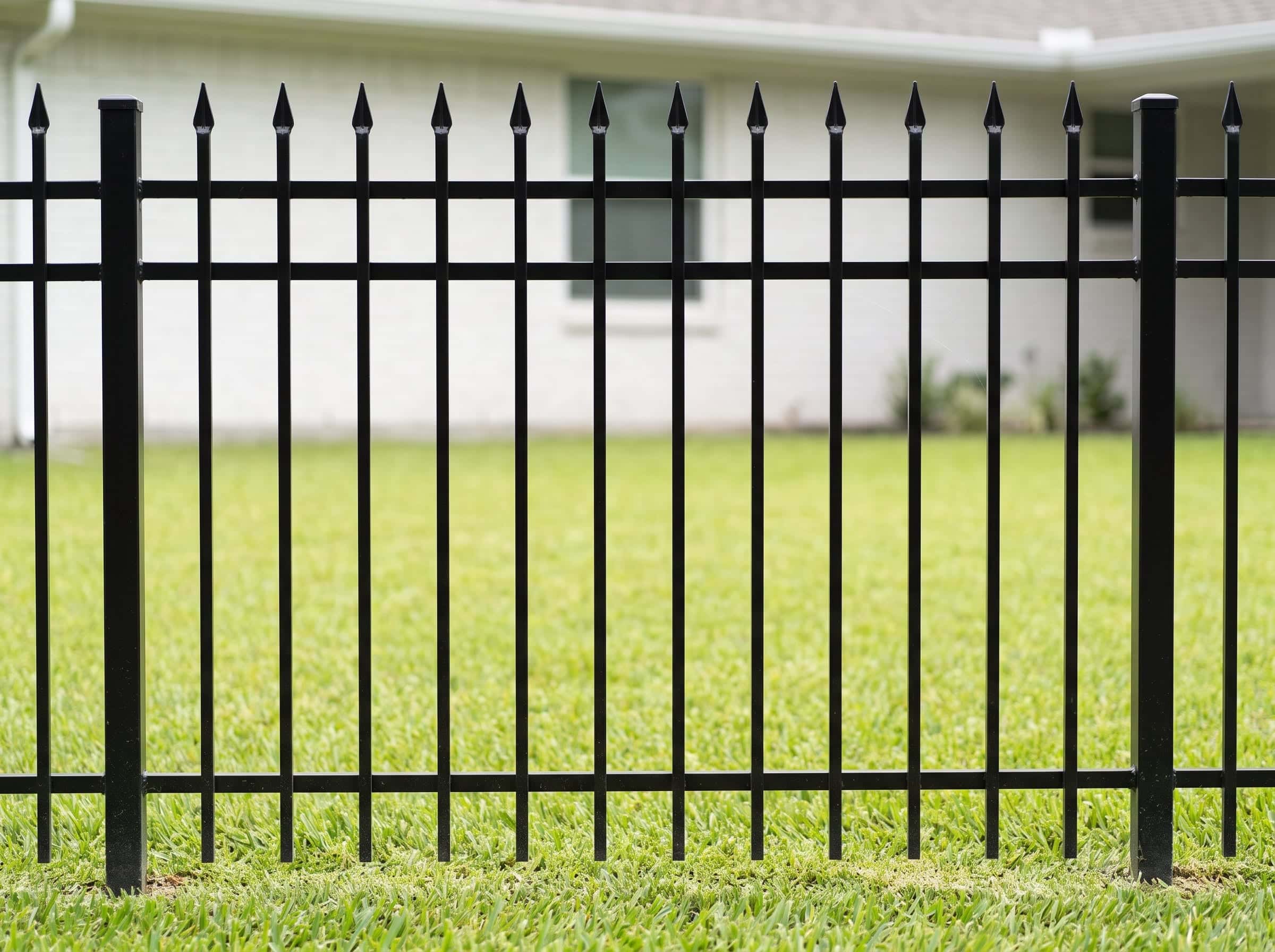
Open picket wood and open ornamental iron are the two fence materials that pass Fort Worth’s front-yard rule under Section 5.305 of the zoning ordinance. The ordinance allows a traditional picket fence of 4 feet, with no more than 50% density, in the front yard of a one- or two-family home (Fort Worth Zoning Ordinance, § 5.305).
The same section names wrought iron, tubular steel and picket as the materials, and it excludes chain link in so many words. It also says the fence must not obscure visibility. The rule reaches the minimum required front yard, the platted front yard, the established front yard and the projected front yard, so a fence set back from the street can still count as front yard.
The city’s residential permitting page says the same thing in shorter words. Fences in the front yard and projected front yard can be no more than 4 feet tall and open design picket style, and chain link is prohibited there.
For you, the rule sorts the three materials fast. Wood works if it is picket style and open. Iron works if at least half of it is open air. Chain link works behind the front setback line, which is covered below, and nowhere in the front yard.
Can you build a 5-foot front-yard fence in Fort Worth?
Not by right. The by-right limit is 4 feet, and a special exception from the Board of Adjustment is the route for anything beyond it. The city’s June 2017 Board of Adjustment agenda shows what that route looks like for height: “Columns at a height of 8 feet, when 5 feet, 6 inches is allowed by special exception, excessive by 2 feet, 6 inches.” (Board of Adjustment Residential agenda, City of Fort Worth, 2017)
A special exception can also reach a solid fence. A solid fence of no more than 4 feet may be considered that way, though approval is not automatic. Plan for a decision that could go either way, rather than treating it as a formality.
The city’s Board of Adjustment page lists a $843.75 filing fee for an owner-occupied residential special exception, plus $250 for each additional variance in the same application. The property owner or an authorized agent files it. The owner or agent must also be at the hearing, and the city’s page says the board may deny the case if no one appears.
The ordinance sets the test the board applies (Fort Worth Zoning Ordinance, § 3.303). The board grants a special exception only when:
- the use is specifically permitted under the ordinance
- the applicant clearly defines the location of the improvements on the site plan
- the exception is wholly compatible with the existing use and permitted development of adjacent properties
The burden of proof sits on the applicant. Written notice of the hearing goes to owners of real property within 300 feet of your lot, not less than ten days before the date set (Fort Worth Zoning Ordinance, § 3.302). Those neighbors are the people who read your plan before the board does, so talk to them first.
If you want a taller front fence, the cleaner path is a 4-foot open fence you can build today. Pay the fee only when the extra foot is worth that much to you.
Where does a Fort Worth front yard end and the 8-foot fence start?
The 4-foot open-fence rule covers the front yard, and behind the front building setback line a Fort Worth fence can reach 8 feet. On a corner lot, no fence over 2 feet is permitted inside the triangle formed 20 feet in each direction from the street-intersection corner (City of Fort Worth, Zoning Ordinance Section 5.305).
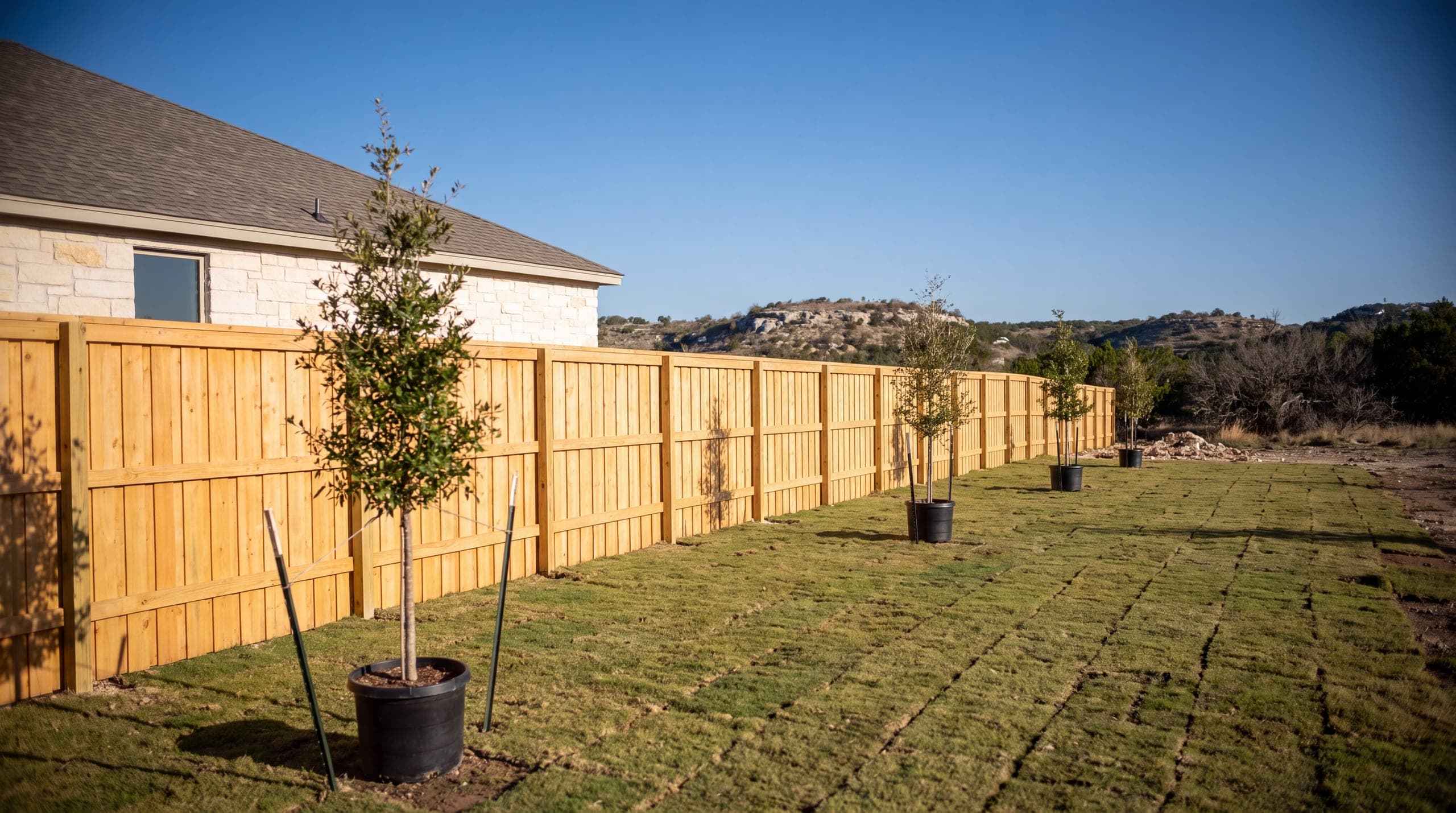
The same section bars any fence over 8 feet surrounding residential property behind the front building setback line. It also says no solid fence or wall is permitted in the required front yard of a one- or two-family home. So the solid wood privacy fence you want belongs behind the setback line, along the sides and the back.
Height is measured from the highest adjacent grade to the highest point of the fence or gate. That detail matters on a sloped lot, where a fence that reads 4 feet from the yard side can stand taller from the low side. Gates count, so a decorative top on a gate counts against the limit too.
The corner triangle is the rule that catches homeowners who did everything else right. Say, hypothetically, your lot sits at a street intersection and you want a 4-foot iron fence along both streets. The 4-foot fence is fine along the front, but inside the 20-foot triangle at the corner, anything over 2 feet is prohibited. Walk off 20 feet each way from the corner before you place the first post.
What do open wood and ornamental iron fences cost per foot in Texas?
Wood fence, from pine to cedar, runs $18 to $45 a foot according to HomeGuide, Angi and HomeAdvisor, a Texas triangulation of their published ranges. Ornamental steel or iron runs $45 to $90 a foot according to HomeGuide and Angi.
Those are the publishers’ market ranges, not our price. They show where the two allowed materials sit against each other. Iron starts at the number where the top of the wood range ends.
For a Fort Worth front yard, that gap matters because both materials pass the rule. If you want the fence to frame the yard and mark the property line, picket wood costs less per foot and meets the same 4-foot limit. Iron buys a fence that stays open without the density math, and you pay for that at every foot of frontage.
The footage you actually buy is smaller than the footage of your house frontage plus sides. Only the front yard falls under the 4-foot rule, and the rest of the fence can be taller and solid. A quote built on measured footage, with the front and the back priced as separate runs of different height, tells you more than one blended number.
When is each front-yard fence material the wrong pick in Fort Worth?
Chain link is the wrong pick for a required front yard because Fort Worth does not allow it there. A solid wood privacy fence is the wrong pick by right, since only a special exception allows a solid fence, and only at 4 feet. Ornamental iron has to stay at least 50% open and picket wood at no more than 50% density, so either one frames the yard but cannot screen it.
That last point trips up homeowners who like the look of a tight picket. A close-set picket that fills in the gaps stops being open design. You cannot stack boards side by side in the front yard and call it picket.
Chain link is the plain case. It is not allowed in the required front yard, so a quote that lists chain link for the front is a quote for a fence that fails. It can still make sense in the back, where the 8-foot limit applies and the open-design rule does not.
A privacy fence is the wrong pick for the street side for the same reason. If screening is the goal, put the solid wood behind the front setback line, where the ordinance allows it, and keep the front open. You get the privacy where you sit, and you pass the rule where the city looks.