
Wrought iron lasts longest in Fort Worth, typically 50 to 100 years with rust prevention and occasional repainting. Aluminum comes next at 30 to 50 years and needs very little upkeep.
What you are up against is a fence that fails too soon, a quote that leaves out the grade, or a crew that never comes back. Fort Worth’s sun, clay soil and hail make each of those cost more.
Pick wrought iron for lifespan or cedar or vinyl for privacy in Fort Worth
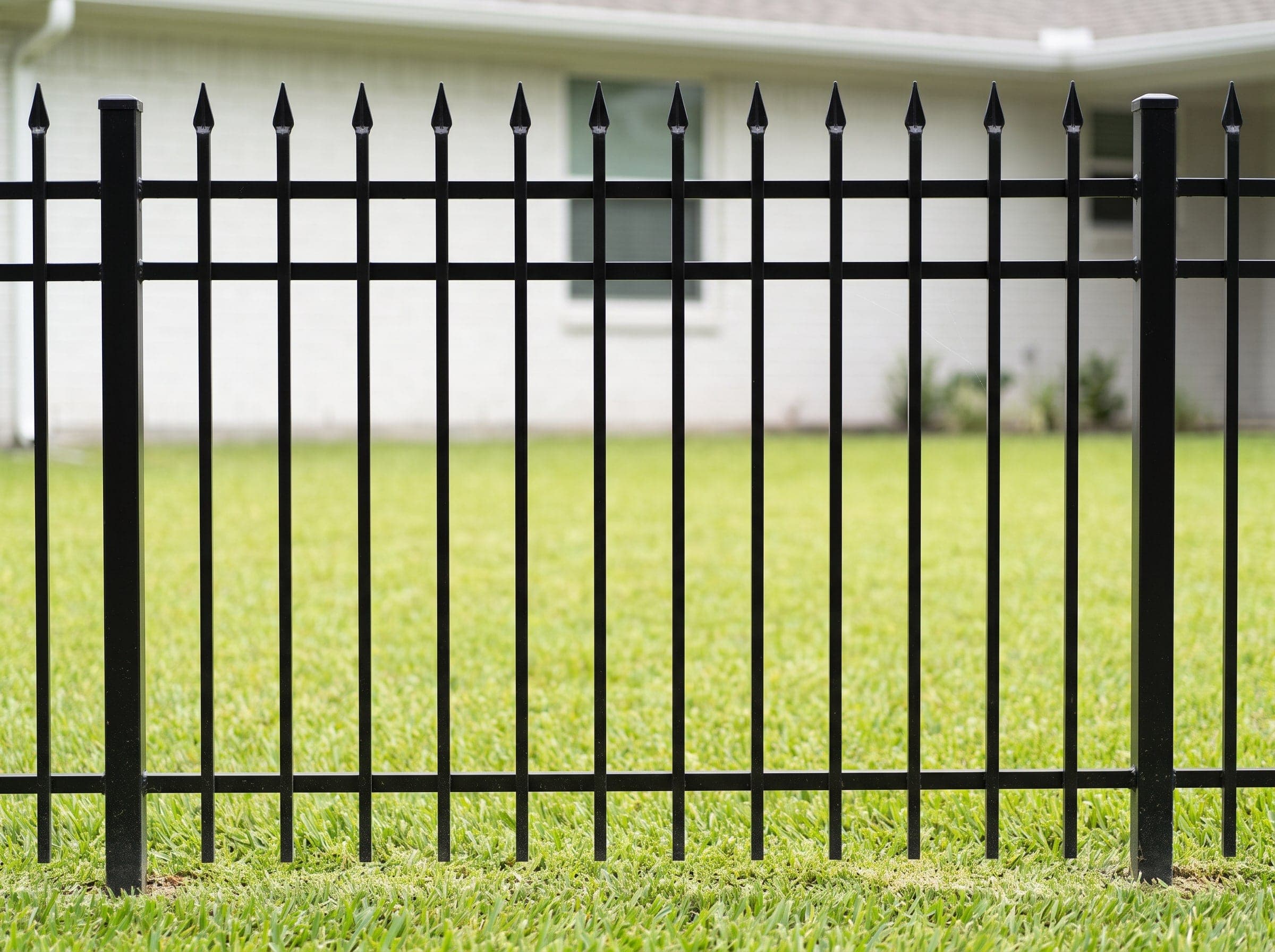
Powder-coated wrought iron or aluminum fencing generally lasts the longest in Fort Worth, and true wrought iron can reach 50 to 100 years when properly maintained. If lifespan is the only job the fence has, buy one of those two.
Most backyards need privacy, though. Nearly every Texas home is built with a backyard privacy fence as standard, and for that job the choice is cedar or vinyl. Vinyl for privacy runs 20 to 30 years. We build wood fences with pressure-treated framing and cedar pickets, and a wood fence put in properly should last about twenty years.
Wood is graded from #1 picket through #3 picket and priced accordingly, and we name the grade on the quote. We have built fences across Texas since 2002, with offices across Houston, Dallas-Fort Worth, Austin and San Antonio, serving 42 cities and towns statewide.
How many years does each fence material last in Fort Worth?
Regional fencing guides put wrought iron at 50 to 100 years and aluminum at 30 to 50. Chain link runs 20 to 50 years, composite 25 to 30, vinyl 20 to 30 and western red cedar 15 to 25, and every one of those depends on installation and maintenance.
A North Texas fence company’s guide for Rockwall, fencerockwalltexas.com (2026), gives tighter local numbers. It puts ornamental aluminum at 30 to 40 years, commercial-grade UV-rated vinyl at 25 to 30 years and galvanized chain link at 20 to 30 years.
Wood has the widest swing. The same page says of cedar: “Properly maintained: 15 to 20 years. Unmaintained: 8 to 12 years.” A cedar fence that gets no care loses a decade, which is why wood sits at the bottom of the list and metal at the top.
What shortens a fence’s life in Fort Worth?
Four conditions shorten a fence’s life here: intense summer UV, hail and severe storms, expansive clay soil that shifts with moisture, and heat and moisture that speed up wood deterioration. Each one works on a different part of the fence.
The heat is getting worse. The Office of the Texas State Climatologist (2024) projects 100-degree days on track to become roughly four times as common by 2036 as they were in the 1970s and 1980s.
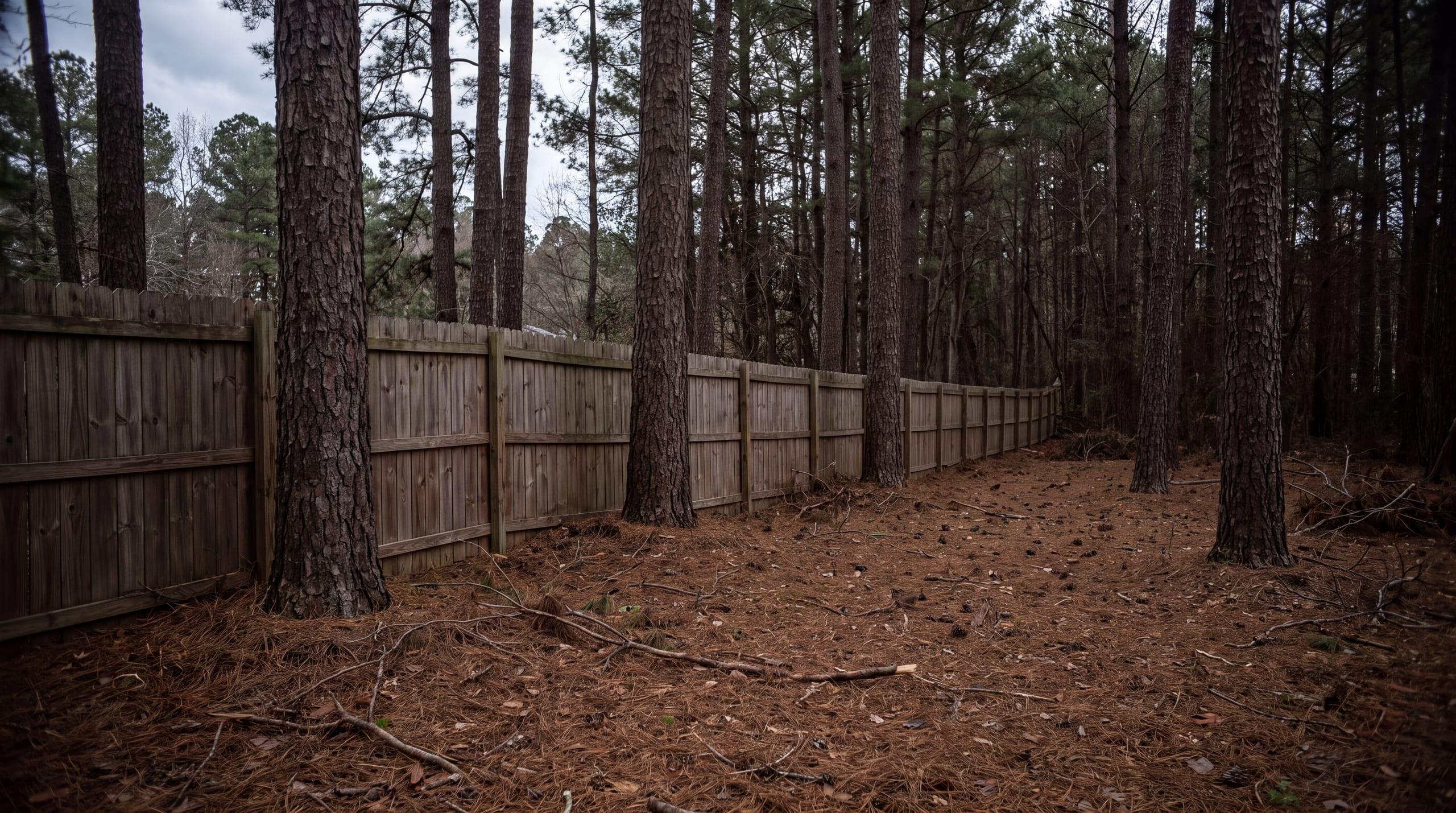
Moisture matters most for wood. The USDA Forest Products Laboratory’s Wood Handbook (2021) says serious decay occurs only when wood moisture is above 30 percent, and that fully air-dried wood usually stays at or below 20 percent, “a reasonable margin of safety against fungal damage.” The same chapter makes drainage and drying the single largest driver of fence-lumber service life. Clay that holds water against a post works against that.
Do steel posts matter as much as the fence material in Fort Worth?
Yes, posts and installation matter almost as much as the material. Properly installed galvanized steel posts and suitable concrete footings can significantly improve the lifespan of a privacy fence.
Builders and neighborhood boards already act on this. The Circle C Homeowners Association’s fence guidelines (2020) name Western Red Cedar as the preferred material and recommend galvanized steel posts for longevity. Even a good cedar picket sits on whatever is in the ground, and in clay that shifts with moisture, the footing is what holds the rest in place.
Which Fort Worth fence materials need the most upkeep?
Cedar needs the most upkeep, with periodic staining or sealing, and wrought iron comes next, needing occasional rust prevention and repainting. Aluminum won’t rust, handles Texas weather well and needs very little maintenance.
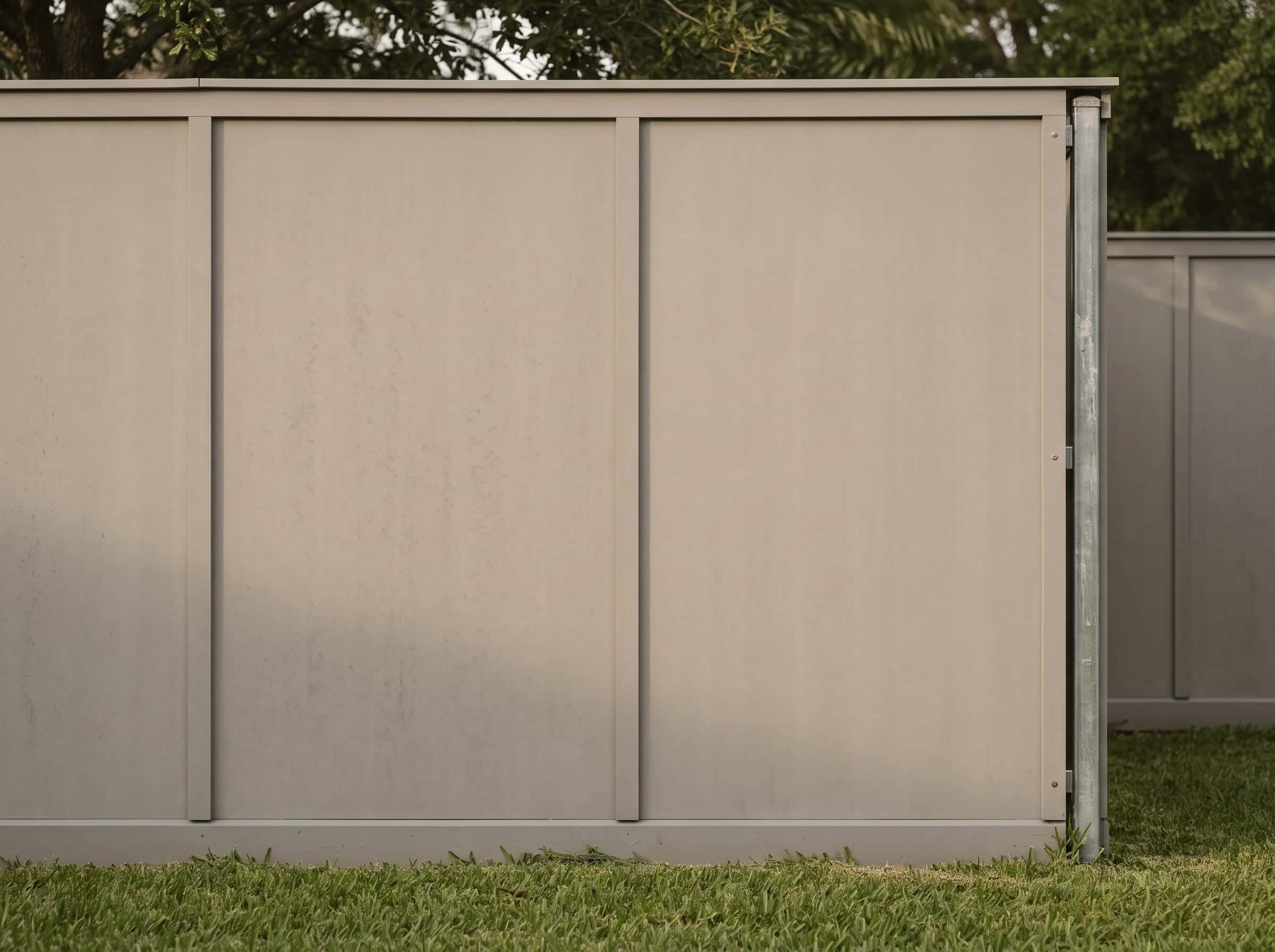
Composite is low maintenance, resists rot and insects and has a wood-like appearance. Resists is the word to watch: USDA Forest Products Laboratory tests by Clemons and Ibach (2004) found wood-plastic composites are not rot-proof, and that processing method and prior moisture exposure strongly affect fungal resistance.
Vinyl needs the right grade more than it needs upkeep. It should be UV-resistant and high quality to stand up to Texas sun. A fence that skips its upkeep is how the 8 to 12 year cedar numbers above happen.
What does a long-lasting fence cost per foot in Texas?
Ornamental steel costs $28 to $100+ per linear foot installed in Southlake, according to Stand Strong Fencing of Southlake (2026), depending on panel style, design complexity and terrain. Wood fence pricing in Texas sits below the national average.
Other Texas publishers land in the same band. Freedom Fence & Gates (2026) lists ornamental steel in Austin at $40 to $80 per linear foot installed, approximate and dependent on site conditions and permits. Aesthetic Gates & Fence (2026) shows $65 to $85 installed in Corsicana for steel with finials, scrolls and arched tops, citing a national HomeGuide figure.
National wood-fence installs run $20 to $50 per linear foot (HomeGuide, 2026; HomeAdvisor, 2025). Houston-area wood privacy fences are commonly quoted at $16 to $42 per linear foot (Angi Houston and HomeBlue, 2025 to 2026), and a 6-foot privacy fence sits around $19 to $26 per foot at the low-labor end.