
Ornamental aluminum is the low-maintenance choice for most Texas yards because it does not rust like ordinary steel, while galvanized, powder-coated ornamental steel is the choice where strength and security come first. Ornamental steel or iron runs $45 to $90 a foot installed, as HomeGuide and Angi measure it for a six-foot residential fence on flat ground before tear-out, gates and slope.
Most homeowners weighing the two metals have already seen the other outcomes: a fence that failed too soon, a quote that left out the grade, a crew that never came back. The choice of metal matters, and so does what the quote says about the finish, the welds and the posts.
Aluminum suits most Texas yards, and steel suits security fences
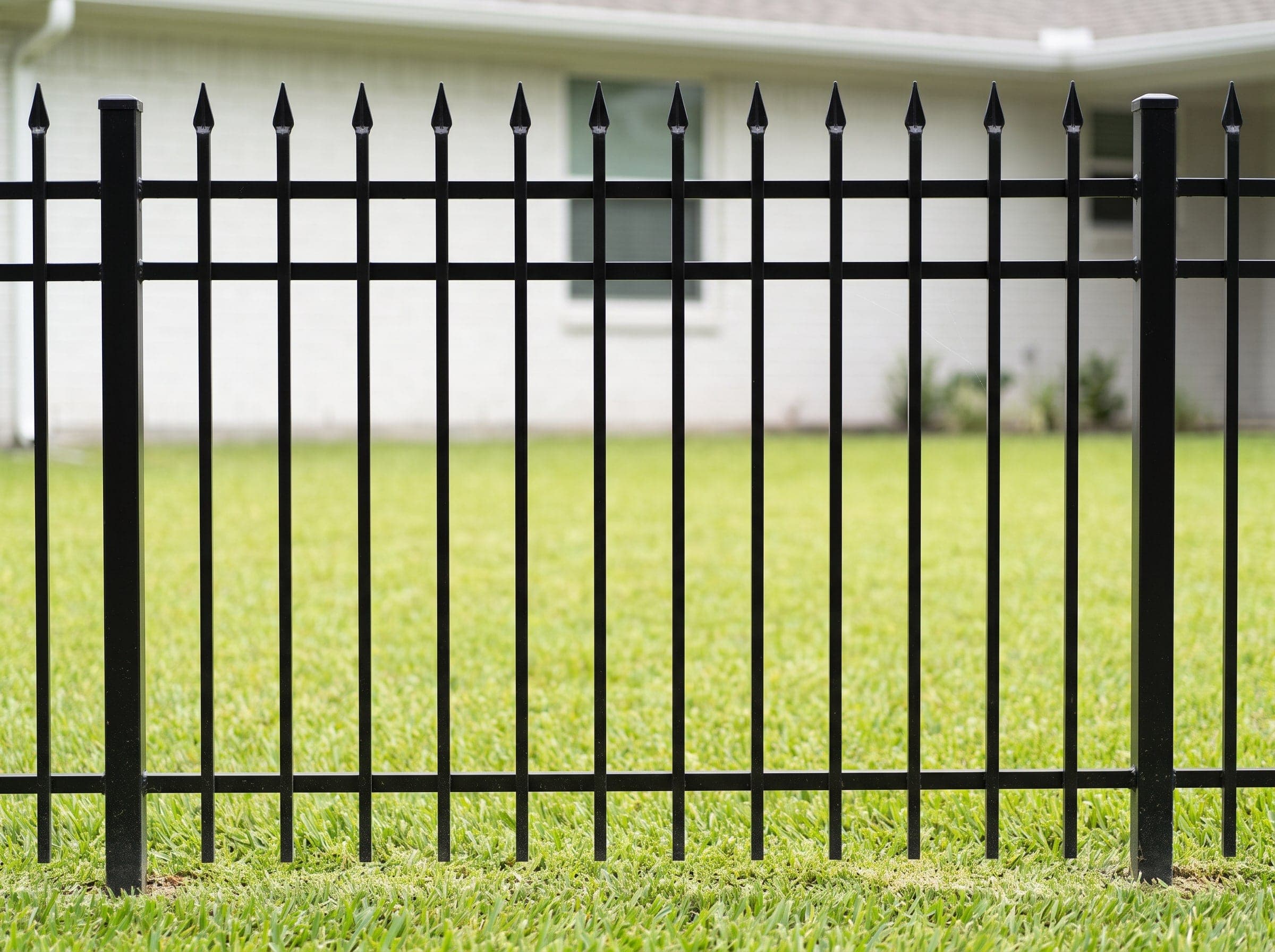
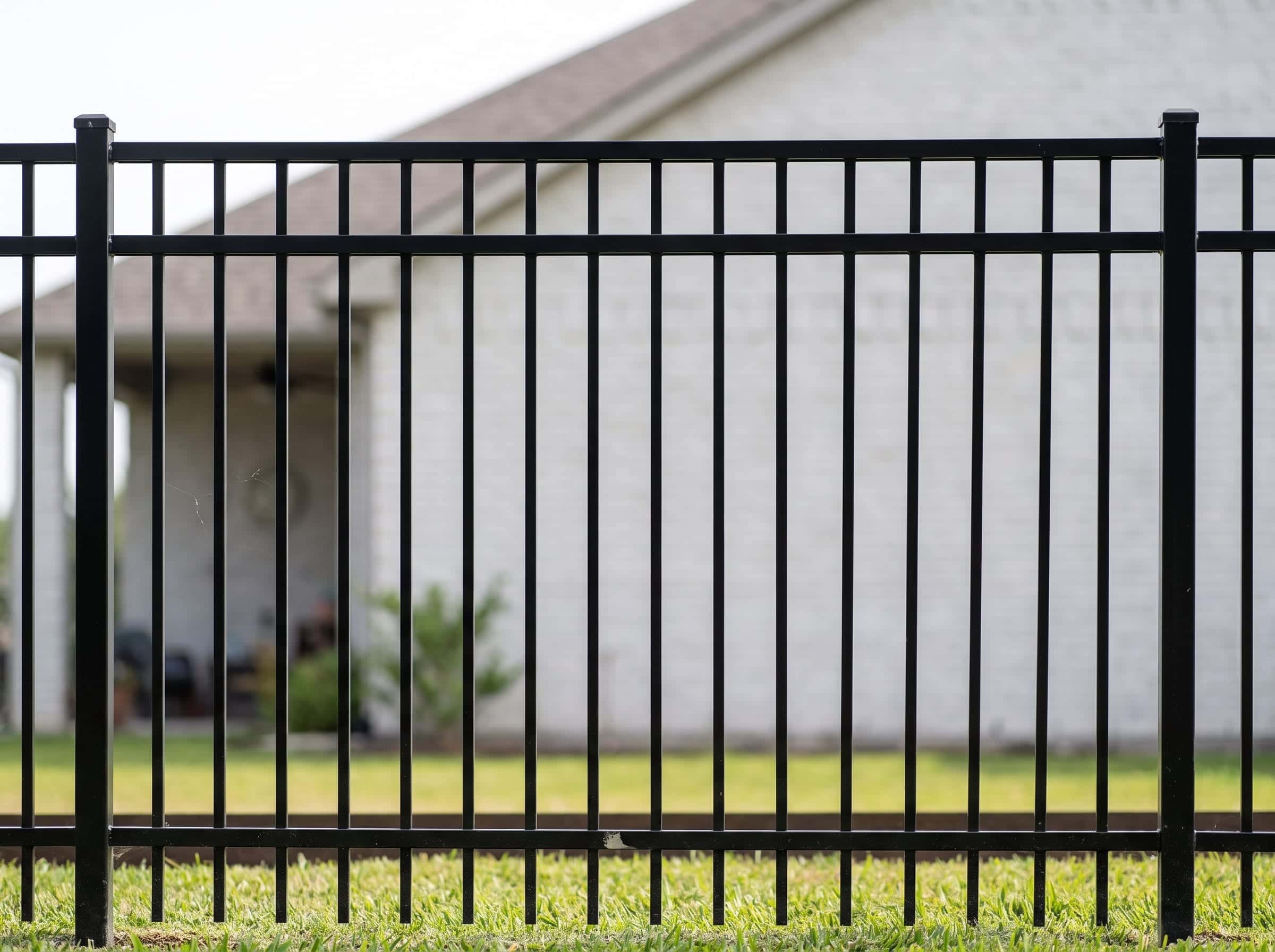
Choose ornamental aluminum for a pool, a front yard or a decorative perimeter. It does not rust like ordinary steel, it is lighter, and a powder-coat finish guards it against UV. For a yard that sits in full Texas sun for months, that combination covers what most homeowners want from a decorative fence.
Steel is stronger and more rigid. That makes it the better metal around a driveway, a property line you need to secure, or any spot where something might lean on the fence or hit it. A heavier, stiffer panel resists force that would bend a lighter aluminum one.
The decision comes down to the job the fence has to do. A pool enclosure and a front-yard border ask for a fence that keeps its look without attention, and aluminum does that. A fence that has to stop a person or a vehicle asks for steel, and steel asks more of you in return, as the next two sections show.
How do aluminum and steel finishes hold up in Texas heat?
Aluminum needs a quality polyester powder coat alone, while steel needs hot-dip galvanizing under the powder coat. A scratch or chip that exposes steel can start corrosion, so welds, cut edges and fasteners need protection too.
For aluminum, ask for exterior-grade architectural aluminum with a quality polyester powder coat. The metal itself will not rust, so the coat carries the color and the UV protection.
For steel, the spec is hot-dip galvanized steel with powder coating over the galvanized surface. The zinc layer is what stands between the steel and the weather once the coat is nicked. Welds, cut edges, fasteners and connections are the places where a factory finish is most likely to be broken, so each one needs its own protection. Steel with a powder coat and no galvanizing underneath has nothing behind the paint.
What does an ornamental steel or aluminum fence cost per foot in Texas?
Ornamental steel or iron runs $45 to $90 a foot installed, according to HomeGuide and Angi, for a six-foot residential fence on flat ground before tear-out, gates and slope. We do not publish a per-foot price of our own, because every job is priced by custom quote after a free on-site estimate.
The local numbers sit inside that range. DFW Iron & Steel (2026) lists a 6 ft welded steel panel fence in Dallas at $38 to $52 per linear foot installed, and calls it the most common residential replacement. Treat the market range as the figure to carry into any conversation with an installer, and the local shop’s number as one data point inside it.
Gates, slope and tear-out move the final number, and cost depends on fence type, materials, length, gates, and site conditions. That is why a measured number beats an estimated one. Our salesperson meets you on site, measures the linear footage with a tape rather than stepping it off from the street, and confirms fence type. Pricing is per linear foot, set by the footage measured on site. Tear-out and haul-off are included in the price.
When is steel or aluminum the wrong pick for a Texas fence?
Steel is the wrong pick if you will not touch up scratches. Coating damage can lead to corrosion, and steel is usually heavier and needs more maintenance than aluminum. Aluminum is the wrong pick where impact matters, since it is less impact-resistant than steel.
Put the two failures side by side. A steel fence that gets a scratch from a mower or a gate latch and is left alone gives corrosion a way in. An aluminum fence at a driveway entrance or along a street takes a hit from a car or a truck and bends where steel would hold.
Match the metal to how you live with the fence. If you want to install it and forget it, aluminum fits. If you accept the upkeep and need the rigidity, steel fits. Picking steel for its strength and then ignoring the finish gets you neither benefit.
How should posts be set for an ornamental fence on Texas clay?
Posts and concrete footings need to be engineered for local soil conditions, particularly North Texas expansive clay. The USDA Natural Resources Conservation Service (2023) classifies Houston Black, the official Texas State Soil covering roughly 1.5 million acres of Blackland Prairie from Dallas south to San Antonio, as a smectite-clay Vertisol of about 60% to 80% clay. Its very high shrink-swell potential is a recognized limitation for building-site development.
That soil swells when wet and shrinks when dry, and a post set in it moves with it. A fence can be galvanized, coated and welded well, and still lean if the footing was not built for the ground.
When a fence goes wrong in clay, the post is usually the part that moves, and metal panels hung on a post that has shifted go out of line with it. Our salesperson meets you on site, measures the linear footage and confirms fence type, so the quote comes from your yard and not from a catalog. Ask any installer how the posts and footings are set for your soil before you compare prices.
What should an ornamental fence quote spell out before you sign?
A good quote names the metal, the finish, how welds, cut edges and fasteners are protected, the post and footing, and a written warranty. The finish line reads hot-dip galvanizing plus powder coat on steel, and a polyester powder coat on aluminum. Ask for documented UV testing on the finish as well.
Look for these items in writing:
- The metal: aluminum or steel, and for aluminum an exterior-grade architectural grade.
- The finish on each metal, as described above.
- Protected welds, cut edges, fasteners and connections.
- Posts and concrete footings engineered for your soil.
- A UV-resistant finish with documented testing and a written warranty.
A quote that says “ornamental fence” and a total tells you none of this. Our warranty covers craftsmanship for one year and does not cover materials. It runs a year from the walkthrough with the foreman. For the finish itself, get the manufacturer’s warranty in writing, because ours does not stand in for it.