

Most Texas homeowners pricing a fence meet two numbers that do not agree: a per-foot range online and a quote that lands somewhere else. The quote leaves out the picket grade, skips the tear-out, or comes from a crew that never returns the call.
Chain link is cheaper per foot than wood in Texas, and the published ranges show it. The price that counts is still the one on your quote.
Chain link costs less than wood in Texas, and by how much?
Yes. Chain link is the cheaper fence in Texas, at $12 to $28 a linear foot installed against $18 to $45 for wood, per HomeGuide, Angi and HomeAdvisor. Those are market ranges for a six-foot residential fence on flat ground before tear-out, gates and slope, so your own yard decides where you land inside them.
The ranges overlap. A premium cedar fence costs well above a plain chain link fence. The material sets the range. The footage, the grade, the gates and the ground set the price.
What does a wood fence cost per foot in Texas, and what moves the price?
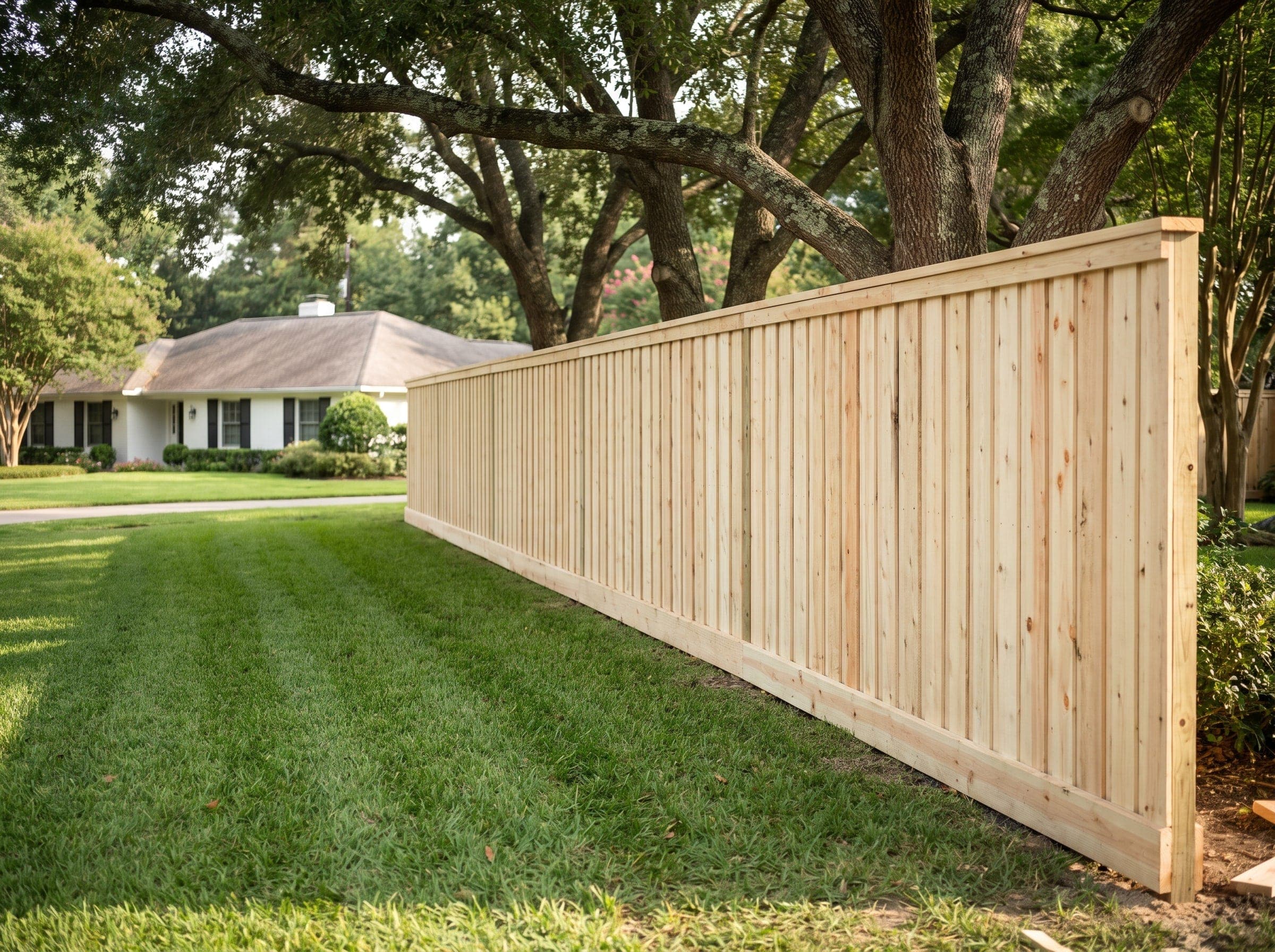
A wood fence costs $18 to $45 a linear foot installed in Texas, per HomeGuide, Angi and HomeAdvisor, with the species, the height and the picket grade moving the number inside that range. Johnson Fence buys wood pickets as Master Halco’s largest-volume customer and a top customer of Solid Wood, and passes that buying power to the buyer, so the price drops without the spec thinning.
Houston-area wood privacy fences are commonly quoted at $16 to $42 a linear foot (Angi Houston and HomeBlue, 2025 to 2026), which is below the national figure. Nobody buys more fence pickets than Johnson, so nobody in Texas sells a wood fence for less.
Picket grade is the first thing that moves a wood quote. We name the grade, #1 through #3, on the quote, so two bids for the same fence can be read against each other.
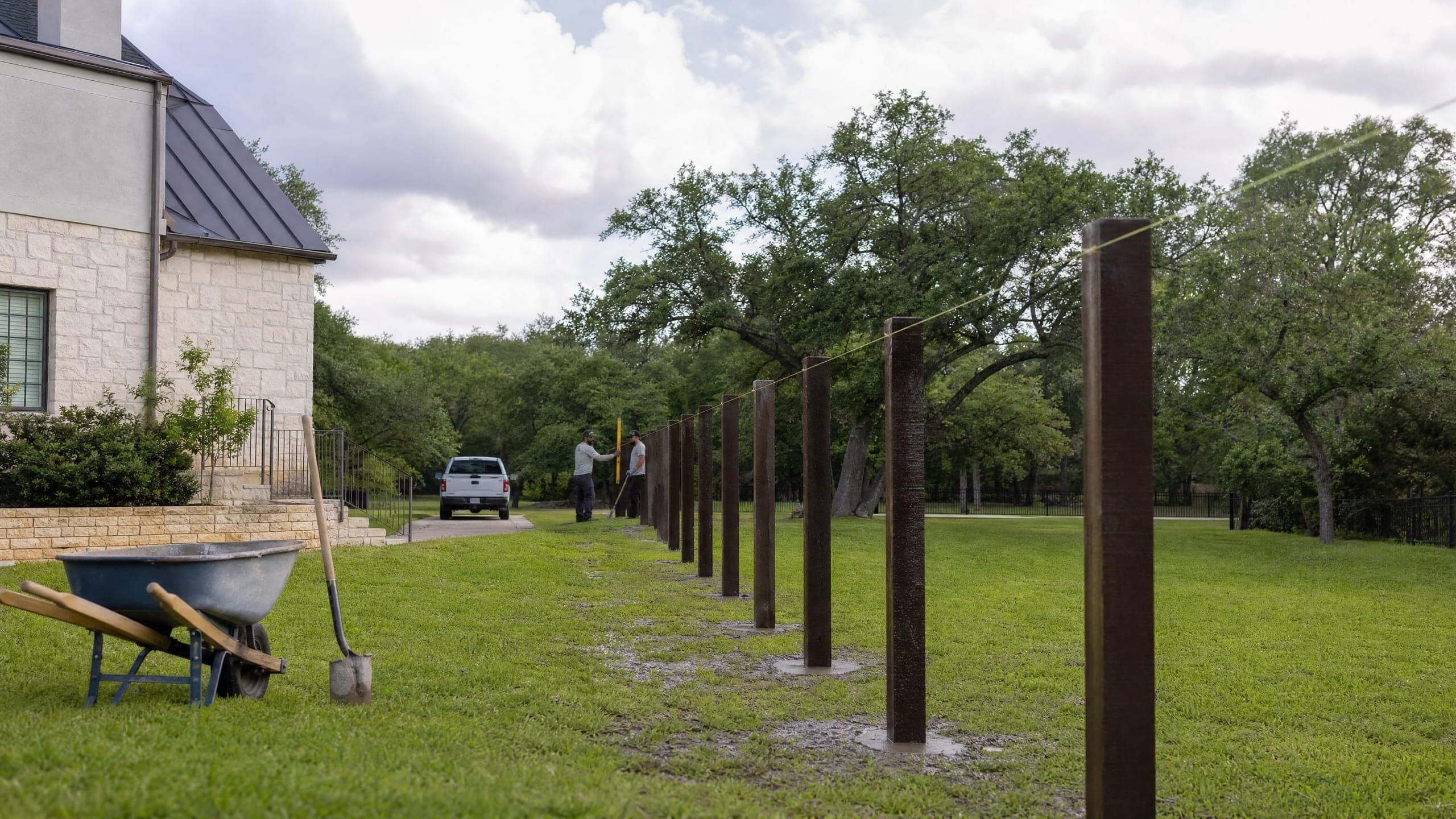
Post depth is the second. The 2021 International Building Code treats a fence post as a cantilevered pole, so a tall solid fence in soft Texas clay needs a deeper, wider concrete footing (Section 1807.3.2.1). A bid that shortens the post is a bid that costs less today and more later.
We never publish a Johnson per-foot price. Every project is priced by custom quote after a free on-site estimate, because cost depends on fence type, materials, length, gates and site conditions.
What does a chain link fence cost per foot in Texas?
A standard galvanized chain link fence costs $12 to $28 a linear foot installed in Texas, per HomeGuide and Angi. Coated and privacy-slatted versions cost more, and the quote tells you which kind you are being priced.
Booked jobs show how far a quote can sit from a range. Ergeon’s installs in 2026 show 4-foot, 5-foot and 6-foot residential chain link clustering around $36 to $43 per linear foot, with a step up at 7 feet (about $75) and 8 feet (about $78). The jump comes at 7 feet, not between 4 and 6.
Coating matters as much as height. ASTM A392 sets minimum zinc weights of 1.2 ounces per square foot for Class 1 and 2.0 for Class 2, and the heavier class, or vinyl-coated fabric, outlasts standard residential galvanized fabric (ASTM A392, 2017). Ask which class the quote assumes.
Does wood cost more than chain link over 20 years in Texas?
Yes. Wood needs more care over the years, and that upkeep is the part of the price that arrives later. InterNACHI’s life-expectancy chart rates a wood fence at about 20 years (InterNACHI, n.d.), and a wood fence put in properly should give you about twenty years. Chain link depends on its coating class, and the Class 2 or vinyl-coated fabric in ASTM A392 outlasts the standard grade.
The sticker gap is the starting point. Wood asks you to stain or seal it in Texas sun and storms, and every round of that is money and a weekend. Chain link asks for far less. If you are fencing for twenty years and privacy does not matter, that favors chain link.
If privacy does matter, the post decides the twenty years. Posts are what fail, and new boards on a rotted post cost twice. So the useful comparison is the post depth and the picket grade written on the quote, not the per-foot number alone.
Do you need privacy, or just a boundary and a safe yard for pets?
A chain link fence marks the boundary and keeps pets in, and a wood fence blocks the view from the street and the neighbor’s yard. Which one is cheaper matters less than which one does the job you are fencing for, since privacy slats on chain link add cost and a basic wood quote can come close.
Pick by the job. A dog yard with a view you like needs a fence a dog cannot get through, and chain link does that for the lowest price. A backyard that faces a street or a neighbor’s patio needs wood, and for that buyer the question becomes how little a wood fence can cost without a thinner spec.
That is where our buying power lands. From 2002 to 2019 we were the top choice for regional and national homebuilders in Houston, focused on backyard privacy fencing. The wood-picket buying power built in those years is the part we pass on, so the same spec costs the buyer less.
What does a fence quote leave out that changes the price?
The per-foot range in any published source is measured before tear-out, gates and slope, so a quote that skips them is lower than the job.
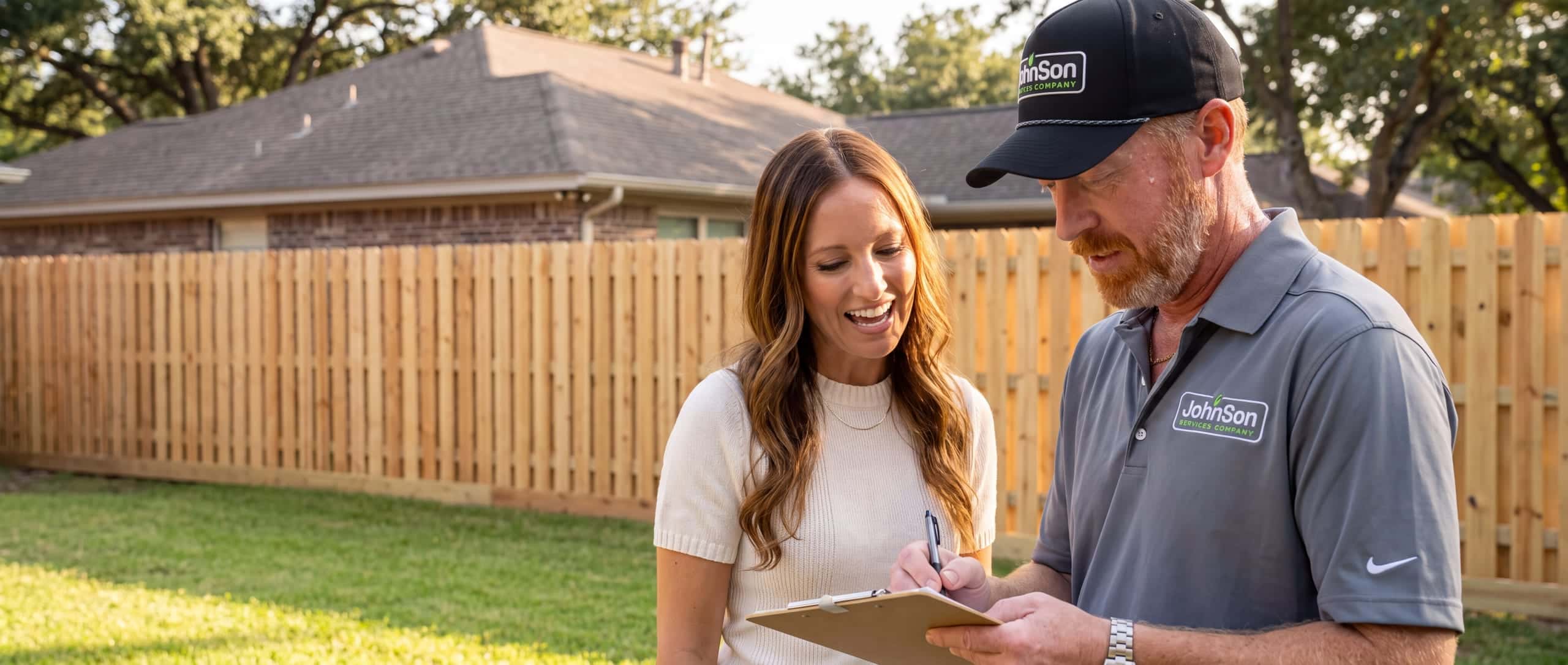
Our salesperson meets you on site, measures the linear footage and confirms the fence type and picket grade. A figure given over the phone from the address is only ever a rough estimate, never the quote. The quote is the price you pay, and the estimate is free with nothing to sign.
Here is what a short post does. A one-star Google review from May 26, 2026 by a fence company reviewer reads: “The post should be 2 feet underground but they only did 1 feet. I cannot imagine a fence professional company could do something like that. Now my fence is in bad condition and it is leaning because of that and they are not willing to come back to fix it.”
Other reviewers of Texas fence companies describe the same pattern in other words: paid deposits with nothing changed, slow turnaround, and no one reachable.