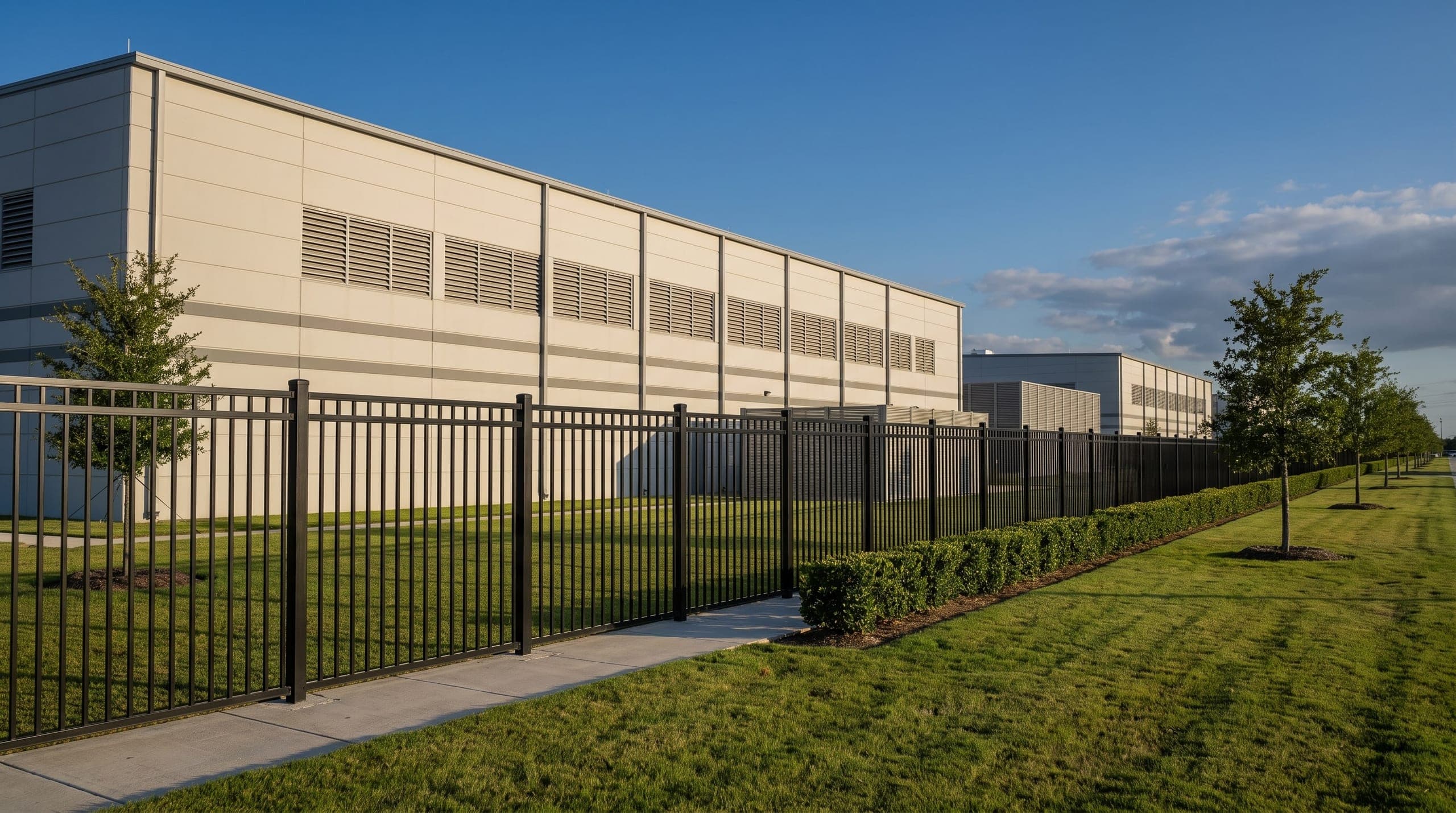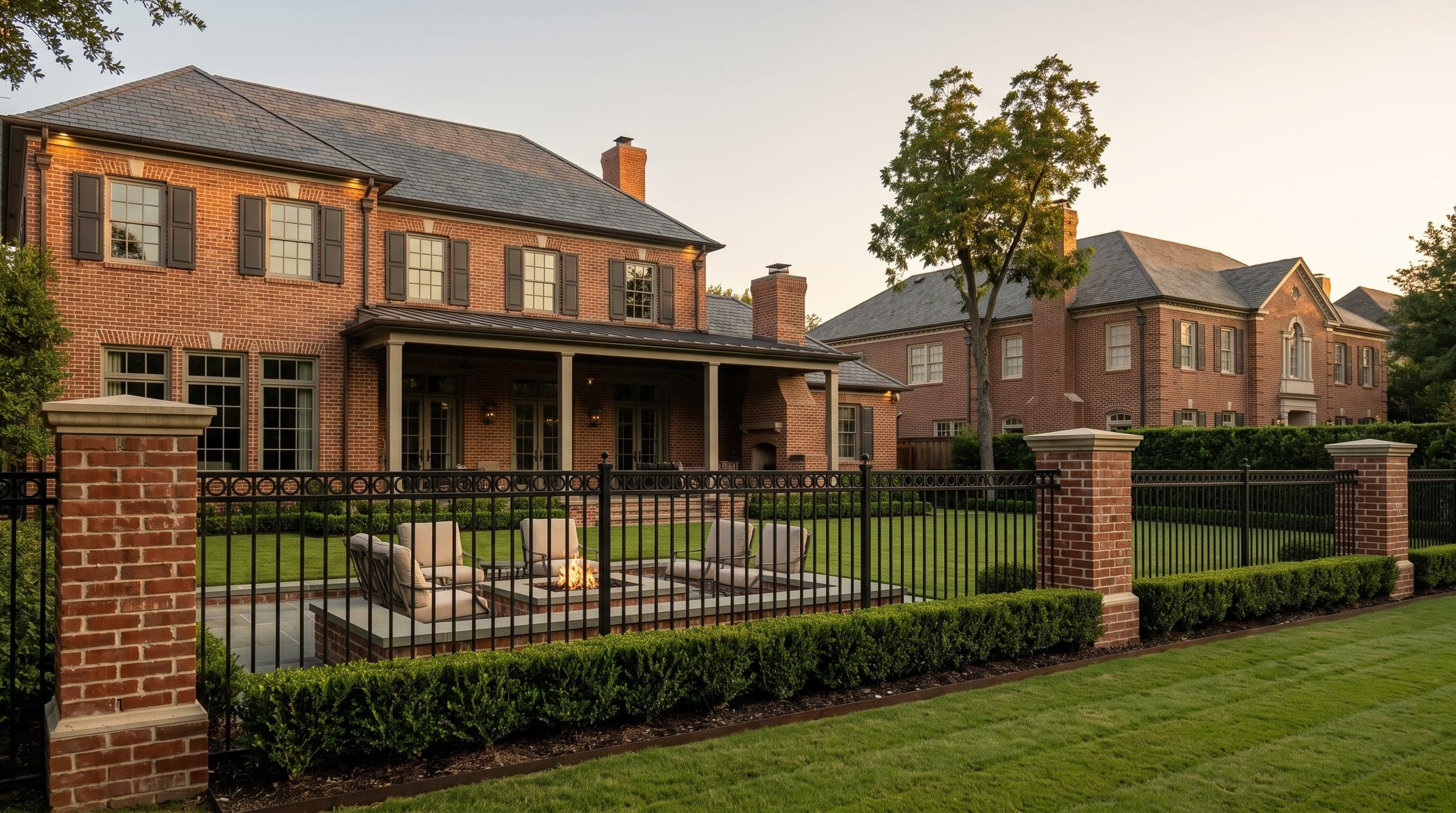

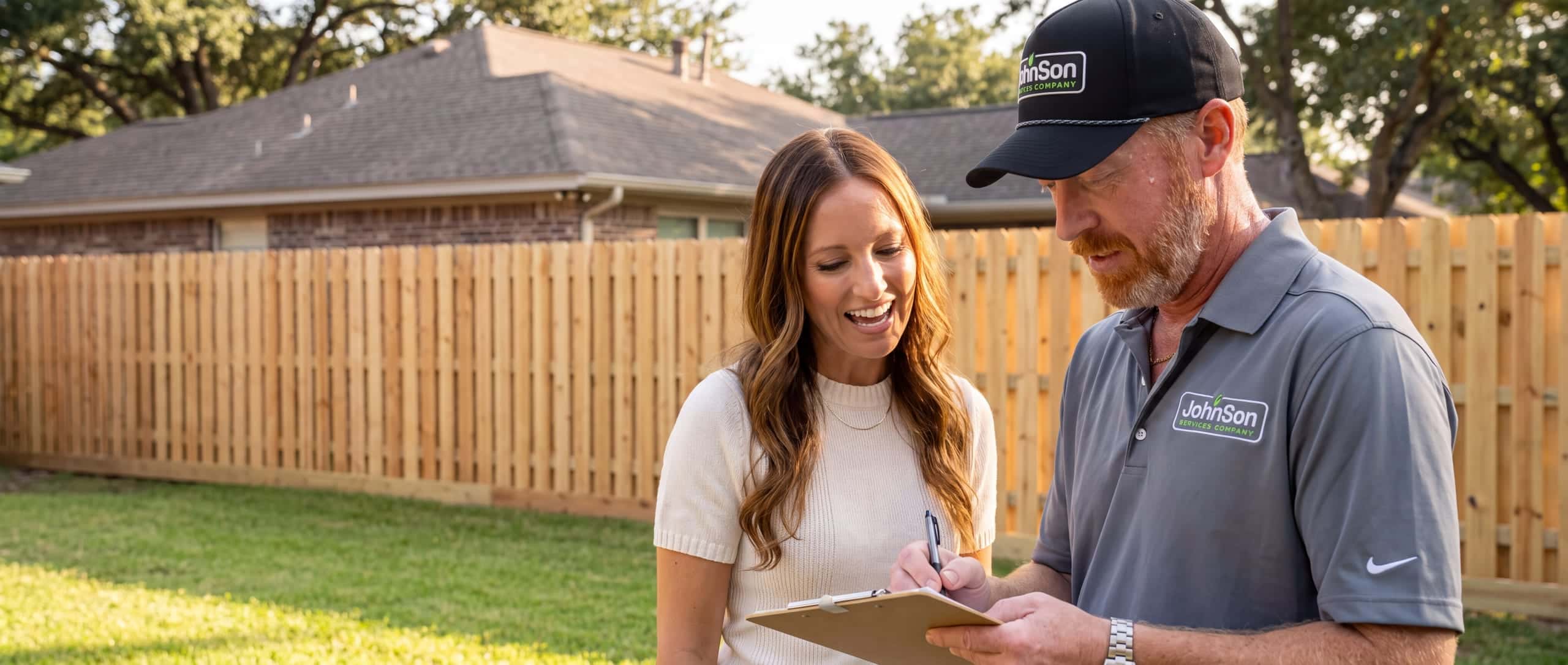
Three bids for the same Katy backyard can land thousands of dollars apart, and the cheapest one usually explains itself the least. What separates a bid you can hold a contractor to from one that turns into change orders is detail: a measured footage, a named material grade, a post depth, and a start date with a real crew behind it. Here is how to read a Katy fence bid line by line, and what to do when two of them look the same.
Why the Cheapest Katy Bid Tells You the Least
Price alone cannot tell you which fence is still standing straight in year eight. Fence Advisors, which researched 574 contractors across 77 Texas cities, puts cedar privacy fence at $25 to $70 installed per linear foot depending on the market. That is a spread wide enough to hide every real difference between two contractors, which is why the number by itself sorts nothing.
Fence Advisors counts 15 contractors serving Katy, with wood work starting around $28 per foot. On a 150-foot backyard, the gap between the bottom of that range and the top is thousands of dollars. Some of that gap is profit. Most of it is scope, material grade, and post work you cannot see once the dirt goes back in the hole.
So the question stops being which bid is lowest. It becomes which bid tells you enough to compare.
Katy Skips the Fence Permit, So Compare Scope Instead
A standard privacy fence in Katy does not carry a fence permit, so no bid can blame the paperwork for its price. The Houston Permitting Center requires a residential fence permit only when the fence goes above 8 feet, or when it is built wholly or partly of masonry or concrete at any height (City of Houston, 2026). An ordinary 6-foot wood or metal fence is exempt.
That matters for reading bids. Strip out permits and the differences that remain are the three you can actually check: how much fence, what it is made of, and when it goes in.
Anything a contractor cannot answer on those three is a cost you inherit later.
Read These Five Lines Before You Read the Price
Every bid worth comparing states five things in writing, and a bid that skips any of them is quoting a guess. Get written estimates that list the work, the materials, the completion date, and the price, and never pay the full amount up front (Federal Trade Commission, 2024). Here is what each line looks like when it is real and when it is filler.
| Line on the bid | The vague version | The version you can hold |
|---|---|---|
| Length | “Approx. 150 ft” | Measured footage per run, taken on site |
| Material | “Cedar” | Species, grade, picket thickness, and rail count |
| Posts | “Set in concrete” | Post size, spacing in feet, hole depth, concrete per hole |
| Old fence | Not mentioned | Tear-out and haul-off priced, or clearly excluded |
| Schedule | “2 to 3 weeks out” | A start date, crew days on site, and who calls you |
Three things a thin bid tends to leave out, and each one shows up later as a change order.
- Gate hardware. A gate is the part of a fence that moves 2,000 times a year. Posts, hinges, and latch grade belong on the page.
- Grade changes. Katy lots are flat until they are not. Stepping a fence down a slope adds panels and posts.
- Access. A crew that has to carry lumber around a pool or through a narrow side yard is spending hours nobody priced.
“Cedar” Is Not a Spec Until It Names a Grade
The word cedar on a bid can mean two materials with very different lifespans. Western redcedar is rated resistant to decay, class 2 on a scale where class 4 is perishable, while southern pine rates only moderately resistant to nonresistant at class 3 to 4 (Oregon State University, 1998). That rating applies to heartwood. The pale sapwood of the same tree rots on a much shorter clock.
So a picket sold as cedar can be mostly sapwood and still be cedar. Ask what percentage of heartwood you are buying, how thick the pickets run, and whether the rails are two or three. Ask the same question of every bidder in the same words, and the answers will separate faster than the prices do.
Pressure-treated pine is a fine Katy fence when it is specified for ground contact and priced honestly. It stops being fine when a bid says “treated wood” and nothing else.
Post Depth and Spacing Decide What a Storm Leaves Standing
The posts are the part of the fence you pay for twice if they are wrong. Building code sizes a fence post like a cantilevered pole, and it lets the soil push back over only about a third of the buried depth (International Building Code, 2021). A taller fence, a solid panel, or a heavy gate all drive that hole deeper and wider, and Katy’s heavy clay makes the math less forgiving, not more.
A bid that names 8-foot post spacing, a 30-inch hole, and a full bag of concrete per post is telling you what it built. A bid that says “posts set in concrete” is telling you nothing you can check after the crew leaves.
Ask one more question while you are there: what happens at the corners and the gate posts. Those are the posts that take the most load and the ones a cheap bid quietly makes the same size as all the others.
Katy’s Wet Heat Is Why a Weak Spec Fails Early
The Gulf Coast is one of the hardest places in the country to keep wood alive. USDA Forest Products Laboratory research scores decay hazard on an index where anything above 65 is high risk, and it puts Houston at 77.2, against 44.3 for Dallas (USDA Forest Products Laboratory, 2009). The same fence spec that lasts up north gives back years here.
That is the reason a Katy homeowner cannot treat material grade as a preference. Heat, humidity, and wet clay run the clock faster on thin pickets, sapwood, and shallow posts. A fence that should have lasted 15 years starts leaning in five, and the second fence costs more than the difference between the first two bids ever did.
One homeowner told us their previous fence was already rotting and warping after three and a half years. They did not need to be sold on doing it right. They had already paid once for doing it wrong.
But a Date Only Counts If the Crew Behind It Exists
A start date is a promise about staffing, and most trade companies are small enough that one sick crew breaks it. About 599,000 specialty trade contractor establishments employ roughly 5.26 million workers nationally, fewer than ten people per establishment on average (U.S. Bureau of Labor Statistics, 2025). One to three crews is the norm in fencing. When that crew gets pulled onto a job that ran long, your date moves and nobody calls.
We built the other way on purpose. We run over 100 crews and installed more than 2 million feet of fence in the last year, about 380 miles across more than 20,000 projects, so a crew missing a day never stops a job.
Ask each bidder how many crews they run and who calls you if the date slips. The answer costs them nothing to give and tells you almost everything.