
Fence a Texas apartment property by giving each boundary its own job: ornamental iron on the street frontage, wood or composite privacy fence on the sides and rear, and access-controlled gates at vehicle entrances, all checked against the city’s fence rules before you ask for bids. Johnson Fence builds each of these in wood, wrought iron, chain link, composite and brick, with over 100 crews in the field across four Texas metros.
Most property managers have already lived the other version: a fence that failed too soon, a bid that left out the picket grade, a crew that never came back. Each step below keeps that from happening on your property.
Match each boundary of a Texas apartment property to its own fence
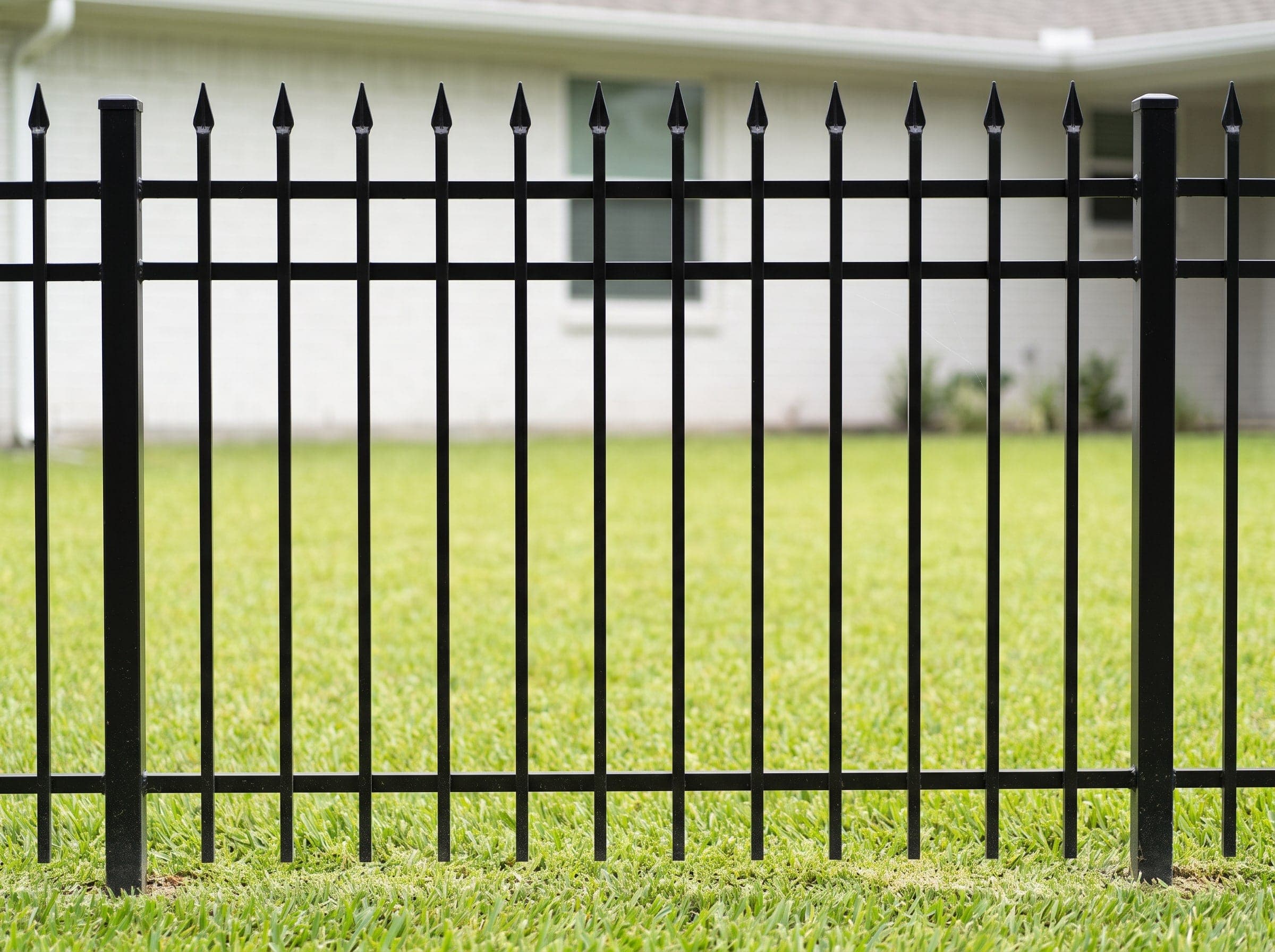
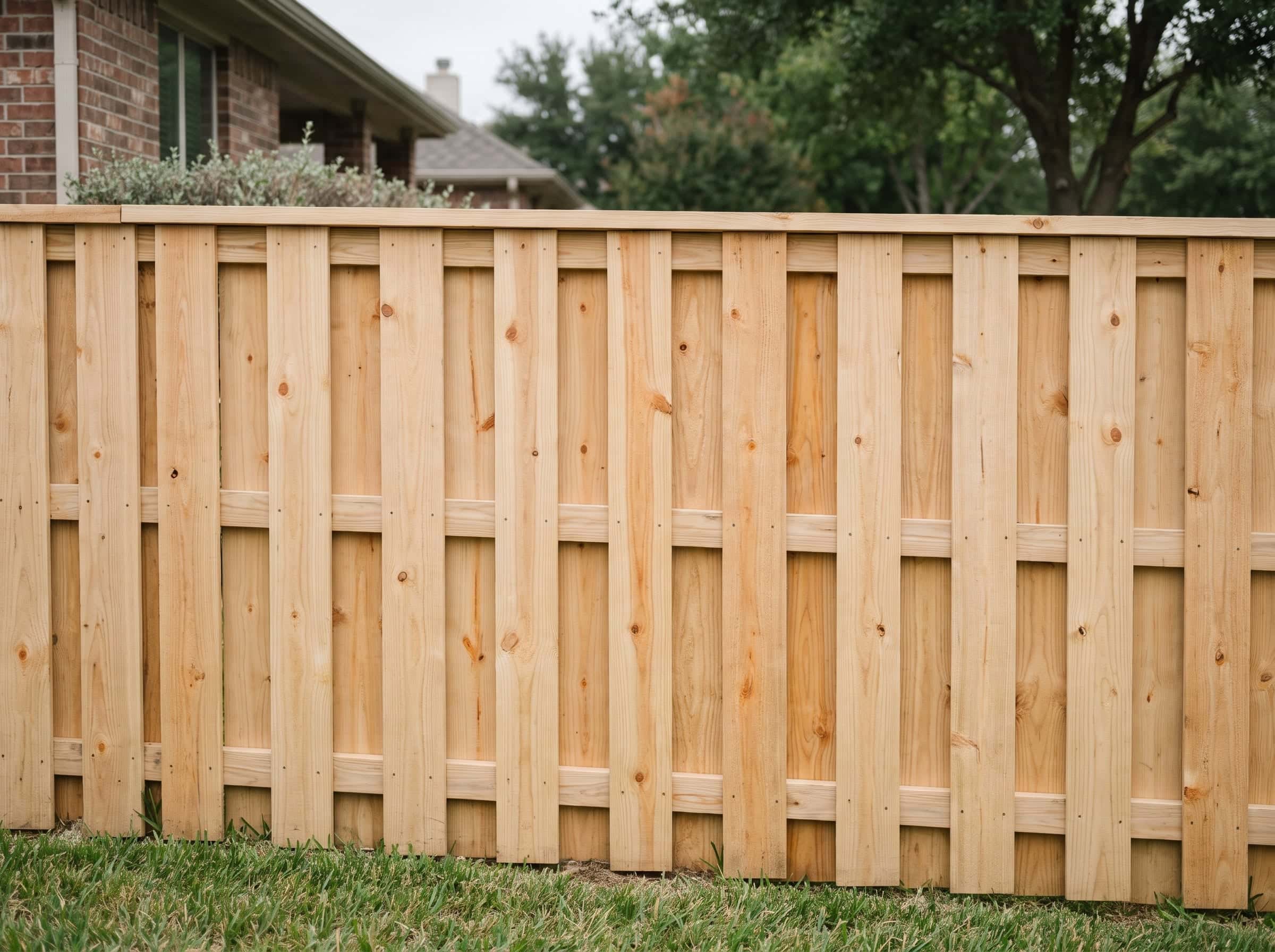
Put ornamental iron on street frontage where looks and visibility matter, wood or composite privacy fence on side and rear boundaries and around dumpsters, brick or masonry on loud major roads where noise and long-term durability matter, and chain link only on out-of-sight service areas where budget rules. Johnson Fence builds all of these in wood, wrought iron, chain link, composite and brick, so one contractor can fence every boundary to its job.
Iron suits an upscale community, a visible entrance and controlled access. Chain link suits utility areas and certain rear boundaries where budget comes first. Brick gives the longest-lasting wall, cuts noise and gives privacy and a finished look.
Wood is the fence most buyers picture. We build it with pressure-treated framing and cedar pickets, graded from #1 picket through #3 picket and priced accordingly. Composite costs $30 to $55 a foot per HomeGuide and Ergeon. A 6 to 8 ft brick privacy wall costs $200 to $360 a foot per Angi, July 2026. Those two numbers show why brick belongs on the loud boundary and not on all four sides.
What fence rules apply to Texas apartments and multifamily properties?
Texas has no single fence-height rule for apartment complexes: the city, the zoning class and the site decide. Austin’s fencing rules expressly cover commercial and multifamily properties and require permits for certain fences, Dallas ties fence height and placement to zoning and requires fire department access, and Houston’s multifamily minimum property standards set a minimum perimeter fence height.
Austin gives the clearest numbers. Under Land Development Code Section 25-2-899 and the Development Services fencing regulations, a fence of any material up to 7 feet is permit-exempt outside floodplains (City of Austin, 2025). A permit is required above 7 feet, above 6 feet along a public right-of-way on residential property, or within a floodplain at any height. A solid fence along a property line may not exceed 6 feet from natural grade, rising to 7 feet only where the grade changes by at least 1 foot.
Houston’s standard is a floor. The entire property must be enclosed by a fence of at least 6 feet, built of masonry, wood, wood composite, chain link or metal, and secure enough to withstand wind and rain (Houston Housing and Community Development Department, 2021).
In Dallas, check the zoning for your parcel first, then confirm the fire department can still reach every part of the site. A fence that passes the height rule and blocks a fire lane still fails.
How should gates and fire access work on a gated apartment community?
Give each vehicle entrance an automatic gate with keypad or credential access, add resident-controlled pedestrian gates, and clear every gate’s emergency access with the fire marshal before it is built. Johnson Fence builds driveway gates and access control, so the gates and the fence line come from one contractor.
Do not lock down every entrance without reviewing emergency egress and access requirements. Any gate that restricts emergency vehicles needs the fire marshal’s sign-off, and it is cheaper to get that sign-off on paper than to move a gate after it is poured.
Budget the gates as their own line. An automatic driveway gate costs $1,600 to $13,000 installed, with about $7,000 the common spend (HomeGuide, 2026), and $2,380 to $8,000 on Angi (August 2026). Total cost depends on fence type, materials, length, gates, and site conditions, which is why each vehicle entrance gets its own price.
What belongs on the site plan before you ask for fence bids?
Start with the entire property boundary, then mark every existing fence, every proposed fence, the vehicle and pedestrian gates, the fire department access points and the pool and amenity enclosures. Add the drainage and utility easements, because the plan is where a bad fence location gets caught for the price of a pencil.
Do not install fencing across drainage easements or block emergency access. Contact Texas 811 before excavation.
A plan like this puts every bidder on the same footing. Each contractor prices the same boundaries, the same gates and the same constraints, so the numbers you get back compare line for line.
What does a fence cost per foot in Texas, by material?
Chain link costs $12 to $25 a foot installed for a standard 4-to-6-foot fence (HomeGuide and Angi), pressure-treated pine $20 to $45 and cedar $35 to $80 (HomeGuide), and ornamental iron $50 to $85, with custom work to $130 (HomeGuide and Angi). Those are national installed ranges from 2025 to 2026, and a Texas property will land inside them or above them depending on height, slope and gates.
Height moves the price more than most buyers expect. Ergeon’s booked chain-link installs in 2026 cluster around $36 to $43 a foot for 4, 5 and 6 feet, then step up to about $75 a foot at 7 feet and about $78 at 8 feet.
Brick costs $60 to $240 a foot for walls of 3 to 6 feet, per HomeGuide in 2026, with concrete footers adding $15 to $35 per linear foot. Keypads add $100 to $800 each on the gate side (HomeGuide, 2026).
Market ranges stop at the average. Our price comes from a salesperson measuring your footage on site and from the picket grade you choose, and tear-out and haul-off are in it. We buy wood at Master Halco volume and pass those savings to the buyer, who pays less for the same spec.