
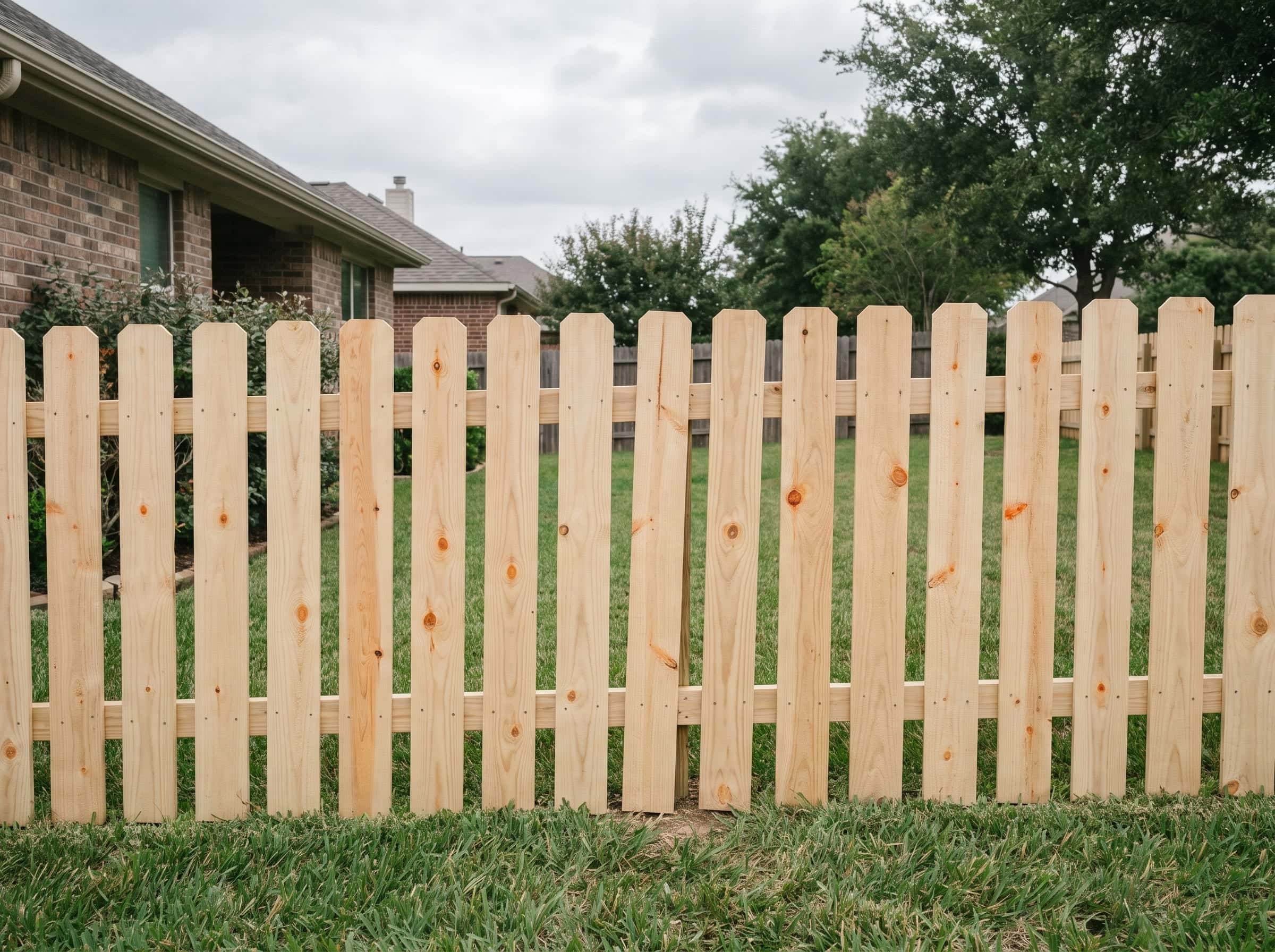
Arlington requires a permit for any new fence and for replacing 50% or more of a fence along a property line. Backyard fences can reach 8 feet, while front-yard fences stop at 4 feet and must be ornamental metal that is at least 75% see-through.
Most homeowners learn the rules after something goes wrong: a fence that failed too soon, a quote that left out the picket grade, a crew that never came back. Arlington’s limits are easy to meet when you know them before anyone digs a post hole.
How does Arlington measure the 8-foot backyard fence height limit?
Arlington measures fence height from the highest adjacent grade within 10 feet of the fence, so ground that rises beside your line counts toward the 8-foot limit (City of Arlington, 2026). Measure at the highest point of ground within 10 feet before you order pickets or panels, because that figure sets how tall the fence can be.
The city also requires a permit for a new fence or for replacing 50% or more of an existing one (City of Arlington, 2026). A yard that slopes, or one where a neighbor’s lot sits higher, changes the number you start from. Two yards with the same fence on paper can end up on opposite sides of the limit.
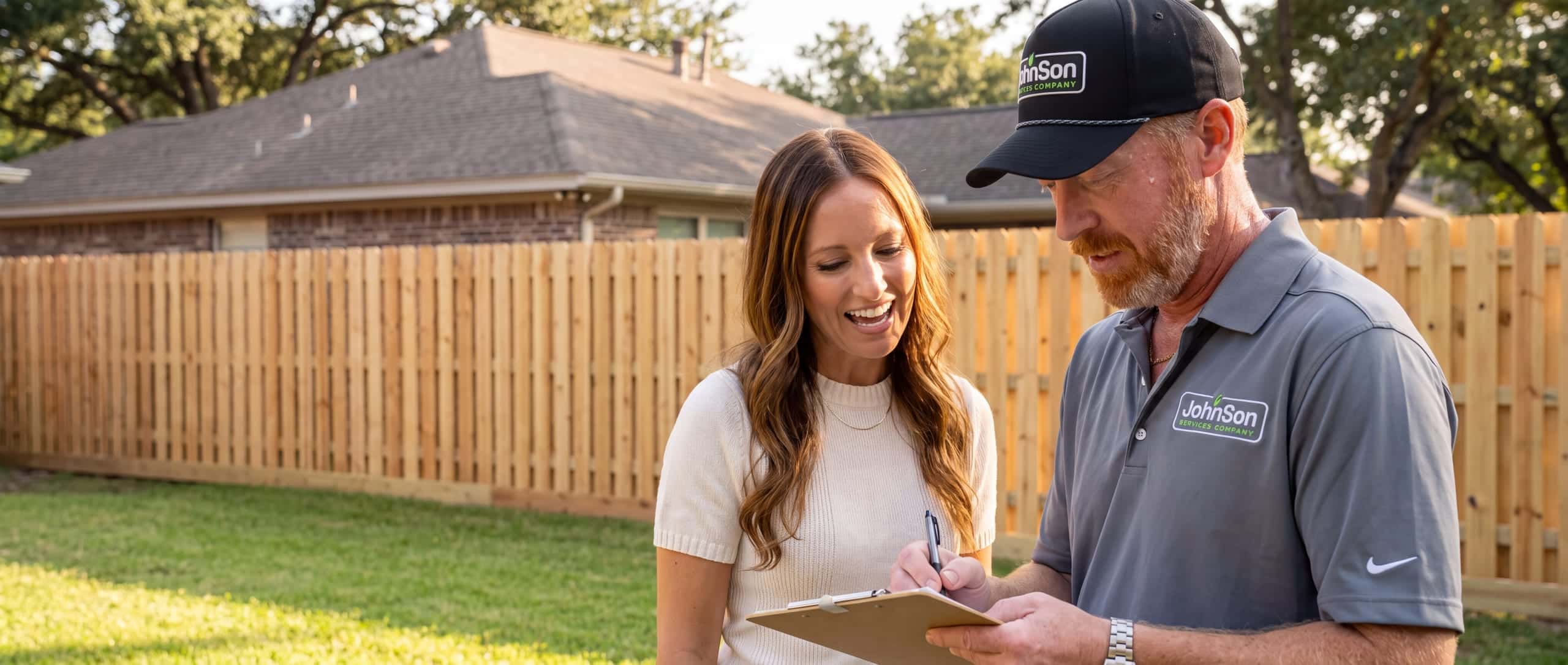
This is why we measure before we quote. On site, our salesperson takes the linear footage and settles the fence type and picket grade with you. Materials are measured and loaded before the crew leaves the yard, so install day holds no surprises. Each linear foot is priced from the footage we measure on site and the picket grade you pick, from #1 to #3.
Arlington front-yard fences must be ornamental metal, 4 feet or lower
A single-family front-yard fence in Arlington can stand 4 feet tall at most and must be ornamental metal railing with at least 75% transparency. Wood pickets and solid fences are not permitted in the front yard.
The city’s residential fences bulletin says it in three sentences: “Fences are allowed in the front yard of single-family residences. The fence must not be taller than 4 feet. The fence must be constructed of ornamental metal railing and be at least 75-percent transparent.” (Unified Development Code Information Bulletin: Residential Fences, City of Arlington, 2018). It adds a separate line for wood: “Wood pickets or solid fences are not permitted.”
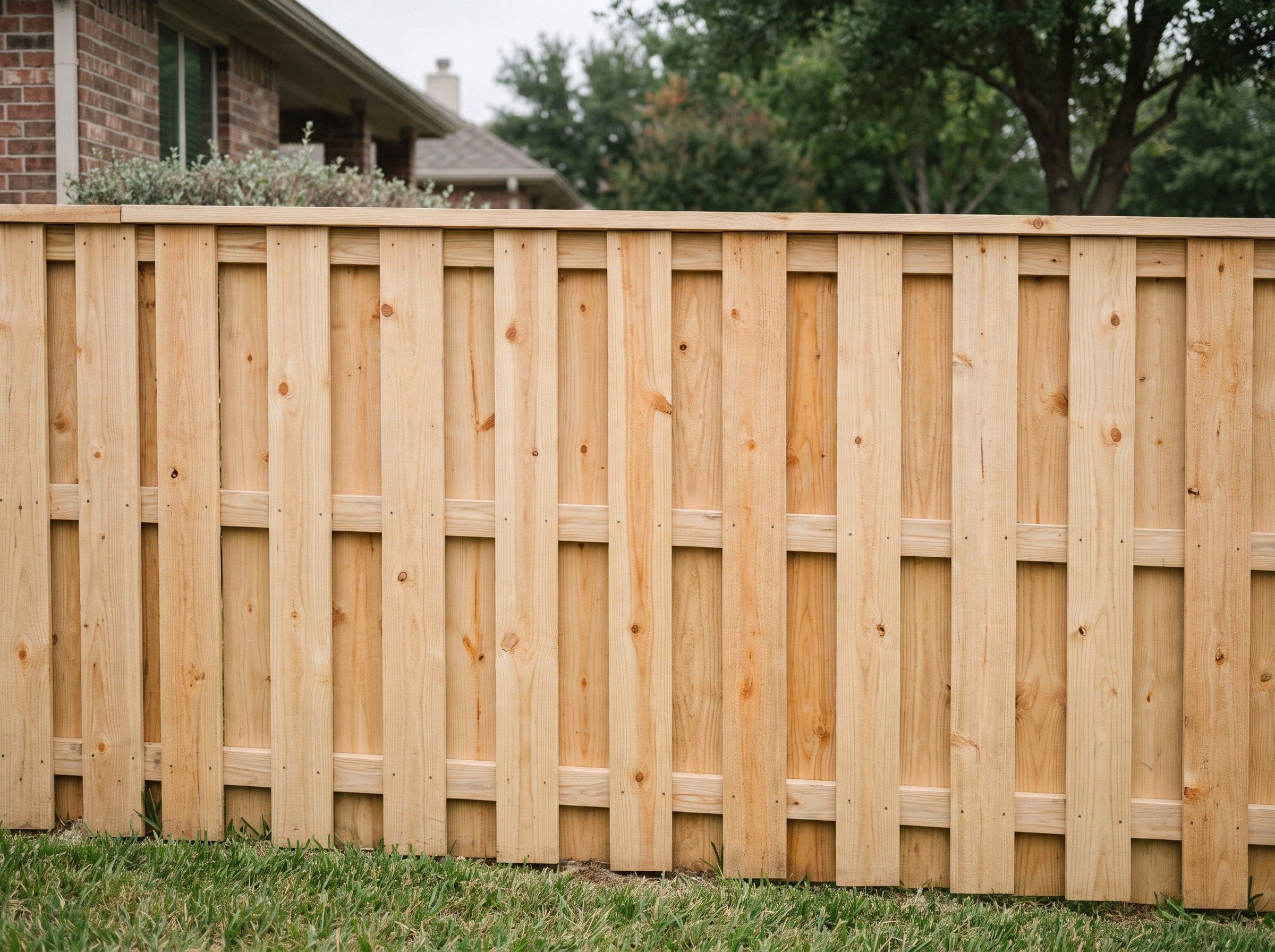
That splits a lot into two jobs. The front takes open metal at 4 feet or lower, and the back can take a taller privacy fence. Our wood fences are built with pressure-treated framing and cedar pickets, which makes them a backyard choice in Arlington. For the front, we build wrought iron and other metal styles, and we have built fences across Texas since 2002. Ask for the front and back as two lines on one quote, so each side is priced to the rule it falls under.
What are the fence rules for corner and reverse-corner lots in Arlington?
On corner and reverse-corner lots, Arlington’s visibility rules limit fence height near intersections and side street lines, and fences over 2 feet tall must meet specific side setback distances. Exposed posts or rails on a fence next to a public street must face away from the street.
For a corner lot, the city limits a fence on the side property lines to 2 feet within the visibility triangle (City of Arlington, 2026). That is the zone drivers need to see across when they reach the corner. A 6-foot privacy panel that works on an interior lot does not work there.
The setback distance for a fence over 2 feet tall depends on whether your lot is a corner or a reverse corner. Confirm that distance with Planning and Development Services before you pick a fence line. The phone numbers are in the permit section below.
The street-facing rule affects how the fence is built. If a fence runs beside a public street, the posts and rails go on the inside, and the finished face goes toward the street. Tell your salesperson your lot is a corner when the measuring starts, so the layout is planned around it.
When does a fence need a permit in Arlington, Texas?
Any new fence in Arlington needs a permit, and so does replacing 50% or more of one side or length of a fence along a property line. Replacing less than 50% generally needs none if you keep the same location and dimensions and use matching or comparable materials.
Say, hypothetically, that you have 100 feet of fence along a side line. Replacing 40 feet of it falls under the 50% mark. Replacing 60 feet crosses it, and a permit is required. Every figure in that example is hypothetical, and the 50% rule itself is the city’s.
The second half of the rule matters as much as the first. A smaller repair stays permit-free only when the new section sits where the old one stood, at the same size, in matching or comparable material. Raise the height or shift the line and you are building something new, which means a permit. Replacing a fence that failed is the most common way owners cross the 50% mark without noticing.
How do you apply for a fence permit in Arlington?
You can submit a fence permit online through the city portal, or contact Arlington Planning and Development Services at 817-459-6502 or 817-459-6504. The fee for a residential fence permit is $50.00 each (Planning and Development Services Fee Schedule, Effective June 1, 2026, Resolution No. 26-151).
Check the City of Arlington Single Family Rapid Reference Guide and the Residential Fences bulletin for current details before you file. They hold the height and material rules that your application has to match, so read them against your plan.
Have your yard location (front, back, or corner), fence material and height, and whether the fence is new or a replacement ready when you call or file. Those three answers decide which rules apply.
What do Arlington’s rules say about pool fences and fence upkeep?
Pool enclosures in Arlington follow separate safety rules for height and self-closing gates, apart from the 8-foot and 4-foot yard limits. Owners must also keep every fence in good repair.
State law sets the pool barrier: “(b) The height of the pool yard enclosure must be at least 48 inches as measured from the ground on the side away from the pool.” (Texas Health and Safety Code, Chapter 757, Sec. 757.003). The gate rule follows: “(a) Except as otherwise provided by Section 757.005, a gate in a fence or wall enclosing a pool yard as required by Section 757.003 must: (1) have a self-closing and self-latching device;” (Texas Health and Safety Code, Chapter 757, Sec. 757.004).
A pool fence has to meet both sets of rules at once. A backyard enclosure can be tall enough for the pool code and still stay under the 8-foot yard limit. The gate hardware is part of the build, so name it on the quote.
Upkeep sits on the owner. Exposed posts or rails on a fence beside a public street face away from the street, and the fence has to be kept in good repair. A fence that leans or rots is a code problem as well as a looks problem.