
Austin City Code § 25-6-324 requires security bollards in front of each pedestrian entrance when a medical facility is newly constructed, installed to the City’s Transportation Criteria Manual. Texas SB 660 separately requires crash-rated bollards or similar barriers beside certain hospital emergency rooms, with a deadline beginning January 1, 2026.
Three sets of rules meet at one hospital entrance: the City’s bollard code, the state’s emergency-room law and the fence and gate rules. A quote that skips any one of them leaves a gap in the plan.
Austin requires bollards at each pedestrian entrance of a new hospital
The rule applies at the development application for new construction of a medical facility. Austin has adopted a specific requirement for security bollards in front of each pedestrian entrance, installed to the Transportation Criteria Manual.
The bollards cannot obstruct accessible routes. The City may grant a waiver if the applicant shows that the walkway design adequately mitigates vehicle-crash risk without bollards. That makes the bollard layout a site-plan decision. Settle it with the design team before the application goes in, not after the entrance is drawn.
What does Texas SB 660 require at hospital emergency rooms?
Texas SB 660 (89th Legislature) requires installation and maintenance of crash-rated bollards or similar safety barriers beside hospital emergency rooms located near vehicular traffic. The barriers must keep vehicles from entering the emergency-room area, and the implementation deadline begins January 1, 2026.
SB 660 applies to existing hospitals, so it reaches buildings that never went through Austin’s new-construction review. An emergency-room entrance that was built years ago and sits near a drive lane is the case the law was written for.
What crash rating should hospital entrance bollards carry?
Specify independently tested, documented vehicle-impact protection: ASTM F2656 for vehicle-impact crash testing, ASTM F3016 for low-speed impact, and IWA 14-1 or PAS 68 for vehicle security barrier testing. A bollard sold as heavy-duty or security-grade is not crash-rated unless the rating applies to the actual product configuration and its installation.
The letters and numbers in a rating are test terms. In an ASTM F2656 M30 rating, the M names the standard test truck, which weighs 15,000 lb (PNH Security Engineering Consultants, 2026). The 30 is the nominal speed in mph, and the actual impact speed for an M30 falls between 28.0 and 37.9 mph (PNH Security Engineering Consultants, 2026).
So a rating tells you which vehicle, at what speed, hit which exact assembly. A rating earned by one bollard on one foundation does not carry over to a different bollard or a different footing. Ask for the rating document for the product and installation you are buying.
What Austin fence rules apply around a hospital entrance?
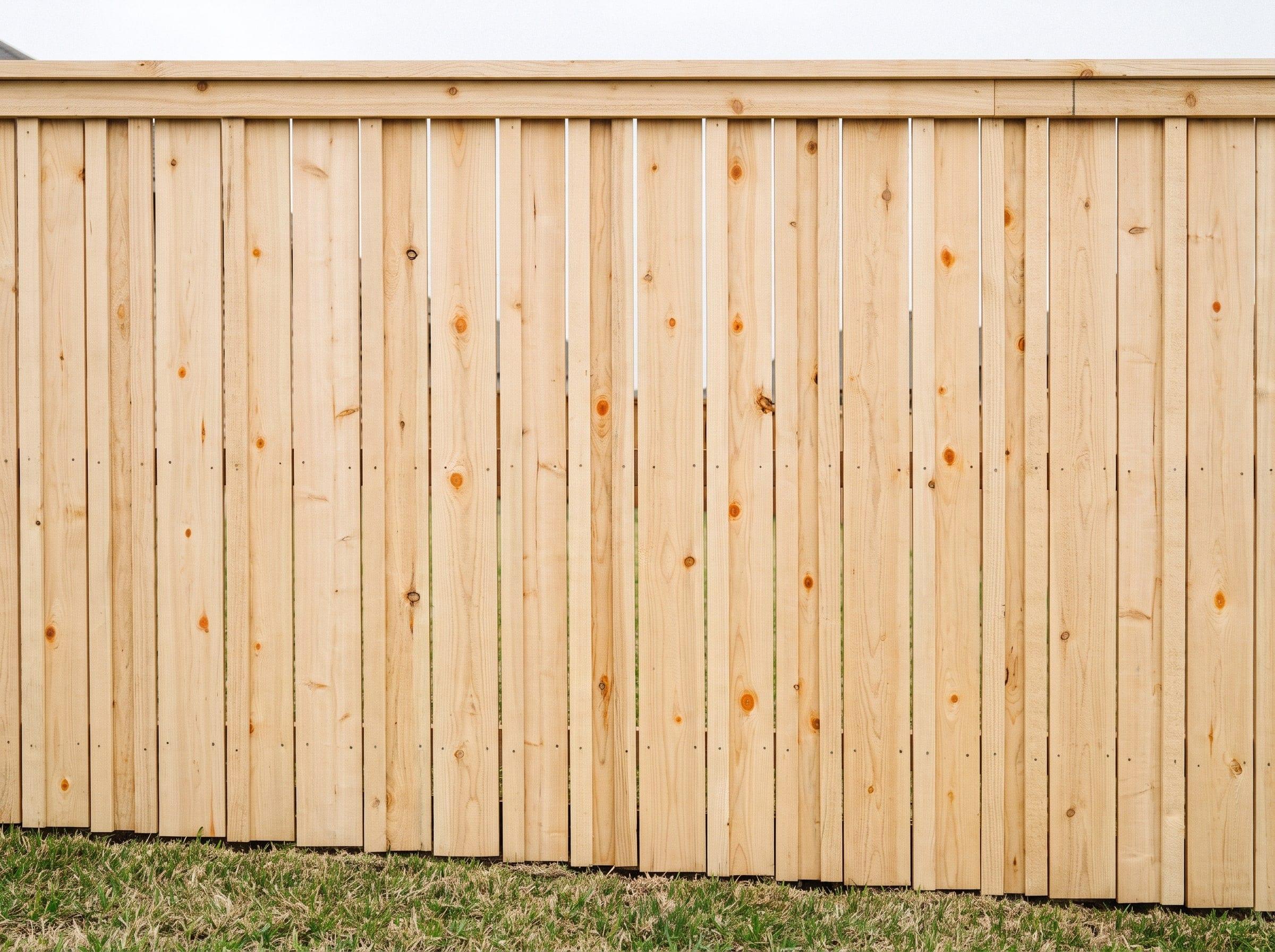
A fence of any material and 7 feet or less needs no permit outside a floodplain, and a fence taller than 7 feet needs one (City of Austin, Land Development Code Section 25-2-899, 2025). A fence inside a floodplain needs a permit at any height, whether it is wood, metal or stone (City of Austin Development Services).
The same 2025 code section requires a permit above 6 feet along a public right-of-way on residential property. Along a property line, a solid fence tops out at 6 feet measured from natural grade, and the limit becomes 7 feet only where the grade shifts by at least 1 foot.
Taller solid fences have two allowances. A solid fence may reach 8 feet along the line between a residentially zoned property and an adjoining property zoned or used for commercial or industrial purposes (City of Austin Development Services Department, 2023). A solid fence can also reach 8 feet on or within the building setback lines (City of Austin Development Services).
Our Austin office is at 11 Indian Meadows Dr in Round Rock. We build fences with pressure-treated framing and cedar pickets, and concrete fences and custom stone columns are commercial-only.
How do you keep accessible routes and ambulance access clear around bollards?
Bollards in Austin cannot obstruct accessible pedestrian routes or accessible entrances and exits, and ADA and TAS access has to be kept. Emergency vehicle access needs its own check with Austin Fire and EMS, and removable or retractable bollards are the option where a lane must open for vehicles. Gates and access control at the same entrance have to leave that emergency route open.
For the walking route, the Texas Accessibility Standards set a minimum clear width of 36 inches (Texas Department of Licensing and Regulation, 2012). Bollard spacing along a route has to leave that clear width.
For fire apparatus, Austin’s fire code requires an unobstructed width of not less than 25 feet on access roads, with an exception for approved security gates under Section 503.6 and the Fire Protection Criteria Manual (Austin Fire Code 2024, UpCodes, 2024). A City review report says gates across two-way fire lanes should be 25 feet or at least the full width of the fire lane (City of Austin, 2019). That report adds that electric gates must have a Knox key switch per IFC 503.6.
On the fence and gate side, we serve commercial properties as one accountable partner for fencing, gates, decks, landscaping and masonry.
Which rule applies to a new hospital, an existing ER or an entrance upgrade?
A new hospital or medical facility with an emergency room falls under both Austin City Code § 25-6-324 and Texas’s emergency-room requirements. An existing hospital with an ER falls under SB 660, because Austin’s ordinance addresses new construction rather than retrofitting every existing entrance.
A full entrance upgrade adds Austin’s fence permit, setback, easement and visibility rules for the fencing and gates. That means checking the permit thresholds above, setbacks, utility easements and driver sightlines before a quote is final. A new building answers to all of it. An existing building answers to SB 660 first, and to the fence rules the moment anyone sets a post.