
Guides

Wood or Chain Link for an Austin Commercial Fence: What the City’s Fence Code Allows

Austin allows both wood and chain link on commercial property. Solid wood is capped at 6 feet, while open chain link is exempt from that limit.

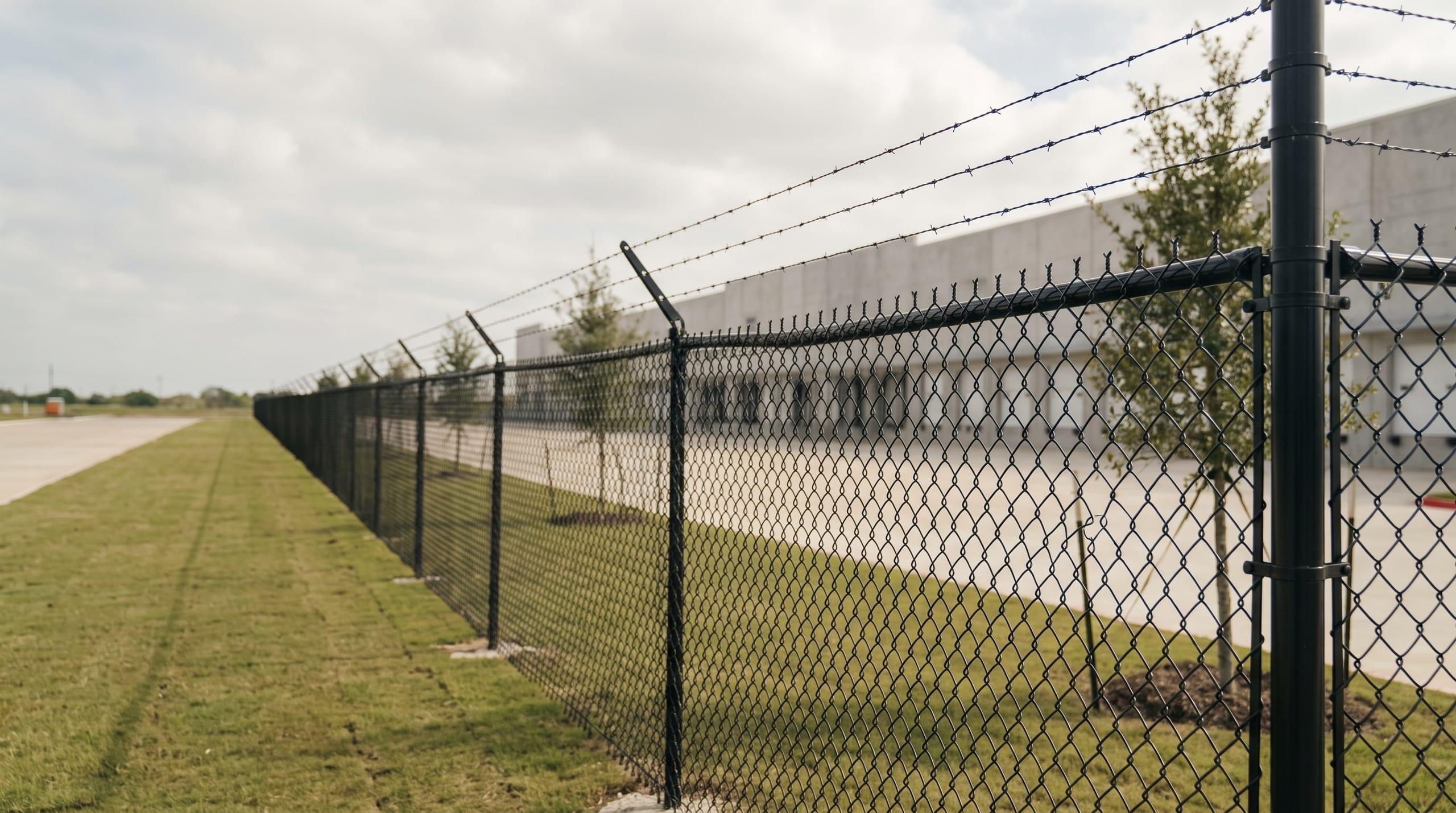
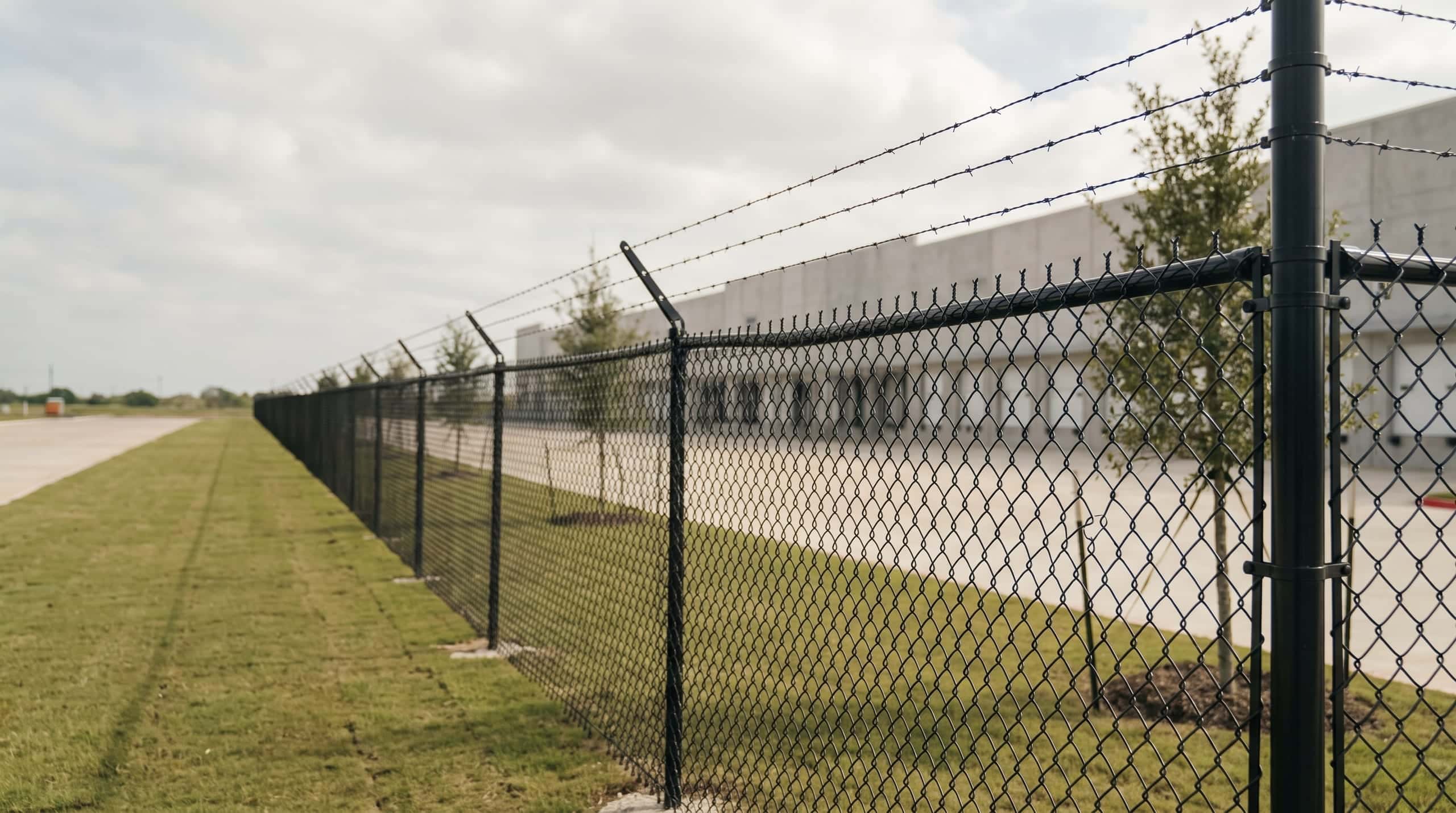
An ornamental steel perimeter along a Texas commercial campus at midday

Austin’s fence code allows both wood and chain link on a commercial property. A solid wood fence along a property line is generally capped at 6 feet, while open chain link counts as an ornamental fence and is exempt from the solid-fence height limit.

That answer is simple, and the rest of the job is not. Business owners usually arrive after a fence that failed too soon, a quote that left out the picket grade, or a crew that never came back.

Yes, Austin allows both materials on commercial property, because the city regulates height, placement, safety and permits rather than the material itself. Chain link is generally treated as an ornamental, open fence and is exempt from the standard solid-fence height limits, while solid wood is capped. Choose wood where you need a solid screen inside those limits, and chain link where you need an open perimeter.

The city’s own commercial fence regulations say both wood and chain link are allowed on commercial properties. The material was never the hurdle. The hurdles are how tall the fence stands, where it sits, what safety rules it meets and whether it needs a permit.

We build wood fences with pressure-treated framing and cedar pickets, and we work in Texas only.

A solid wood fence on a property line may stand 6 feet tall, rising to 7 feet where the grade changes and to 8 feet next to residential land. The Austin Development Services fencing regulations put the base limit this way: “A solid fence constructed along a property line may not be more than 6 feet high, measured from the natural grade up.”

The 7-foot allowance applies only where there is a grade change of at least 1 foot, and only for the portion of the fence where the grade changes (City of Austin, 2025). The 8-foot allowance covers a solid fence along the line between a residentially-zoned property and an adjoining property zoned or used for commercial or industrial purposes (City of Austin Development Services Department, 2023). A commercial site that backs onto homes is the case that gets the extra foot.

The line between solid and ornamental decides which limit applies. Austin classifies a solid fence as one with more than 20% solid material. An ornamental fence has no more than 20% solid material relative to its total design, and it is not subject to the standard solid-fence height restrictions. A wood privacy fence sits far above 20% solid. An open chain link fence sits below it.

Exempt from the solid-fence limit does not mean exempt from every rule. A fence of any material above 7 feet needs a permit, as the next section covers. A tall chain link perimeter still runs into that threshold.

When does an Austin commercial fence need a building permit?

A fence 7 feet high or less generally needs no building permit in Austin, and a fence over 7 feet does. A fence in a floodplain needs a permit at any height. The regulations spell out both triggers: a fence requires a permit if it is in a floodplain, or if it is more than 7 feet high at any point (Austin Development Services Fencing Regulations).

The floodplain rule catches buyers who stop at the height number. The regulations say: “You need a permit to build a fence within a floodplain regardless of the fence height.” A 6-foot chain link fence along a creek-side lot can need a permit that the same fence on higher ground does not. Austin points owners to its FloodPro webpage to find out whether a property sits in a floodplain.

A fence that needs no permit must still meet the city’s fence regulations on height, placement and safety. Commercial fence projects should also be reviewed through the City’s Land Use Assistance and Site Plan Review process. Settle that review before you order material, so the fence you price is the fence the city will accept.

Austin’s safe-fencing rules bar spiked pickets and dangerous decorative elements, and they require knuckle selvage on chain link covered by the solid-chain-link provision. The rules also exempt certain safety requirements for nonresidential properties when the fence is at least 6 feet tall.

For a wood fence, the pickets are the point. Spiked tops and sharp decorative elements fail the rule, so a commercial wood fence carries a flat or capped top. For chain link, the question is whether the fence falls under the solid-chain-link provision. If it does, the fence must use knuckle selvage.

The nonresidential exemption matters most to commercial owners. It applies when the fence is at least 6 feet tall, so a lower fence on the same lot gets no relief. Bring the fence height and the use of the property to the same conversation with the city.

Wood fits a site that needs a solid screen within the 6 to 8 foot solid-fence limits, such as a property next to homes. Chain link fits a site that needs an open perimeter at a height the solid-fence limit does not touch. The two compare like this:

Factor Solid wood Chain link
Austin code class Solid fence, more than 20% solid material Ornamental fence, no more than 20% solid material
Height rule 6 feet on a property line; 7 feet with a grade change; 8 feet next to residential land Not subject to the standard solid-fence height restrictions
Permit threshold No permit at 7 feet or less outside floodplains; permit above 7 feet No permit at 7 feet or less outside floodplains; permit above 7 feet
Privacy Solid screen between your site and the neighbor Open; sight lines stay clear
Installed cost per linear foot $25 to $41 for 6 ft pressure-treated pine privacy (MeasureFence, 2026) $20 to $35 for 6 ft chain link in Texas (Fence Advisors, 2026)

Astro Outdoor Designs (2026) lists a 6-foot galvanized chain link fence in Houston at $18 to $28 per linear foot. Ergeon’s 2026 booked installs show a cost step at 7 feet, about $75 per foot for chain link, rather than between 4 and 6 feet. Height drives the price of chain link as much as the material does.

Pickets come in grades from #1 down to #3, and the price follows the grade. Two wood quotes for the same footage can differ by grade alone, and the grade is what the buyer is really comparing. We name the picket grade in writing on the quote, so the pine-or-cedar and #1-or-#3 question gets answered before you sign.
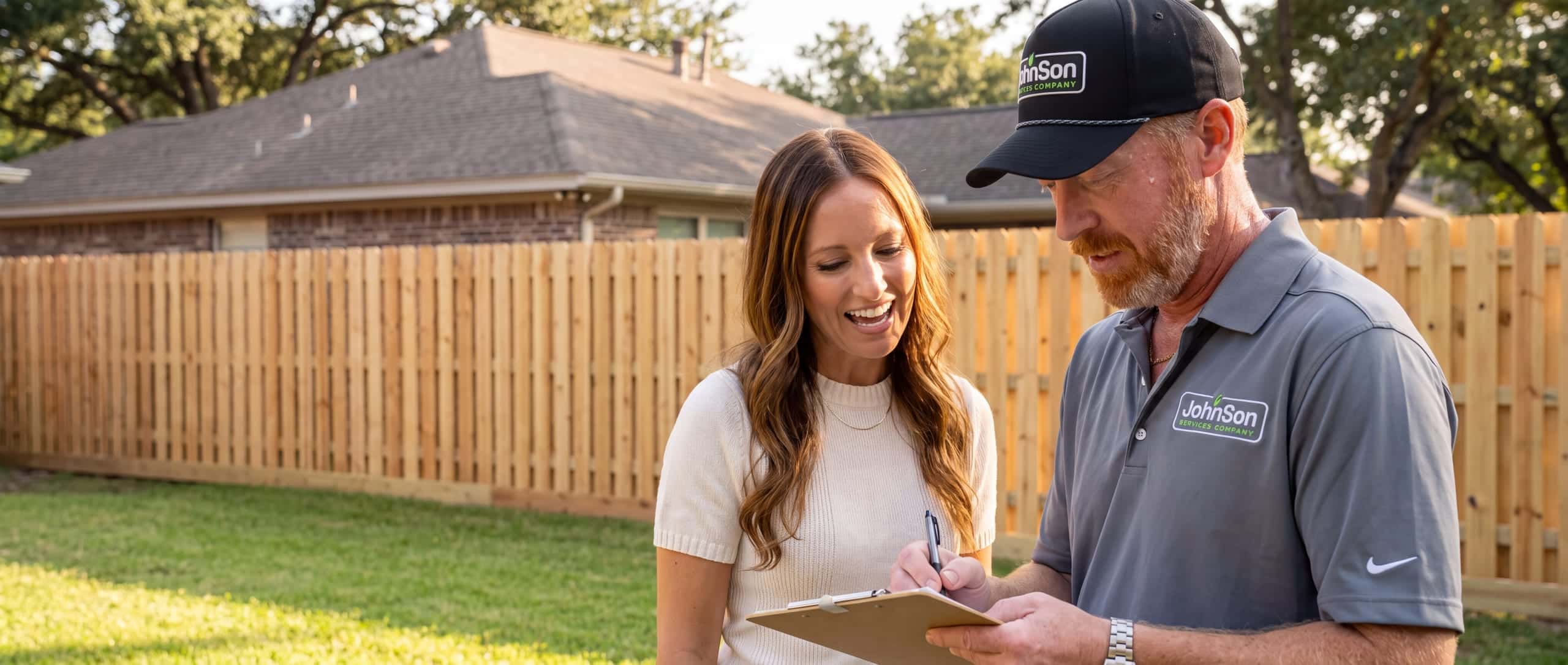
A Johnson estimator writing a fence quote on a clipboard beside a homeowner.

Price a fence before you call

See what a fence costs before anyone quotes you.

Pick the material, the height and how many feet of fence, and the calculator shows the market range for a fence like yours in Texas. Then a salesperson measures the real one in your yard and the number comes back the same day.

The estimate is free and there is nothing to sign.

Wood is the wrong choice when you need a solid fence taller than the code allows, and chain link fails the job when you need privacy. A solid wood fence on a property line stops at 6 feet unless a grade change or a residential neighbor raises the limit. Chain link stays under 20% solid material, so it screens nothing.

The code draws the same line from the other side. Chain link covered by the solid-chain-link provision must use knuckle selvage, and a fence that is more than 20% solid is held to the solid-fence limits. Pick the material for the job the fence does, then check the code class that material falls into.

The contractor matters as much as the material. Buyers who have been burned describe it in their own reviews. A 2-star Google review of Texas Fence, posted May 19, 2026, reads: “our gates have continued to fall apart. Even the ones we don’t use. They have come to repair them twice already and need to come a third and we’ve only had the fence for a couple of months. They haven’t given us an answer as to why this is happening.”

A code-compliant fence that fails in a few months still costs you twice. Check the grade, the footage and the warranty on paper before the crew arrives.

Johnson Fence serves the Austin metro with over 100 crews in the field. The table sets our markets, crew counts and build details beside three other Texas fence companies. Check each row for Austin coverage and for the wood and chain link work your site needs.

Our Austin-area list covers Pflugerville, Round Rock, Cedar Park, Buda, Hutto, Georgetown and Lake Jackson. The west and southwest corridor, from Westlake Hills to Dripping Springs, is a market we serve too. We run offices across Houston, Dallas-Fort Worth, Austin and San Antonio and serve 42 cities and towns statewide, and we are expanding.

Company Texas markets served Crews in the field Published build or warranty detail
Johnson Fence Houston, Dallas-Fort Worth, Austin, San Antonio metros; 42 cities and towns statewide Over 100 crews in the field In business since 2002; A+ BBB rating since 2003; one-year craftsmanship warranty; zero craftsmanship warranty callbacks across 20,000-plus jobs last year
Texas Fence Houston metro and surrounding areas over 20 crews In business since 2003; more than 30,000 fences built; 30 full-time staff
Quality Fence & Welding San Antonio metro; South Texas Crew count not published In business since 1980; 5-acre facility; 29,000 square foot steel fabrication shop
Austex Fence & Deck Austin metro; Central Texas Crew count not published 30+ years serving Central Texas; claims 200,000-plus projects; full materials showroom

The markets, crew counts and build details in the table are each company’s own published statements.

Reliability is where buyers get hurt, and the reviews of other Texas fence companies show how. A 1-star Google review of Southland Fence & Supply from September 25, 2026 says: “They stole my money. Paid them a deposit and I never heard back from them. They asked that I pay with a check and not a credit card. Now I see why. Do not do business with them. I just saw that they lost their BBB accreditation.”

Why have Johnson Fence build your Austin commercial fence?

We build commercial wood fences with pressure-treated framing and cedar pickets, and we put the grade of the picket in writing before the job starts. The estimate is free, and it happens on site.

We price every project by custom quote after that free on-site estimate and keep no fixed published price list. The picket grade, #1 through #3, is named on the quote, so you compare the same wood against the same wood. Our published process runs in three steps: Free Estimate and Consultation, Custom Design and Installation, and Final Review and Satisfaction.

The only warranty we give is a one-year craftsmanship warranty, and it covers craftsmanship only, not materials. The over 100 crews behind it are why a date holds. In a September 2026 5-star Google review, Jay wrote: “Great company!! On time every time and very good work! Would never use anyone else for my fencing needs!!”

Request the free on-site estimate for your Austin commercial fence, and the quote names the grade.

FAQ

Where does a commercial fence project get reviewed in Austin?

Commercial fence projects should be reviewed through the City’s Land Use Assistance and Site Plan Review process. That review is separate from the building permit question. Run it before you commit to a material, so the height and placement you priced match what the city accepts.

Austin’s safe-fencing rules generally bar barbed wire. Certain safety requirements have exemptions for nonresidential properties when the fence is at least 6 feet tall. Confirm with the city that your fence and its use fall inside that exemption before you order.

Knuckle selvage is the edge finish Austin requires on chain link fencing that falls under the solid-chain-link provision. If your fence is covered by that provision, the finish is mandatory. Ask for it by name on the quote.

How does Austin tell a solid fence from an ornamental one?

An ornamental fence has no more than 20% solid material relative to its total design. A wood privacy fence is solid, and an open chain link fence is ornamental, which is why they carry different height rules.

What sets the price of a commercial fence quote in Austin?

Fence type, materials, length, gates and site conditions all move the cost. Our pricing is per linear foot, set by the footage measured on site and the picket grade chosen, #1 through #3. Picket grade moves the price of wood, and the grade is named on the quote.

What warranty does Johnson Fence give on a commercial fence in Austin?

Our warranty is one year on craftsmanship. It covers craftsmanship only, not materials. It is the only warranty we give.

What should I ask a fence company before signing a commercial fence quote?

Ask for the picket grade in writing and for the footage measured on site. We name the material grade, #1, #2 or #3, on the quote and price per linear foot from the footage measured on site. Ask about the warranty and what it covers. A 2-star Google review of Alamo Fence Company of San Antonio from March 25, 2026 gives the kind of complaint a clear quote heads off: “Slow turnaround, uncompetitive pricing, lack of follow-through on follow-ups and revisions”


Johnson Fence measures your Austin commercial fence on site, names the picket grade on the quote and builds it in wood or chain link.

Request a free on-site estimate for your Austin commercial fence →

Free estimate

Get your estimate from the largest fence company in Texas

Tell us what you need and where the fence goes, and a salesperson will come out and measure the line before anyone writes a number. You get the picket grade and the total in writing, the visit costs nothing, and there is nothing to sign.

Call (877) 956-4676

Estimate requests get a reply 24 hours a day, 7 days a week.

What kind of fence?
Which part of Texas?
Roughly how much fence?
How did you hear about us?
  • Free on-site estimate
  • Same-day quote
  • Nothing to sign
  • Work starts in about 4 days