
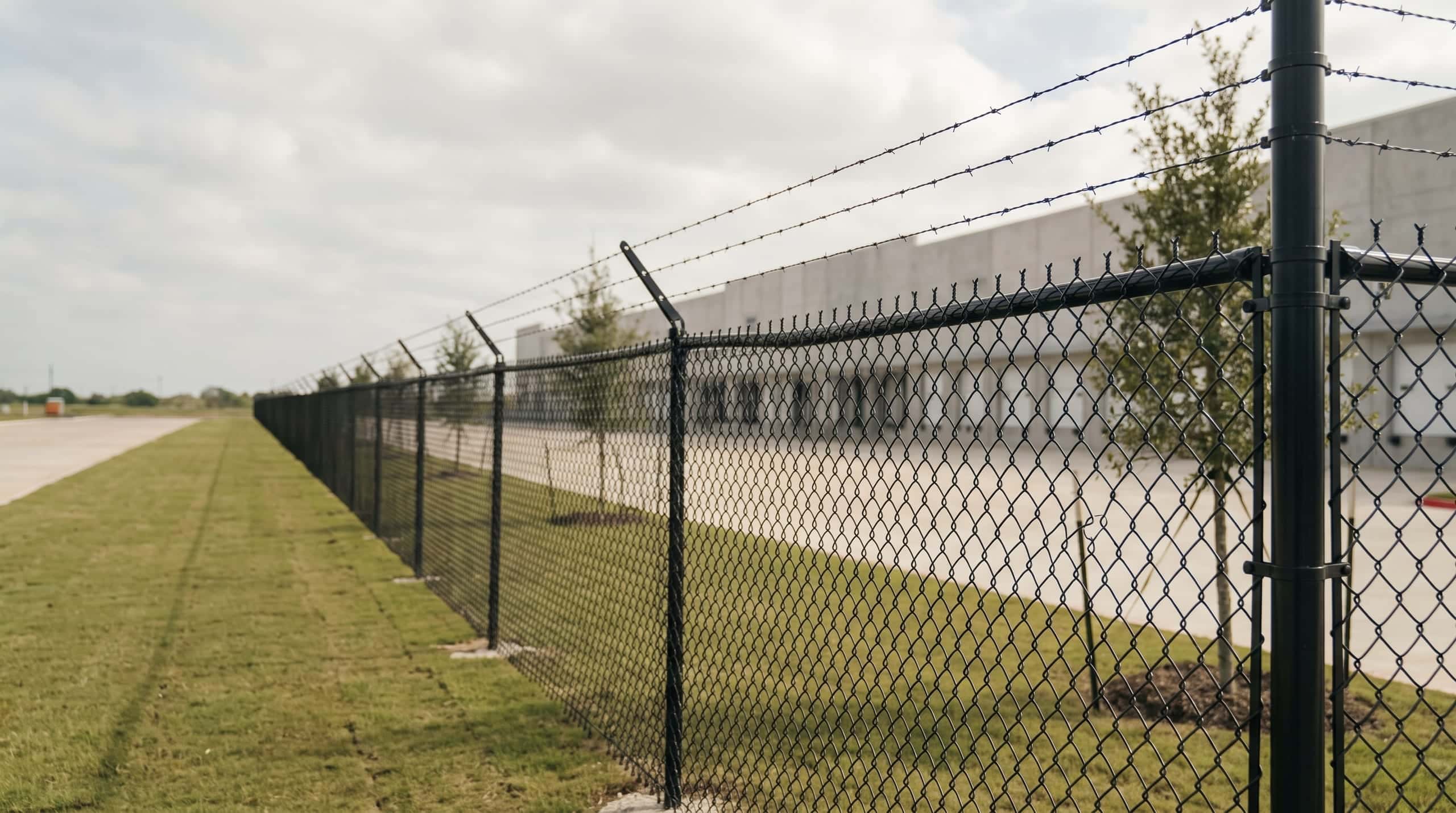
Use chain link for back lots, storage yards and long perimeters, and ornamental steel for storefronts, offices and any frontage customers see first. Either one has to clear Fort Worth’s permit and zoning rules before it goes up, and Johnson Fence builds both after a free on-site measure.
Most business owners have already met a fence that failed too soon, a quote that left out the grade, or a crew that never came back. The sections below sort out what the city requires and what each fence costs, so none of that happens on your property.
Use chain link for Fort Worth back lots and ornamental steel up front
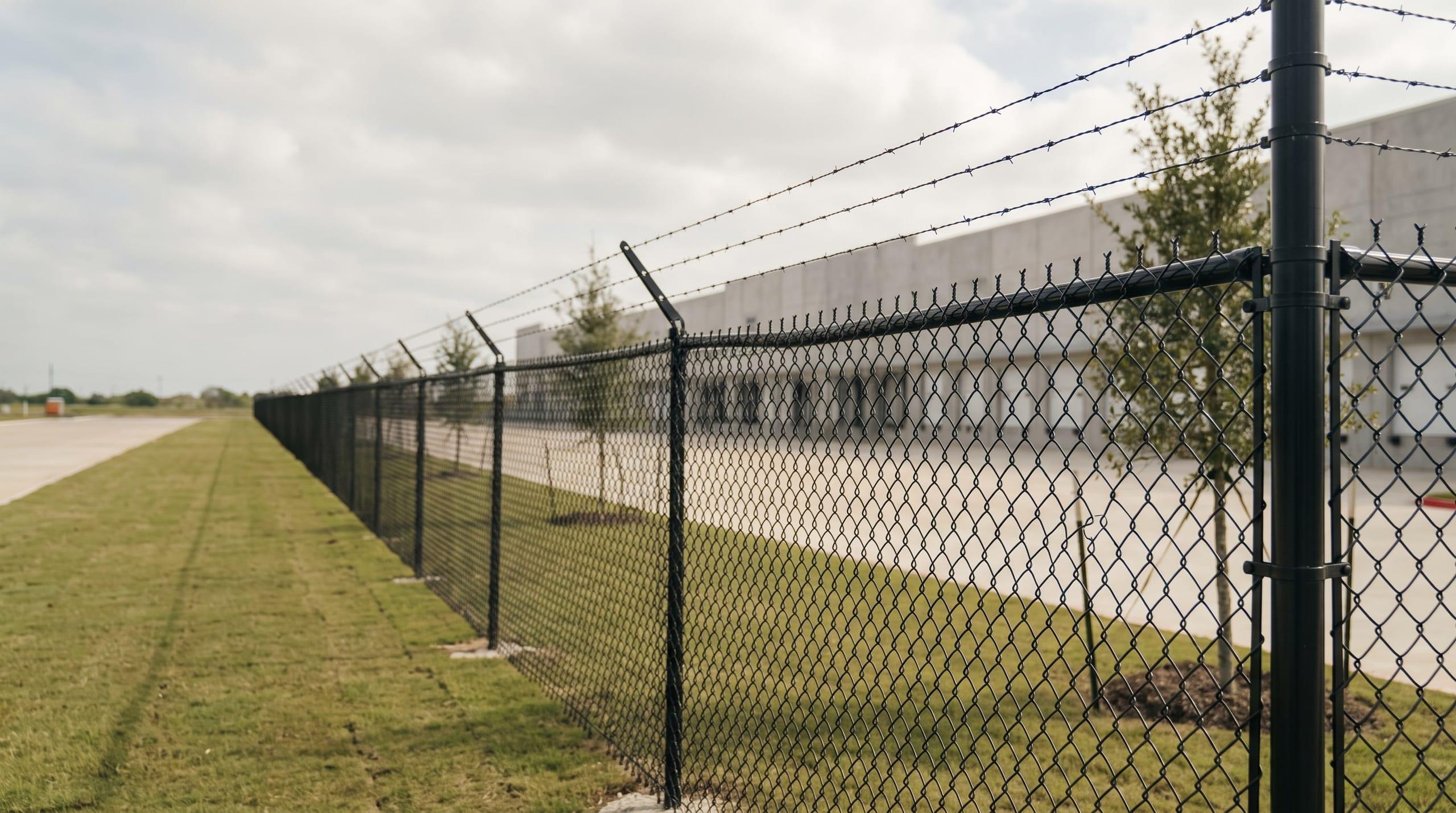
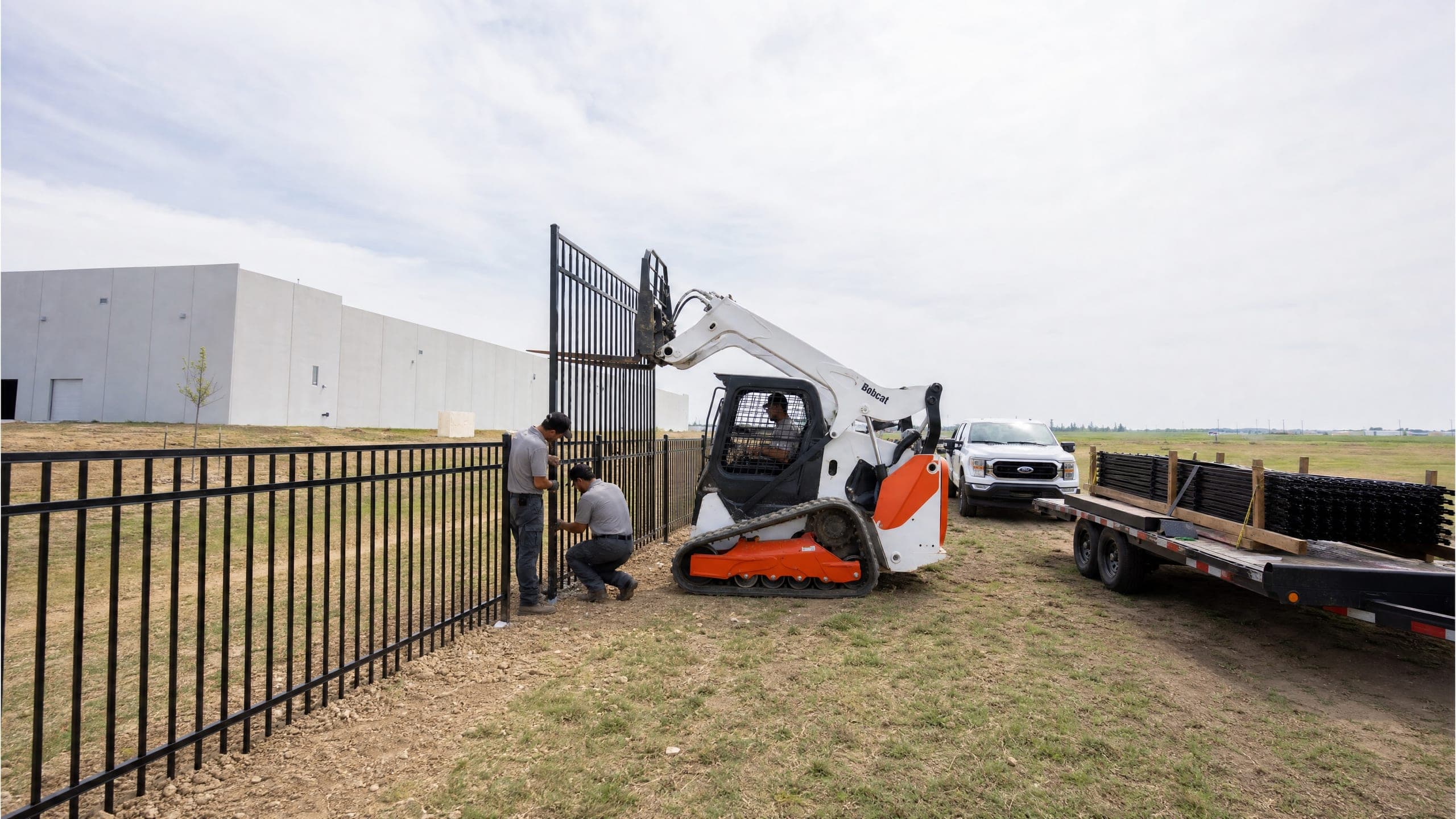
Chain link fits industrial yards, storage lots, back-of-house perimeters and large acreage where cost and visibility come first. Ornamental steel fits retail storefronts, office parks and any Fort Worth property where first impressions and architectural style count.
Sort your property by who looks at the fence. Where customers pull in and park, steel earns its price. Where only trucks and staff pass, chain link covers the footage for less. Most business properties need both, with steel on the street side and chain link behind it.
What permits and codes does a Fort Worth commercial fence need?
The City of Fort Worth’s 2025 Commercial Development Guide requires a separate building permit for each structure, including retaining walls, dumpster enclosures and certain fences. The zoning ordinance (City of Fort Worth Code of Ordinances, § 5.305) bars any fence or wall in the minimum required front yard, platted front yard or projected front yard. The exceptions cover one- and two-family homes, multifamily developments, utility facilities, auto repair and body shops, and through lots, and general commercial use is not among them.
That rule decides where ornamental steel can stand. A steel fence meant to frame your frontage has to sit behind the front yard line. On a corner lot, the same ordinance caps any fence at two feet within a triangle measured 20 feet in each direction from the property-line corner at the street intersection.
Gates face a second set of rules. The Fort Worth Fire Code (2021) says: “All gates crossing fire apparatus access roads shall have a minimum twenty (20) feet clear width when opened.” Security gates that restrict fire department access need approval from the fire code official, plus an approved means of emergency operation kept working at all times. Electric gates need an approved key switch on the column or post near the control box, and the gate stays open until someone resets it. They also need a mechanical manual release or a fail-safe mechanism for power failure.
What do Fort Worth clay soil and wind demand of a commercial fence?
Fort Worth soil moves, and the wind pushes on whatever you put in it. According to WatertightHub, 60% of the ground sampled in Fort Worth is high shrink-swell clay, and USDA maps the city as mostly Aledo soil. WindLoad.Solutions lists design wind speeds of 100-115 mph for Fort Worth under ASCE 7-22.
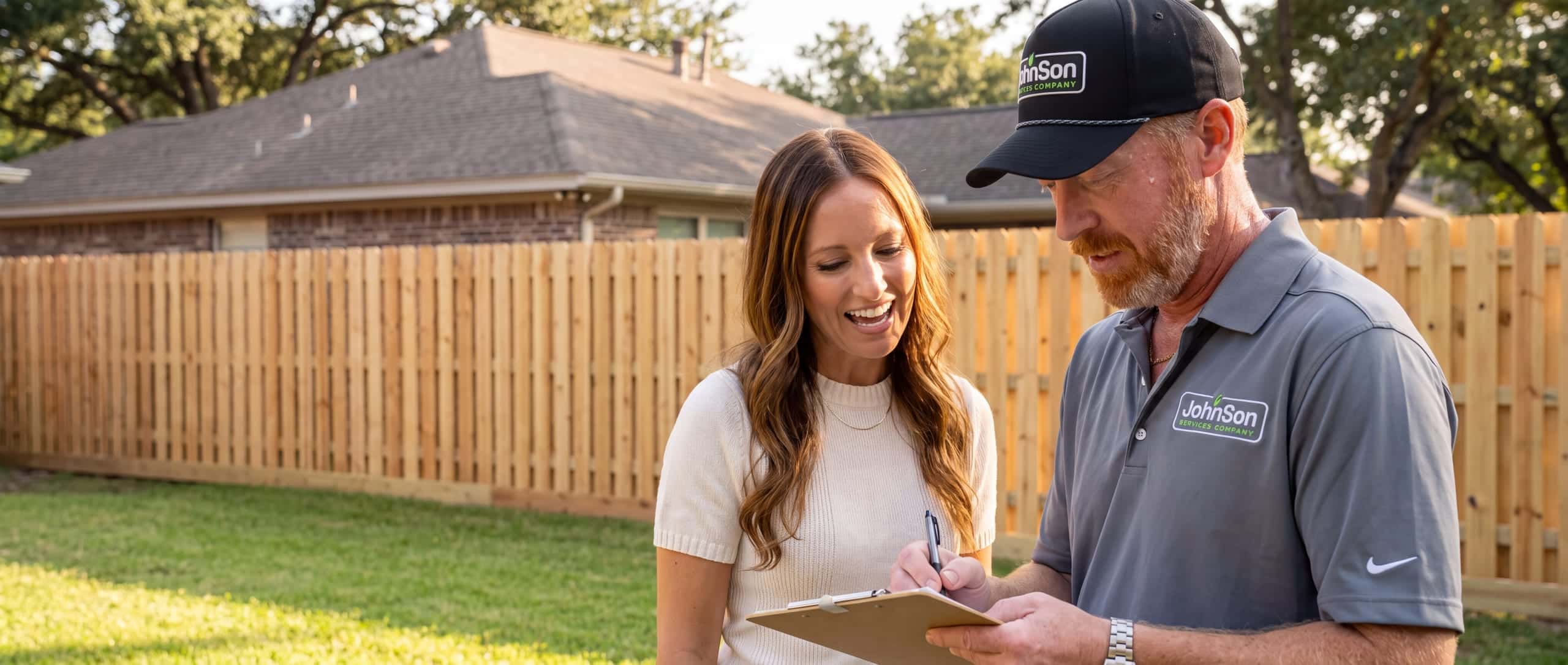
Clay that swells and shrinks works on posts every season. A long solid face catches the wind. So ask every bidder how deep the posts go and get the depth in writing. Our quote names the material grade in writing, and our salesperson meets you on site, measures the linear footage and confirms fence type and picket grade.
The finish matters in this weather. Galvanized or black PVC-coated steel chain link makes a strong, climb-resistant barrier, and powder-coated finishes protect steel against North Texas weather.
How much does commercial chain link or ornamental steel fence cost per foot?
Fence Advisors’ 2026 pricing guide puts installed chain link at $15 to $35 a foot and steel or wrought iron at $35 to $75. Palmer Fence’s 2026 numbers for a 6-foot fence run higher, at $55 to $70 for chain link and $70 to $90 for iron.
| Publisher and year | Chain link, installed per foot | Ornamental steel or iron, installed per foot |
|---|---|---|
| Fence Advisors, 2026 | $15 to $35 for 4 to 6 feet | $35 to $75 for steel or wrought iron |
| Palmer Fence, 2026 | $55 to $70 for a plain 6-foot fence | $70 to $90 for 6-foot iron |
| HomeGuide and Angi, 2025 to 2026 | $12 to $25 for 4 to 6 feet | $50 to $85, custom to $130 |
Ergeon’s 2026 installs show 4-, 5- and 6-foot chain link clustering around $36-$43 a foot. The real jump comes at 7 feet, about $75, and 8 feet, about $78.
Those are market ranges, and the number that matters is the one measured on your lot. We price every project by custom quote after a free on-site estimate, with no fixed price list. Pricing is per linear foot, set by the footage measured on site and the picket grade chosen. Gates, total length and site conditions move the final number as much as the choice between chain link and steel.
Which is stronger and easier to maintain: chain link or ornamental steel?
Ornamental steel is the stronger barrier, and chain link is the easier one to keep up. Rigid welded steel panels deter forced entry, while galvanized or vinyl-coated chain link needs minimal upkeep.
Steel’s upkeep runs low to moderate, and the part to check is the powder coating. Chain link looks utilitarian and costs less. It still works as a climb-resistant barrier where nobody cares how it looks. For a yard full of equipment, that is often the whole job.