
Fencing a hospital or medical campus in Austin starts with a permit review: a fence over 7 feet, or a gated campus entrance, usually goes through a commercial site plan or building permit. Every gate on a fire route then has to stay at least 20 feet clear, open by hand when power fails and carry an emergency override the Austin Fire Department approves.
Most facilities managers reach this job after a fence that failed too soon, a quote that left out the grade, or a crew that never came back. The code figures below are what you hold a contractor to before anyone digs a post hole.
Austin medical campus fences often run taller than the 6-foot standard
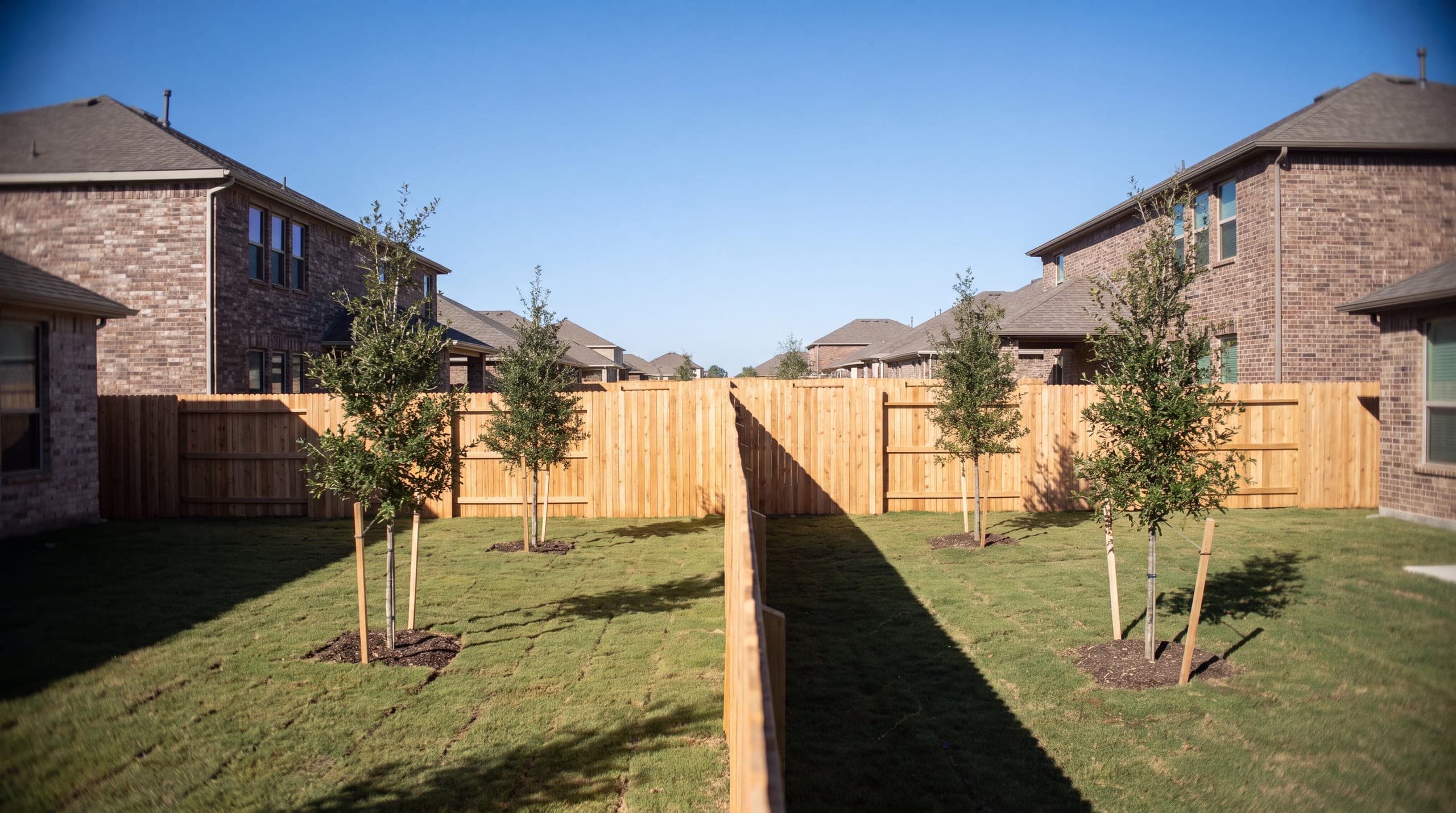
A solid fence along a property line generally cannot exceed 6 feet from natural grade, or 7 feet with a natural grade change of at least 1 foot (City of Austin Land Development Code Section 25-2-899, 2025). Medical campuses routinely want more than that.
Perimeter fences of 8 feet or higher are common around medical facilities, mental health units and generator or utility enclosures. They typically need formal review as part of a commercial site plan or a specific fence or building permit. Plan the height early, because it decides which review track you are on.
Concrete fences and custom stone columns are commercial-only products for us. The same company can handle fencing, gates, decks, landscaping and masonry across the whole property.
When does a hospital campus fence in Austin need a permit?
A permit applies when the fence is taller than 7 feet at any point, or when it stands in a floodplain at any height. Austin exempts a fence of any material at 7 feet or less outside floodplains. It requires a permit above 7 feet, above 6 feet along a public right-of-way on residential property, or within a floodplain at any height (City of Austin Land Development Code Section 25-2-899, 2025).
A campus perimeter at 8 feet crosses the 7-foot line on its own. A gated entrance adds a second trigger. Major perimeter changes, security upgrades and gated entrances on commercial and medical campuses are usually reviewed through commercial site plan amendments or building or trade permits.
Settle the permit track before you settle the fence type. The height and the gate locations decide the paperwork, and the paperwork decides the schedule.
How wide must a hospital fire-lane gate be in Austin?
A gate across a fire apparatus access road needs a clear opening of at least 20 feet. The Austin Fire Code states it in one line: “The minimum clear opening width shall be 20 feet.” (Austin Fire Code 503.6)
Fire department staff have gone further in practice. In a 2019 comment on a replat, Austin Fire Department staff said gates for two-way fire lanes should be 25 feet or at least the full width of the fire lane (Zoning and Platting Commission, 2019). If your lane is two-way, design to the wider number.
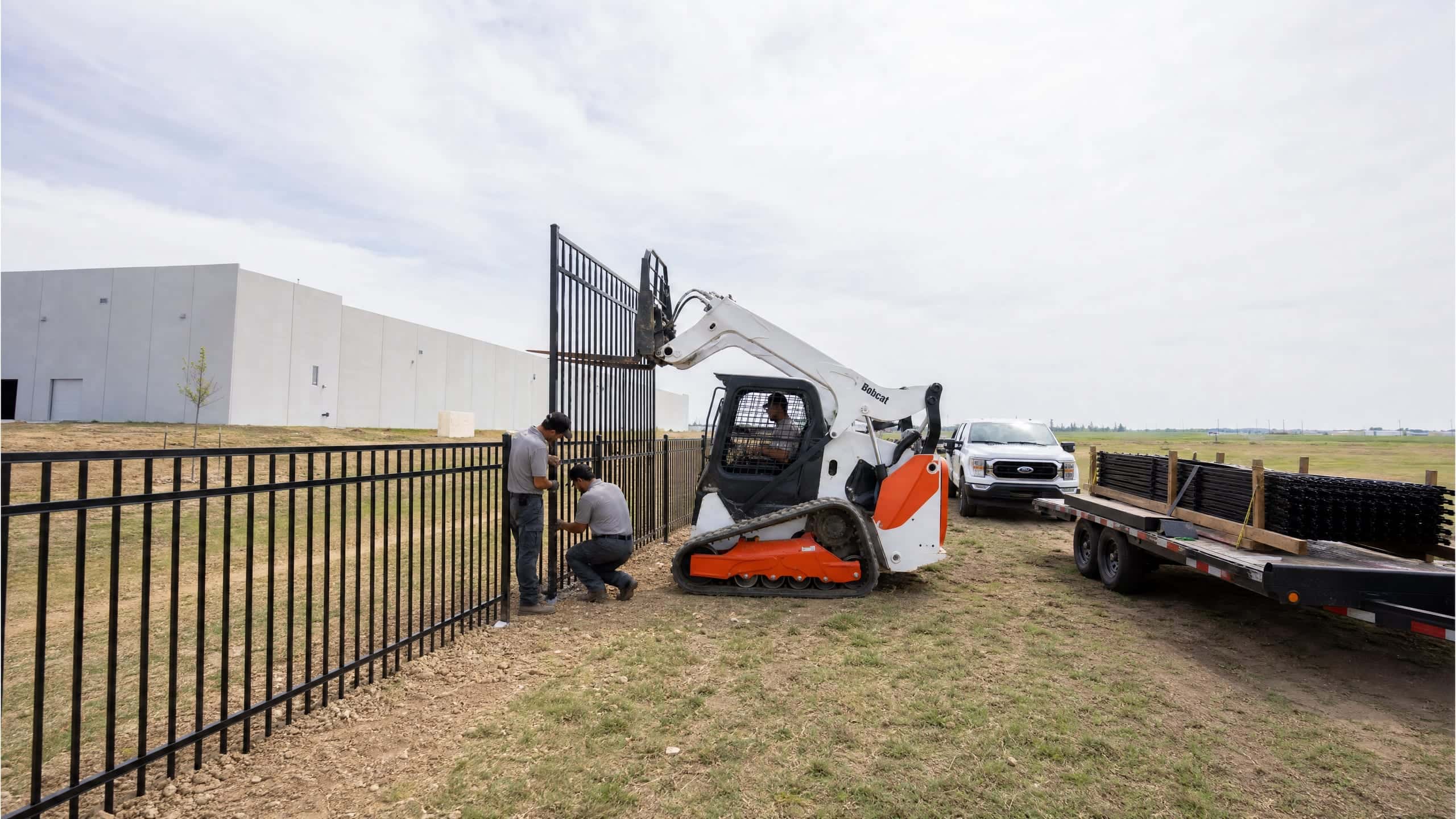
Width is only part of it. Gate construction must allow one person to operate it by hand if power fails. A hospital gate that needs two staff and a wrench during an outage fails that test. Our gate-operator installations are UL325-compliant.
Do electric gates on an Austin hospital campus need a Knox override?
Yes. An electric or automated gate needs an approved Knox key switch or an emergency override device that the Austin Fire Department approves, and a gate locked with a chain and padlock needs a Knox box or Knox padlock.
Fire department connections add a second requirement. Fences and walls must not block access to them. If a fence crosses or encloses a connection path, it needs an approved access gate with clear signage and emergency operation approved by the fire chief.
Put the Knox hardware and the connection access on the drawings before bidding. A contractor who prices the gate without them has priced a gate you cannot use.
Which standards apply to automatic gates on a medical campus in Austin?
Automated gate operators must comply with UL 325, and the gate itself must meet the installation design standards under ASTM F2200. A third standard governs people: on an accessible route, the Texas Accessibility Standards require a clear width of 32 inches minimum for door openings, which include manual gates (Texas Department of Licensing and Regulation, TAS Chapter 4, 2012). An opening more than 24 inches deep needs 36 inches clear.
UL 325 asks for two independent entrapment-protection means in each direction of travel (DASMA, 2018). That makes a code-correct automatic gate a system of gate, operator and sensors. A motor bolted to an existing fence does not meet it.
We work from that system view on commercial projects, with one accountable partner for the fencing and the gates on the same property.
How do Austin’s wind and soil change a campus fence build?
Wind loads in Austin are set by location. The Austin Building Code says: “Location-specific basic wind speeds shall be determined using the ASCE Wind Design Geodatabase.” (Austin Building Code, 2024)
Engineers treat a solid privacy fence as a solid freestanding wall that takes wind on its full face (ASCE/SEI 7-22, 2022). Post embedment grows with the wind force and its lever arm, and it shrinks as soil gets stronger (2021 International Building Code, 2021). A tall solid fence or heavy gate therefore needs more footing than a standard fence of the same length.
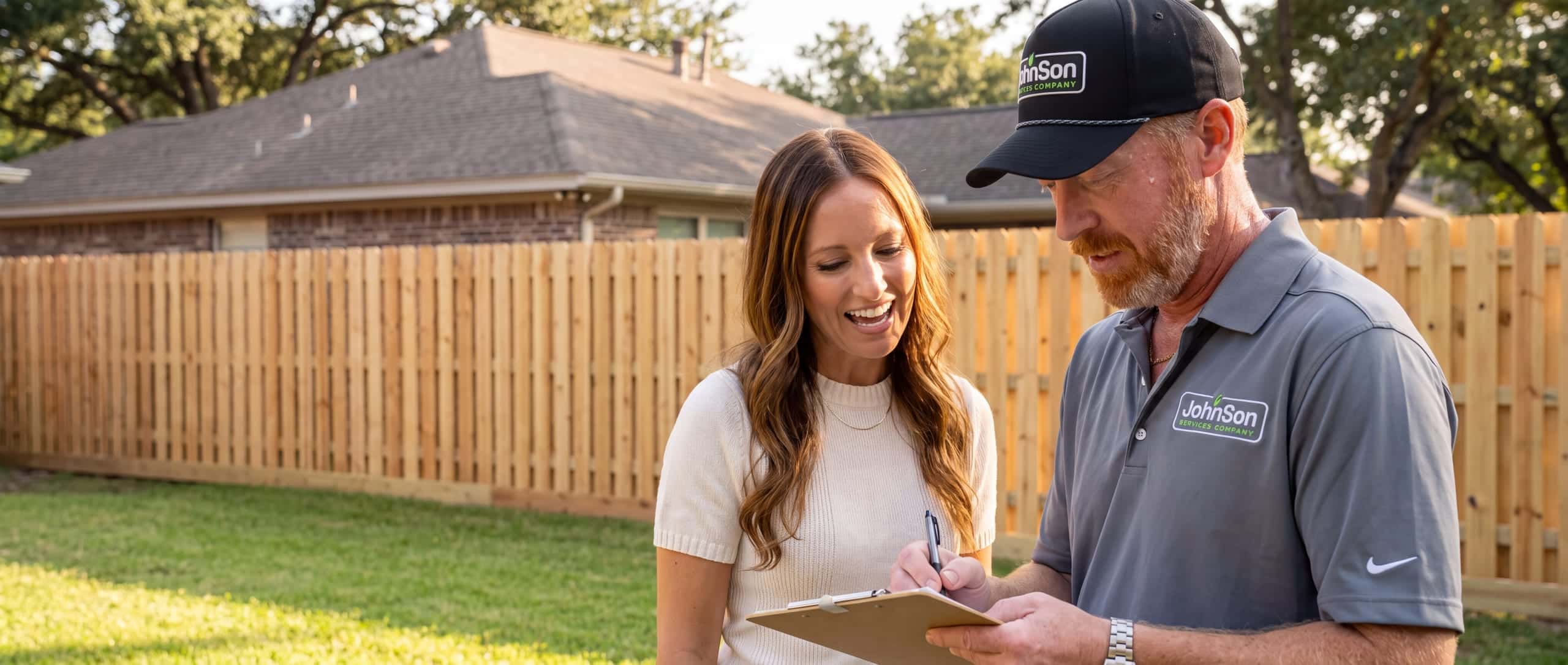
Site conditions shape the price on our side. Cost depends on fence type, materials, length, gates and site conditions. Pricing is per linear foot, set by the footage measured on site and the picket grade chosen (#1 through #3. Our salesperson meets you on site, measures the linear footage and confirms fence type and picket grade, and the material grade is named in writing on the quote.