
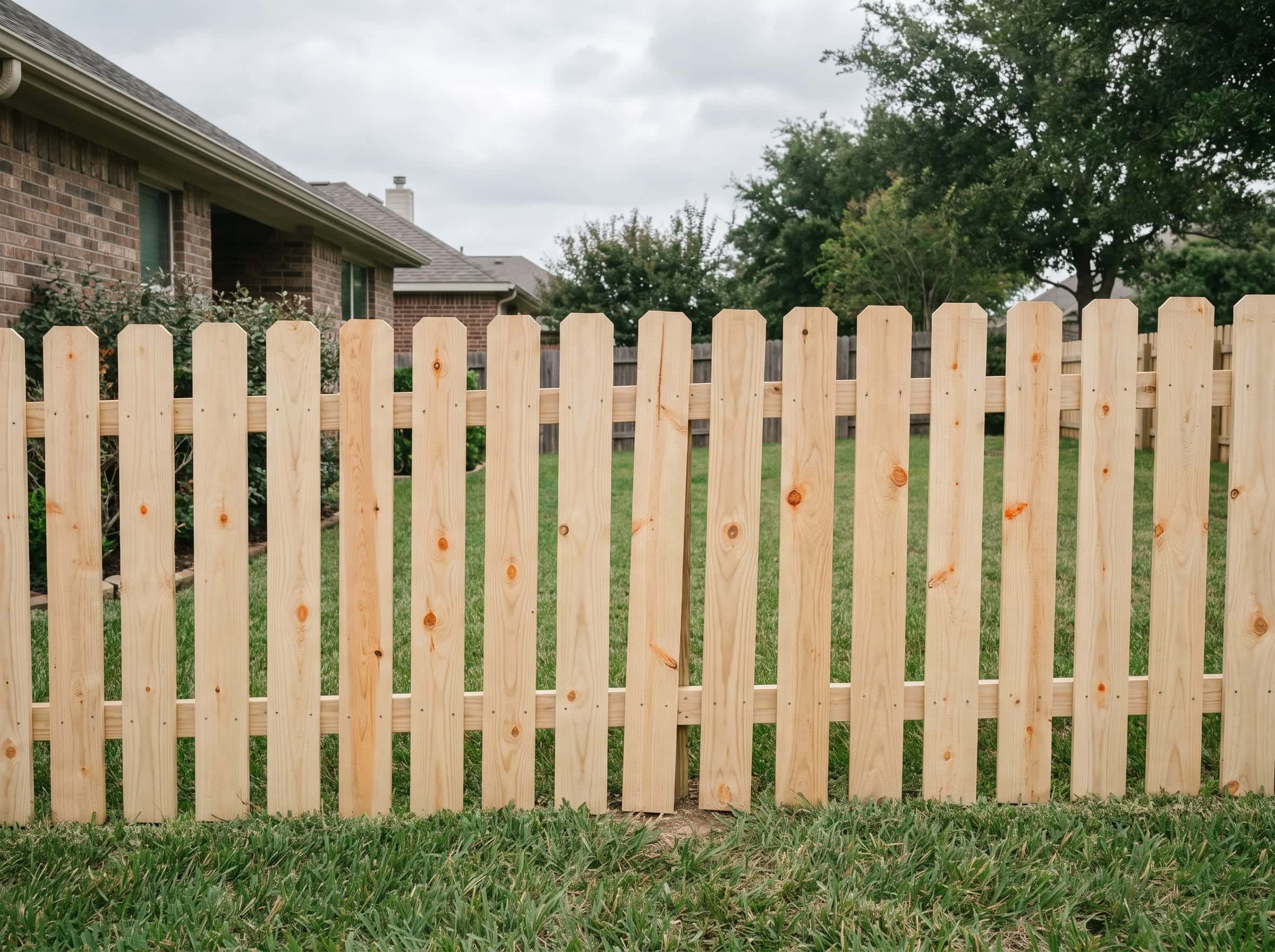
Ask who builds the best front-yard fence in San Antonio and you get a list of names with phone numbers beside them. Nobody tells you the rule that decides what you are allowed to build in the first place.
San Antonio’s Unified Development Code caps a solid front-yard fence at 3 feet and a predominantly open one at 5 feet. That is tighter than Houston, Dallas, or Austin, and most quotes never mention it until a crew is standing in your yard with the wrong panel on the truck.
A Solid Front-Yard Fence Tops Out at 3 Feet in San Antonio
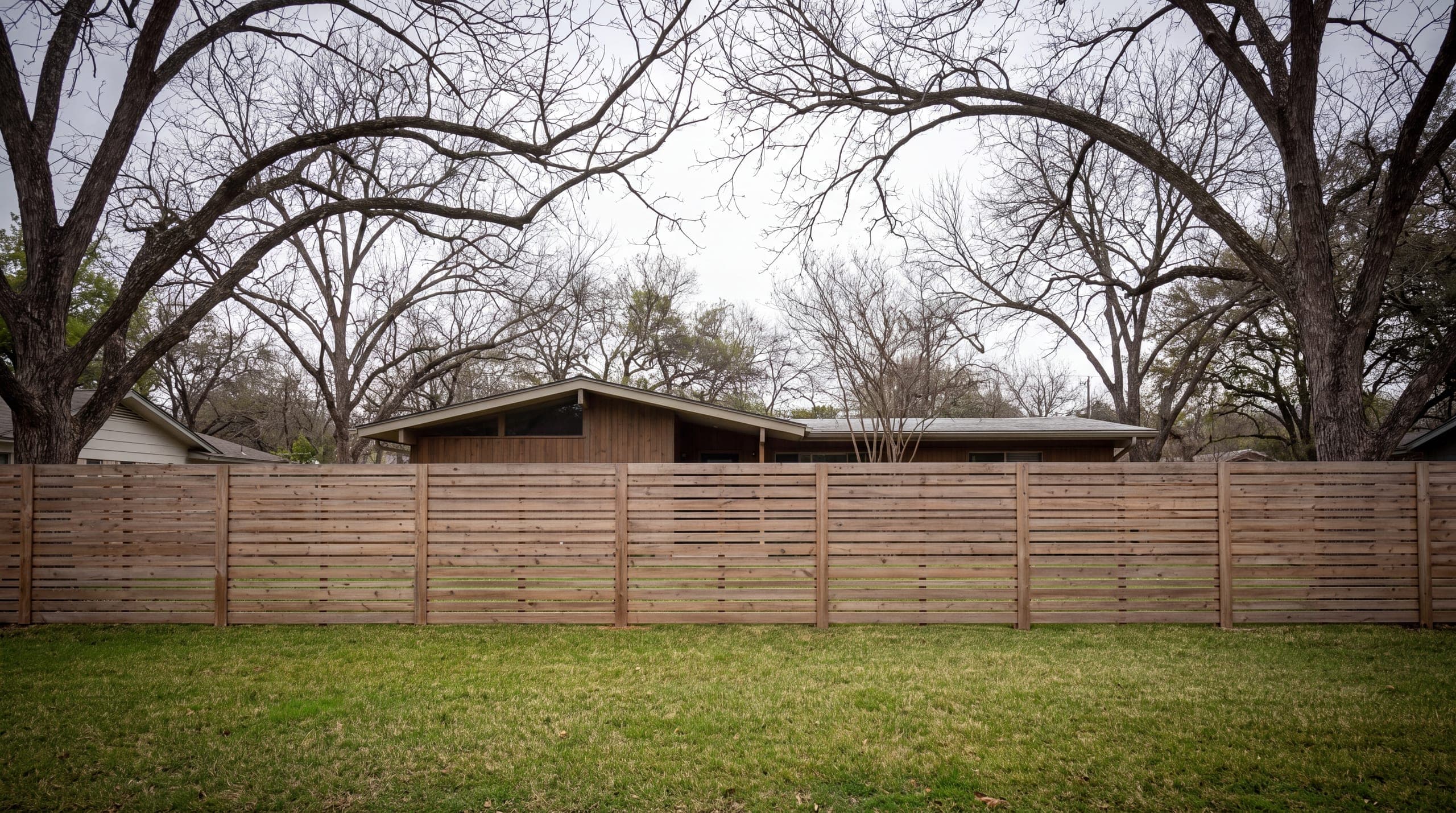
How open the panel is decides your height. A predominantly open style, meaning iron or aluminum pickets with gaps between them, is allowed to 5 feet in a San Antonio front yard, while a solid wood or masonry face is held to 3 (City of San Antonio, Information Bulletin 223, 2025). Most homeowners plan one 6-foot privacy line around the whole lot and learn about the split late.
There is a way up to 6 feet in front, and it is narrow. An open fence up to 6 feet is allowed in a front yard by right only on lots of at least 20,000 square feet with at least 100 feet of street frontage; below that, it takes a special exception (San Antonio Unified Development Code, Section 35-514). Half an acre with wide frontage is a real category in parts of San Antonio. A standard subdivision lot is not in it.
So the first question a front-yard quote should settle is not the price. It is which of those three numbers applies to your lot.
Houston, Dallas, and Austin All Give You More Front-Yard Height
Every other metro we work in is looser in front. That is why advice a friend gave you after fencing a house in Katy or Plano falls apart at a San Antonio front lot line, and why a builder who works several metros has to check the code city by city rather than by habit.
| Metro | Front-yard height allowed | Permit trigger | Source |
|---|---|---|---|
| San Antonio | 3 ft solid, 4 ft predominantly open | Building permit for a new fence inside city limits | San Antonio UDC 35-514 |
| Houston | No zoning, so no separate front-yard cap | Over 8 ft, or any masonry or concrete fence | Houston Permitting Center |
| Dallas | 4 ft above grade in the required front yard | Above the by-right limits, city permit | Dallas Development Code 51A-4.602 |
| Austin | 6 ft solid along a property line | Over 7 ft, or over 6 ft along a right-of-way | City of Austin LDC 25-2-899 |
One more line worth knowing: behind the house, San Antonio holds a side or rear yard fence to 6 feet, and allows 8 only with an exception the code names, such as a pool, an alley or a commercial neighbor (City of San Antonio, Information Bulletin 223, 2025).
Learn These Four Terms Before You Read a Front-Yard Bid
A front-yard quote uses code words, and two of them decide your height. Read these first and the bids stop sounding interchangeable.
| Term | What it means on your quote |
|---|---|
| Predominantly open | A face that is mostly gaps, such as iron or aluminum pickets. This is the style allowed to 5 feet. |
| Front building line | The line your house has to sit behind. The strip in front of it is where the tight rules apply. |
| Special exception | Case-by-case city approval for height above the by-right cap, rather than an over-the-counter permit. |
| Picket grade | The lumber grade behind the word cedar, numbered #1 through #3. Two quotes can say cedar and mean different boards. |
Your HOA Can Still Bar a Fence in Front of the House
State law now protects your right to a perimeter fence, and it leaves your HOA one power that matters most in the front yard. Since September 1, 2025, a property owners’ association may not prohibit an owner from installing a perimeter fence, but it keeps the authority to regulate fence type or material, to require a driveway gate set back at least 10 feet from a laned right-of-way, and to bar fencing forward of the front building line (Texas Property Code, Section 202.023, as amended by SB 711).
Read that last clause twice if you live under covenants. The city may allow you 5 feet of open picket across the front, and your deed restrictions may still say nothing goes in front of the house. Both documents have to say yes before anyone digs.
Fences installed before September 1, 2025 are grandfathered, so an older front fence down the street is not proof that yours will be approved.
The Estimator Has to Stand in Your Front Yard Before Naming a Style
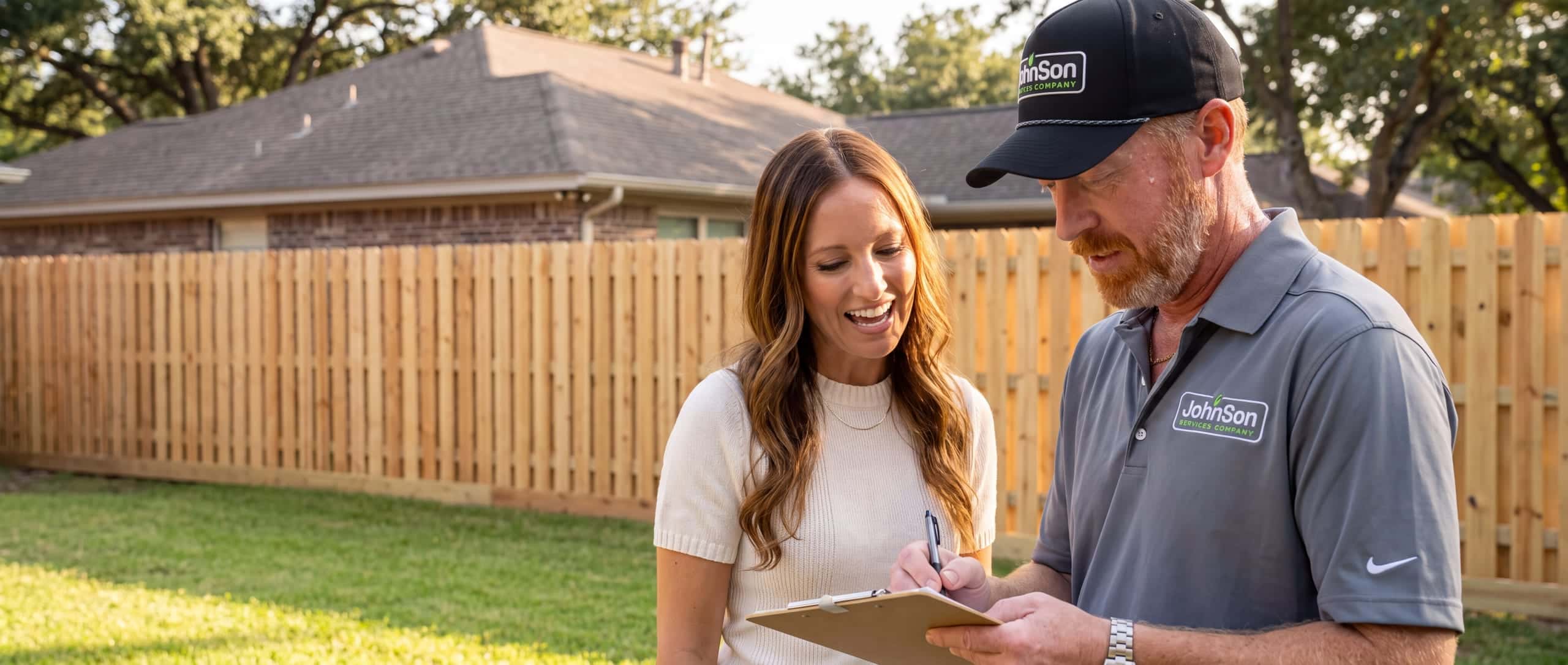
A style quoted from an aerial image is a guess about your setback. Frontage, the front building line, the driveway apron, and the utility easement all change what can legally go where, and none of them are readable from a satellite photo. The single best predictor of a front-yard bid worth taking is that someone measured your yard with a tape before writing a fence type on the page.
Here is what a front-yard estimate should name in writing.
- Measured frontage. Linear feet taken on your lot, with corner and end posts counted.
- Distance to the front building line. The number that tells you whether the 3-foot rule, the 4-foot rule, or the large-lot allowance applies.
- Solid or predominantly open. Say it in the quote, because that word is your height.
- Material and picket grade. Wood by grade, or iron and aluminum by the style and post size.
- Gate width and swing. A front walk gate and a driveway gate carry different posts and different setback rules.
- Who files the permit. Name the party, and name the date it gets filed.
Speed of quote is where San Antonio buyers tell us they get stuck. We call back the same day a lead comes in, give a rough number over the phone from the address, and get the written quote out the same day on 95% of real leads, then start work in about 4 days. In a June 2026 SoTellUs review, a customer wrote: “Their price was competitive and lower than the other 2 but what sealed the deal was Matt called back the same day I initially contacted them for an appraisal. It was a good decision and Matt was quick to reply with the cost estimate and each time I had a question. In addition the crew showed up promptly per schedule and Matt came by early to coordinate some changes I requested after accepting the original quote. The fence was installed in just 2 days and looks great! The job site was cleaned up well b4 the crew left. The original cost was revised making the total cost much less than I expected.”
Price belongs in that same conversation, and ours starts at the lumber yard. Master Halco named us its 2026 Largest Volume Customer for the Southwest Region and for the World, and we buy wood pickets at a cost a single-truck shop cannot get. That saving goes into the quote, so you pay less for the same spec and the same named grade.
Caliche Decides How Deep a San Antonio Front-Yard Post Goes
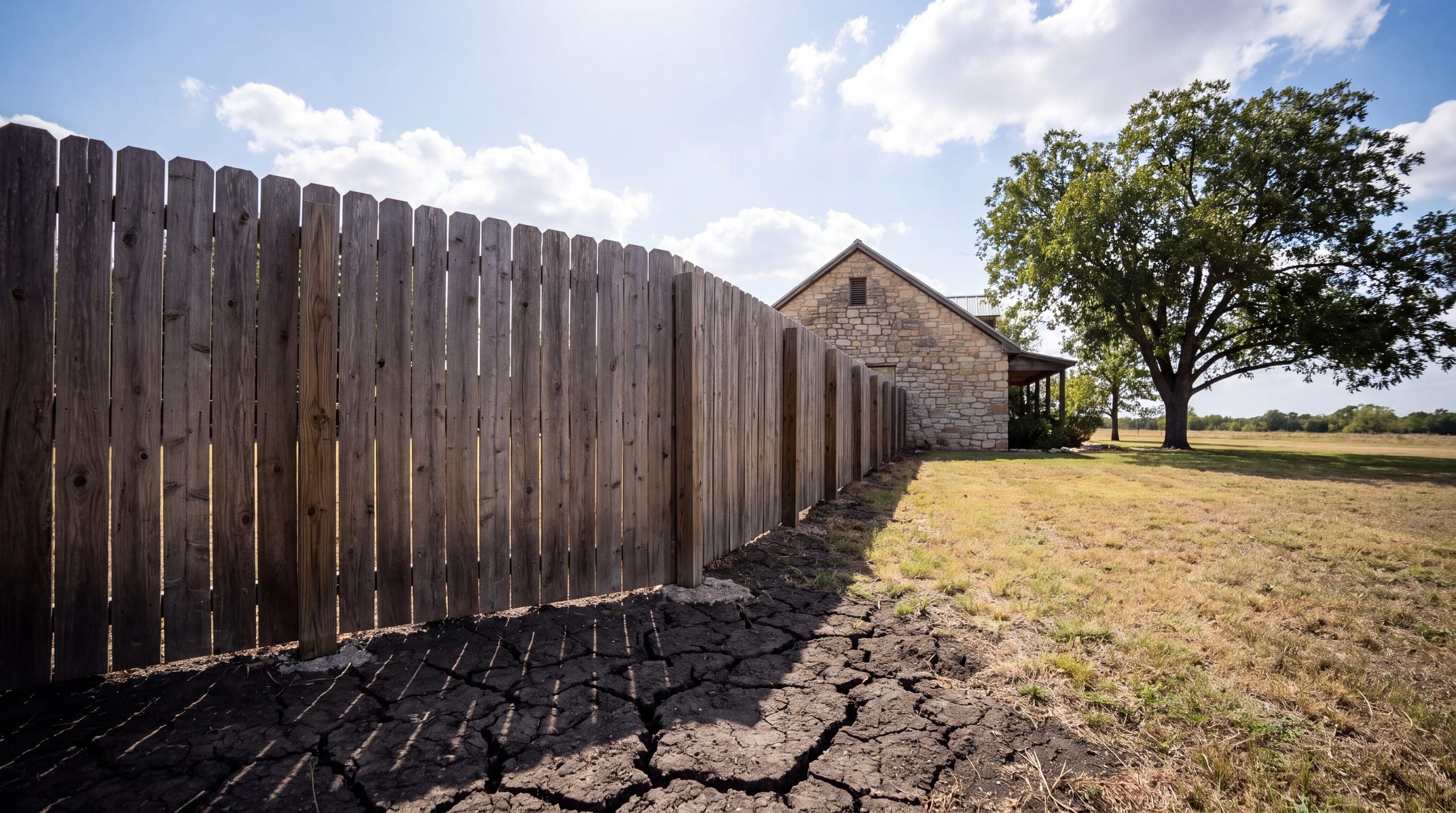
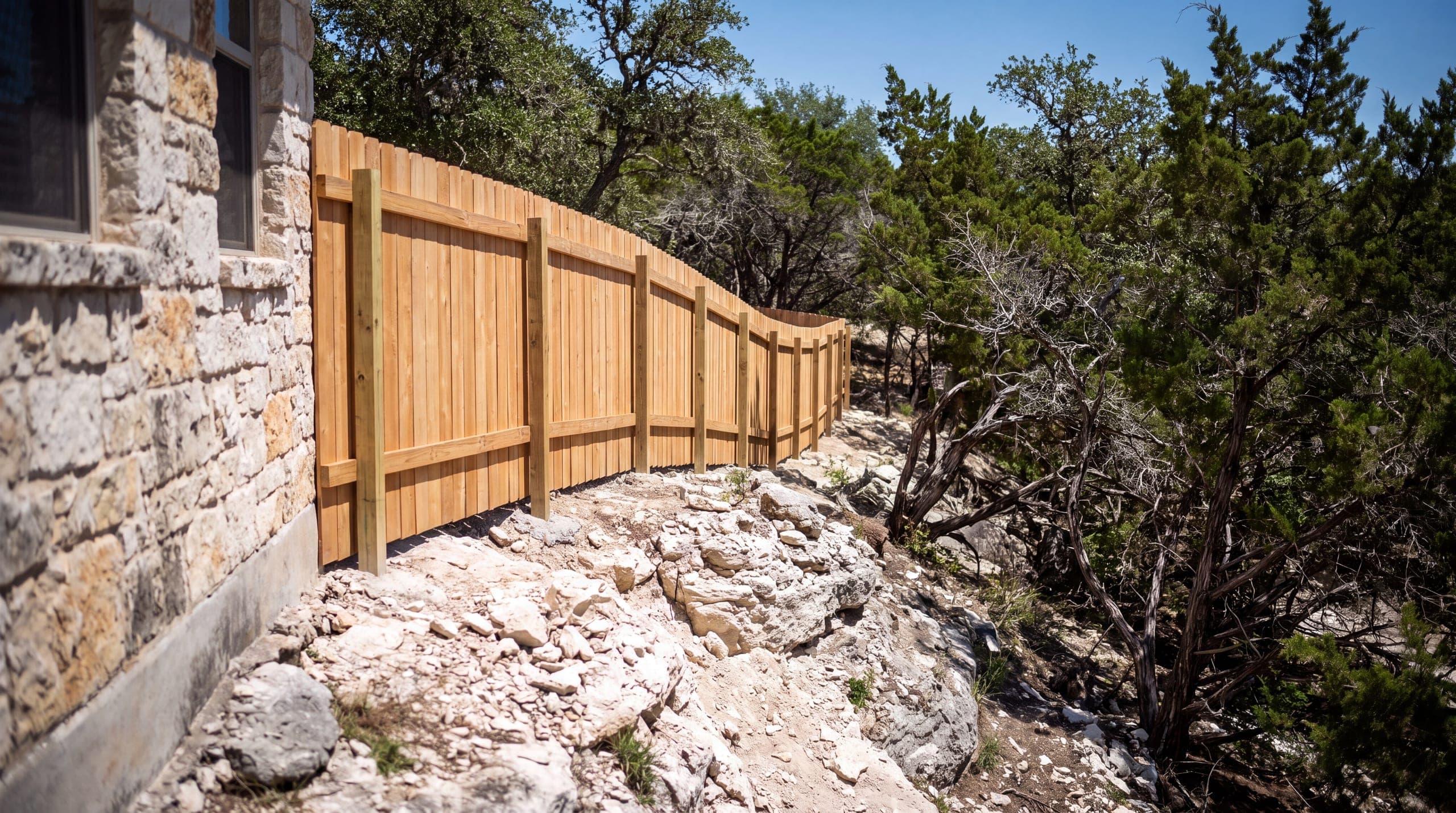
Short fences still fail at the post, and around San Antonio the reason is usually rock. In the Lacoste soil series, depth to the cemented caliche layer runs 10 to 20 inches, and that whole range can show up within 25 horizontal feet (USDA NRCS Soil Survey, Lacoste series). One hole along your frontage hits caliche at knee depth and the next one does not.
That matters more in front than in back. Front-yard runs are short, so a bigger share of the posts are ends, corners, and gate posts, which are the ones carrying load. A crew that hits caliche and simply stops short leaves you a 3-foot fence that leans within two seasons, and a fence in front of the house is the one everybody sees.
Ask how the crew handles rock before install day, and ask what happens to the schedule when they find it. A shop running one crew has to choose between finishing your hole and starting the next job.