
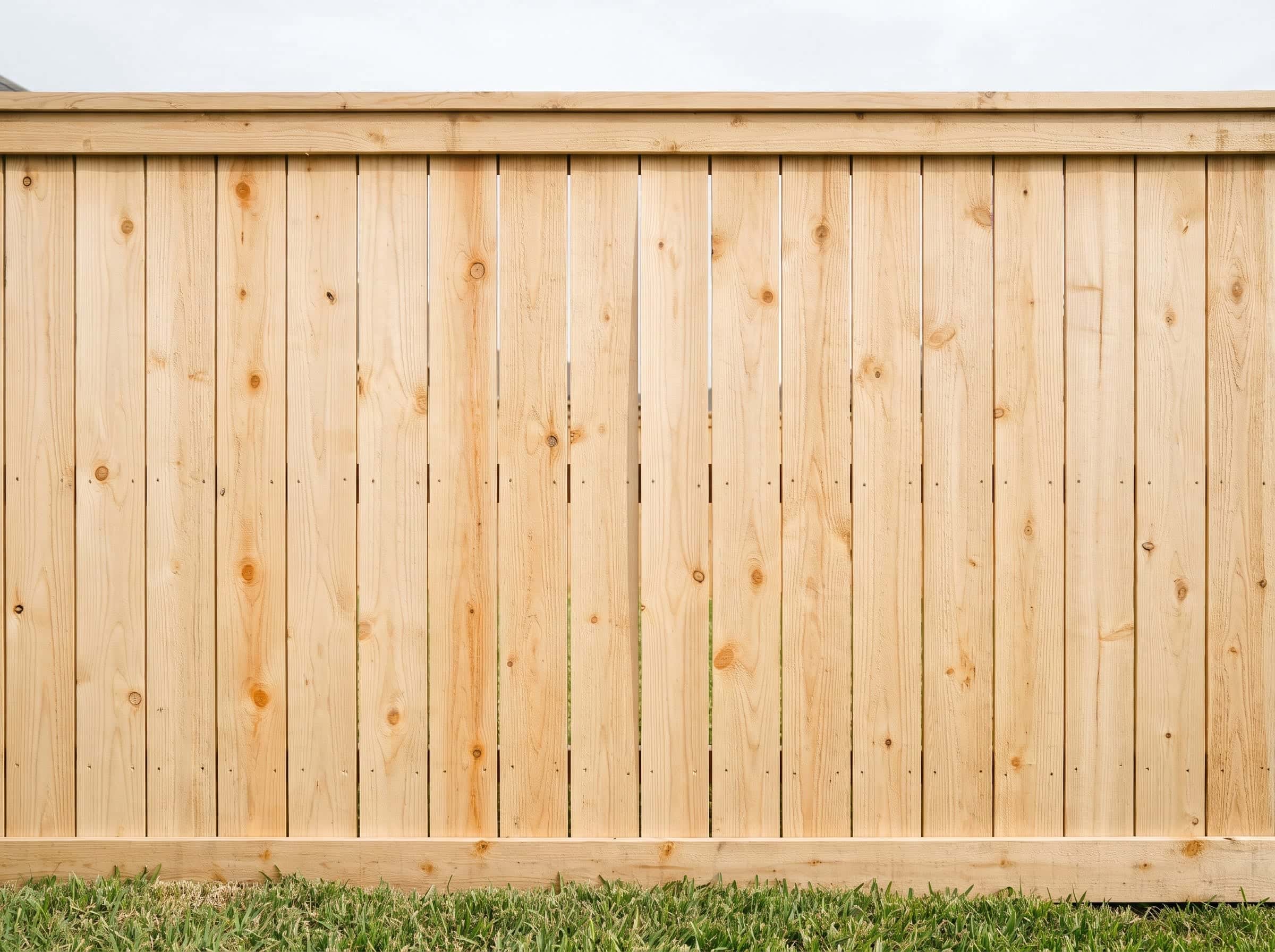
A privacy fence in a San Antonio side or rear yard can be up to 6 feet tall, and up to 8 feet only where the city allows the exception: a pool in the yard, a lot line on an alley, a busy street or a commercial neighbor, or a steep grade. In the front yard a solid fence is capped at 3 feet and a predominantly open one, such as iron or chain link, at 5 feet (City of San Antonio, Information Bulletin 223, 2025).
A new fence needs a permit, and so does replacing more than 25 percent of an old one. The permit costs $26.50 online and is usually issued the same day (City of San Antonio, Residential Fence Permit FAQ).
How Tall Can a Front-Yard Fence Be in San Antonio?
Three feet if it is solid, and 5 feet if it is combined or predominantly open (City of San Antonio, Information Bulletin 223, 2025). That applies to the front yard, the area in front of the face of the house. It is half of what most people picture, and it is the most common reason a San Antonio fence plan gets sent back.
There is one way up from there, and it is narrow. A predominantly open fence can reach 6 feet in the front yard by right on a residential lot of at least 20,000 square feet, and by special exception on smaller lots (San Antonio Unified Development Code, Section 35-514).
What Do the Terms in San Antonio’s Fence Rules Mean?
The five that matter are front yard, predominantly open, solid screen fence, special exception, and ground contact. Four of them decide your height before anyone measures a linear foot. The fifth decides how long the fence stands once the city has stopped looking.
| Term | What it means | Why it changes your fence |
|---|---|---|
| Front yard | The area in front of the face of the house; the city treats everything behind it as side or rear yard | Height caps here are the tightest on the whole lot |
| Predominantly open | A fence you can largely see through, such as ornamental iron, chain link or spaced pickets | Buys 2 more feet of front-yard height than a solid fence |
| Solid screen fence | A continuous barrier with little or no gap between boards or panels | Falls under the 3-foot front-yard cap, and needs an engineer above 8 feet |
| Special exception | A case-by-case approval from the city’s board of adjustment | The route to a 6-foot open front fence on a smaller lot |
| Ground contact (UC4A) | The preservative treatment class for lumber buried in soil | Decides how long the buried part of the post survives |
Does an Open or Solid Fence Change the Height Limit?
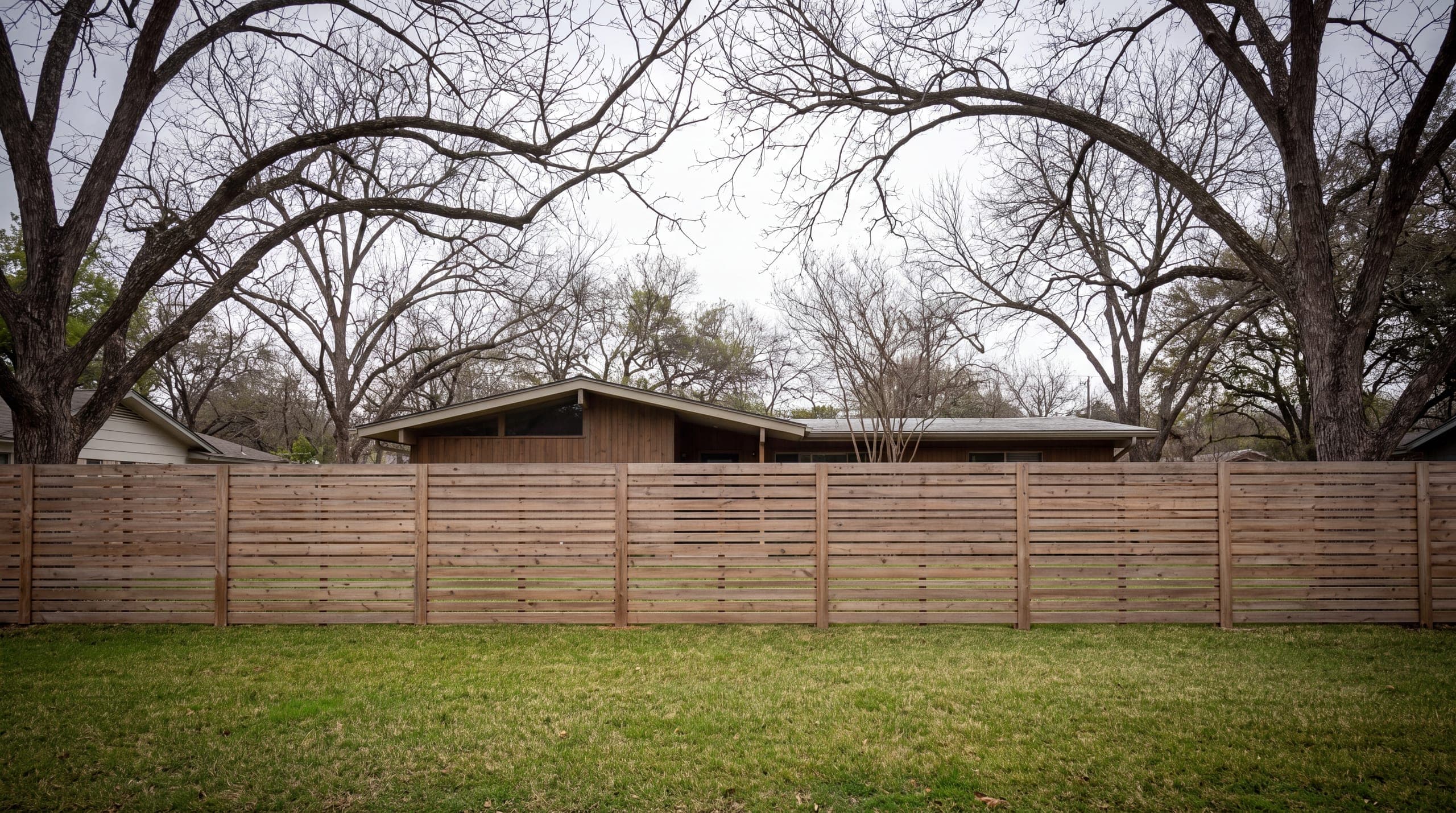
Yes, in the front yard: openness is what decides whether you get 3 feet or 5. A wrought iron fence you can see through gets 5 feet. The same height in tight cedar pickets gets sent back to 3. Wind engineers draw a similar line: a freestanding wall counts as solid once its openings fall below 30% of the gross face area (ASCE/SEI 7-22, 2022).
That threshold is worth knowing even when you are nowhere near a permit fight. A shadowbox or spaced-picket fence behaves differently in a gust than a board-on-board wall does, because the wall catches close to the full push of the air. Your city cares about sight lines. Your posts care about pressure. The same design choice answers both.
When Can a San Antonio Backyard Fence Be 8 Feet Tall?
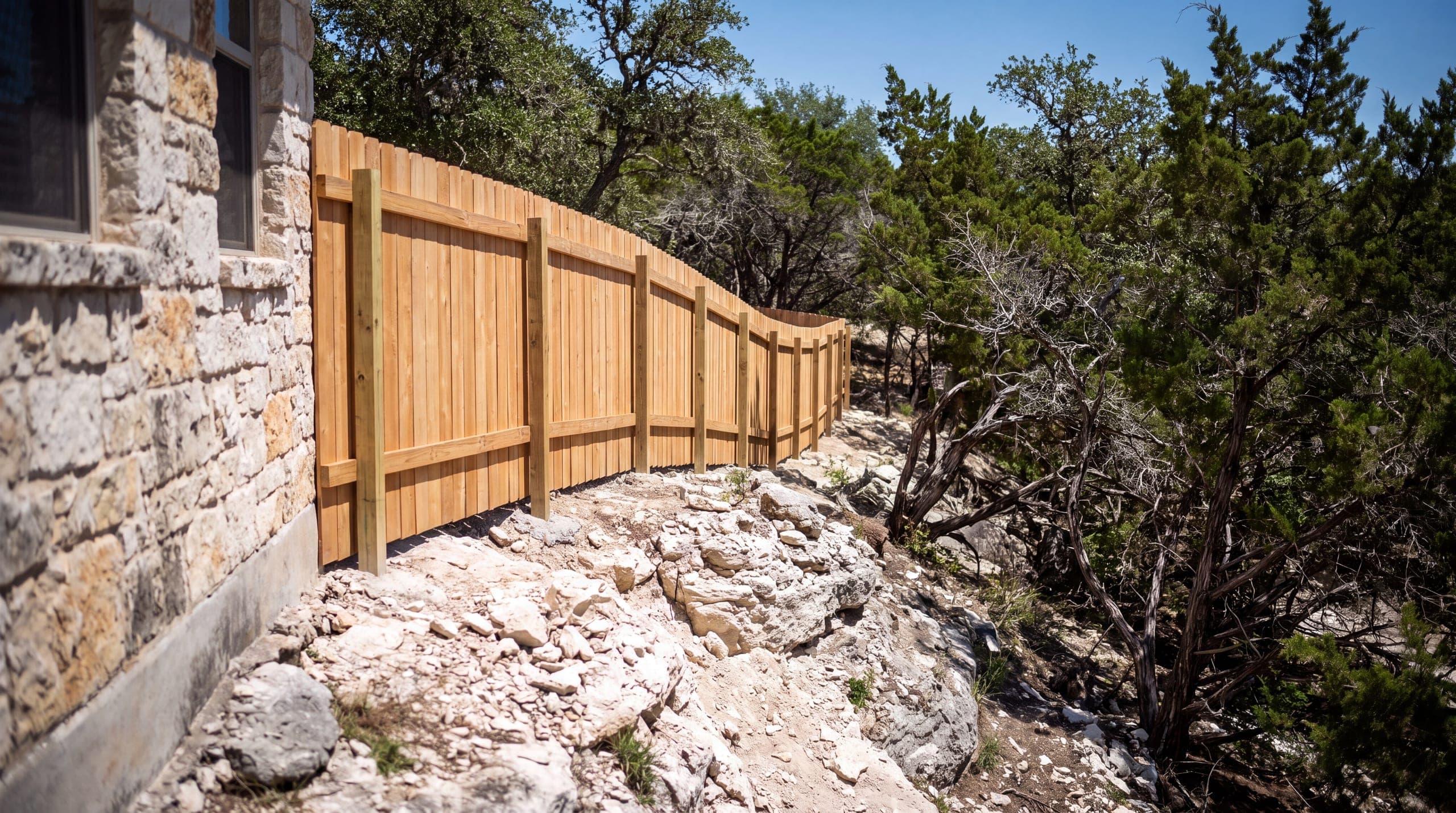
Only when one of the exceptions in UDC Section 35-514(c)(2) applies. The usual ones are a lot line that abuts an alley, a railroad, a street busier than a local street, or a multifamily, commercial, industrial or park use; a house on either side sitting at least 4 feet higher than the shared lot line; a swimming pool or hot tub in your yard or the yard next door; and a slope where the top of the fence has to stay level (City of San Antonio, Information Bulletin 223, 2025). Without one of those, the side and rear yard limit is 6 feet.
City Code Chapter 6 adds one step above 6 feet: the city contacts the owners of every abutting property, and the fence goes ahead only if none of them object.
| Where the fence sits | What San Antonio allows | What that means for a privacy build |
|---|---|---|
| Front yard, solid fence | 3 feet | A privacy screen does not fit in front of the house |
| Front yard, combined or open fence | 5 feet | Iron, chain link or spaced picket buys 2 more feet, with no privacy |
| Front yard, open fence to 6 feet | By right on lots of 20,000 square feet or larger, by special exception elsewhere | Most city lots need the special exception |
| Side and rear yard | 6 feet | The standard height for a backyard privacy fence |
| Side and rear yard with a 35-514(c)(2) exception | Up to 8 feet, with the abutting owners contacted first | Pool, alley, busy street, commercial neighbor, grade change or slope |
| Any fence above 8 feet | Texas licensed engineer’s wind-load certification | Moves the job from a fence build to an engineered wall |
Does a Tall San Antonio Fence Need an Engineer?
Above 8 feet it does: any fence over 8 feet needs a Texas licensed engineer to certify that the foundation and supports meet the building code’s wind loads (City of San Antonio, Information Bulletin 223, 2025). That requirement lands mostly on commercial and screening work, where a tall solid wall around a yard, a dumpster run, or a job site is a normal ask.
It is the city treating a tall solid fence as what it is. A continuous face that height carries real load across every panel, and the failure never starts in the middle. It starts at the corners, the end panels, and the tall posts flanking a gate. An engineer’s stamp forces someone to size the posts and footings against that load before the concrete goes in.
Do You Need a Permit for a Fence in San Antonio?
Yes, for a new fence, and for repairing or replacing more than 25 percent of an existing one (City of San Antonio, Residential Fence Permit FAQ). The permit costs $26.50 online or $36.50 in person, needs no inspection, and is usually issued the same day over the counter or within two business days online. The short fence still goes through the desk.
Four things belong in writing before a crew shows up:
- Who files the permit. Say it out loud on the phone. A contractor who leaves it with you should say so in the contract.
- What height the permit is written for. The number on the permit and the number on the bid should match, measured from grade.
- Where the front of the house falls. That line decides whether your fence lives under the 3-foot cap or the 6-foot one.
- Proof of insurance. San Antonio registers residential contractors and sets a minimum liability level. Ask for the certificate, not a verbal yes.
Also worth knowing: San Antonio’s code governs fences inside city limits. Converse, Helotes, Leon Valley, and New Braunfels write their own rules, so a bid built off the San Antonio ordinance is not automatically right in the suburb next door.
Does Wood Rot Faster in San Antonio Than in Dallas?
Yes. San Antonio scores 52.2 on the Scheffer decay hazard index, against 44.3 for Dallas (Carll, USDA Forest Products Laboratory, 2009). Both sit in the moderate band, and moderate is not mild. It means the ground line here stays damp long enough, often enough, for decay fungi to keep working through the year. That number never appears on a permit, and it decides more about your fence than the permit does.
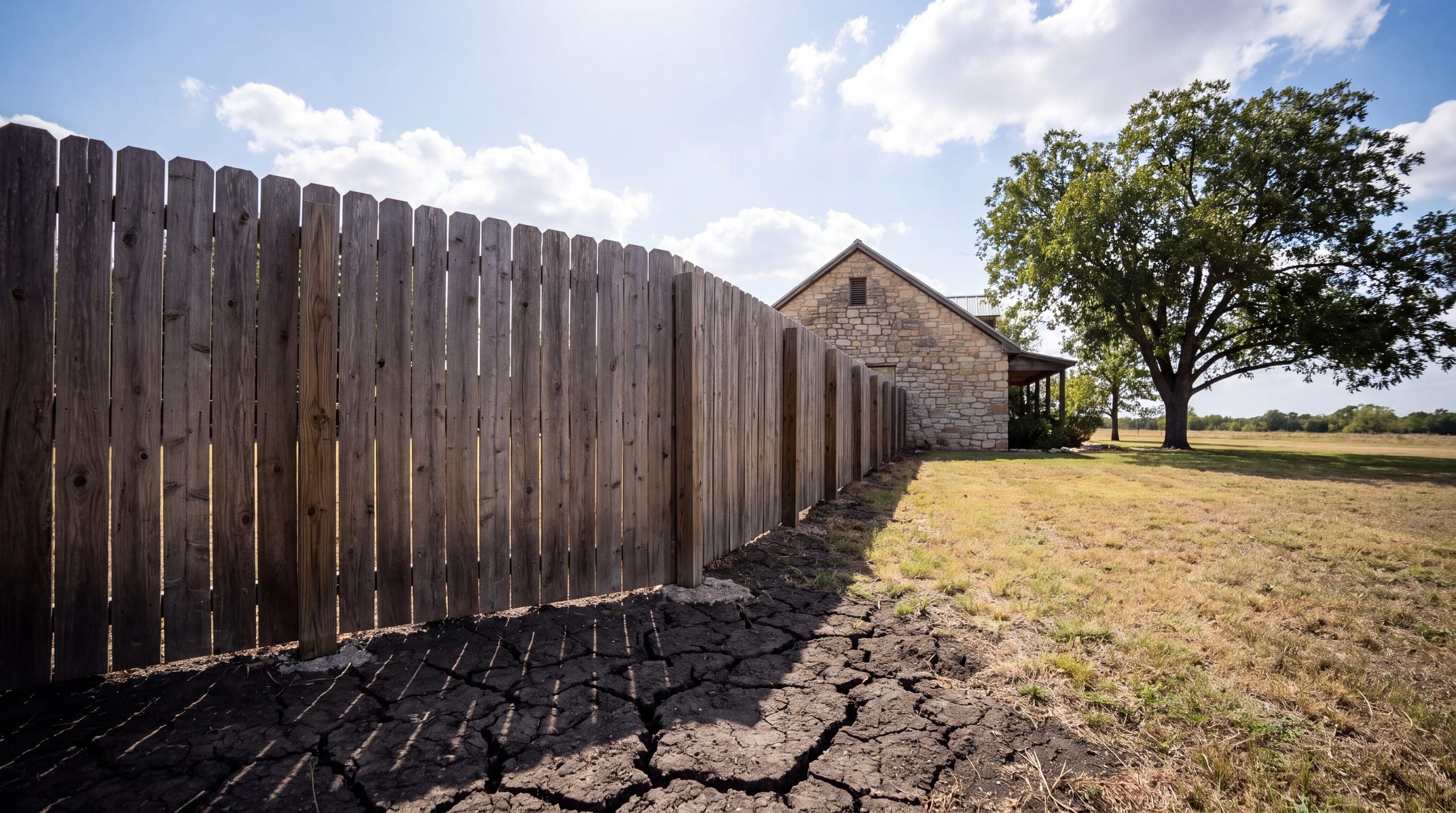
Then there is what the crew hits with the auger. Across San Antonio-area soils, the cemented caliche layer can start anywhere from 10 to 20 inches down, and that depth can change inside a horizontal distance of 25 feet (USDA Natural Resources Conservation Service, Lacoste series). One post hole goes to full depth easily. The next one, four posts along the same line, hits rock at 11 inches. What the crew does at that moment, drill through it or set shallow and hope, is the difference between a fence line that holds and one that leans in three years.