
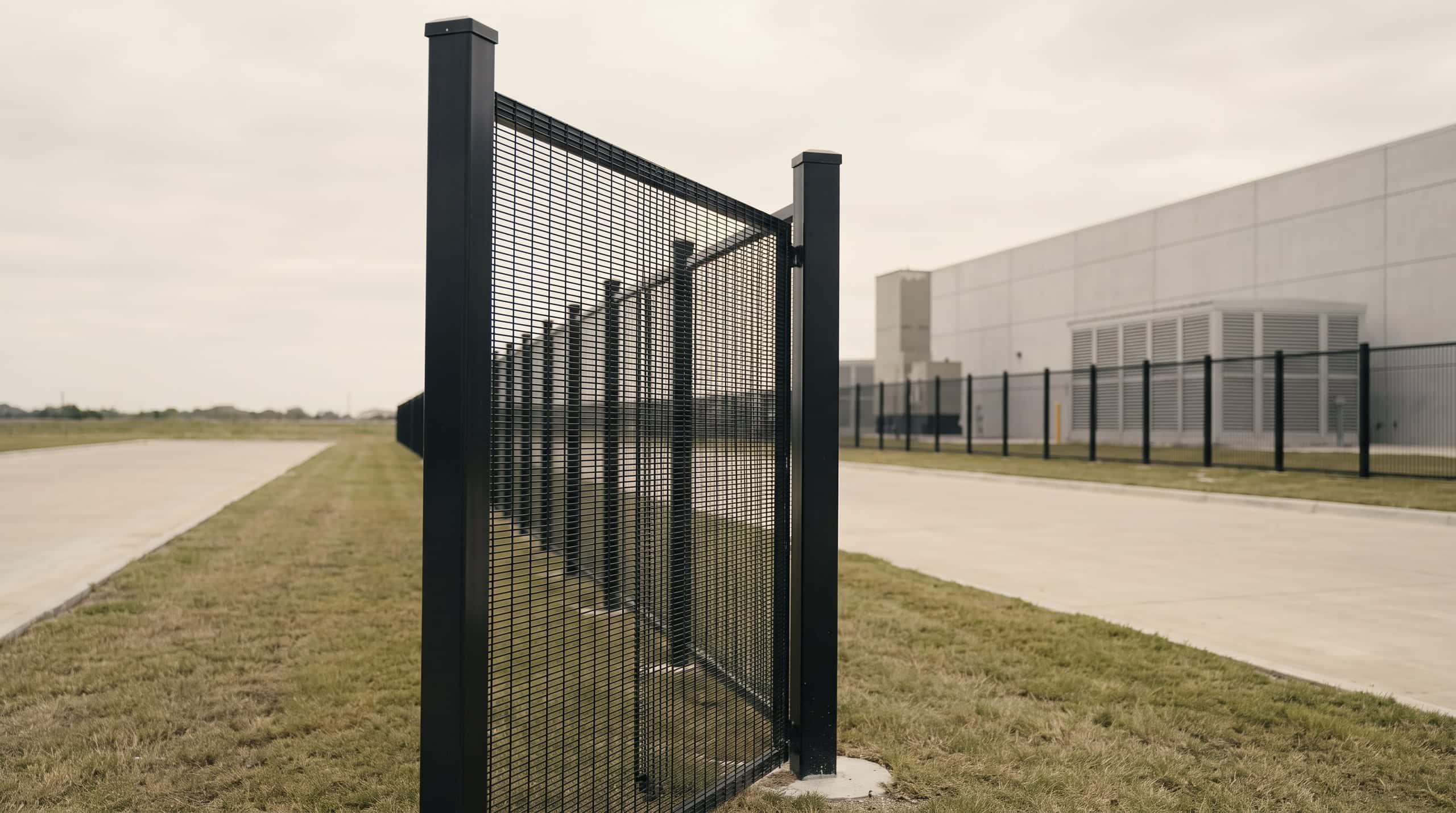
Most daycare fence quotes start with a price per foot and a fence type. Neither one tells a director whether the fence will pass.
Two rule books decide that: the state’s minimum standards for child care operations, and the city’s fence code. Confirm the first with your licensing representative before you order anything, and we can check the second from the lot. A quote that skips both is pricing a fence nobody has approved.
Two Rule Books Govern a Texas Daycare Fence, and Most Quotes Read Neither
The state’s minimum standards for child care operations regulate the outdoor play space itself, and the city’s fence code regulates the fence as a structure. Those are two different offices with two different answers. A contractor can read the city code off the lot. The licensing text comes from your licensing representative, and we do not quote it here.
That split matters because the quote usually answers neither. It lists a height, a material and a gate, and it assumes the numbers are fine.
Before you design anything, get these four answers from your licensing representative in writing:
- Enclosure. Whether the outdoor play space must be fenced, and what counts as an enclosure.
- Height and openings. The minimum height and the largest gap a child must not be able to pass or climb.
- Gates and latches. How many exits the play area may have and how each one must close.
- Approval timing. Whether the fence is reviewed before or after it goes up.
Hand the written answers to the contractor. Every line of the quote should answer one of them.
Pull Three Things in Order Before You Order a Daycare Fence
The order is licensing first, city second, fence third. Reverse it and you risk building a fence the city allows and the licensing office rejects, or the other way around.
| Step | What to pull | Who answers it |
|---|---|---|
| 1. Licensing | The written requirement for the outdoor play area | Your licensing representative |
| 2. City code | The height limit and permit trigger for a commercial fence on your lot | Your city permitting office |
| 3. Fence and gate | Fence type, post depth and gate hardware that satisfy steps 1 and 2 | Your fence contractor |
If the two answers conflict, follow the stricter one and get both offices to confirm it in writing. The contractor’s job starts at step 3, and a good one will ask you for steps 1 and 2 before naming a price.
Daycare Fence Height and Permit Limits in Houston, Dallas, Austin, and San Antonio
The four big metros do not agree. Houston exempts an ordinary fence up to 8 feet, Austin stops its exemption at 7 feet, and San Antonio sets an 8-foot ceiling that no exception can lift. Here is each city’s published fence rule.
| City | Height and permit rule | Source |
|---|---|---|
| Houston | No zoning. A wood or metal fence at 8 feet or under needs no permit. Masonry or concrete needs one at any height. | City of Houston, 2026 |
| Dallas | Residential districts allow 4 feet in a required front yard and 9 feet in any required yard. A permit applies above those limits. | Dallas Development Code, 2025 |
| Austin | No permit up to 7 feet outside floodplains. A permit applies above 7 feet, or at any height in a floodplain. A solid property-line fence tops out at 6 feet. | City of Austin, 2025 |
| San Antonio | Residential front-yard fences cap at 3 feet if solid and 4 feet if open. The residential maximum is 8 feet, with no exception above it. | San Antonio UDC, 2025 |
These are the published residential fence rules. A daycare may sit in a commercial or institutional district, so ask the city which district your lot is in before you trust any number above. Then ask whether a commercial fence on that lot has its own height or permit trigger.
If your lot is in Houston, notice the masonry line. A brick or stone fence needs a permit at any height there, and a plain steel or wood fence does not.
Pick the Fence Type That Passes Both Rule Books
The right fence type is the one that meets the licensing requirement and the city limit at the same time, then holds up in your soil and wind. We build ten commercial fence lines, and each one behaves differently on a play yard.
- Ornamental steel and aluminum. An open bar fence passes wind and lets staff see the whole yard. Ask your licensing representative how wide the gap between bars can be.
- Chain link. It is the lowest price. The zinc coating class decides how long it lasts, so ask for the class by name on the quote.
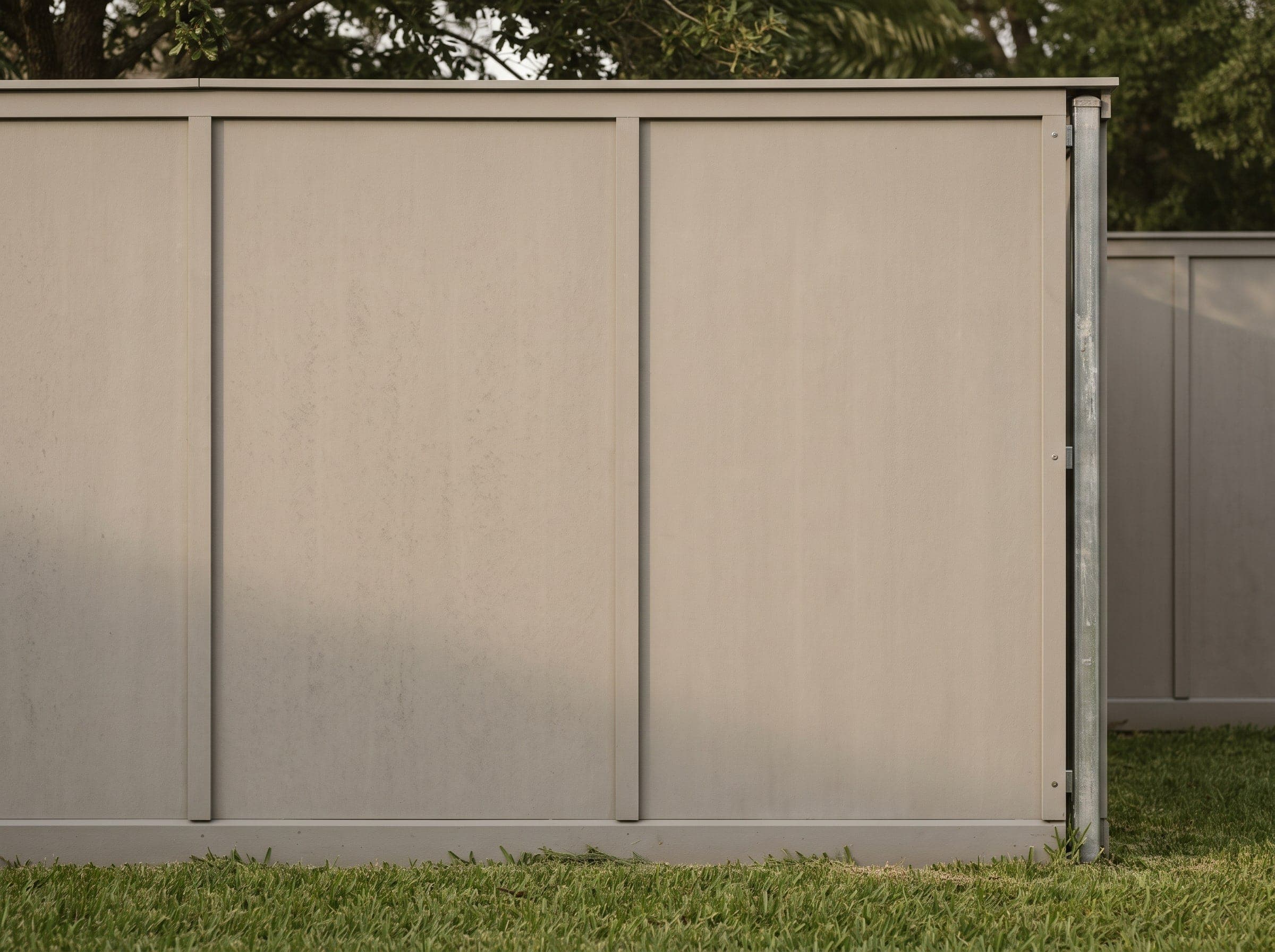
- Vinyl. It is smooth along the panel face. Vinyl fabricators build to ASTM F964 for impact resistance, so ask which grade the quote assumes.
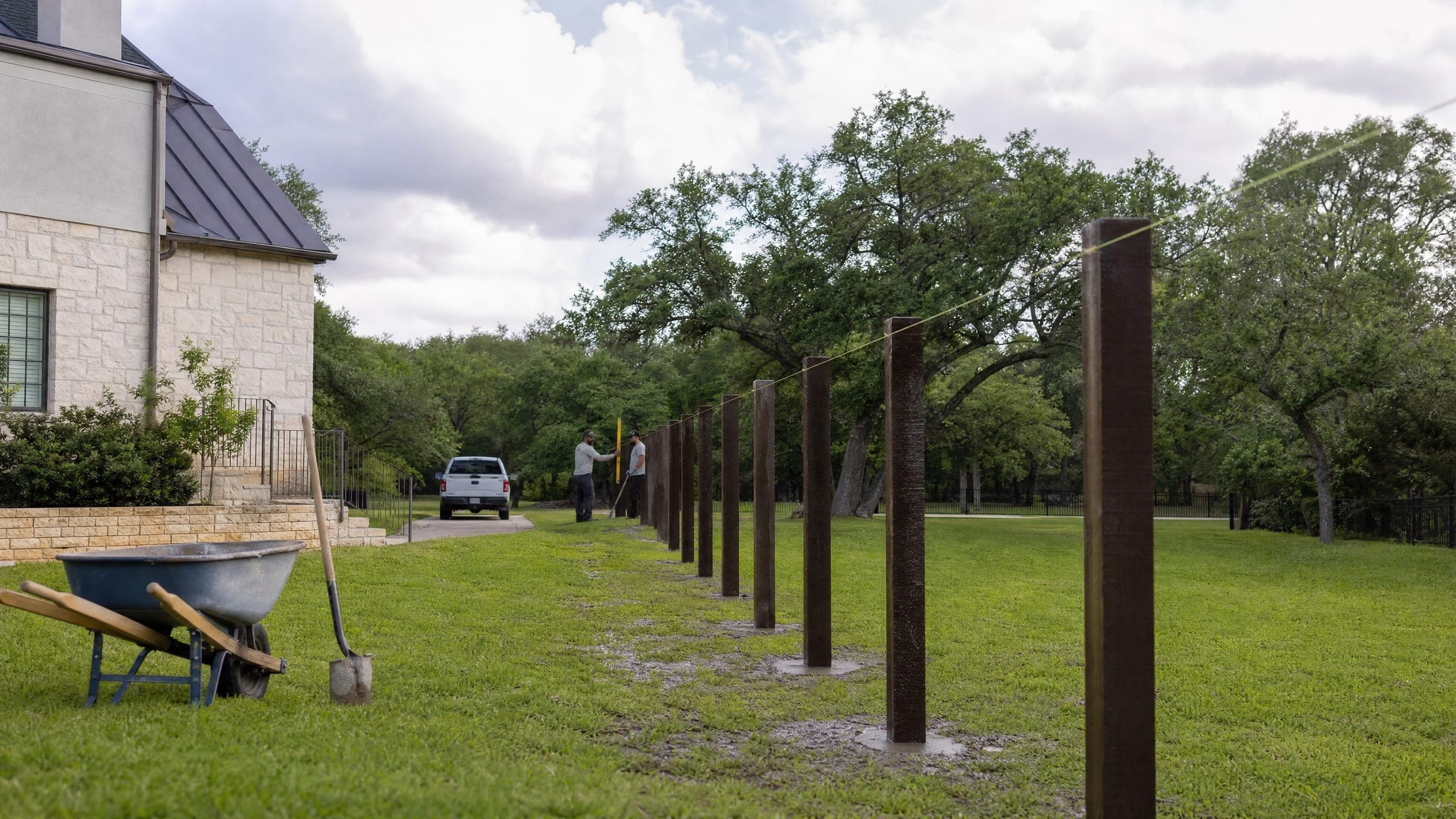
- Wood. It screens the yard well. In wet Texas clay the posts fail at the ground line first, so ask what treatment the posts carry.
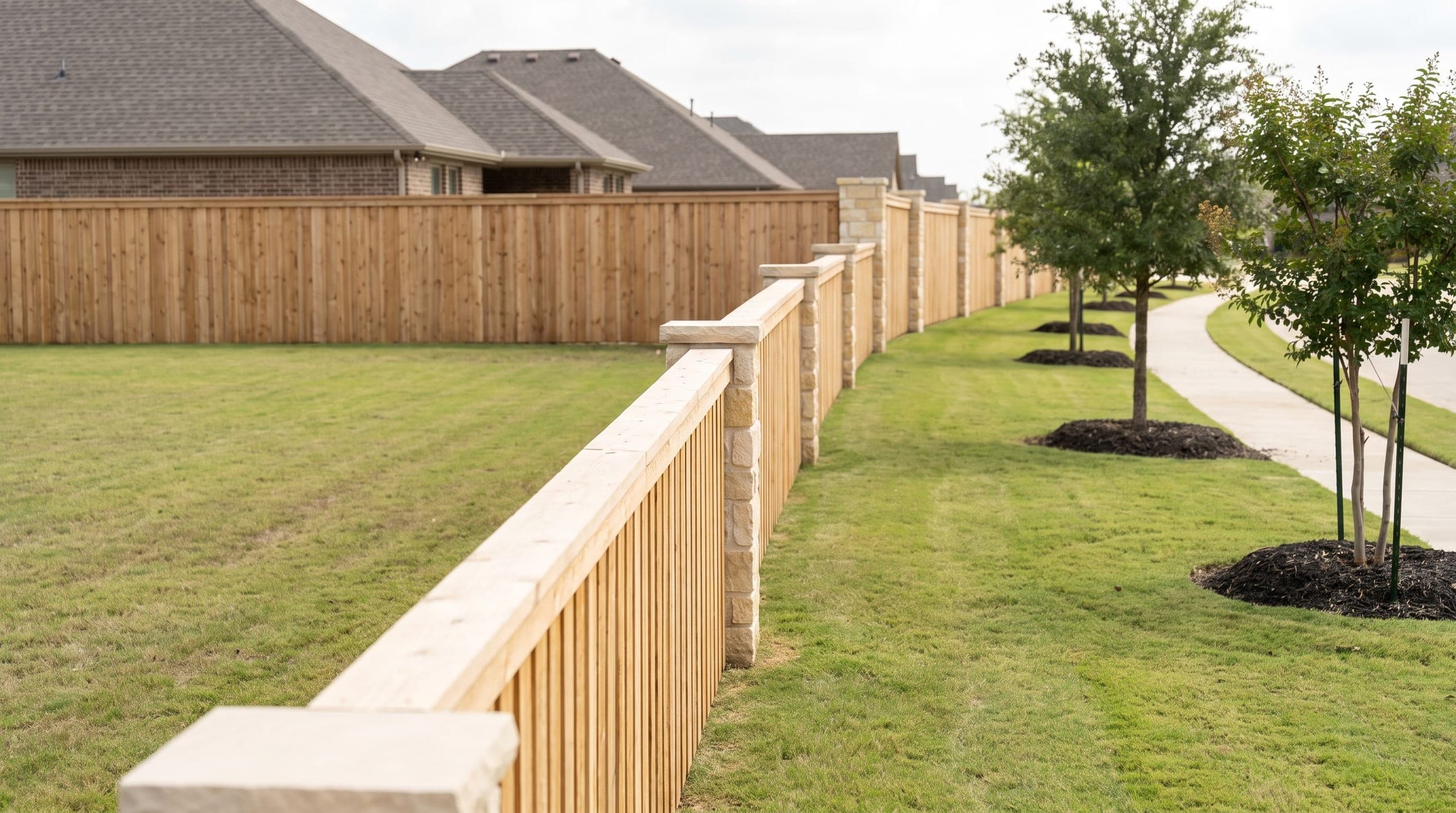
- Masonry. It is a wall, so it is engineered like one. In Houston it also triggers a permit at any height.
A child-safety fence is also a harder job than a backyard panel. A backyard fence has to stand. A play-yard fence has to stand, stay closed, and resist climbing and pushing for years, with someone leaning on it every day.
Texas Wind Sizes a Solid Daycare Fence Like a Wall
Engineers treat a solid fence as a solid freestanding wall, and a fence counts as solid when its openings are under 30% of the face (ASCE/SEI 7-22). That means a tall privacy panel catches wind across its whole face and hands that load to the posts.
An open bar or picket fence lets much of the wind pass through. So the same yard can need very different posts depending on how closed the fence is. If your licensing representative wants a fence a child cannot see through or climb, you are choosing a solid panel, and the posts have to be sized for it.
Ask the contractor one question: what wind load did you size these posts for? A quote that cannot answer is a quote that did not size them.