
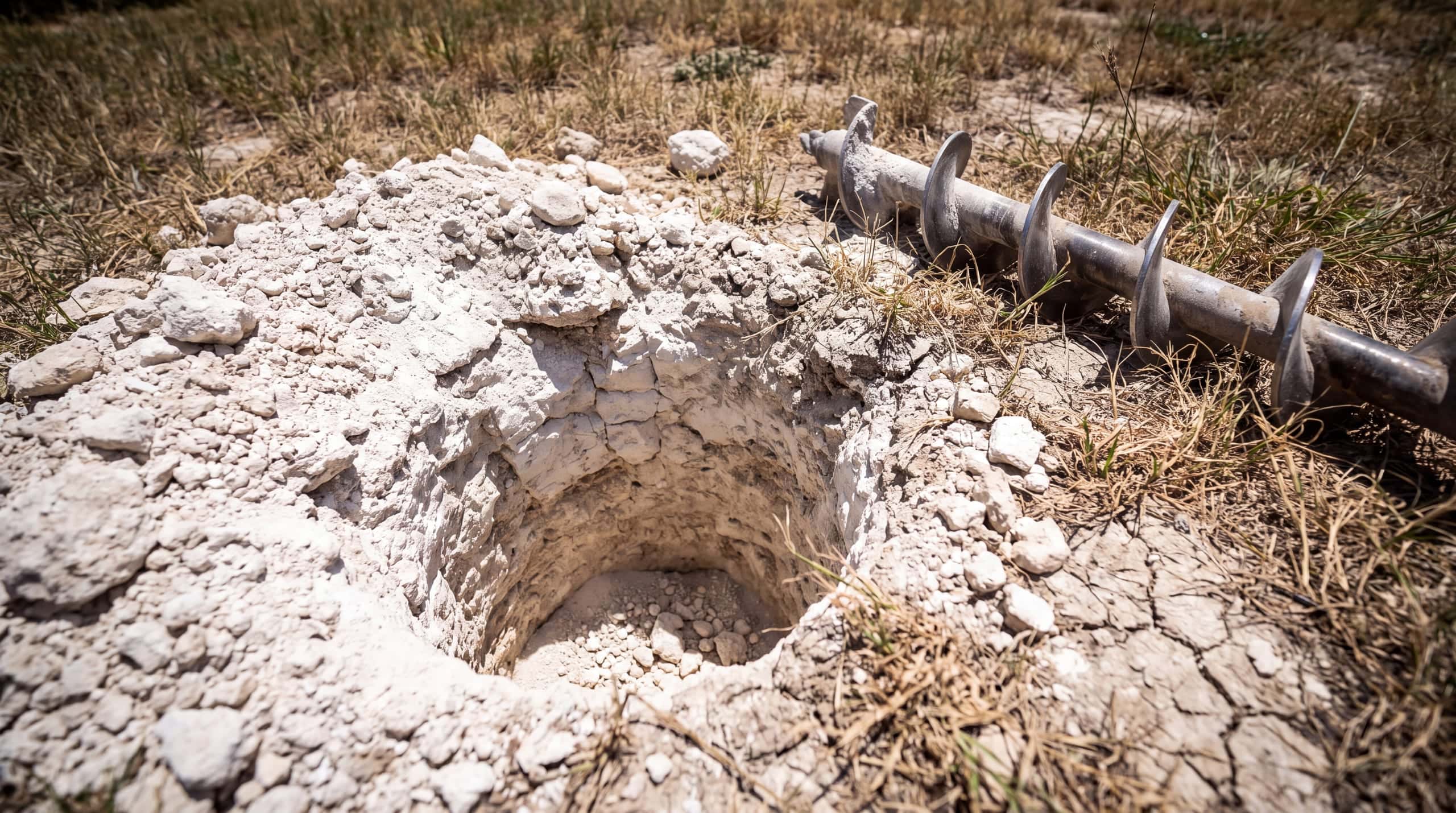
Limestone changes which San Antonio fence company you should choose, because rock and caliche sit 10 to 22 inches down across much of the metro and decide how every post hole gets dug. Choose the company that names the post depth, what it does when the auger hits rock, and what that costs, in writing. Johnson Fence works San Antonio from its office on Naco Pass, rated 4.8 stars across 11 Google reviews (October 2026).
Two crews can quote the same 150 feet of cedar in Helotes and land hundreds of dollars apart. Most homeowners read that gap as one company being greedy and the other being fair.
It is usually neither. The gap is under your yard. San Antonio sits on limestone and caliche, so the honest bid here is the one that priced the hole.
Do San Antonio Fence Posts Hit Rock?
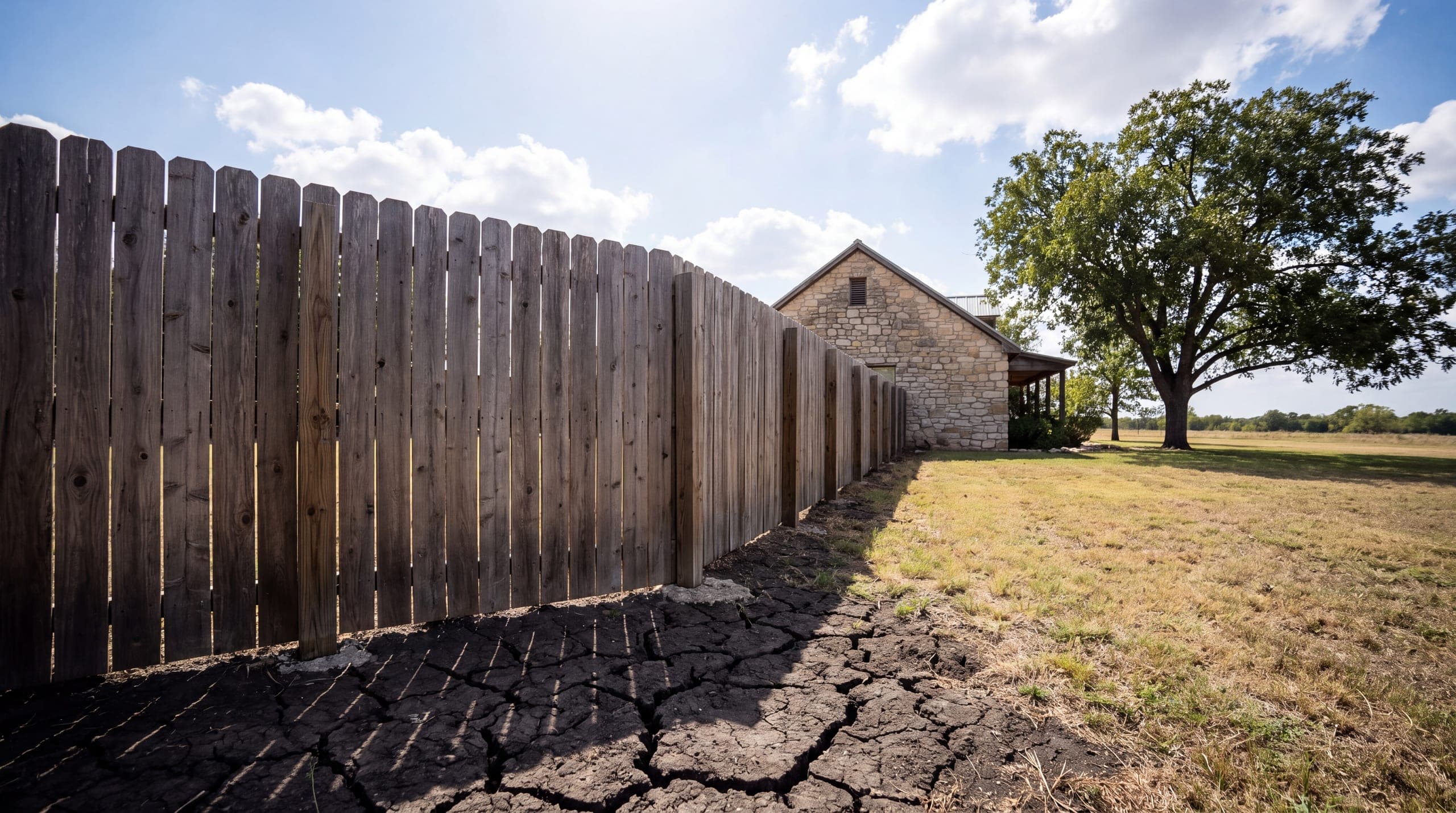
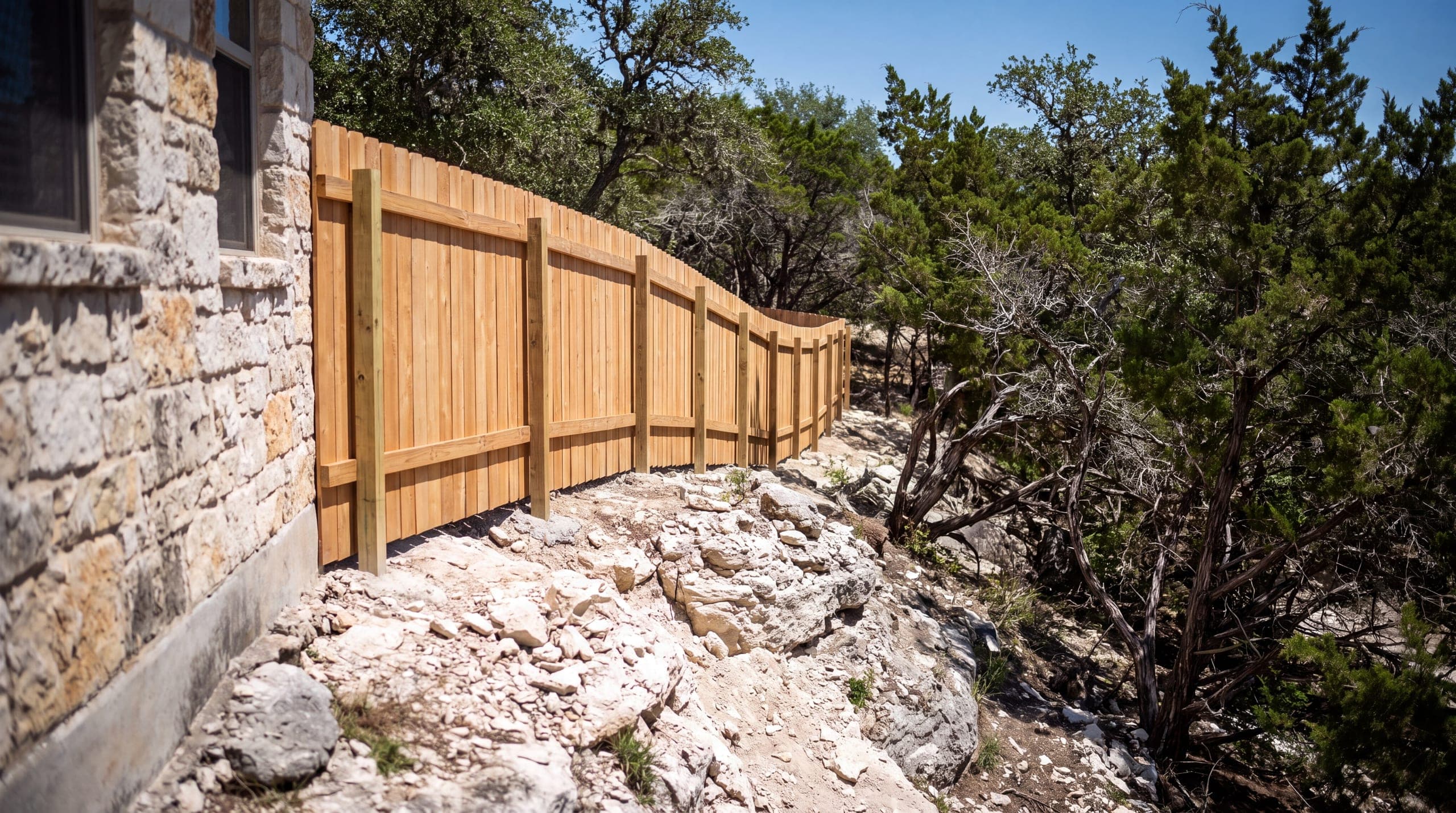
Often, yes. The auger reaches cemented rock before the post reaches the depth it needs. The USDA soil survey describes the Gruene series, north of the metro, with strongly cemented, massive caliche starting around 13 to 22 inches down (USDA NRCS, Gruene series). A 6-foot fence post wants to sit deeper than that. Past that line, the crew is drilling, not digging.
We install in four Texas metros, and the same fence is a different job in each one. In Houston clay, a post hole is minutes of work and the fight is water and rot. Around San Antonio the fight is rock. A crew with a standard auger can run a whole day and set a fraction of the posts it planned, and somebody pays for that day.
What Terms Should You Know Before Reading a San Antonio Fence Bid?
Most of the money in a San Antonio fence quote hides behind five plain words, and none of them describe the pickets. They describe what happens between the ground and the bottom of the post. Learn them once and you can read any bid in the metro.
| Term | What it means | Why it costs money |
|---|---|---|
| Caliche | A hard layer of calcium carbonate cemented into the soil | Standard augers stall in it |
| Petrocalcic horizon | The soil survey’s name for that cemented caliche layer | Its depth decides where drilling starts |
| Refusal | The point where the auger stops advancing and hits rock | Triggers slower tools and more hours |
| Embedment | How much of the post is buried below grade | The code sizes it, and shallow posts lean |
| Rock auger | A heavier bit built to cut cemented material | Costs more per hour than a standard auger |
Is Caliche the Same Depth Across Your Yard?
No, it can shift within 25 feet of your fence line. Rock depth is not one number for your yard. In the Lacoste series, another Texas soil with a cemented layer, depth to that layer runs 10 to 20 inches, and that whole swing shows up within horizontal distances of just 25 feet (USDA NRCS, Lacoste series). Your fence line is far longer than 25 feet. So one run of posts can go in easy and the next run of posts can hit rock at a foot.
That is why a flat price per foot is a guess in this metro. It works fine on a builder lot in flat clay. On an established lot in Converse or Leon Valley, the same number has to cover ground the bidder has not touched yet. A crew that walks the line and probes it is buying information. A crew that prices from the address alone is buying a surprise, and the surprise arrives as a change order on your invoice.
How Deep Should a Fence Post Go in San Antonio?
Deep enough for the wind on the fence and the strength of the ground holding the post, which the building code turns into a formula. San Antonio’s design wind speed sits well below the Gulf Coast figure Houston carries (ASCE/SEI 7-22, 2022), which is why an identical fence spec is over-built here and under-built there. The code treats a fence post as a cantilevered pole and lets the soil resist over only one-third of the buried depth, so embedment grows as the wind force and its lever arm grow, and shrinks as the soil gets stronger (International Building Code, Section 1807.3.2.1).
A solid privacy fence is the hard case. Wind engineering treats it as a solid freestanding wall once its openings drop under 30% of the face, which means the whole face catches the load and passes it into the posts (ASCE/SEI 7-22, Section 29.3). San Antonio adopted the 2024 editions of the international codes effective May 1, 2025 (City of San Antonio, Ordinance 2025-01-30-0075). None of that changes because the ground is hard. Rock makes the required hole harder to make. It does not make it optional.
What Should a San Antonio Fence Bid Include?
A bid that names these three things is a bid you can hold someone to. Everything else on the page is the fence you already picked.
- The post-setting method. How the posts go in: augered and set in concrete, or drilled where the auger refuses. If the bid does not say, the crew decides on install day.
- The embedment depth. The number of inches below grade, written down, at line posts and again at corner and gate posts. Depth is the first thing a rushed crew shortens, and you cannot see it after the concrete cures.
- What happens at refusal. Who absorbs the cost when the auger stops at 12 inches. The soil under most of this metro is why it happens: the NRCS maps the Blackland Prairie and Edwards Plateau boundary through Bexar County, where shallow soils sit directly on limestone (USDA Natural Resources Conservation Service, 2023). Either the price already includes rock work, or the contract names a rate, or you will negotiate it while a crew stands in your yard.
Ask all three of every bidder on the same day. The answers sort the bids faster than the totals do.
Why Is One San Antonio Fence Bid So Much Cheaper?
Usually because it priced no rock. Two quotes hundreds of dollars apart on the same fence usually differ on the hole, and the low number is often the one that assumed easy ground. Overruns are the norm in home projects: 70% of owners went over budget on their most recent renovation, and 24% of them by at least $5,000 (Clever Real Estate, 2026). A fence bid that skipped the rock is an overrun with a signature on it.
Published cost ranges do not rescue you either, because they are written for flat, clear ground.
| Material | National installed cost per foot | What San Antonio adds |
|---|---|---|
| Pressure-treated pine | $20 to $45 | Drilling posts into caliche |
| Cedar | $35 to $80 | Same rock work, higher picket cost |
| Chain link | $12 to $25 for 4 to 6 feet | Line posts still need the same holes |
| Ornamental iron | $50 to $85, custom to $130 | Heavier posts and larger footings |
Source: HomeGuide and Angi, 2026. Ranges exclude removal, gates, and difficult ground.
Material price is where we can help before anyone digs. Master Halco named us its largest-volume customer for 2026 in the Southwest Region and the World, and that picket cost gets passed through to the person buying the fence. What we will not do is take the rock out of the price to win the bid.