
The #1 fence company in Texas
Can a Fence Go on the Property Line in Texas?
Yes, and most do. Texas has no state permit and no state fence license, so the line is where the survey puts it, the deed restrictions say what can stand on it, and the city sets the height. Here is each one, and the two things to settle with the neighbor first.
Same-day quotes. The estimate is free and there is nothing to sign.
- 24Years in Texas
- 20K+Fences installed yearly
- 4.9Google rating
- A+BBB rating
A fence can go on the property line in Texas, and most back-yard fences do. The state has no fence permit and no fence license, so three things decide it: the survey, which says where the line is; the deed restrictions, which say what can stand on it; and the city, which caps the height.
The line is where the survey pins are, not where the old fence stood. A salesperson from Johnson measures the fence line from the pins, and the quote names which side of the line the posts sit on, so the paper settles the question before a post goes in the ground.
The line is where the pins are, not where the old fence stood
The old fence is the least reliable marker on the lot. It went in twenty years ago, from a builder’s stake, and it has leaned since. The survey from your closing shows the pins and the easements, and a salesperson measures from those.
A drainage easement or a utility easement along the back of the lot is the common surprise. The fence can usually cross it, and the utility can usually take it down to reach the line, so the quote names where the easement runs.
The HOA decides more than the city does, and the law changed on September 1, 2025
In most Texas subdivisions the deed restrictions, not the city, set the height, the material, the color and which side the finished face points. Texas Property Code Section 202.023, as amended in 2025, lets an HOA prohibit a fence that blocks a public sidewalk or a drainage easement, and requires a driveway gate to sit at least ten feet back from the road.
An HOA with more than forty lots follows the review procedure in Section 209.00505, so a fence plan gets a written answer. We check the restrictions before a post goes in, and the salesperson tells you what the committee will ask for.
Four cities, four height rules, each stated flat
Houston asks for a building permit only when a fence stands over eight feet, or for a masonry or concrete fence at any height, and has no zoning, so the deed restrictions carry the rest. Dallas caps a residential front yard at four feet and any fence in a required yard at nine, and a panel less than half open sits at least five feet back from the front lot line.
Austin exempts a fence up to seven feet outside a floodplain, and a solid fence on a property line may not pass six feet from natural grade, rising to seven only where the ground changes by a foot or more. San Antonio takes a front-yard solid fence to three feet and an open one to four, with eight feet the ceiling anywhere on the lot.
| City | Permit | Height on the line |
|---|---|---|
| Houston | Over eight feet, or masonry at any height | No zoning; the deed restrictions, usually six in back and four in front |
| Dallas | Above the caps | Nine feet in a required yard, four in the front yard |
| Austin | Over seven feet outside a floodplain | Six feet solid on the line, seven where the grade changes a foot |
| San Antonio | On height | Eight feet anywhere; three solid or four open in front |
Price a fence before you call
See what a fence costs before anyone quotes you.
Pick the material, the height and how many feet of fence, and the calculator shows the market range for a fence like yours in Texas. Then a salesperson measures the real one in your yard and the number comes back the same day.
The estimate is free and there is nothing to sign.
Two things to settle before a post goes in: who pays, and which face points where
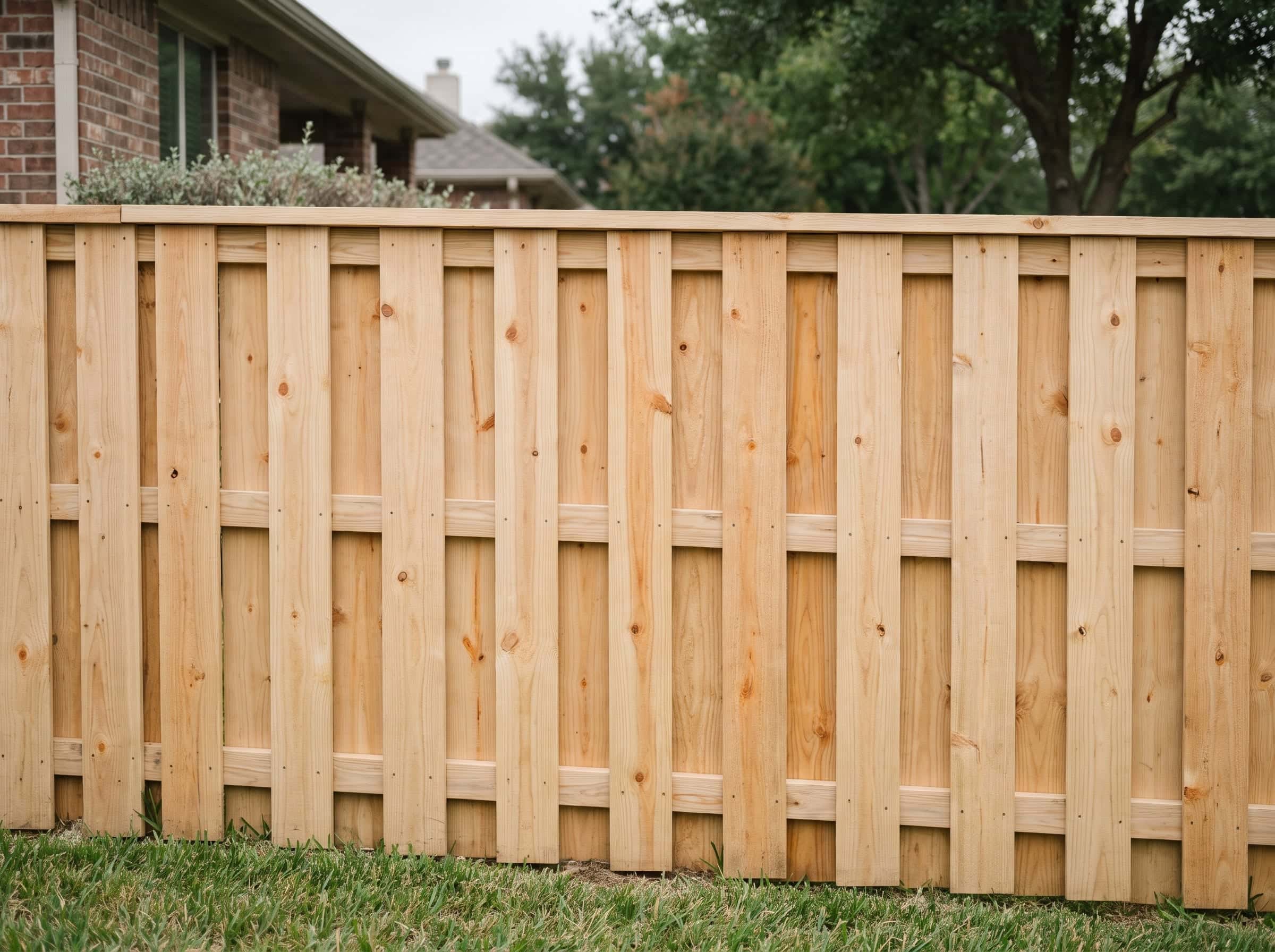
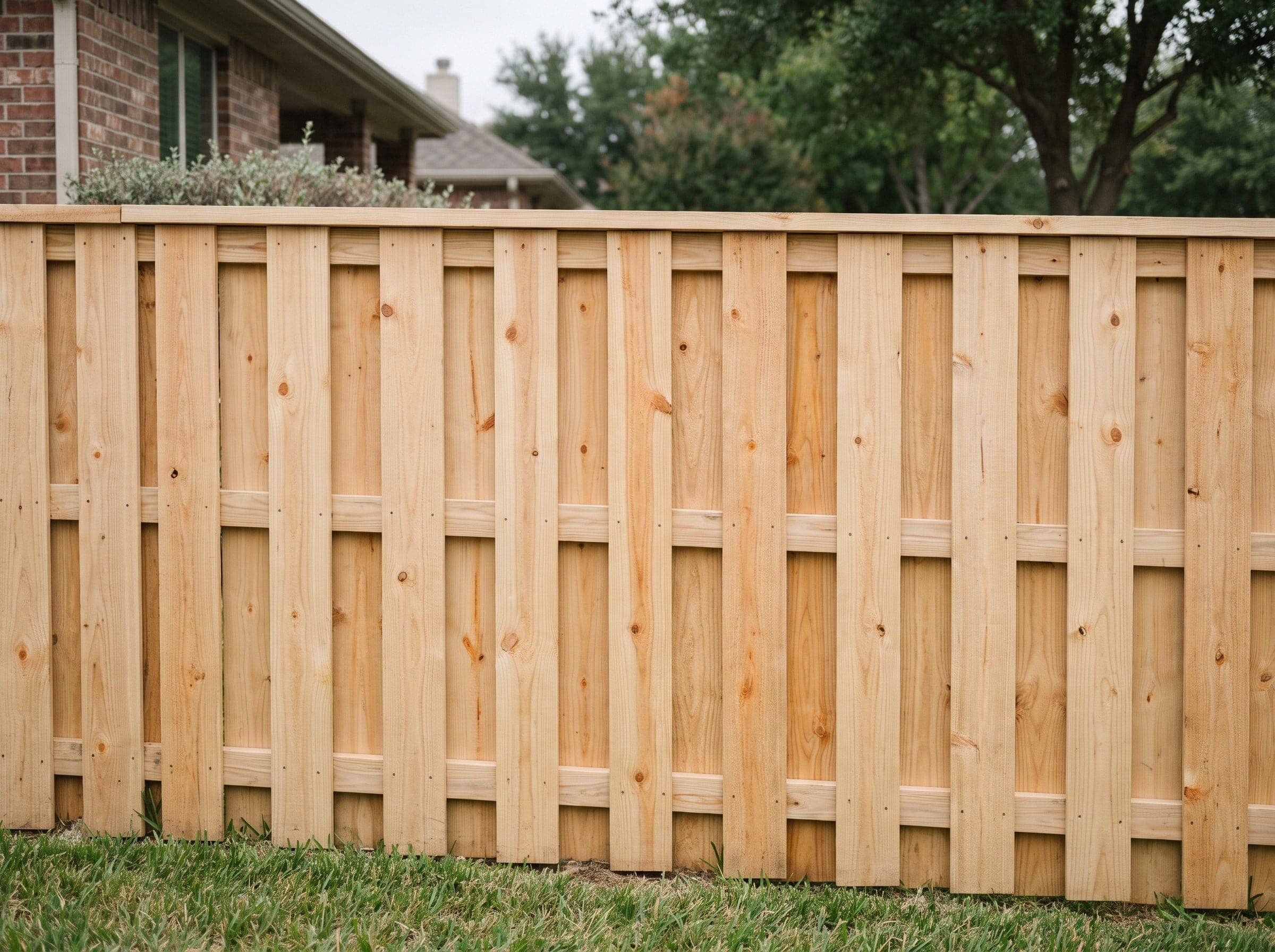
A fence on the line stands on both properties, so the neighbor gets a say. Who pays is the first decision, and a split down the middle is the usual answer on a shared line. Which side gets the finished face is the second, and a shadowbox run finishes the same on both faces, which settles most shared-line conversations before they start.
The fence inside your own line, a few inches in, is yours alone: your cost, your finished face, your choice of style. Most owners who cannot get a neighbor to answer build there.
Measure from the survey pins, never from the old fence.
Read the deed restrictions before the city code; they usually decide.
Settle who pays and which face points where, in writing, before the crew comes.
Shadowbox on a shared line, so both faces finish the same.

Same-day quotes
The quote names which side of the line the posts sit on, so the paper settles the question before the crew comes.
A salesperson measures from the survey pins standing in your yard, reads the deed restrictions, and the number comes back the same day in writing.
The estimate is free and there is nothing to sign.
Customers
Twenty thousand fences last year, and not one callback
Great work. We had two gates installed in the back yard and all fence posts wrapped in cedar. Turned out amazing. Great communication and pricing was fair. I’d use Johnson Services Company again.
Travis H.Google review, Houston North office, August 2025 I can’t emphasize how pleased I am with my new fence!! The guys were efficient and very sweet! The company was very transparent in all discussions and bill paying was a breeze!
Melba T.Google review, Houston North office, August 2025 Johnson is a phenomenal company to work with. Chance is an excellent communicator and provides wonderful customer service as well as a quality product.
Cabot B.Google review, Houston North office, September 2025
Common questions about can a fence go on the property line in texas
Can my neighbor make me move a fence that is on the line?
A fence on the line stands on both properties, which is why the agreement comes first. A fence a few inches inside your own line is yours alone, and most owners who cannot reach a neighbor build there.
Do I need a permit for a fence on the property line in Houston?
Only over eight feet, or for a masonry or concrete fence at any height. Houston has no zoning, so the deed restrictions set the rest, and we check them before a post goes in.
How high can a fence on the property line be in Austin?
A solid fence on a property line may not pass six feet from natural grade, rising to seven only where the ground changes by a foot or more. A fence up to seven feet outside a floodplain needs no permit.
Can a fence go across a drainage easement?
Often, and the utility can take it down to reach the line. An HOA can also prohibit a fence that blocks a drainage easement or a public sidewalk since September 1, 2025, so the quote names where the easement runs.
Who pays for a fence on the property line?
Whatever the two owners agree. A split down the middle is the usual answer on a shared line, and the agreement belongs in writing before the crew comes.
Free estimate
Get your estimate from the largest fence company in Texas
Tell us what you need and where the fence goes, and a salesperson will come out and measure the line before anyone writes a number. You get the picket grade and the total in writing, the visit costs nothing, and there is nothing to sign.