
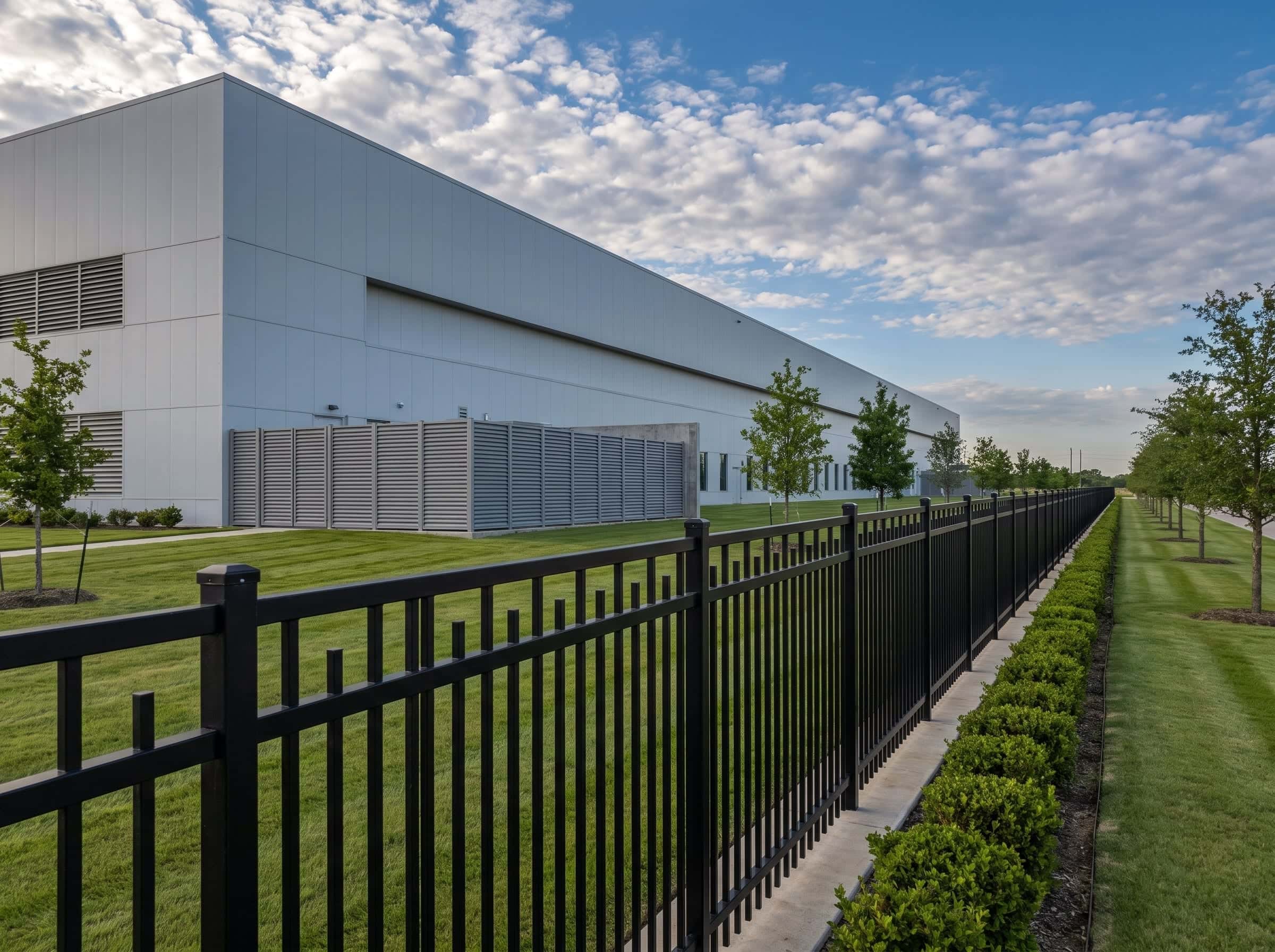
A cheap fence bid is not a price. It is a list of the hours and the boards one crew plans to spend on your line, and nothing else on it accounts for what happens after they drive away. The costs that decide whether you paid too much show up later: the gate that will not latch, the end post that tilts after the first real wind, the walkthrough item that sends a crew back to a house a builder was ready to close. Here is what fails on a cheap install, why it fails on a predictable schedule, and what to verify in the quote instead of in the callback.
A Low Bid Prices Hours and Boards, Nothing Else
Two bids for the same fence differ mostly in what the low one leaves out. 10% of property owners who finished a renovation named picking the wrong contractor as their biggest regret (Clever Real Estate, 2026). The bid never shows the removal that was quietly excluded, the post depth nobody wrote down, or the second trip somebody eventually pays for. It shows a number, and the number is the smallest part of the job.
Fence Lifts, which repairs fences built by low-cost installers, puts the gap between a solid fence and a cheap one at often only a few hundred dollars, and says the repair or partial rebuild usually costs significantly more than building it right the first time.
Four things get shortened when a crew has to hit a low number:
- Post depth. The hole is the slowest part of the day and the only part nobody can see once the concrete is poured.
- Post count and spacing. Stretching spans saves posts, concrete, and labor at once, which is why it is the most tempting cut on the sheet.
- Board attachment. Fence Lifts lists boards not nailed correctly among the most common problems it finds on cheap installs.
- Picket grade. A quote that says “cedar” and nothing else can arrive as a lower grade than the one you thought you were buying, and you will not know until it cups.
Post Depth Is the First Thing a Cheap Crew Shortens
The hole is where the money hides. The 2021 International Residential Code sizes a fence post as a cantilever and lets the soil resist over only about one third of the embedded depth, so embedment grows with the wind force and with how high above grade that force acts (2021 International Building Code, Section 1807.3.2.1). A 6-foot solid fence in soft ground needs real depth and real concrete, and there is no clever way around it.
That is why a shallow hole is such a profitable cut. It saves digging time, concrete, and haul-off, and the fence stands up perfectly on the day it is finished. Nothing about install day tells you whether the post went to depth. Only weather does, and weather takes its time.
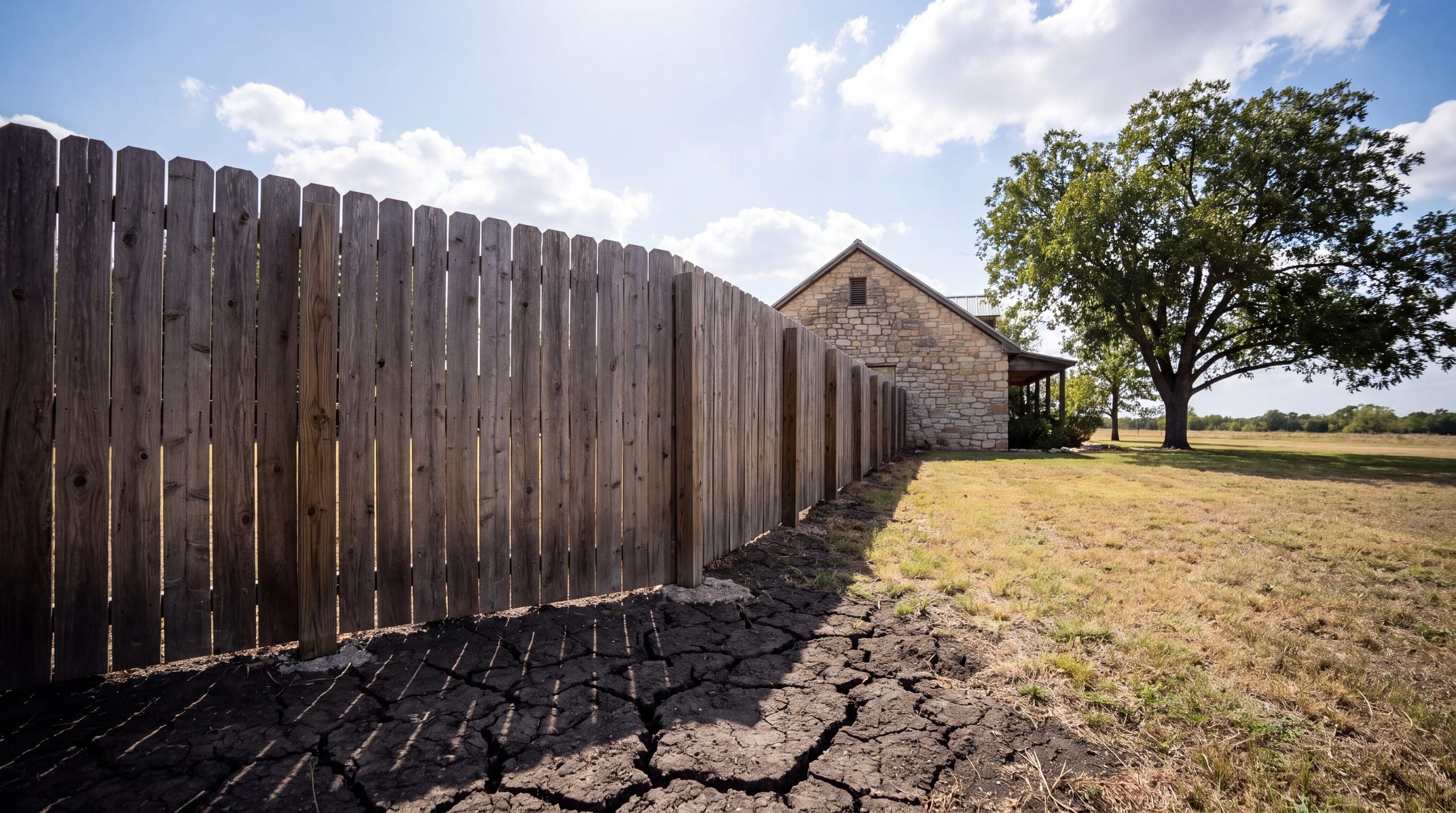
Heavy Texas clay makes it worse. The soil swells wet and shrinks dry, and it works a short post loose the way a hand works a tent stake.
The Gate Tells You What the Crew Skipped
Gates fail first, and wind research says why. Full-scale wall testing found wind pressure is highest near a wall’s free ends and leading edge, which is exactly where the gate posts stand (Journal of Wind Engineering and Industrial Aerodynamics, 1996). The tall posts flanking an opening carry more load than any post in the middle of a run, and they carry it with a heavy swinging leaf hanging off one side.
A gate that drags, will not latch, or drops half an inch out of square in its first season is not a hardware problem. It is a post problem, and the hardware is just the part you can see. Fence Lifts reports the same pattern in the field: sagging, dragging, and improper latching are the fastest failures on cheap construction.
That is also the item most likely to appear on a builder walkthrough, days before a closing.
A Cheap Fence Fails on a Schedule You Can Predict
The failures arrive in order, and the order is set by weather. Houston sits at a decay hazard index of 77.2, deep inside the high band, against 44.3 for Dallas and 52.2 for San Antonio (USDA Forest Products Laboratory, 2009). Wet Gulf air rots a wrong spec faster than dry inland air does. One homeowner told us their previous fence was already rotting and warping after three and a half years.
| What fails | When it usually shows | What was skipped |
|---|---|---|
| Gate sags, drags, or misses the latch | First season of use | Undersized or shallow gate posts |
| End posts and corners tilt | First real wind event | Embedment depth at the highest-load posts |
| Boards cup, gap, or pop fasteners | First hot summer after install | Board attachment and picket grade |
| Rot at the ground line | First few wet years on the Gulf Coast | Ground-contact rated framing and posts |
| A whole run leans together | After a storm plus a wet-to-dry clay cycle | Post spacing and concrete volume |
Every row on that list is repairable. Every row also costs more to repair than it would have cost to build correctly, because the repair pays for demolition, disposal, and a second mobilization that the original job never needed.
Rework on a Fence Line Lands on the Builder’s Closing Date
For a builder, the fence is not a yard feature. The skilled-labor shortage cost single-family builders $10.8 billion in a year, including $2.663 billion in higher carrying costs alone (Home Builders Institute and NAHB, 2025). Carrying cost is the daily price of a house sitting finished except for one trade, and the backyard fence is often that trade.
A peer-reviewed model of subcontractor selection argues that awarding each trade to the lowest bidder in isolation underperforms a plan optimized across cost, duration, quality, and safety together (ASCE Journal of Construction Engineering and Management, 2025). Builders learned this before the researchers wrote it down. The cheapest fence sub becomes the most expensive vendor on the job the first time a crew does not show and a certificate of occupancy waits.
In a Google review, Adam K. wrote: “Johnson Service Co went above and beyond to complete the scope of work we agreed on. I have been a builder for over 20 years and I would highly recommend this company to any clients, friends or family.”
But Crew Depth Removes the Reason to Cut Corners
A shortcut is almost always a schedule problem wearing a quality costume. We run over 100 crews, where most fence companies run one to three, and across more than 20,000 projects last year we had zero craftsmanship warranty callbacks. When a crew is out sick, another crew takes the day. Nobody has to make up the time by pulling a post hole up six inches or stretching a span.
Buying power is the other half of it. Master Halco named us its Largest Volume Customer for the Southwest Region and for the World in 2026, and we are a top customer of Solid Wood. We buy wood pickets at a price a three-crew shop cannot get, and that saving goes to the customer. You get the same fence for less, because we buy the wood for less.
That is the difference between cheap and affordable. Cheap means a thinner spec at a lower number, and we quote the picket grade by name, #1 through #3, so nobody has to guess which one showed up on the truck.