
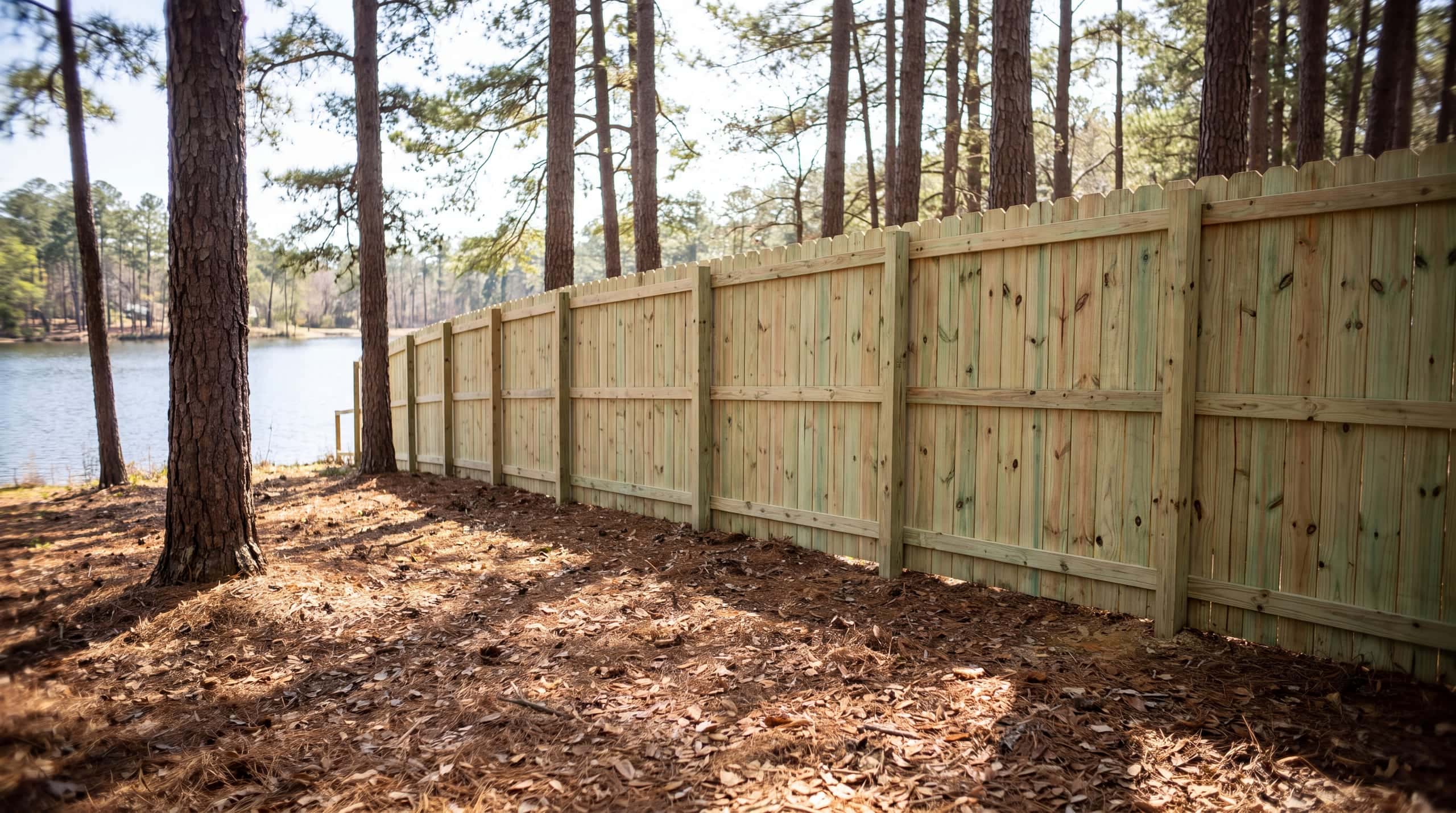
To judge a Conroe fence company before you sign, check its Google rating and the reviews behind it, what its warranty covers in writing, whether it specifies the wood and post depth for Houston-area rot and wind, and whether the estimate names materials rather than just a price per foot. Texas licenses no fence contractors, so those checks are the license.
Johnson Fence works Conroe from its Houston North office in Tomball, rated 4.9 stars across 69 Google reviews (October 2026). The pages that call themselves the best tend to name the fewest facts you can check, so run these checks in order.
Does a Conroe Fence Contractor Need a License?
No, there is no state fence license to look up, so the word carries less weight here than most people assume. Texas regulates about 40 occupations, and general contracting, home improvement, and fence building are not among them (TDLR, 2026). Any licensing that exists sits at the city or county level. What you can verify yourself is the insurance.
Ask for the certificate of insurance and read the name on it. General liability covers damage to your property. Workers compensation covers the crew in your yard, and without it an injury on your side of the fence line can land on your homeowner policy.
Then call the insurer at the number printed on the certificate itself. It takes four minutes. We are licensed, bonded, and insured, and we have held an A+ rating with the Better Business Bureau since March 2003, which is a date you can check without asking us.
How Should You Read a Conroe Fence Company’s Reviews?
Read the reviews behind the rating, because the rating is only a summary. A rating is a summary, and the reviews under it are the evidence. 68% of consumers will not use a local business rated below 4 stars, up from 55% the year before (BrightLocal, 2026). That makes the number on the pin the first thing most people see and the last thing they should decide on. Open the profile and read.
Start with the one-star reviews. They tell you how a company behaves when a job goes wrong, which is the only day the answer matters. Then check whether the good reviews describe work like yours. A crew that installs chain link all week has not shown you it can build a cedar privacy fence down a sloped Conroe lot.
Of the companies quoting fences here, we hold the highest rating: 4.9 stars across 69 Google reviews on our Tomball listing. What customers write about is the crew, the schedule, and the state of the yard when the trailer pulls out.
What Does a Fence Warranty Actually Cover?
Most fence warranties cover workmanship for a year, and the argument later is always about what workmanship means. Fence companies serving Conroe publish one-year workmanship warranties on the fences they install, including outfits that have fenced these streets for decades. That is a real commitment and a common one. The question is what sits outside it.
Three exclusions do most of the damage:
- Wood movement. Warping, cupping, and checking in boards get called normal for the material, so they sit outside the install warranty.
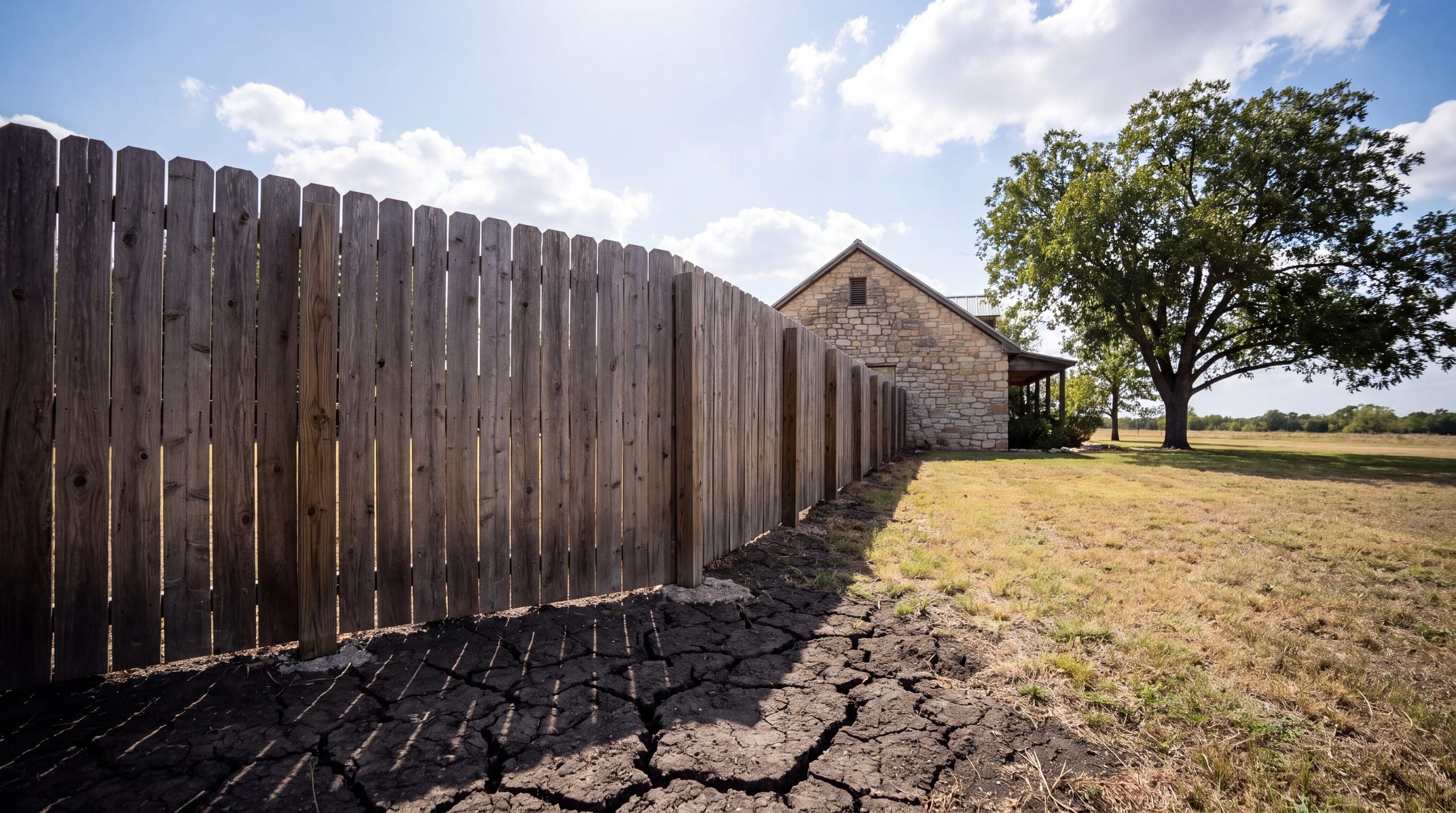
- Ground movement. A post that leans after the clay swells and shrinks is often written off as a site condition.
- Storm damage. Wind is treated as an act of nature even when the post depth is what failed.
Get the exclusions in writing before you sign, alongside the work, the materials, the completion date, and the price, and never pay the full amount up front (FTC, 2024). A contractor who will not put the exclusions on paper has told you something.
Does Conroe Weather Shorten a Fence’s Life?
Yes, for the wrong wood. The same fence lasts different lengths of time in different parts of Texas, and Conroe sits on the hard end. The Forest Products Laboratory scores Houston at 77.2 on the wood decay hazard index, where anything above 65 is the high-risk band (Carll, 2009). Wet wood rots. Dry wood does not. Dallas sits at 44.3 on the same scale, which is why a fence spec that works up there is not a spec for here.
Species and grade decide the rest. Decay resistance lives in heartwood, and the sapwood of the very same tree fails years sooner. So “cedar” on an estimate tells you almost nothing. “Western red cedar heartwood” tells you what you are buying.
| Material | How long it holds up | Source |
|---|---|---|
| Cedar | About 20 years | InterNACHI |
| Pressure-treated pine posts | Decades in the ground when treated right | AWPA Standard U1 |
| Vinyl (PVC) | Over 100 years | InterNACHI |
| Composite | 25 years under the residential warranty | ASTM D7032 and Trex |
| Ornamental steel | Lifetime under the residential warranty | Ameristar Montage |
The spread between a 20-year fence and a 100-year fence comes down to the material somebody picked for you, usually to hit a number.
How Deep Should a Fence Post Go in Conroe?
Deeper than the fence next door, if the fence next door was priced to win. A solid privacy fence catches almost the full wind, and the Houston metro is mapped at design wind speeds of 130 to 140 mph for ordinary structures (ASCE 7-22, 2022). That load runs down the boards, into the post, and out through whatever is holding the post in the ground.
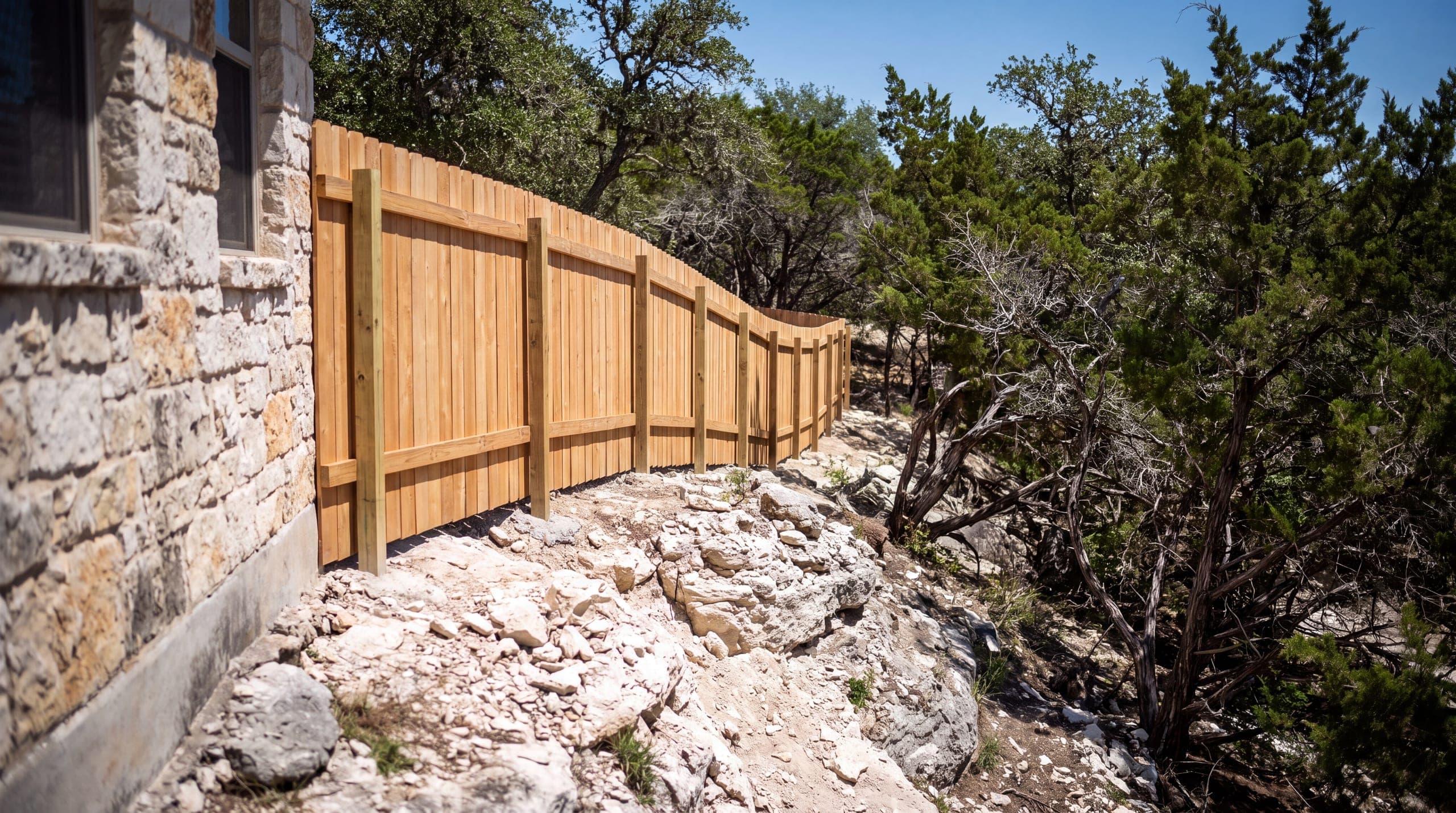
The code turns that into a number. How deep a post has to sit grows with the wind load and the height of the fence, and shrinks with stronger soil, and the code lets the soil push back over only one third of the buried depth (International Building Code, 2021). Soft, shifting clay means a deeper hole and more concrete. There is no way to price around that and still have the fence stand.
This is why two estimates for “a 6-foot cedar privacy fence” can differ by hundreds of dollars and describe two different fences. One of them specified the post depth; and that depth still has to be paid for somewhere. Most contractors pay for it by shaving the wood. Johnson doesn’t have to, because Johnson buys the wood differently: as Master Halco’s largest-volume wood-picket customer in 2026, Johnson gets picket pricing that smaller crews simply can’t access, and that buying power gets passed straight through to the post depth and the picket grade on the quote. Same fence, set to code, for less; not because the labor is cut short, but because the wood costs less going in.
None of that engineering math matters if the crew that dug the hole didn’t get it right, which is the part a homeowner can’t inspect once the concrete cures. Last year, across more than 20,000 completed jobs, Johnson had zero craftsmanship warranty callbacks; a 100% record, not a pitch about future intentions. And the post-depth conversation happens fast: a same-day callback, a quote the same day on 95% of real leads, work starting in about 4 days, and most jobs finished start to finish in a day. Ask which fence was engineered for the wind speed on the map, and ask what the post depth actually is; the answer either holds in a storm or it doesn’t.