
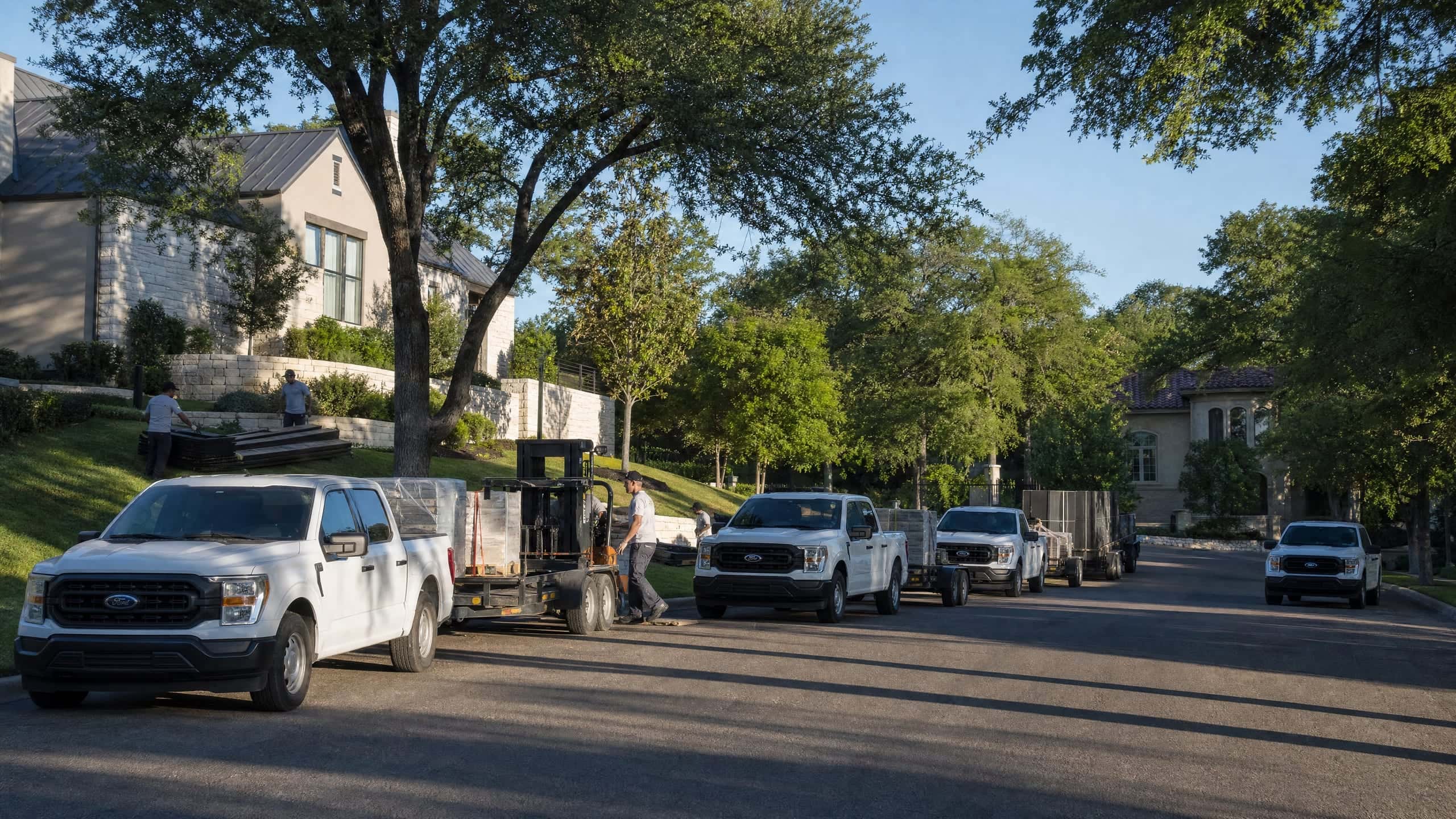
Ask how long a fence replacement takes and you will get the install number back. That number is real, and it starts the clock on the morning a crew pulls up. The days you actually wait through happen before that, and on most Texas jobs they add up to more than the install itself.
Install Time Answers the Wrong Question About a Replacement
King Of Kings Fence, a Dallas-area builder, puts most residential installs at one to five days once work begins, with chain link at one to two days, wood privacy at two to four, and wrought iron at three to five. Those ranges hold up. They also start counting on the last piece of the job, after the quote, the schedule, and the materials are already settled.
Nobody plans a yard around that number. They plan around a dog that needs a fence by the weekend, a pool that needs an enclosure, a closing date, or a storm that laid the back line flat. Wind is what drives most of our replacement calls, hurricanes on the coast and windstorms inland around Dallas, and wind does not schedule itself politely.
So the useful question is not how many days the crew is on site. It is how many days pass between your call and the first post coming out of the ground.
Learn the Five Steps Before You Read Any Timeline
A Texas fence replacement runs through six steps, and only the last one is what people picture. The first four decide your date.
| Step | What happens | What decides how long it takes |
|---|---|---|
| Callback | A salesperson returns your call and gives a rough price from your address | How many salespeople the company has answering the phone |
| On-site measure | Someone walks the line, measures footage, confirms fence type and picket grade | How many estimates one salesperson can fit into a day |
| Written quote | The measured price comes back to you in writing | Whether the company prices from the field or waits on the office |
| Scheduling and staging | Your materials get counted and loaded before a crew leaves the yard | Whether the pickets are in stock at the volume needed |
| Demolition | Old panels and concrete-set posts come out and get hauled off | Concrete footings, tree roots, and buried irrigation lines |
| Install and cure | Posts get set, concrete cures, panels go up | Curing time and the weather that week |
Notice where the waiting lives. Steps one through four have nothing to do with how fast a crew swings a hammer, and they are where a replacement quietly loses a week.
The Quote Phase Is Where Most Texas Timelines Are Lost
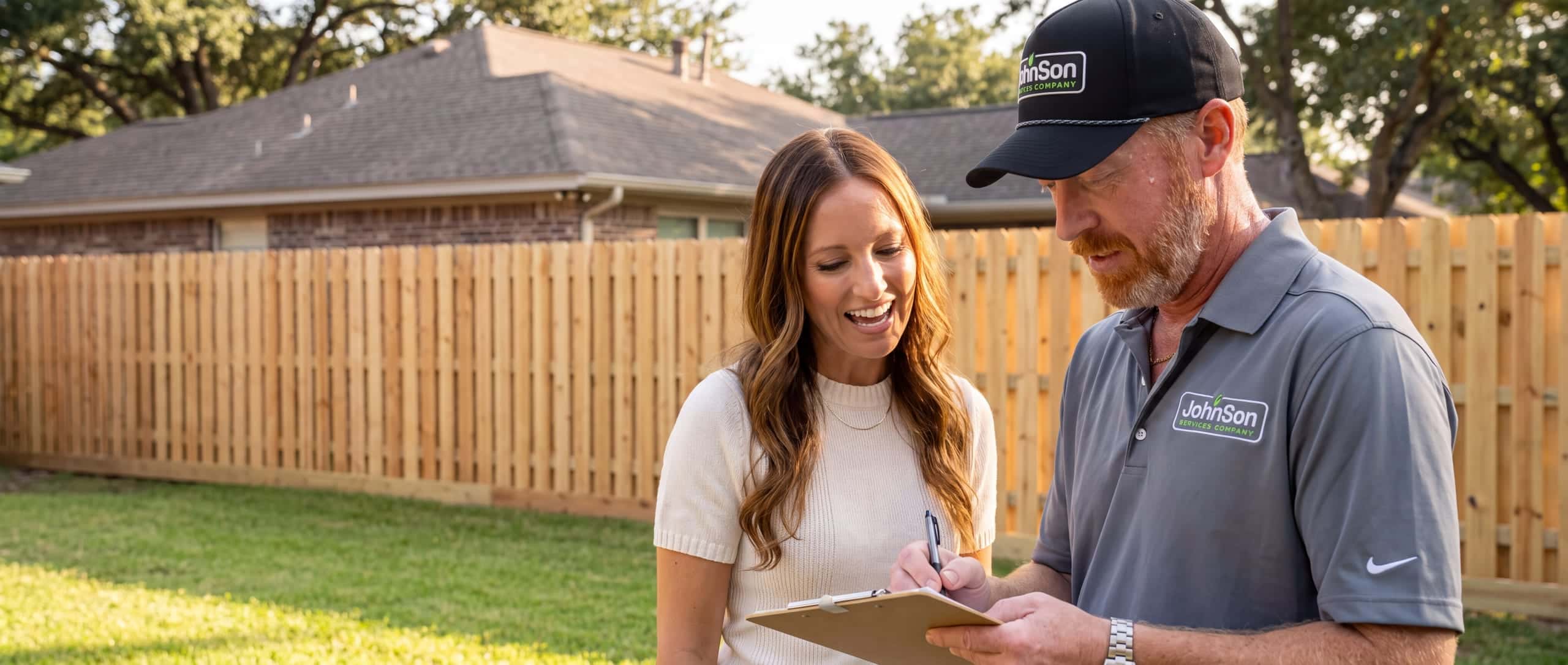
We call back the same day a lead comes in, and we get a written quote out the same day on 95% of real leads, verified against our own CRM. A rough price comes over the phone from your address first. Then a salesperson drives out, measures the line foot by foot, and confirms the fence type and the picket grade before anything is promised.
That measure is the honest bottleneck. Each market has one homeowner salesperson fitting about ten estimates into a day, and the model only works inside roughly 30 miles of an office, because every job gets physically measured. We would rather be limited by driving time than guess your footage from a satellite photo.
Speed here is a deliberate wedge for us. We once had a homeowner call the top five competitors in each of our markets and try to get a quote, and getting one at all turned out to be the hard part. In a Google review, Shawn K. wrote: “Matt was awesome. They got me on the schedule quickly installation was done in a day and the fence looks great.”
Permits and HOA Sign-Off Can Add Days Before Anyone Digs
Most Texas residential fence replacements need no city permit at all, which surprises people who have budgeted two weeks for one. Houston requires a permit only above 8 feet, or at any height for masonry and concrete construction. The rules change by metro, and they change what a replacement is allowed to be.
| Metro | The local rule that can add a step | Source |
|---|---|---|
| Houston | Permit only above 8 feet, or any height for masonry or concrete | City of Houston, 2026 |
| Dallas | 4 feet max in a required front yard, 9 feet max in any required yard | Dallas Development Code, 2025 |
| Austin | Permit above 7 feet, above 6 feet along a right-of-way, or in a floodplain | City of Austin, 2025 |
| San Antonio | Front-yard solid fence capped at 3 feet, side and rear 6 feet | City of San Antonio, 2025 |
The homeowners association is the step that more often adds real days, because the review runs on the board’s calendar. Texas law narrowed what they can stop: since September 1, 2025, an association may not prohibit a perimeter fence outright, keeping only limited say over type and material, a 10-foot gate setback from a laned right-of-way, and fencing forward of the front building line (Texas Property Code, 2025). Send the packet the day you get the quote, and it runs in parallel with everything else.
Tearing Out Old Posts Adds Time a New Build Never Has
Demolition and junk removal add a half-day or a full day to a replacement, and King Of Kings Fence points out the reason most people forget: the old posts were almost certainly set in concrete. A new-build lot has none of that. Every foot of your old fence has to leave the property before the new one starts.
Replacement on an established lot is the harder job, and it is the job we are built for. A 30-year-old home has mature live oaks along the fence line and irrigation lines in the ground that nobody mapped. Pulling old footings out without killing a tree or cutting a sprinkler zone is slower than digging a fresh line on a builder lot, and it is the part a cheap bid tends to underestimate.
This is also why the measure matters so much. We count the footage, the corners, the gates, and the obstacles up front so the demolition day is a known quantity instead of a discovery.
Clay, Concrete, and Heat Set the Floor on Install Day
Concrete needs 24 to 48 hours to cure before boards or panels go on, according to King Of Kings Fence. That is physics, and no crew size shortens it. Four other things decide how the on-site days actually run in Texas.
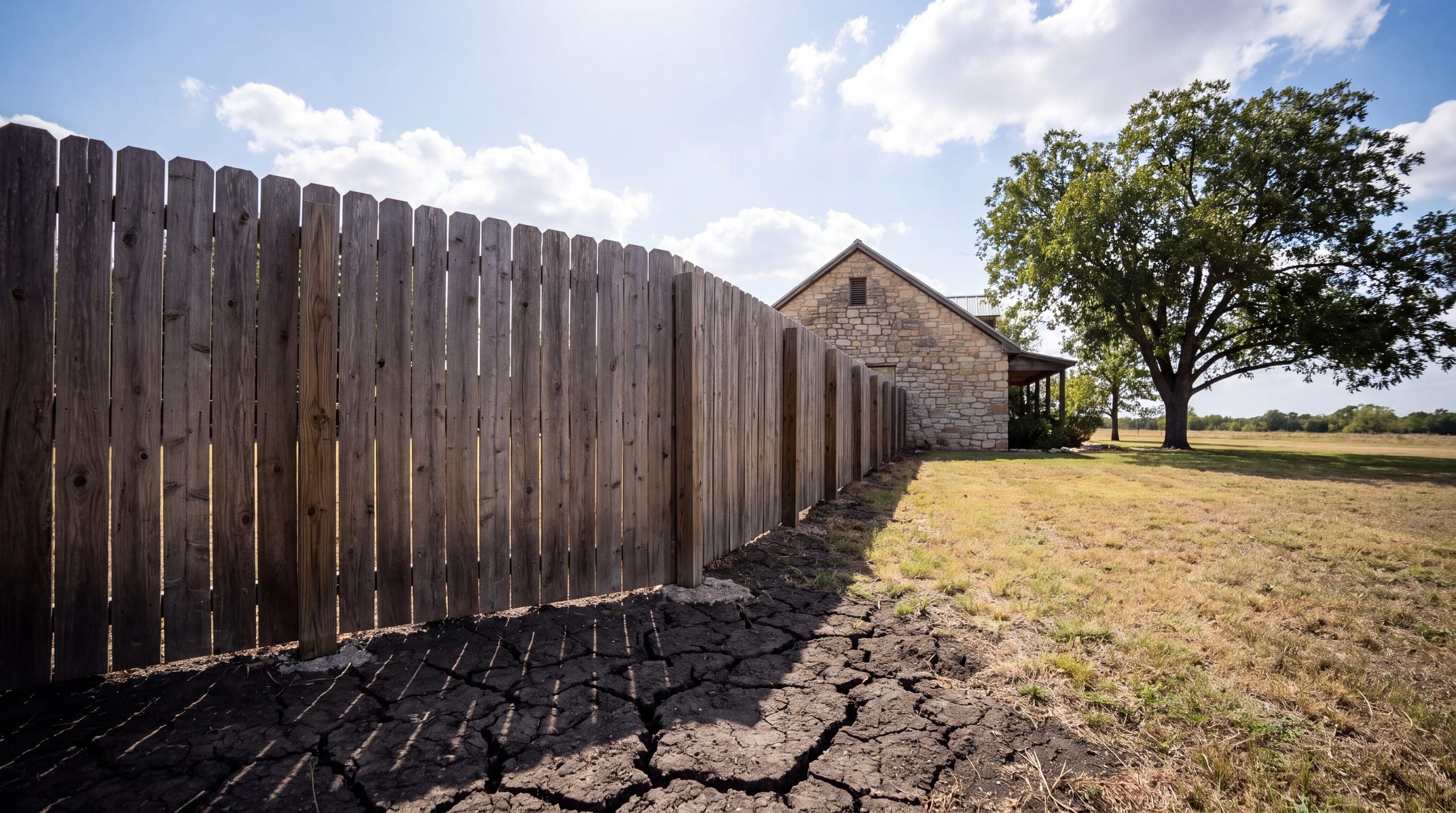
- Clay soil. Houston Black, the state soil, runs about 60% to 80% clay across the Blackland Prairie from Dallas down to San Antonio, and its very high shrink-swell rating is a recognized limit for building sites (USDA Natural Resources Conservation Service, 2023). Wet clay smears, dry clay sets like rock, and post holes take longer in both.
- Summer heat. The state climatologist projects 100-degree days becoming about four times as common by 2036 as they were in the 1970s and 1980s (Office of the Texas State Climatologist, 2024). Crews still work, on adjusted hours.
- Rain. A wet week moves an install day. It does not restart the quote or the material order, which is why the front half of the timeline is worth protecting.
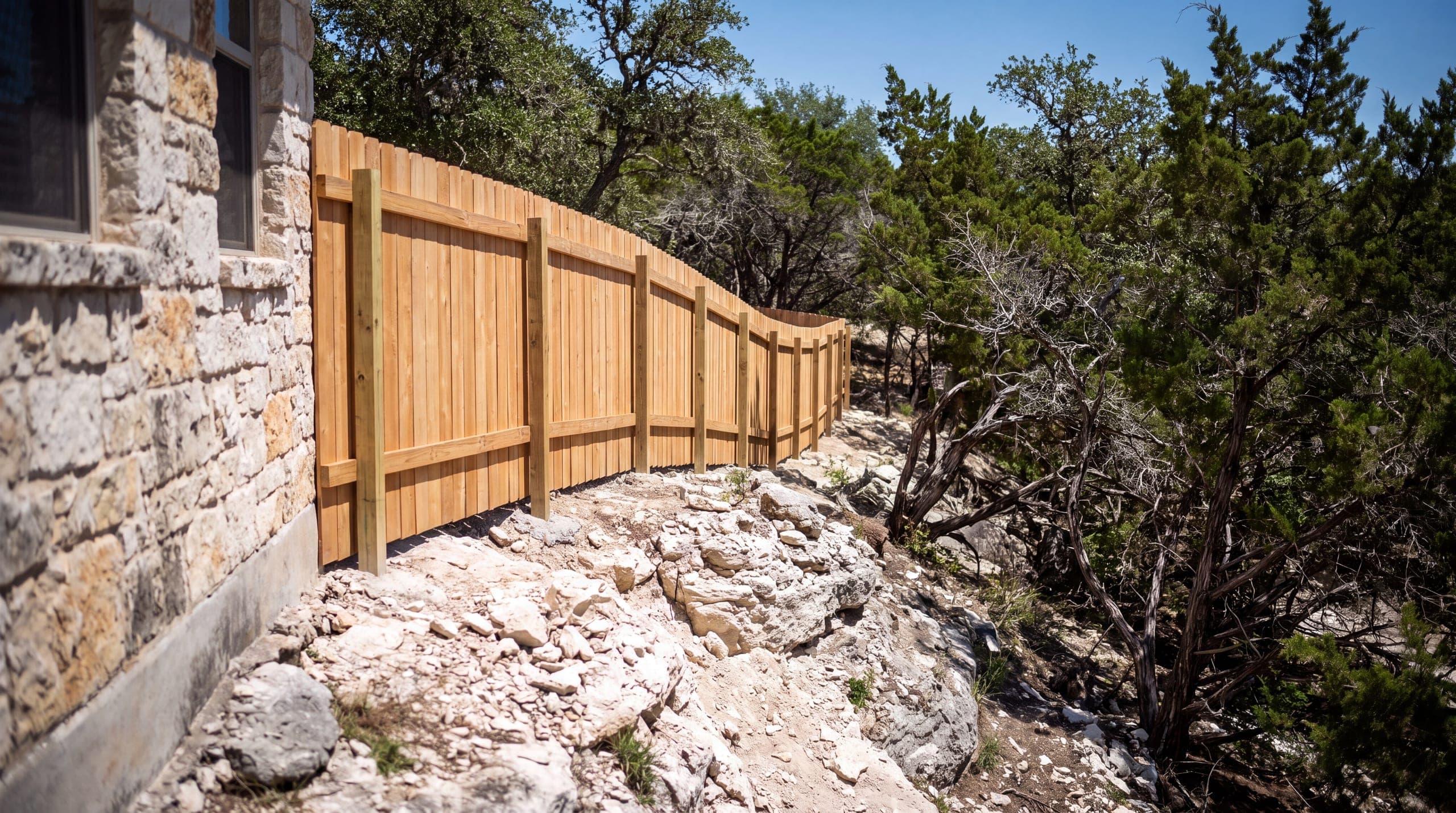
- Gates and slope. A driveway gate, an automatic operator, or a sloped line adds hours that a straight run of privacy fence does not.